How to choose a repair for a leaking metal roof

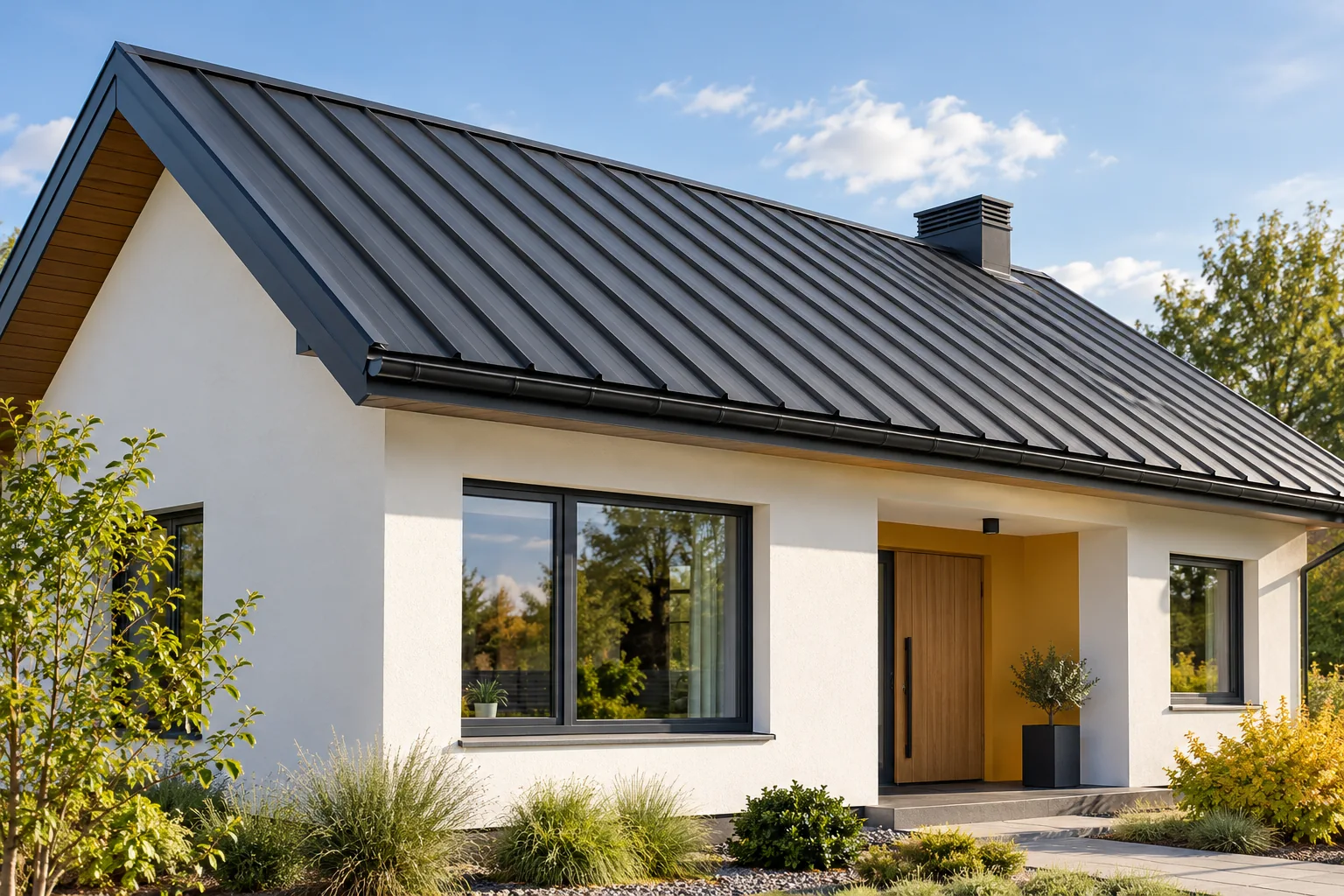
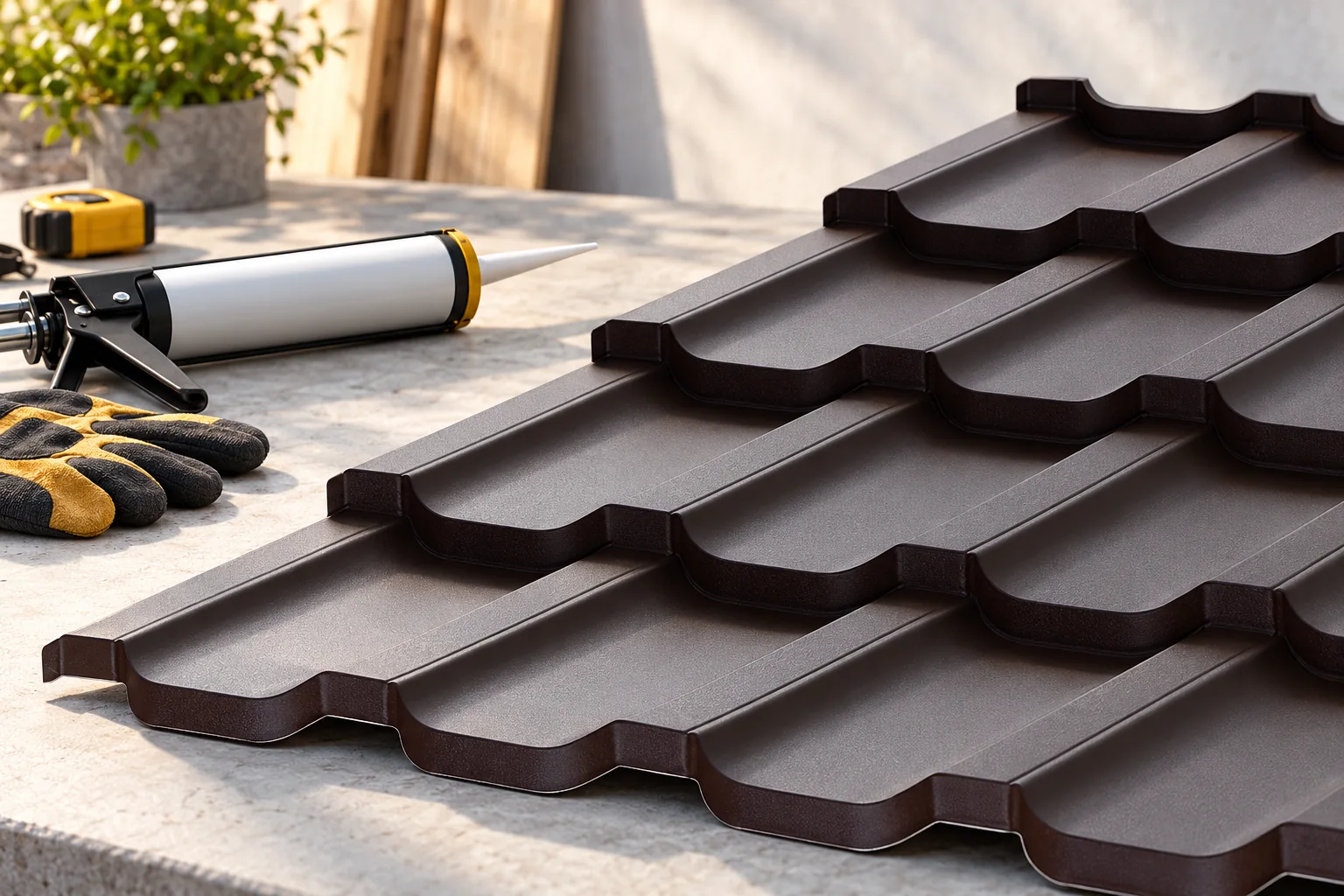
First establish whether water is actually penetrating the covering or is the result of condensation of water vapour beneath the metal sheet. That distinction determines the repair method, since tape and sealant will not fix every cause. Check the condition of the washers, the geometry of the laps, the flashings at the chimney and wall, and any corrosion of the sheets. Also assess the roof pitch and whether drainage is unobstructed. With sandwich panels, the core and the joint may matter. Only after locating the water path and assessing the substrate can a durable or temporary solution be chosen.
By |2026-11-14T19:21:14+01:002023-02-18|Building guide|Comments Off on How to choose a repair for a leaking metal roof

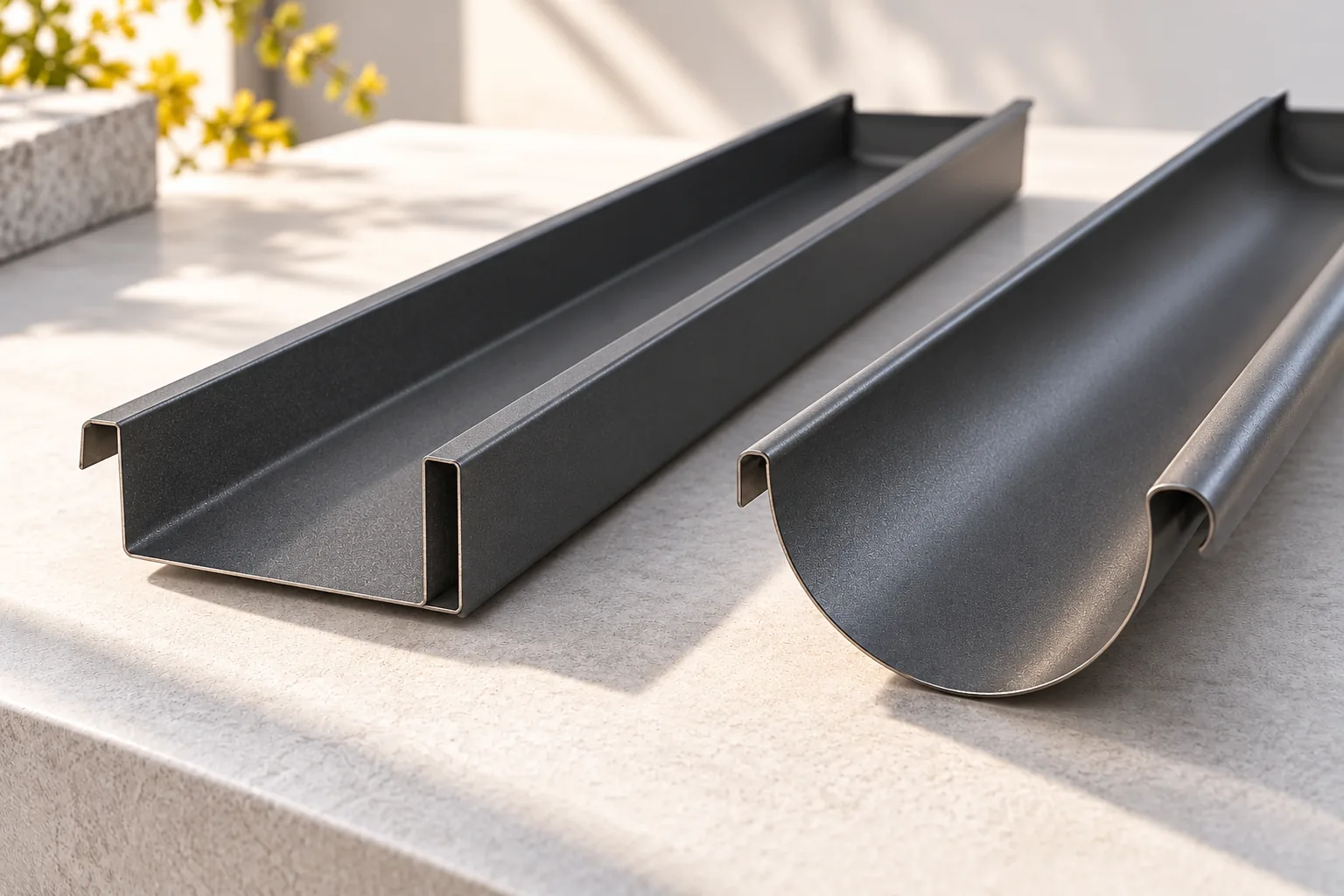
Box gutters and half-round gutters: how do they differ?

The choice between square and half-round gutters depends not only on aesthetics but, above all, on whether a given system will drain a specific roof slope effectively. It is worth checking the cross-section, the number and position of outlets, the fall, and the fit to the eaves and façade. Shape alone does not guarantee greater capacity – flow depends on dimensions and the completeness of the system. When comparing, consider materials, installation method, service access and the cost of the whole set, not just the gutter price.

By |2026-11-14T22:55:07+01:002023-02-05|Building guide|Comments Off on Box gutters and half-round gutters: how do they differ?

Thermano GK-A and GK-H2: composite thickness and thermal resistance in design

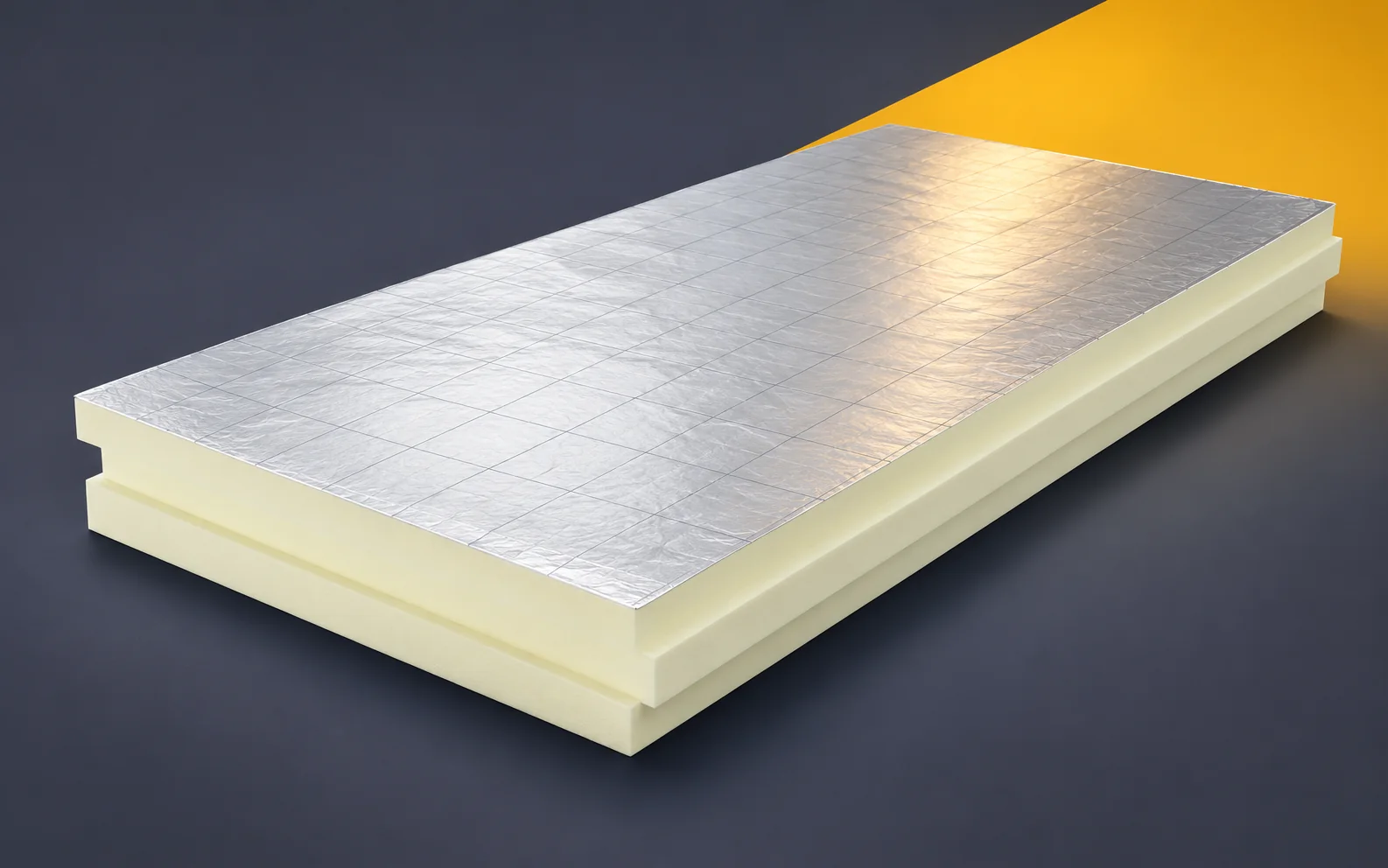
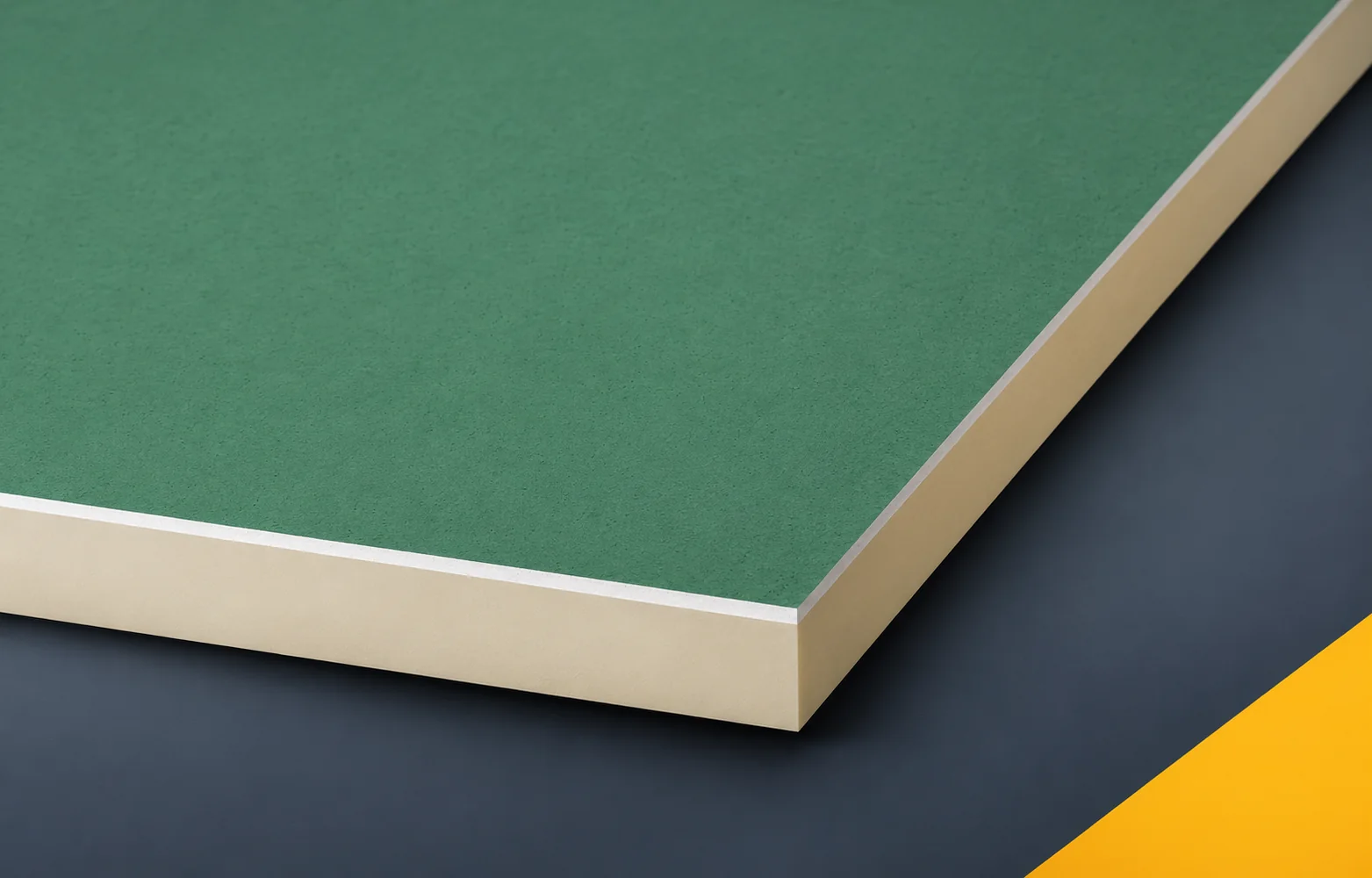
In the description of Thermano GK, a distinction must be made between the PIR foam and the finished composite board. The total thickness includes the gypsum plasterboard facing. Using the lambda of the core alone for the entire product can therefore lead to an overly optimistic calculation result. Thermano GK-A and Thermano GK-H2 combine a PIR core in gas-tight facings with a 12.5 mm thick gypsum plasterboard. The GK-A variant has a white facing for typical dry rooms. In the application specification described as PIR boards, clearly indicate the choice between the white GK-A facing and the green GK-H2 facing in a room with a defined function. The GK-A or GK-H2 variant must be assigned to the function and conditions of use of the room, and the selected variant must be clearly marked in the documentation.

By |2026-11-16T00:52:13+01:002023-02-05|Building guide|Comments Off on Thermano GK-A and GK-H2: composite thickness and thermal resistance in design

What should you check before buying 100 mm second-grade wall panels?

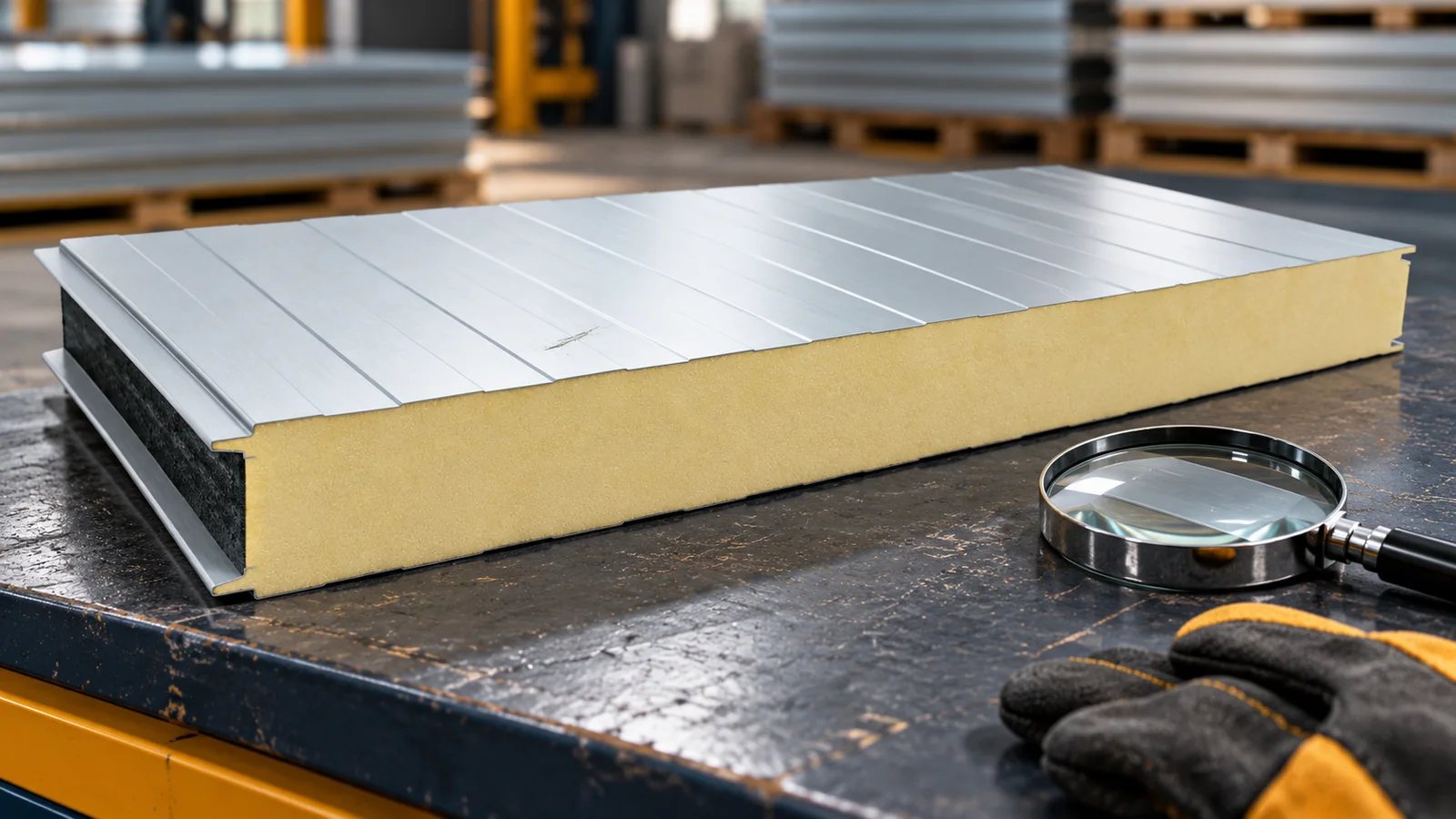
To check a 100 mm second-grade sandwich wall panel, first establish whether the specific batch meets the project requirements, not just the thickness. Inspect the locks along their full length, the condition of the facings and core, and the documents confirming the properties. Assess whether the defects are purely visual or affect the panel's construction. Compare the full specification, because PIR and mineral wool variants may have different insulation, weight and fire classification. Leave the suitability decision to the designer.

By |2026-11-14T16:06:13+01:002023-02-02|Building guide|Comments Off on What should you check before buying 100 mm second-grade wall panels?

When do the advantages of a metal roof make a difference?

A metal roof can combine low weight, varied appearance and efficient coverage of large areas, but these benefits emerge only once the product is matched to the specific project. It is worth checking the load capacity and condition of the structure, the required pitch, the support spacing and how the loft will be used, and only then choosing the profile and coating. When replacing a covering, a lighter material may make it easier to find a suitable variant, yet it does not confirm that the old roof truss is sound. Assess the whole roof with its insulation, fixings and details, because the covering alone does not make it.

By |2026-11-14T16:09:27+01:002023-02-01|Building guide|Comments Off on When do the advantages of a metal roof make a difference?

PIR, cellulose and wood fibre: specification comparison criteria

A comparison of insulation should separate thermal conductivity, the heat storage capacity of the layers and the method of execution. PIR boards, cellulose and wood fibre do not have an identical form. The specification must define the function, the acceptance criteria and the scope of the analysis of summer conditions and moisture conditions. PIR boards are rigid products of a defined thickness and facing. Cellulose can be blown into prepared cavities. A factory-made board has a declared thickness, whereas a blown-in layer is produced on site. The acceptance description should correspond to this technological difference. For blowing in, the thickness and the density specific to the application are significant.

By |2026-11-16T00:55:34+01:002023-01-30|Building guide|Comments Off on PIR, cellulose and wood fibre: specification comparison criteria

Which sandwich panels suit cattle, poultry and pig housing?

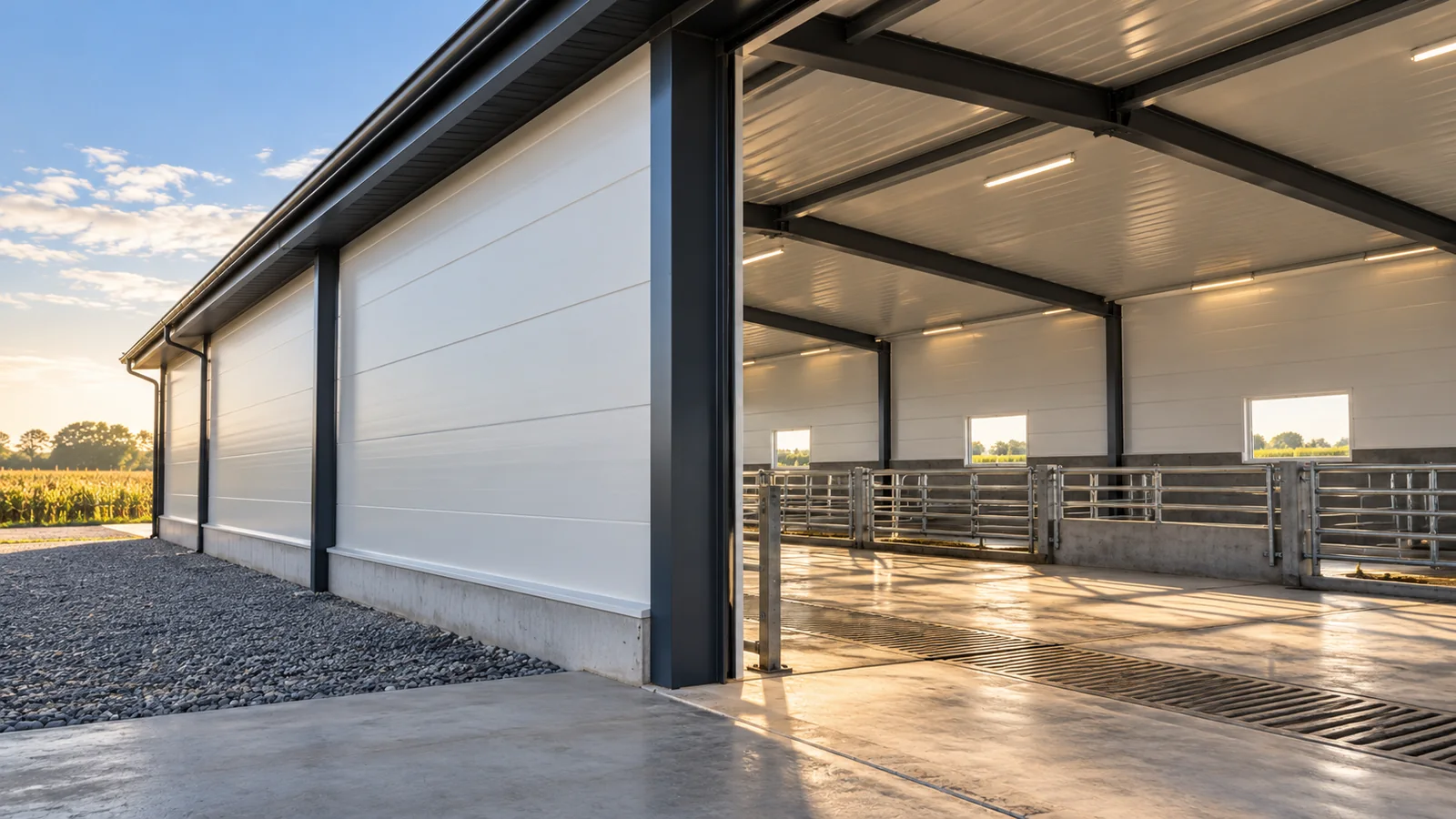
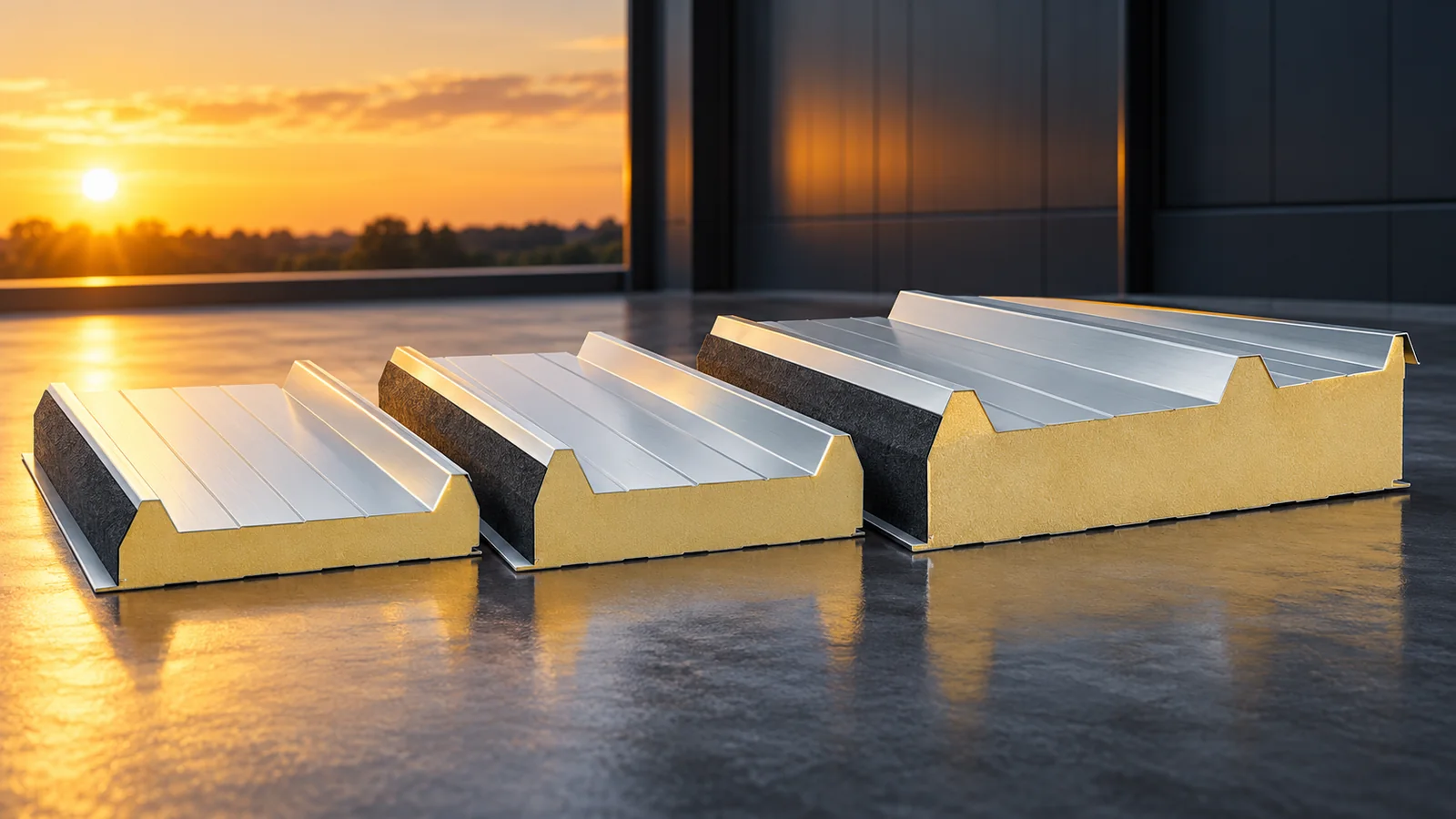
Insulated panels for a cattle shed, poultry house and piggery are selected according to the livestock conditions and the way the building is maintained. Heat, ventilation, moisture, chemical compounds and washing are important. A PIR core can help achieve good insulation performance at a small thickness, but on its own it does not protect the facings against corrosion. The entire wall and roof system must be selected, including coatings, fasteners, seals and details around installations. A cattle shed, poultry house and piggery may operate at different temperatures, humidity and air exchange rates. The conditions also depend on stocking density and technology. A single panel thickness should not be assumed for every agricultural building. The material must be matched to the assumptions for the specific facility.

By |2026-11-14T12:15:06+01:002023-01-26|Building guide|Comments Off on Which sandwich panels suit cattle, poultry and pig housing?

How thick should insulated roof panels be for a heated building?

The thickness of a sandwich panel roof in a heated building should be selected primarily according to the required U-value for the specific product, not solely from a thermal table. Check the declared Uc, load-bearing capacity and deflection for the given support arrangement, the effect of the facing colour, and the airtightness of joints and service penetrations. PIR allows good performance at a small thickness, but the core alone does not ensure airtightness – the entire installation determines the result. Determine the target U for the building's conditions of use.

By |2026-11-14T16:06:11+01:002023-01-26|Building guide|Comments Off on How thick should insulated roof panels be for a heated building?

Modular tile-effect sheets compared with other lightweight roof coverings

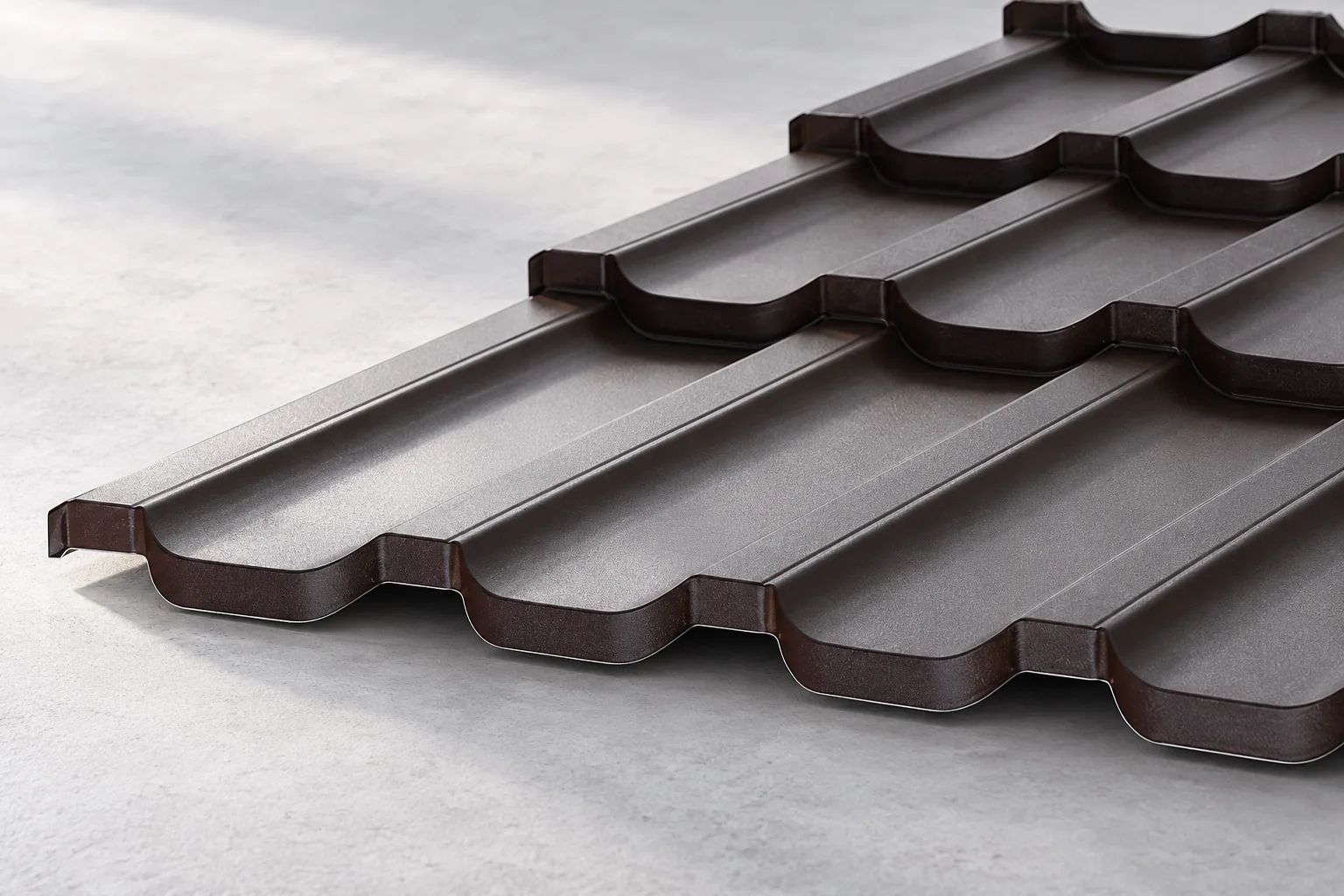
When choosing a lightweight roof covering, compare above all the format of the elements and the number of joints, as these determine how well the covering fits the roof. Check whether modular metal roof tiles suit your roof slope, details and installation method, not just the overall appearance. It is worth comparing the cutting layout, the time needed to make joints and the full cost with cut sheets and trapezoidal profiles. Remember that overall dimensions differ from the effective covering area, and individual models may have a different geometry.

By |2026-11-14T19:22:21+01:002023-01-24|Building guide|Comments Off on Modular tile-effect sheets compared with other lightweight roof coverings

Rain noise on corrugated fibre cement roofing: what affects indoor sound?

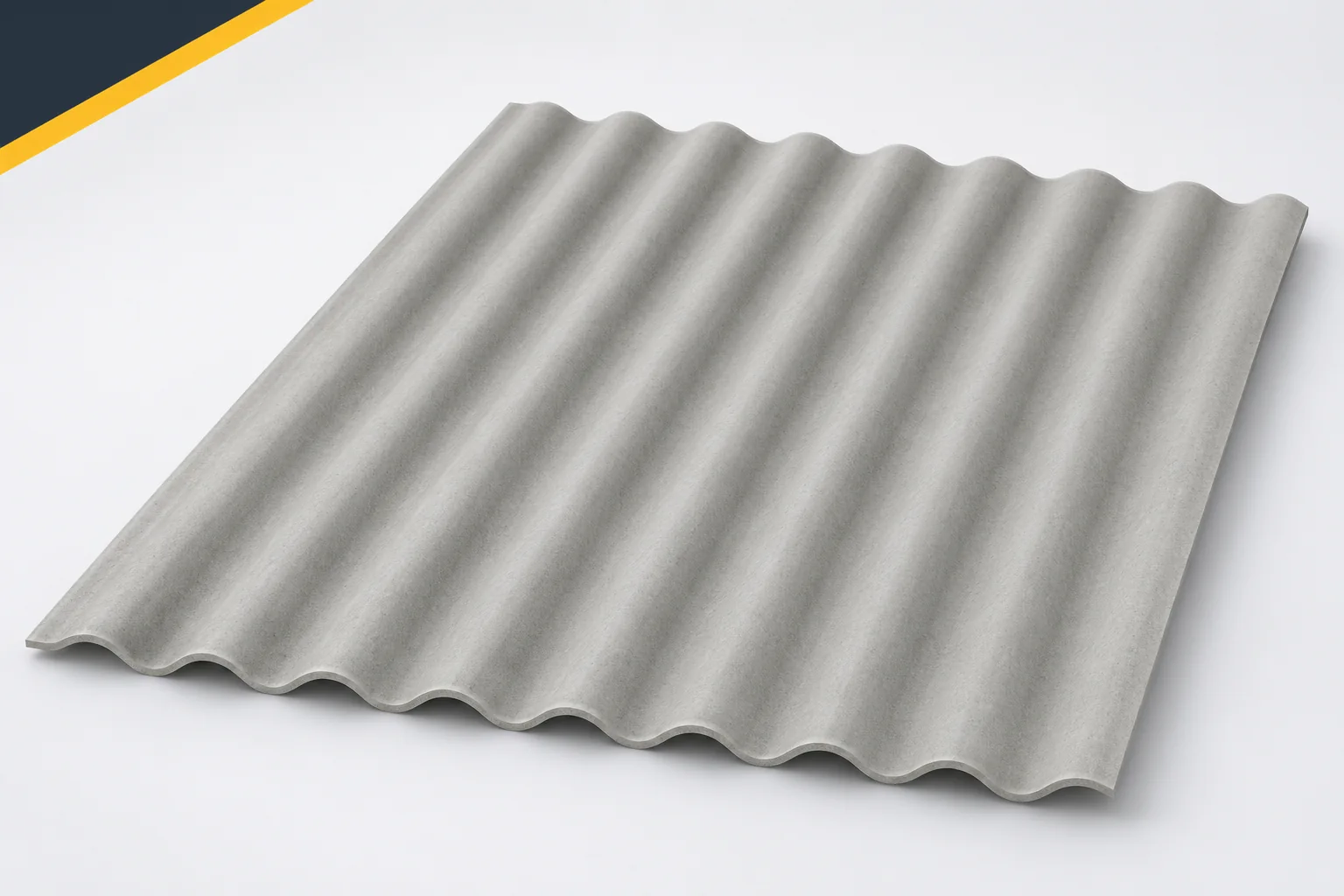
The sound of rain is assessed inside the building, not only at the surface of the sheet itself. The covering material matters, but the effect also depends on the roof layers, the supports and the room. Fibre cement sheets are sometimes chosen for their favourable acoustic behaviour. However, this does not guarantee a specific level of quiet in every hall. Asbestos-free fibre cement is worth considering as part of the whole building envelope, particularly above work and rest areas. Drops strike the surface, and the resulting energy can be transmitted through the material and the connections. The character of the sound depends on stiffness, mass, damping and the method of support. This is why different coverings do not sound identical.

By |2026-11-15T17:56:23+01:002023-01-24|Building guide|Comments Off on Rain noise on corrugated fibre cement roofing: what affects indoor sound?
Back to top