Which sandwich panels suit cattle, poultry and pig housing?
Sandwich panels
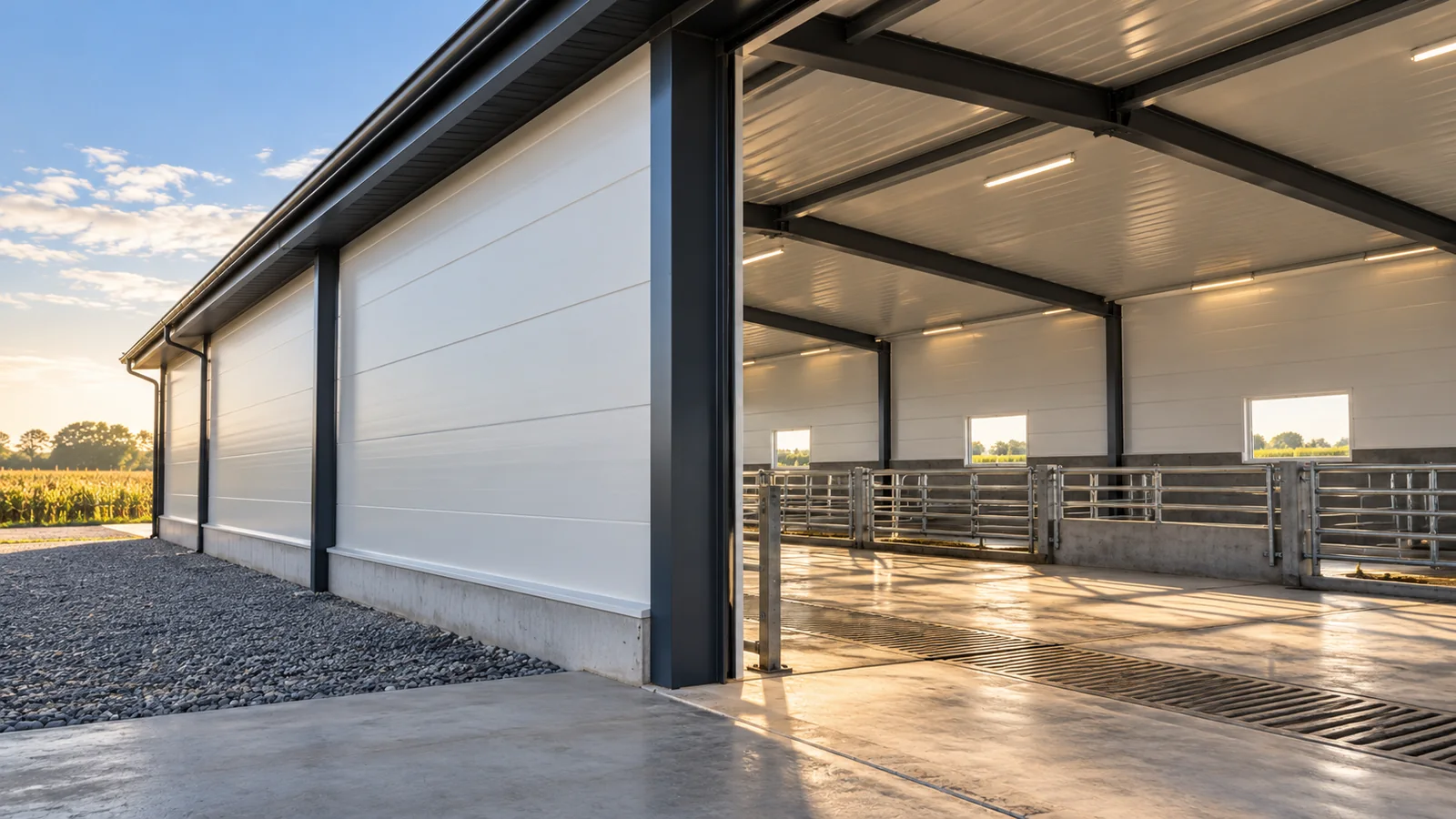
Insulated panels for a cattle shed, poultry house and piggery are selected according to the livestock conditions and the way the building is maintained. Heat, ventilation, moisture, chemical compounds and washing are important. A PIR core can help achieve good insulation performance at a small thickness, but on its own it does not protect the facings against corrosion. The entire wall and roof system must be selected, including coatings, fasteners, seals and details around installations. A cattle shed, poultry house and piggery may operate at different temperatures, humidity and air exchange rates. The conditions also depend on stocking density and technology. A single panel thickness should not be assumed for every agricultural building. The material must be matched to the assumptions for the specific facility.
Why does the type of livestock farming matter?
A cattle shed, poultry house and piggery may operate at different temperatures, humidity levels and air exchange rates. Conditions also depend on stocking density and technology. A single panel thickness should not be assumed for every agricultural building. The material must be matched to the design assumptions of the specific facility. The building envelope design should be coordinated with the ventilation solution.
In the enquiry, also describe the planned cleaning and disinfection method. The surface will perform differently in a dry feed store than in an intensively washed room. Mark zones with particular exposure, for example near channels and equipment. Such information helps in selecting the facings and accessories. The general term ‘agricultural panel’ does not replace this assessment.
Which core should you choose for walls and roof?
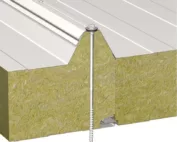
PIR offers favourable insulation performance relative to thickness and weight. It may be a good choice if it meets the project requirements. Mineral wool is considered, among other things, where specific fire conditions are important. However, the core cannot be selected without checking the entire panel and how it is used. Reaction to fire and fire resistance of the system are separate parameters.
The thickness results from the required U-value, the operating conditions and the calculations. The roof and the wall may need different variants. The thickness should not be copied from a neighbouring building without comparing the technology. The thermal assessment is complemented by checking the details and thermal bridges. Good insulation helps maintain conditions, but does not replace the removal of moisture and gases through the designed ventilation system.
Which facing will withstand the building environment?
For steel facings, select the protection to suit the conditions on both sides of the panel. The interior of a livestock building may be more demanding than the external façade. It is not enough to choose a thicker coating or a light colour. Confirmation is needed that the coating is intended for the specific environment and cleaning method.
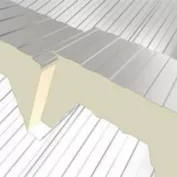
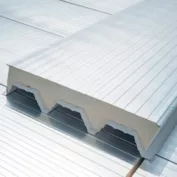
In selected roof solutions, a glass-fibre-reinforced laminate is used on the underside. Such a material must be assessed on the basis of its own documentation. It is not resistant to any chemicals simply because it is not sheet metal. Also check the disinfectants as well as the washing temperature and pressure. Establishing these rules before purchase helps avoid a conflict between the livestock technology and the operating conditions of the building envelope.

How can you reduce moisture and condensation?
Condensation may occur where moist air meets a sufficiently cool surface. The risk is increased by thermal bridges, leaky joints and high steam production. Changing the core alone does not solve all these problems. Proper insulation performance, tight details and moisture control must be combined.
Pay particular attention to the wall-to-roof junction, the plinth and ventilation penetrations. Water should not enter the core or linger at the edges. If the building is already in use, observe when droplets and streaks appear. Distinguish condensation from leakage. Their causes may differ, so they require different measures than coating the entire surface with another layer of sealant.
Which accessories are as important as the panel?
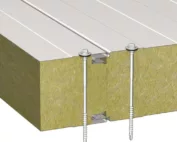
Fasteners, flashings and seals should be suited to the environmental conditions. A resistant facing will not help if the fixing corrodes or the joint at the ventilation chimney leaks. It is worth planning service penetrations before installation. Large openings may require additional support and special finishing elements.
Also check access for cleaning and inspection. Dirt and moisture should not accumulate in hard-to-reach pockets of the flashings. Cut edges must be protected with the specified detail. If you plan to install additional equipment, plan its support. Heavy installations should not be suspended from the thin facing alone without a structural solution.
How do you prepare an order for a livestock building?
Include a description of the livestock, temperatures, humidity and cleaning method. State the required U-value, fire parameters, support spacing and enclosure dimensions. List the substances used during disinfection. Ask for confirmation of the selection of facings and accessories. Compare complete offers, because the price per m² alone does not show the cost of a roof ready for use.
After installation, keep the instructions and plan inspections. Check the seams, fixings, surface damage and areas of frequent dampness. Any change in the cleaning method should be checked for compatibility with the coating. A durable agricultural building is created from a well-selected set of materials. A single claim of ammonia resistance or one popular panel thickness will not ensure it.
7 branches. Materials closer to your project.