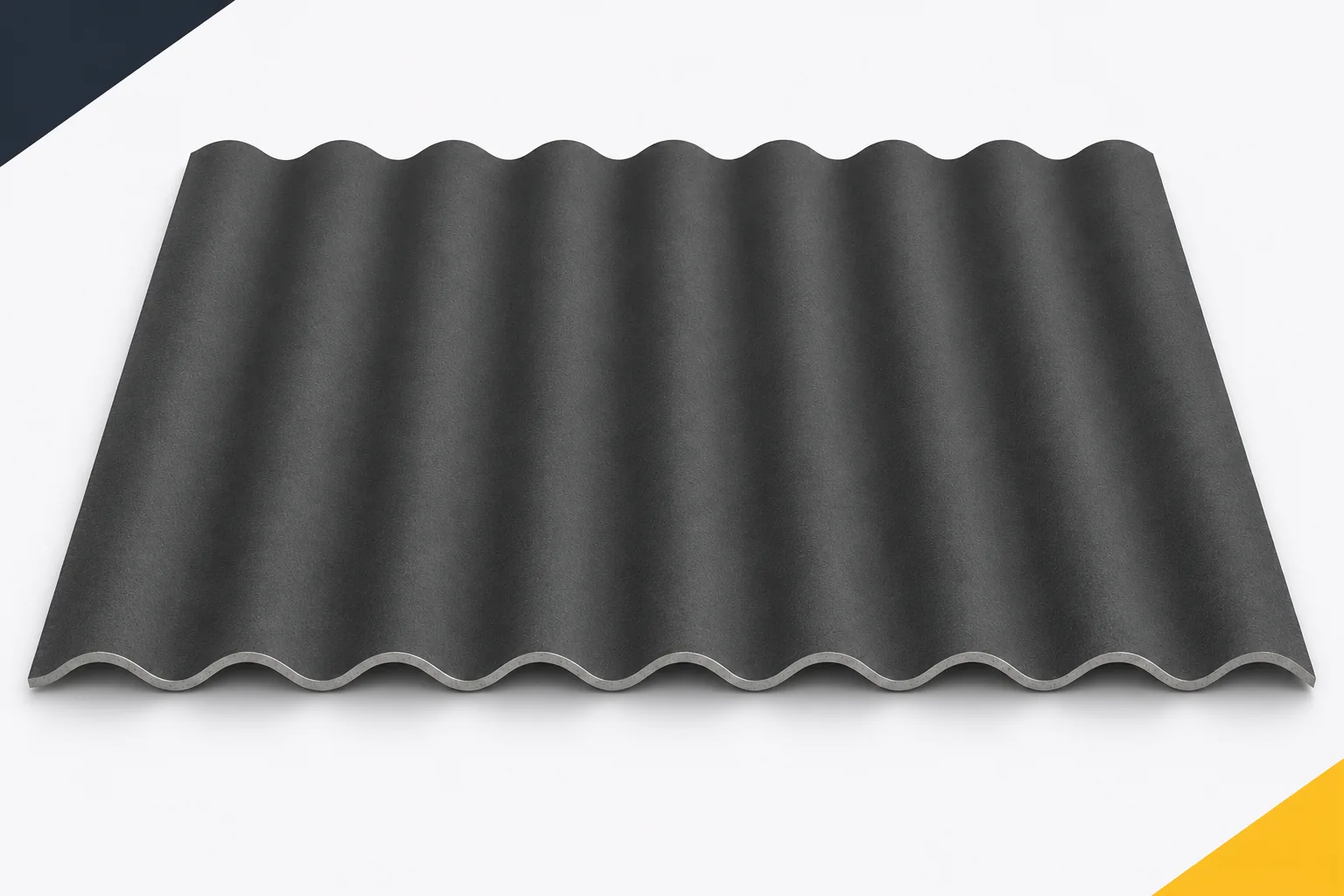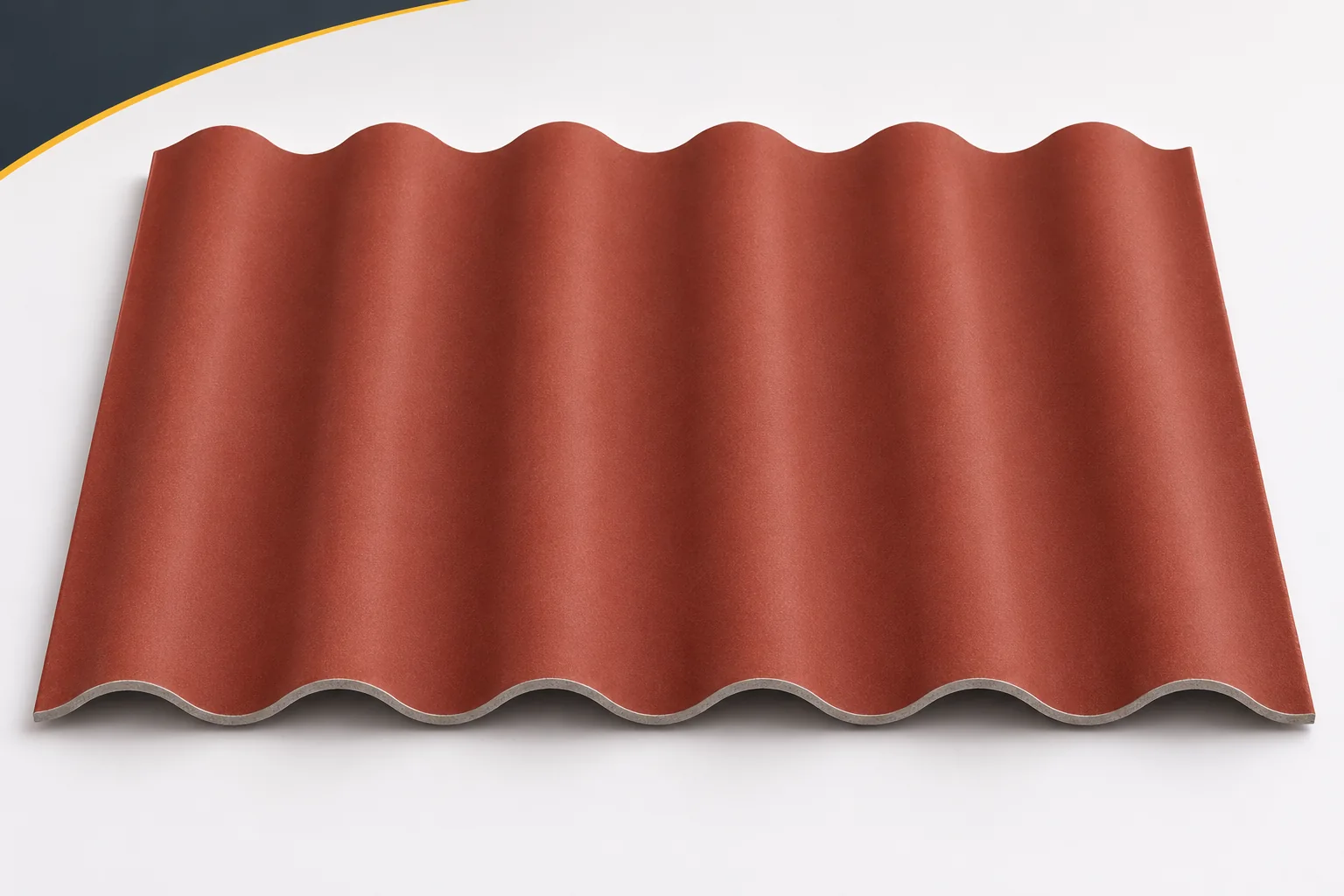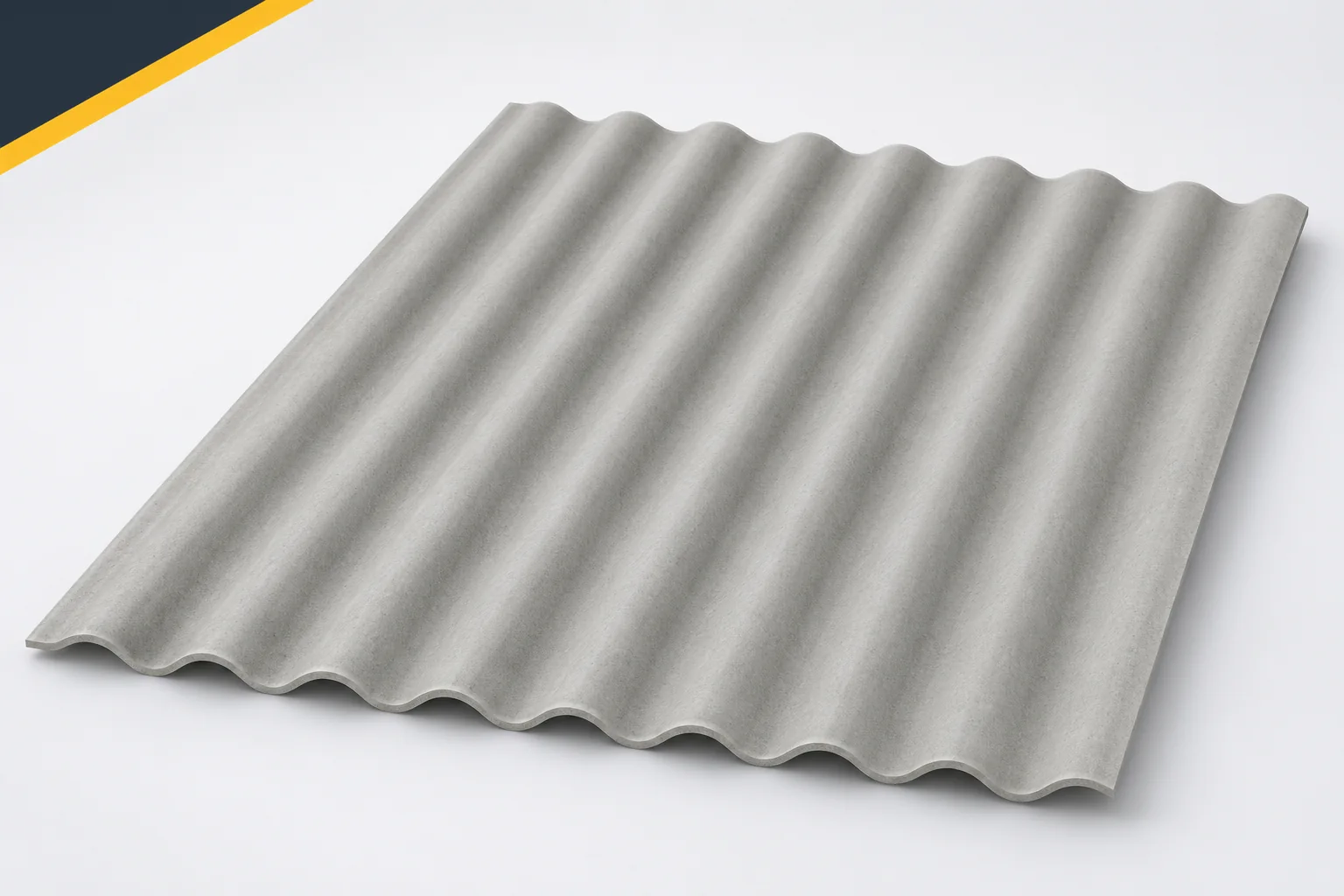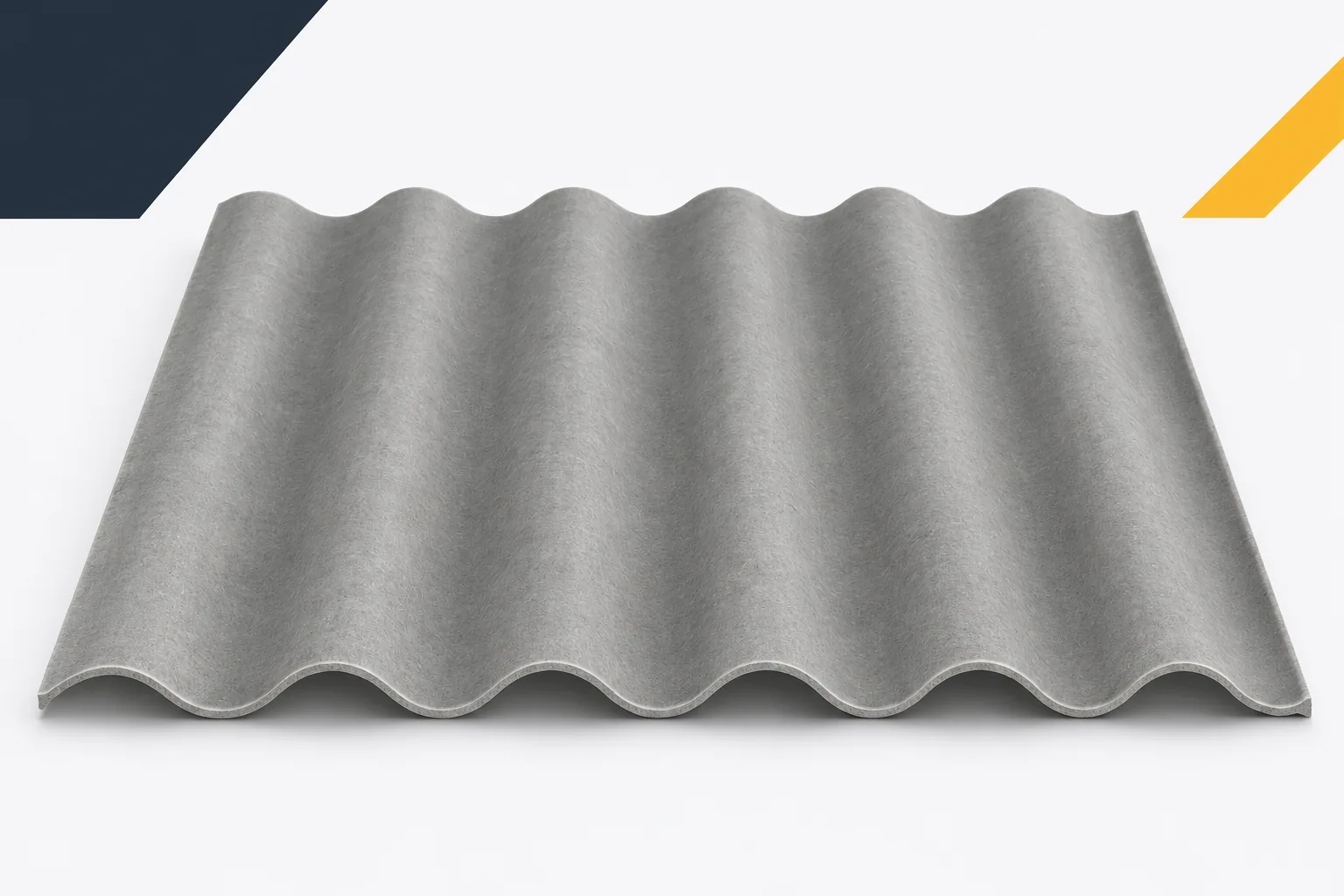
A heated workshop with fibre cement roofing: the roof build-up and working comfort

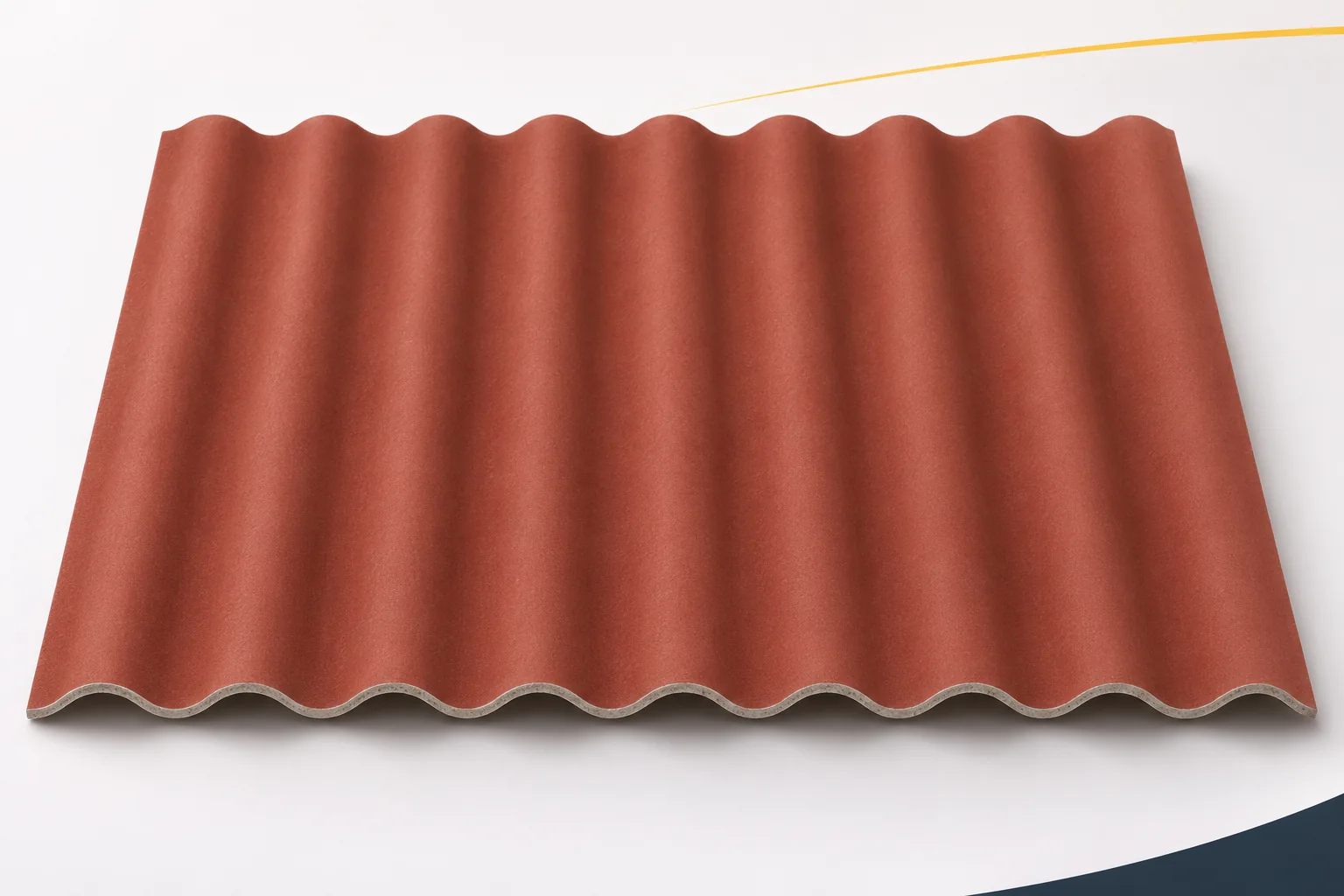
In a workshop, a stable working environment matters, not just sheltering tools from the rain. Heating, wet vehicles and running equipment create conditions different from an open carport. Fibre cement sheets can be the covering of such a building, but comfort requires a complete layer build-up. Asbestos-free fibre cement is not a thermal solution on its own. Before buying, it is worth defining the working temperature, operating hours, sources of moisture and the services required. A workshop used daily and a room heated for a few hours react differently. With intermittent heating, the structure and covering may remain cold while the air inside warms up quickly. If it contains a lot of moisture, the importance of a correct layer build-up and ventilation increases.
2026-11-15T17:56:41+01:00

Fibre cement roofing above an insulated loft: layers and junctions

A covering over a habitable loft must work together with the layers that provide warmth, dryness and comfort. A durable outer surface alone is not enough. Fibre cement sheets can be included in such a roof if the whole solution meets the building's requirements. Asbestos-free fibre cement acts here as the covering, not as a ready-made insulated panel. The junctions between layers at walls, windows and service penetrations require the most attention. The insulation may be located in the roof slope or in the ceiling separating an unused space. These are different arrangements. If the loft is to be habitable, the thermal envelope should encompass all used parts. Knee walls, slopes and junctions with the ceiling must be checked.

2026-11-15T17:56:38+01:00

Fibre cement roofing and summer heat inside the building

On a hot day, room temperature is determined by more than the type of outer sheet. Sun, insulation, windows, air exchange and how the building is used all matter. Fibre cement sheets can be part of a well-designed envelope, but they do not guarantee lower temperatures. Asbestos-free fibre cement also heats up in the sun. A sensible choice of roofing requires looking at the path of heat through the whole roof and the other parts of the building. Radiation falls on the roof, and some of the energy is absorbed by the material. The amount depends among other things on the properties of the surface, the angle of incidence and the ambient conditions. A dark colour is often associated with greater absorption of radiation than a light one, but it does not replace data for a specific coating.

2026-11-15T17:56:21+01:00

Does asbestos-free fibre cement roofing provide thermal insulation?

A roof can be rain-tight and yet still fail to protect adequately against heat loss. These tasks belong to different parts of the building envelope. Fibre cement sheets are primarily a covering or cladding specified within a given system. Asbestos-free fibre cement does not replace a suitably selected thermal insulation. When choosing a material, it is worth separating the functions of the layers. That makes it easier to assess what a heated house, a workshop or an unheated warehouse needs. Materials differ in their ability to conduct heat, but their thickness matters too. A thin sheet may conduct heat less readily than metal and still have too low a thermal resistance to serve as proper building insulation.

2026-11-15T17:56:18+01:00

Ventilated fibre cement roofs: maintaining an uninterrupted air path

Roof ventilation only works when air can enter, flow through and escape to the outside. The space beneath the covering alone is not enough. Fibre cement sheets can be part of such a system, but its effectiveness depends on the whole assembly. Asbestos-free fibre cement does not remove moisture indefinitely. Airflow helps create the conditions for drying, so it must be planned as carefully as the details that protect against rain. Ventilating rooms and ventilating the layer beneath the covering are different tasks. In an outbuilding they may be connected, but they should not be equated. An insulated roof may have a separate cavity separated from the interior.

2026-11-15T17:56:20+01:00

Rain noise on corrugated fibre cement roofing: what affects indoor sound?

The sound of rain is assessed inside the building, not only at the surface of the sheet itself. The covering material matters, but the effect also depends on the roof layers, the supports and the room. Fibre cement sheets are sometimes chosen for their favourable acoustic behaviour. However, this does not guarantee a specific level of quiet in every hall. Asbestos-free fibre cement is worth considering as part of the whole building envelope, particularly above work and rest areas. Drops strike the surface, and the resulting energy can be transmitted through the material and the connections. The character of the sound depends on stiffness, mass, damping and the method of support. This is why different coverings do not sound identical.

2026-11-15T17:56:23+01:00

Condensation beneath fibre cement roofing: tracing the source of moisture

Droplets on the underside of the roof do not always mean damaged roofing. The water may come from the air inside the building. Fibre cement sheets then become the place where the moisture and temperature problem becomes visible. Asbestos-free fibre cement can temporarily buffer some moisture, but it does not guarantee a dry underside under all conditions. Identifying the cause is important, because a leak and condensation require different measures. The air contains moisture from people, animals, wet materials and ongoing work. When it meets a sufficiently cool surface, water may condense. It does not have to be raining for this to happen. In an unheated building, weather changes and cooling of the roof slope also matter.

2026-11-15T17:56:17+01:00

Finding thermal bridges in buildings with corrugated fibre cement roofs

Even a thick layer of insulation may not provide uniform protection if heat finds an easier path through the junctions. Thermal bridges often occur in places that are not visible once the work is finished. Fibre cement sheets are the outer part of the roof and do not automatically resolve these details. Asbestos-free fibre cement must be considered together with the structure and the insulation. It is precisely at their interface that the causes of cold strips or local dampness should be sought. A cold spot may result from easier heat flow through the material, but also from air leakage. The symptoms may be similar, but the repairs are different. A structural thermal bridge will not disappear by simply taping the membrane.

2026-11-15T17:56:39+01:00

Vapour control layers beneath fibre cement roofing: when are they needed?

The need for a vapour control layer is not decided by the name of the covering alone. Temperature, indoor humidity and the layer build-up of the roof are more important. Fibre cement sheets can cover both an open canopy and a heated attic. In each case, water vapour behaves differently. Asbestos-free fibre cement does not replace a layer that controls its flow. The choice of such a solution must be linked to airtightness and the ability of the assembly to dry out. Simplified guidance usually refers to vapour diffusion through materials. In a real building, the flow of moist air through gaps is also significant. A leaky joint at a wall or duct can supply moisture to cool layers.

2026-11-15T17:56:34+01:00

Choosing an underlay membrane for a corrugated fibre cement roof

A roof membrane is not selected solely on the basis of the type of external sheet. You need to know what it is to protect against and where any water will be drained away. Fibre cement sheets are the main covering, while the underlay can perform an additional function in a specific assembly. Asbestos-free fibre cement does not impose a single membrane for every building. The choice is determined by the structure, insulation, ventilation and the requirements in the documentation for the materials used. The membrane can help protect the layers below against water penetrating under the covering. Its scope of action results from the properties of the product and the method of installation. It is not automatically a substitute roof for any length of time.

2026-11-15T17:56:36+01:00
Back to top