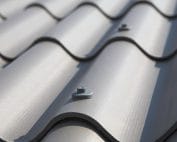
A heated workshop with fibre cement roofing: the roof build-up and working comfort
Fibre cement roofing
In a workshop, a stable working environment matters, not just sheltering tools from the rain. Heating, wet vehicles and running equipment create conditions different from an open carport. Fibre cement sheets can be the covering of such a building, but comfort requires a complete layer build-up. Asbestos-free fibre cement is not a thermal solution on its own. Before buying, it is worth defining the working temperature, operating hours, sources of moisture and the services required. A workshop used daily and a room heated for a few hours react differently. With intermittent heating, the structure and covering may remain cold while the air inside warms up quickly. If it contains a lot of moisture, the importance of a correct layer build-up and ventilation increases.
In this article
Decide whether you heat continuously or only during working hours
Appearing droplets should not be treated as automatic proof of a leaking roof. It is worth recording the heating method, how often the gate is opened and the type of work carried out. This information helps in choosing a solution. A design based on an unheated hall may need changes when the building starts to be used for regular work at a higher temperature.
The covering and the insulation must have separate tasks
Fibre cement sheets protect the roof surface within the intended system. Heat loss is limited by the insulation together with correct connections. It should not be omitted on the assumption that the cement material alone will retain heat. It is also worth allowing for thermal bridges through structural elements and the junction of the roof with the walls. A workshop often contains many steel details that require a considered solution. The insulation thickness should be selected to suit the requirements of the whole building. The room height, the large gate and how often it is opened are also significant. A correct roof will not eliminate all losses through the other parts of the building.
Moisture comes from everyday activities
A wet vehicle, washing, drying components and the presence of people can raise humidity. Even without visible vapour, the interior affects the building envelope. Fibre cement sheets do not replace ventilation or extraction needed for the work carried out. If the process produces moisture or contaminants, a way of removing them at source must be provided for. Sealing all openings to save heat can worsen conditions. Ventilation of the room should also be separated from the flow in the cavity under the covering. Discharging humid air into an incidental roof void risks dampening the layers instead of effectively removing it to the outside.
Airtightness helps maintain control
Incidental gaps cause uncontrolled air exchange and can carry moisture into the cool zone. Asbestos-free fibre cement has laps intended to work as a covering, not as an airtight inner shell. In an insulated workshop, it should be defined which layer provides the airtightness. Particular attention is required at junctions with walls, conduits and hangers. Installations often change with the workshop equipment, so it is worth providing space for them. Every later penetration should receive proper sealing. It is not enough to leave employees with general information that there is a membrane above the ceiling which is better not damaged.
Fire safety concerns the whole building
A workshop may contain combustible materials, heating appliances and work generating high temperatures. Fibre cement sheets have a declared reaction to fire depending on the product and coating. This property alone does not determine the fire resistance of the complete roof. The structure, insulation, finish and installations are all subject to assessment. It should not be concluded that a favourable covering class allows the requirements for the rest of the building to be omitted. The planned heat source should have suitable penetrations and clearances resulting from its documentation. An incidental routing of a conduit through a sheet and sealing it with any compound does not create a verified solution.
Plan daylighting and equipment before covering
Skylights, fans and conduit penetrations affect the support, airtightness and thermal layers. Fibre cement sheets must be laid out around them, avoiding small unsupported offcuts. A translucent element has its own requirements and is not simply colourless fibre cement. In a workshop, access for cleaning and replacement of equipment should also be considered. The roof should not require walking directly on brittle sheets. If later installations are planned, it is better to allow for their fixings and load path in advance. This reduces the risk of incidental drilling into the finished covering and disturbing the layers beneath it.
Combine handover with observation of how the building is used
Once the workshop is up and running, it is worth checking whether condensation, draughts or local cold spots appear. Note any link with heating, opening the gates and wet work. Fibre cement sheets can perform correctly even though another element of the building envelope requires adjustment. Retained drawings and photographs of the layers make diagnosis easier. If the operating conditions change significantly, the roof and ventilation must be reassessed. Turning a dry store into an intensively used workshop is not merely a change of equipment. It can change the moisture load, the thermal requirements and the rules for safe operation of the building.
When enquiring about asbestos-free fibre cement, add the heating method and the type of work carried out in the workshop. This allows the covering to be selected as part of a solution suited to the actual use.
7 branches. Materials closer to your project.