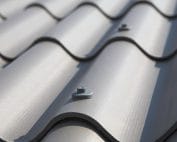
Ventilated fibre cement roofs: maintaining an uninterrupted air path
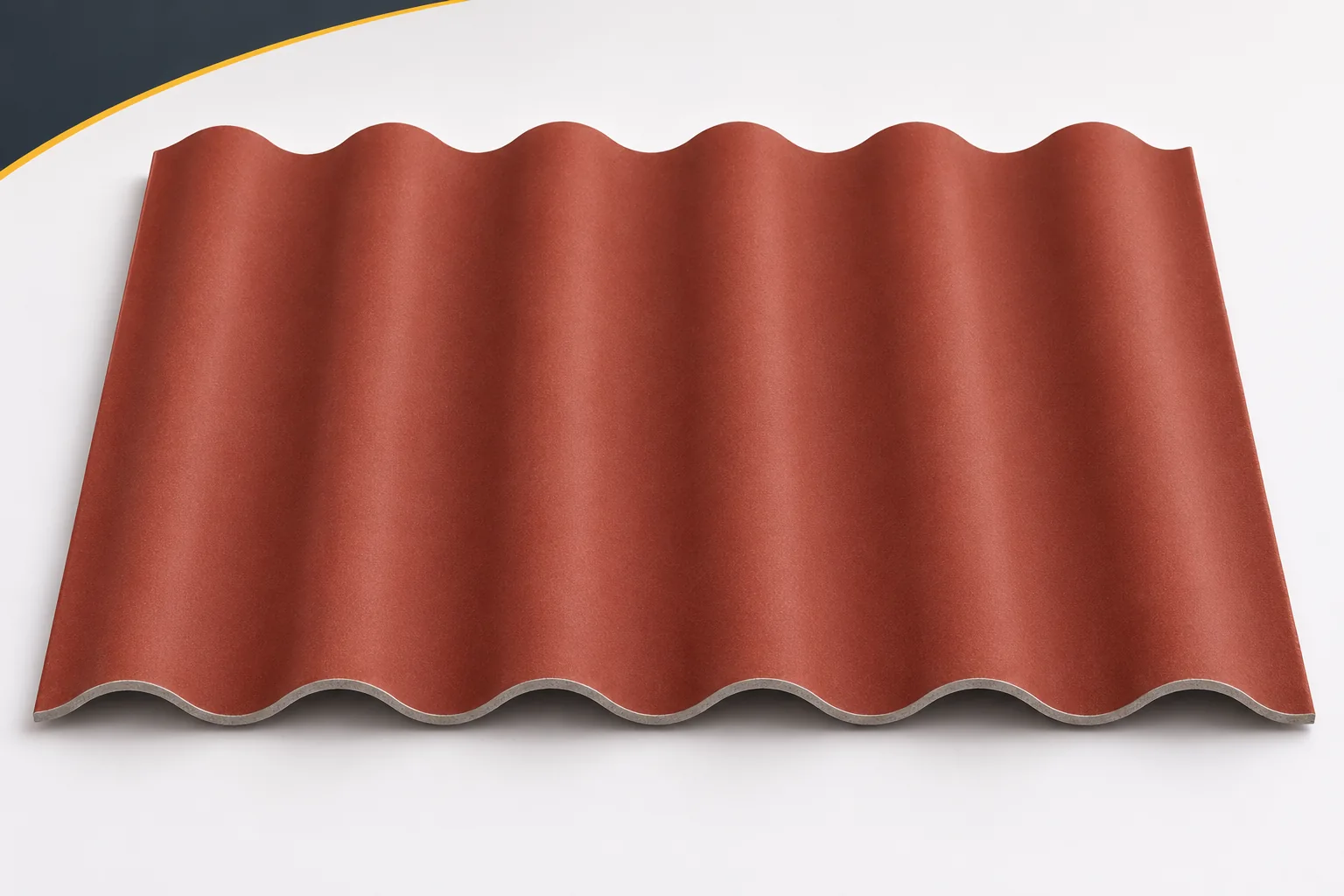
Fibre cement roof coverings
Roof ventilation only works when air can enter, flow through and escape to the outside. The space beneath the covering alone is not enough. Fibre cement sheets can be part of such a system, but its effectiveness depends on the whole assembly. Asbestos-free fibre cement does not remove moisture indefinitely. Airflow helps create the conditions for drying, so it must be planned as carefully as the details that protect against rain. Ventilating rooms and ventilating the layer beneath the covering are different tasks. In an outbuilding they may be connected, but they should not be equated. An insulated roof may have a separate cavity separated from the interior.
In this article
Determine which space you want to ventilate
It does not serve as an arbitrary outlet for moist air from a bathroom or workshop. The design should define the boundaries of each space and how air is supplied and removed. Without this, it is easy to create an opening that does not support the required flow. It is worth tracing the building section from the interior all the way to the external surface, rather than considering only the corrugated shape of the sheet visible on the roof.
The inlet at the eaves must remain clear
The start of the airflow path is sometimes covered by soffit boarding, insulation or a sealing element of the wrong type. Fibre cement sheets will not provide ventilation if the inlet has been closed off. Accessories protecting against birds and larger contaminants should match the designed function. Not every profiled element is ventilating. Its effective cross-section, the way it is laid and its resistance to operating conditions must be checked. Continuity of the inlet over the required length is also important. A few openings left by chance need not replace the intended solution. The eaves should be inspected before the structure is finally closed.
Air needs a path across the entire roof slope
The gap may be interrupted by insulation protruding too far, a structural element or a poorly laid membrane. Fibre cement sheets on the outside may look correct even though the flow beneath them is blocked. The cross-section and execution details are therefore essential. It should be checked whether the path is maintained also beneath service penetrations and near roof windows. There is no single universal gap height for every building. The dimension and arrangement result from the design, the length of the roof slope and the adopted system. Increasing the void in one place will not remedy its complete closure elsewhere.
The outlet must not be accidentally sealed
The ridge often closes the ventilation path, but it may also perform other functions in a given arrangement. It must be checked whether the selected fitting actually enables the required air discharge. Asbestos-free fibre cement with a fully sealed ridge filler does not thereby automatically create a ventilated roof. If the design provides for separate outlet elements, their number and arrangement must be maintained. Protection against precipitation must work together with the flow. Leaving an arbitrary gap under loose trim is not a proper way of ventilating. A detail with a known function is needed, one that can be executed and subsequently inspected.
Valleys and obstructions divide the airflow into sections
On a simple roof the path from eaves to ridge is clear. At a roof valley, dormer or wall, areas terminated by an obstruction arise. Fibre cement sheets must then be considered together with the local layer arrangement. It should not be assumed that the air will find a bypass through the neighbouring corrugation on its own. The design should determine how the individual fields are ventilated. This also applies to subsequently added installations that may restrict access to certain places. During renovation it is worth checking whether earlier repairs have closed the required openings. A leak may have been eliminated at the expense of ventilation if the contractor did not know the function of the detail.
Ventilation does not replace airtightness from the inside
Moist air penetrating through large leaks can supply more moisture to the assembly than was allowed for. It should not be assumed that the flow beneath the covering will always remove the excess. Fibre cement sheets work together with the other layers, including vapour control and airtightness. Each has a different task. Opening a gap under the roof is therefore not the only way to remedy a damp attic. First the source of moisture, the condition of the insulation and the connections on the room side must be identified. For a more complex assembly, an analysis of its behaviour over time may be needed, not just an inspection of a single section.
The airflow path must be kept clear during use
Leaves, insects, nests and later alterations can gradually change the flow conditions. During an inspection, ventilation should also be checked, even if the roof is not leaking. Fibre cement sheets require safe access, without walking directly on the sheets. It is worth keeping drawings showing the inlets and outlets. These make it easier to assess whether a visible gap is intentional before someone decides to close it. Signs of moisture should be compared with the weather and the use of the building. Restoring free flow can improve drying out, but damp layers require a separate assessment. Correct flow will not repair material that is already permanently damaged.
When planning asbestos-free fibre cement, ask for the full air path to be shown in a roof cross-section. The inlet, the gap and the outlet should form a single verifiable solution.
7 branches. Materials closer to your project.