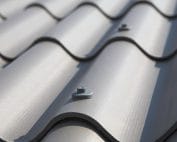
Choosing an underlay membrane for a corrugated fibre cement roof
Fibre cement coverings
A roof membrane is not selected solely on the basis of the type of external sheet. You need to know what it is to protect against and where any water will be drained away. Fibre cement sheets are the main covering, while the underlay can perform an additional function in a specific assembly. Asbestos-free fibre cement does not impose a single membrane for every building. The choice is determined by the structure, insulation, ventilation and the requirements in the documentation for the materials used. The membrane can help protect the layers below against water penetrating under the covering. Its scope of action results from the properties of the product and the method of installation. It is not automatically a substitute roof for any length of time.
In this article
First determine the function of the additional layer
The permissible exposure conditions and support requirements must be checked. It is also worth distinguishing water protection from the airtightness of the interior and vapour control. The name ‘roofing membrane’ is too general to settle all these functions. The design should clearly state the task of each layer so that the installer does not try to achieve several different goals with a random material.
The layer must have a drainage path
Even a good membrane will not work correctly if it forms depressions that retain water. The direction of laps, the run at supports and the termination at the eaves are important. Fibre cement sheets carry away the main flow of precipitation, but water on the lower layer also needs a controlled outlet. It must not be directed into the insulation or the interior of the wall. At the chimney and other obstructions, a way of intercepting it must be provided for. Wrapping the opening carefully in material does not always ensure drainage. The drawing should show where the water goes next, including after passing through the next detail. The continuity of this path is checked before covering.
Vapour permeability is selected to suit the cross-section
Different membranes restrict water vapour flow to different degrees. The right choice depends on the other layers and the drying potential. Fibre cement sheets do not mean that every assembly will work correctly with any membrane. The insulation, any sheathing and the control layer on the room side must be taken into account. In renovation, knowledge of the materials already present on the roof is also needed. A new membrane should not be selected on the basis of a single advertising feature. Compatibility of function across the whole system is important. If there is a risk of moisture being trapped, a hygrothermal assessment should be carried out instead of adding another airtight coating.
Check the operating conditions under the selected covering
The material is located close to the outer surface and may be exposed to a specific temperature and moisture. The range of application, resistance and method of installation must be checked. Asbestos-free fibre cement in a dark variant above a sun-exposed roof slope creates a different environment from a sheltered roof with a different layer arrangement. This does not mean an automatic problem, but it requires a compatible selection. The conditions of temporary exposure during the works are also important. The membrane should not be left without covering for longer than the documentation permits. Damage occurring at this stage may remain invisible after the covering is completed and only become apparent with water under the sheets.
Ventilation requires the specified space to be maintained
Material laid too loosely or insulation pushed out excessively can restrict the clearance. Fibre cement sheets will not ensure flow beneath the roof slope if the path has been blocked at the lower layer. The design must establish where the gap is and how it runs around obstructions. The airflow should not be corrected by random cuts in the membrane. These can destroy its protective function. If the material has shifted, the method of fixing and support must be assessed. This part of the works should be checked as it proceeds, because once the sheets are laid, reaching a local obstruction is much more difficult.
Penetrations and connections require compatible materials
Tapes, collars and adhesives should be matched to the membrane and the substrate. A random tape that holds well on the day of installation does not necessarily maintain the connection after longer use. Fibre cement sheets shield the detail from above but do not eliminate the effects of temperature and moisture. The connection to the wall, roof hatch and pipes requires particular care. The substrate must be prepared in accordance with the instructions. The possibility of movement of components must also be allowed for. A layer tensioned rigidly can be damaged by minor displacement. Good documentation shows how the sealing is done, not merely marks the presence of the membrane on a section.
What to keep after roof acceptance
It helps to record the material used, the installation instructions, delivery documents and photographs of details before covering. It is also worth noting the exposure time during works. Fibre cement sheets can later be replaced locally, but errors in the underlay cannot always be corrected without wider dismantling. That is why inspection before covering is so important. If dampness appears, the documents help establish whether the cause is a leak, damage to the membrane or a problem with vapour flow. Not every wet patch should be taken as proof that the covering itself is ineffective. The assessment must cover the system from the outside through to the interior.
For the choice of asbestos-free fibre cement, attach the roof layer design. This will allow you to check whether a membrane is needed and how to combine its function with ventilation and drainage.
7 branches. Materials closer to your project.