

Building handbook
The Izoprofil.eu handbook covers roofing, wall cladding and insulation, from reading specifications to preparing an order. Find guidance on sandwich panels, PIR boards, trapezoidal sheets and metal roof tiles. Understand overall sheet width and effective cover width, compare insulation options and plan installation details. The articles also cover renovation, material storage and costs that are easy to overlook. Worked examples explain the calculation method. Check the design and product documentation before making the final selection. Once you have identified the material, prepare the dimensions, quantity and delivery location for a quote.
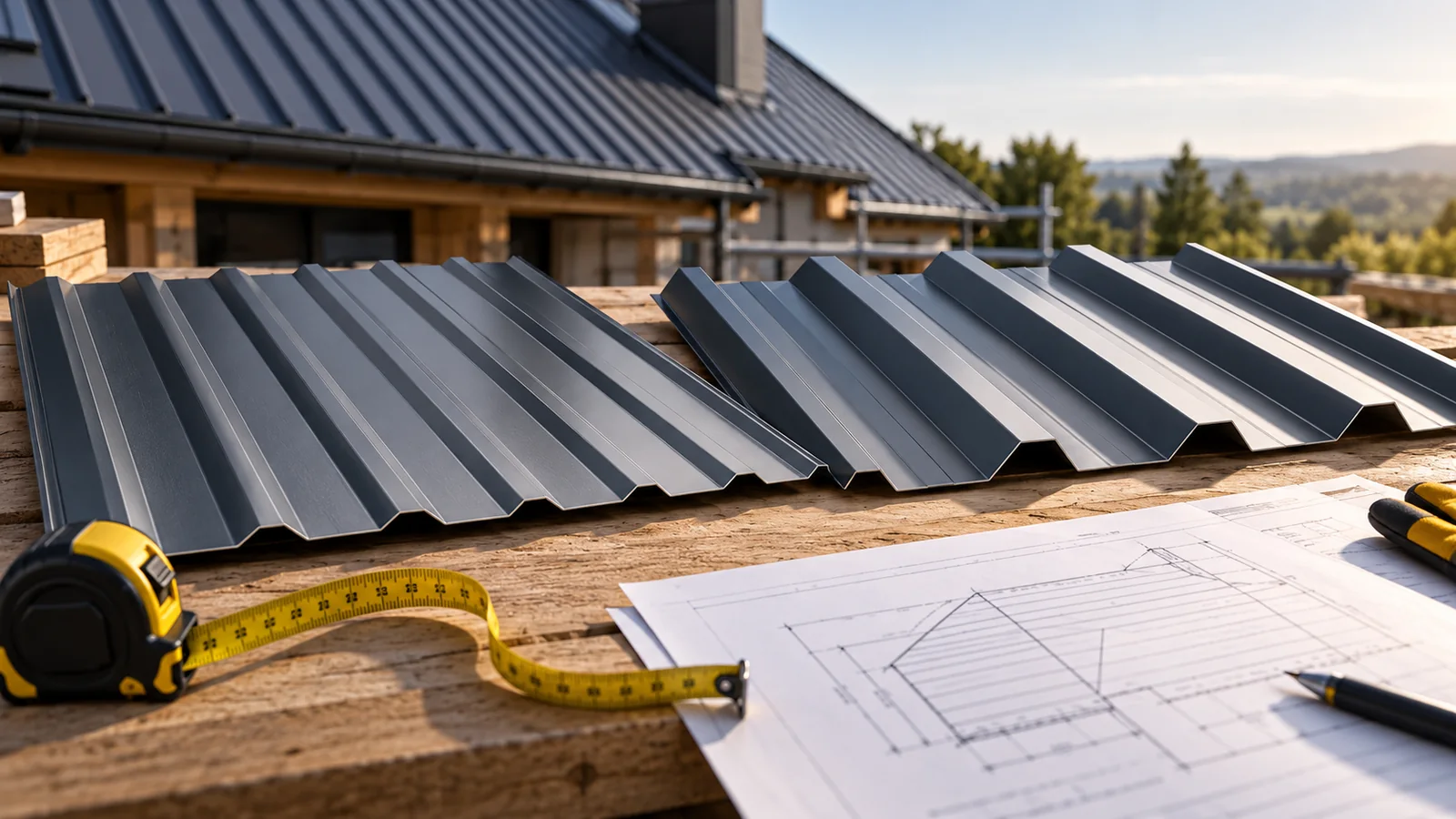
Ordering trapezoidal steel roofing: from roof measurements to sheet sizes
Begin by establishing what function the trapezoidal sheet is to serve: whether it will be external cladding, wall lining, or a load-bearing element of another system. This determines the choice of profile and documentation. Next, check whether the building is heated and where moisture may come from, and plan for rooftop equipment and point loads. Prepare a sketch with dimensions of the roof slopes, eaves, ridges and pitch. In an existing building, check the plane and condition of the supports. Remember that T18 and T35 designations do not define a single geometry – verify height, rib pitch and coverage width.
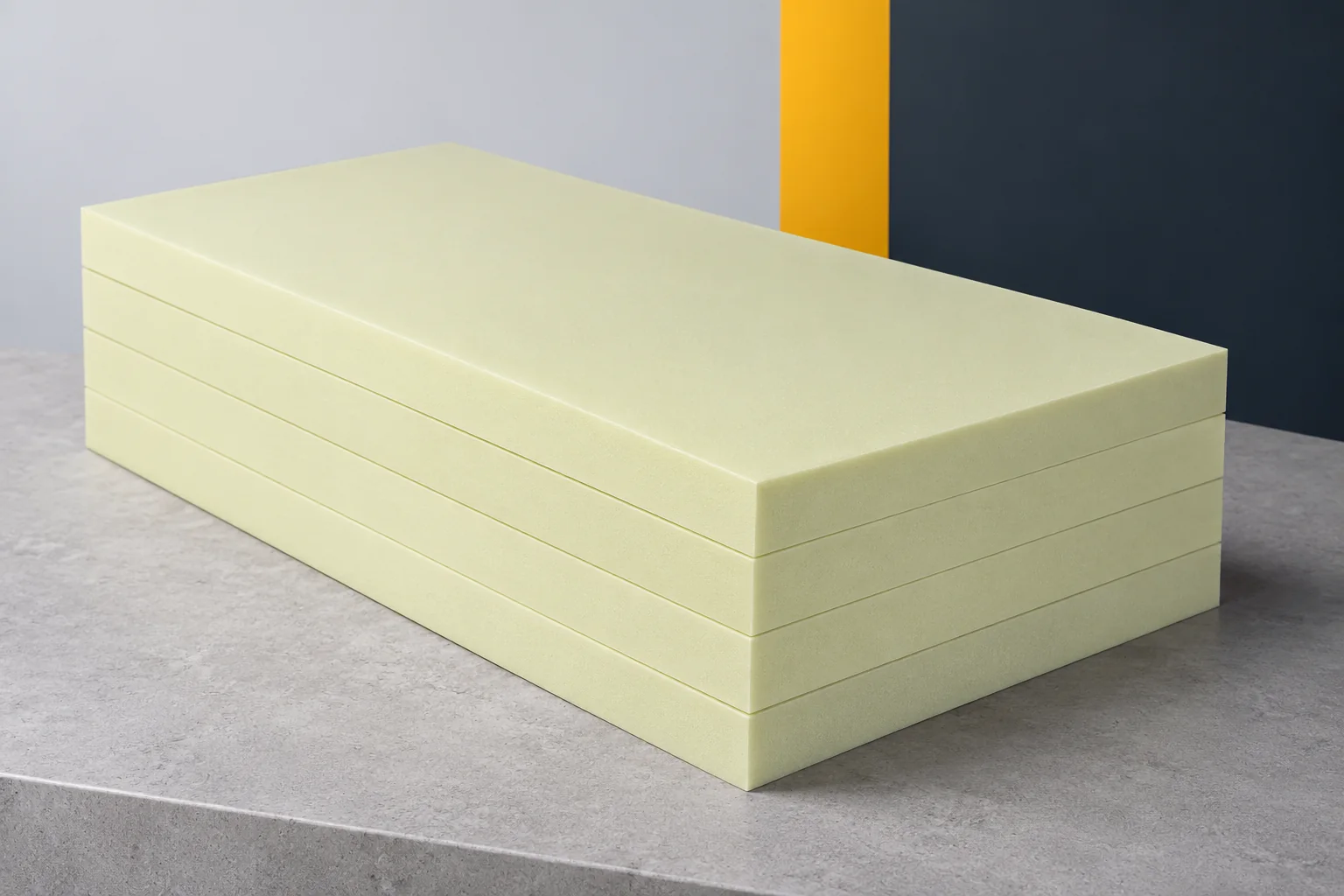
XPS dimensional stability and temperature: understanding the figures
XPS boards make it easier to install insulation of a specified thickness with straight edges. However, this convenience does not mean that the material does not react to temperature and moisture. Extruded polystyrene has declared characteristics regarding dimensional stability and behaviour under specified conditions. It is worth distinguishing these from compressive strength. This makes it possible to select the material for the application and to protect it during storage, installation and subsequent use. In XPS documentation, the designation DS can be found, relating to the assessment of dimensional changes under specified conditions. Alongside the symbol, information appears about the test conditions or the level of the declared characteristic. The entire designation should be read, together with the explanation in the table.
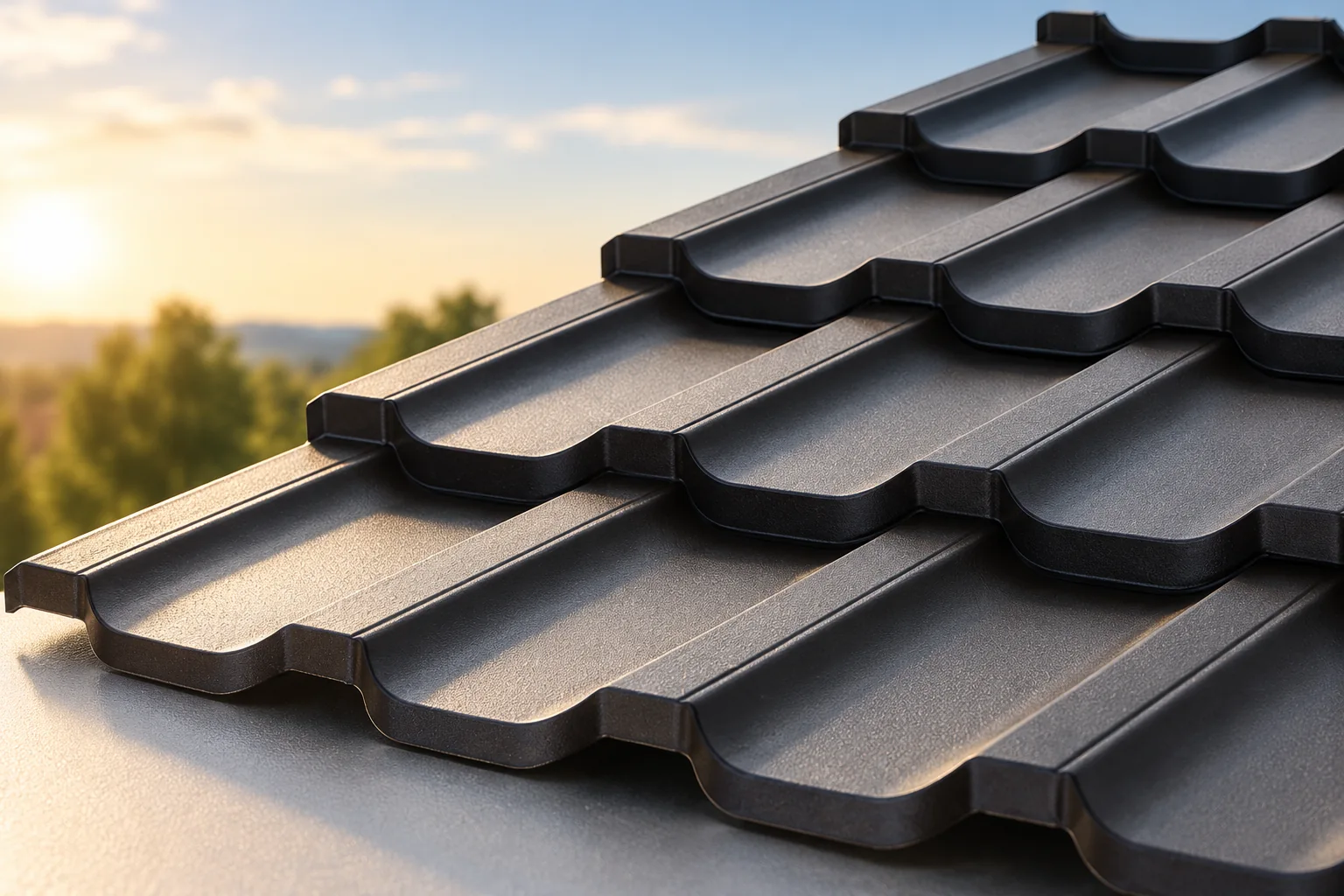
How to choose a coating for tile-effect steel roofing
The choice of a metal roof tile depends on the entire coating system, not just colour or lacquer thickness. A building owner should check how the metallic protection, pre-treatment layers and organic coating work together in the specific environment. This article covers finish types, the influence of surroundings, the meaning of gloss and texture, and the real scope of a warranty. It also stresses that comparing offers requires identical sheet parameters and full technical data. The decision becomes informed when corrosion resistance, installation conditions and subsequent care are weighed together, rather than relying on a trade name.
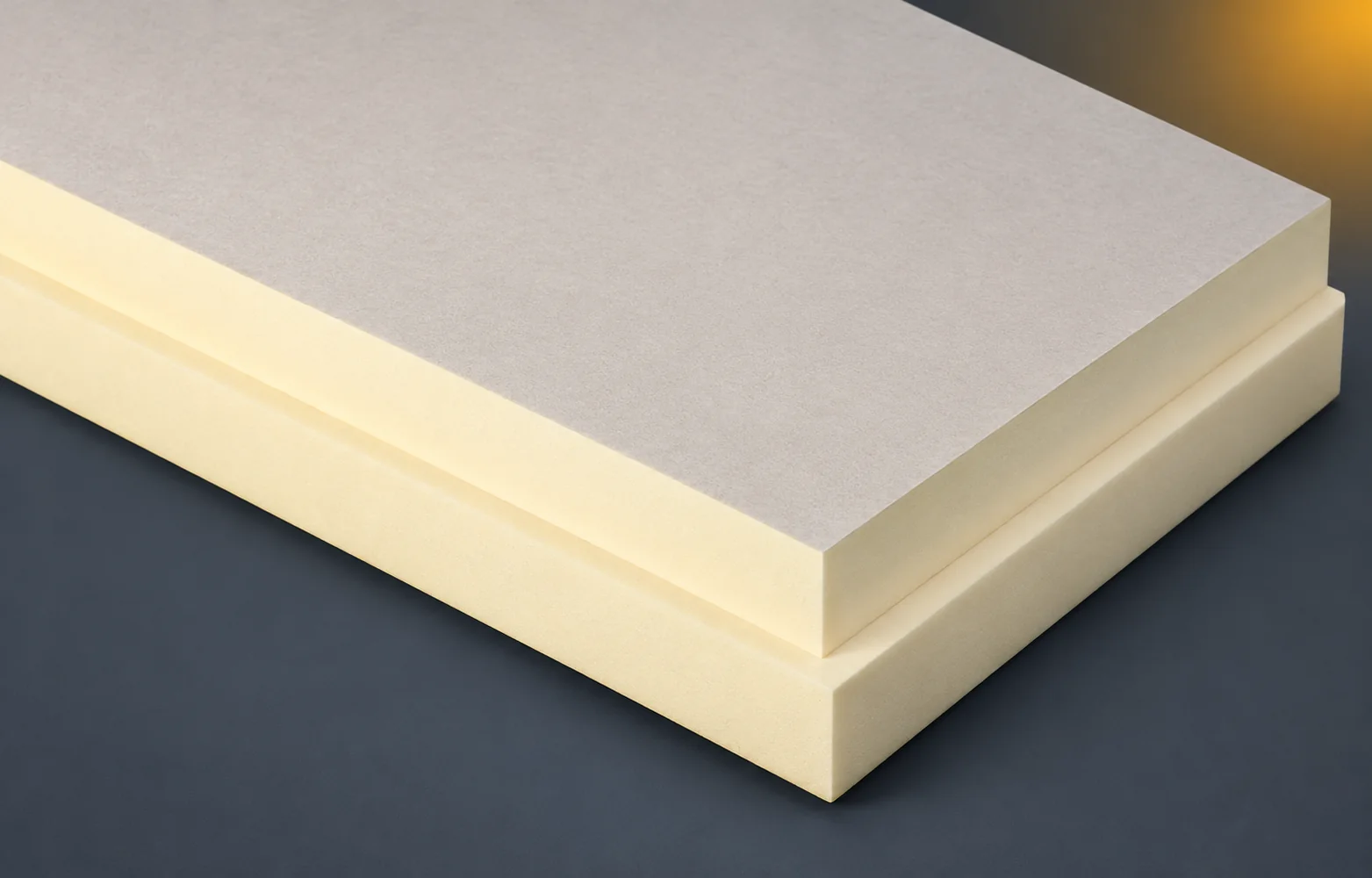
BauderPIR M/MF: selecting properties from current documents
For M/MF, the lambda value must be assigned to a specific thickness. For example, 100 mm should be calculated using the applicable range, not the value for the aluminium-faced board. It is worth recording the mineral facing and the M or MF edge separately, so that a substitute product can be assessed against the full set of relevant characteristics. The BauderPIR M/MF specification should identify the function the roof with the mineral-faced PIR board is to fulfil. The area of the fleece under the waterproofing layer is an element that requires an unambiguous description. The input data should include the thickness of the insulation ordered and the condition of the substrate under the covering, not only the area to be insulated. The coordinating document remains the set of documents for the specific M or MF thickness and the connection to the covering.
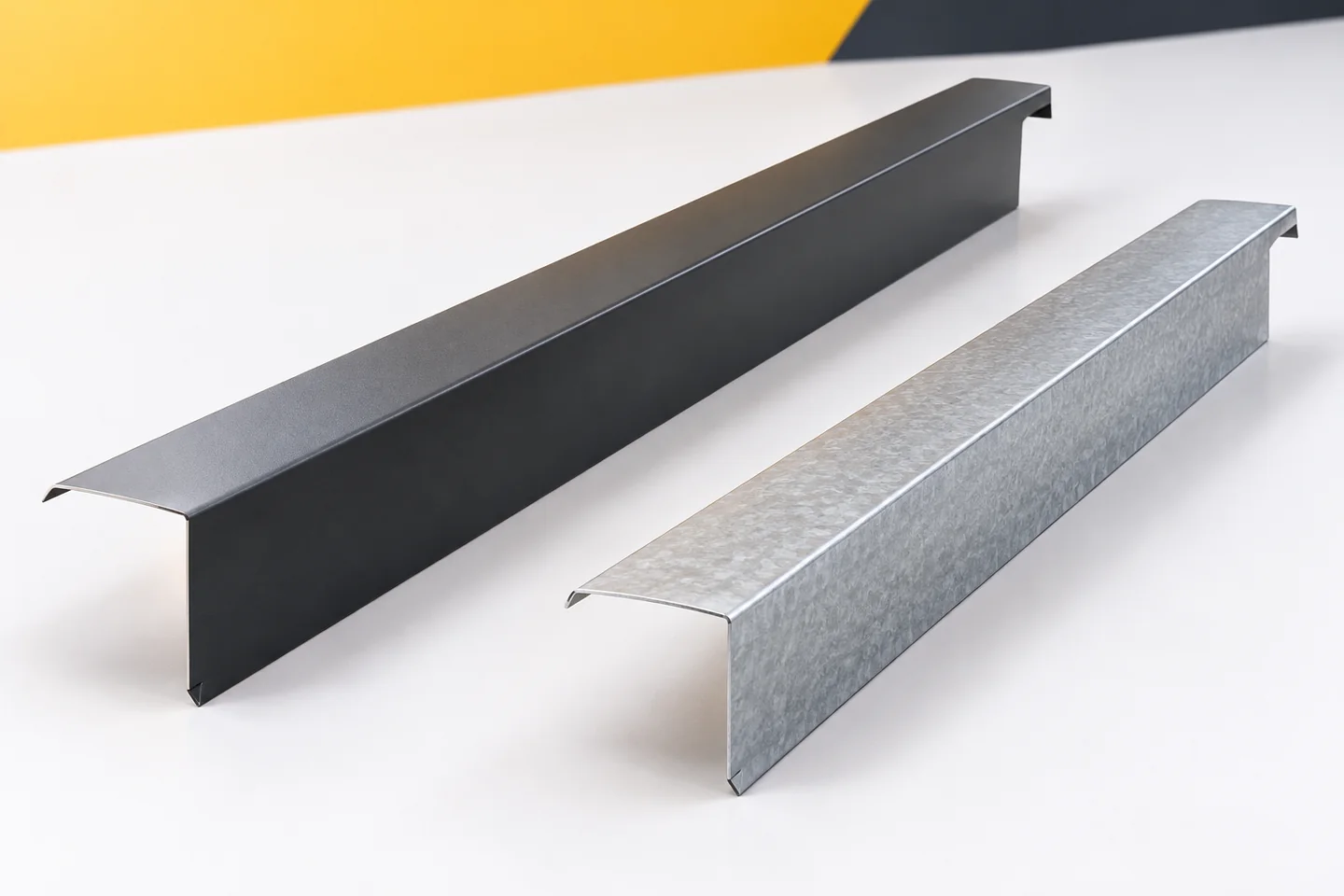
Cleaning and maintaining a complete set of metal flashings
Flashings do not require daily attention, but they should remain part of building inspections. Water, dust and installation damage affect their condition. For maintenance, it is best to start by identifying the material and the location of the soiling. Only then should cleaning or repair be selected. A single random product is not the solution for all surfaces and all details. The material specification is useful for care. Galvanised, aluzinc and coated steel sheets have different surface finishes. A coloured element may also belong to one of several coating variants. It is worth locating the delivery documents before choosing a product for a stubborn stain.
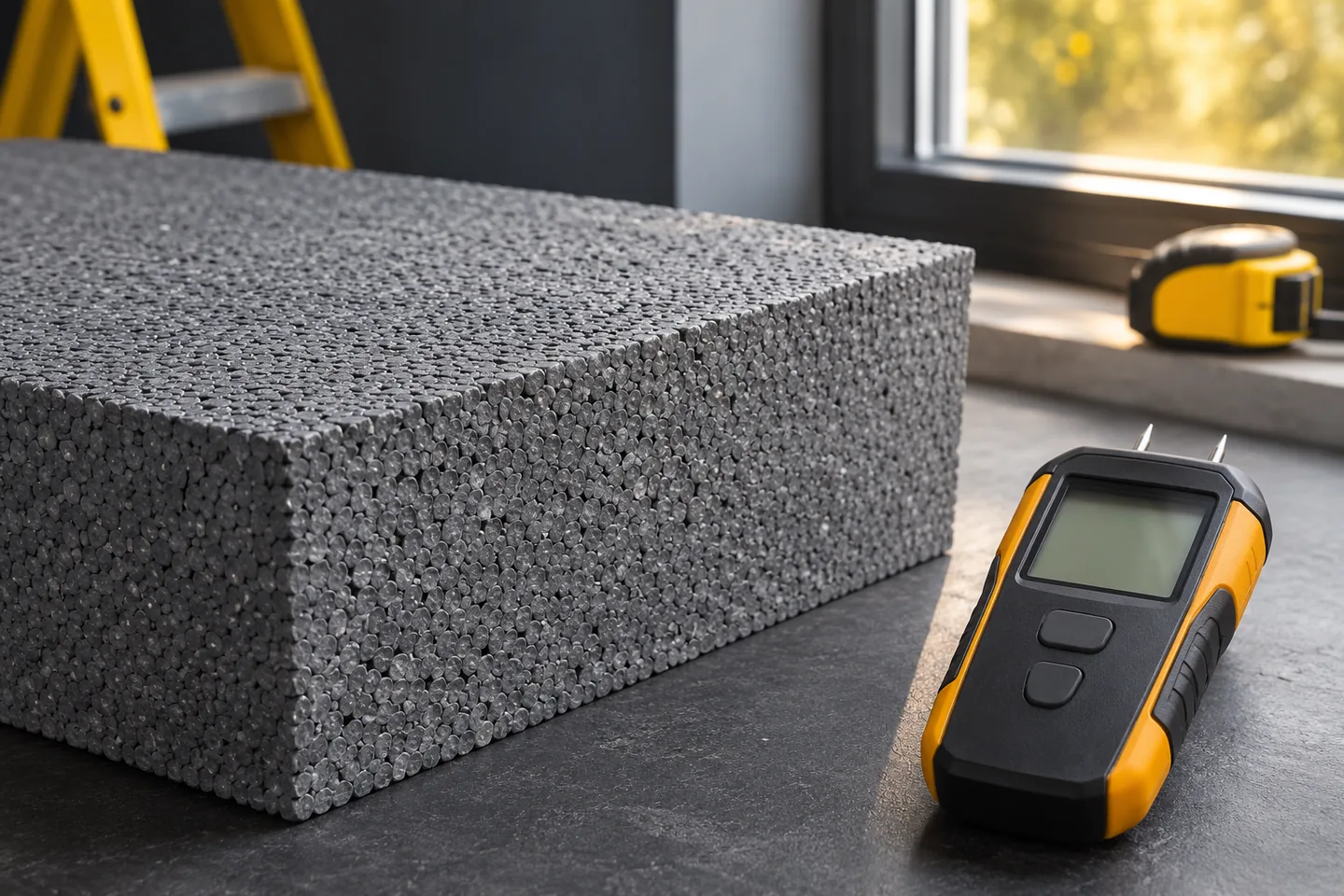
Assessing condensation risk after adding EPS insulation
Adding EPS insulation changes the temperatures and the vapour flow in the building component. Assessing condensation therefore requires knowledge of all the layers and of the conditions inside and outside. It is not enough to point to a place where the dew point supposedly always lies. A distinction must be made between moisture on the surface, moisture inside the assembly and water originating from a leak or from the ground. Condensation on the internal surface is linked to its temperature and to the air humidity. Condensation between the layers concerns the conditions inside the building component. Leaks, capillary rise and construction moisture occur separately. These phenomena can look similar in a photograph, but they require different measures. Not every damp patch is proof of an incorrect EPS thickness.