

Building handbook
The Izoprofil.eu handbook covers roofing, wall cladding and insulation, from reading specifications to preparing an order. Find guidance on sandwich panels, PIR boards, trapezoidal sheets and metal roof tiles. Understand overall sheet width and effective cover width, compare insulation options and plan installation details. The articles also cover renovation, material storage and costs that are easy to overlook. Worked examples explain the calculation method. Check the design and product documentation before making the final selection. Once you have identified the material, prepare the dimensions, quantity and delivery location for a quote.
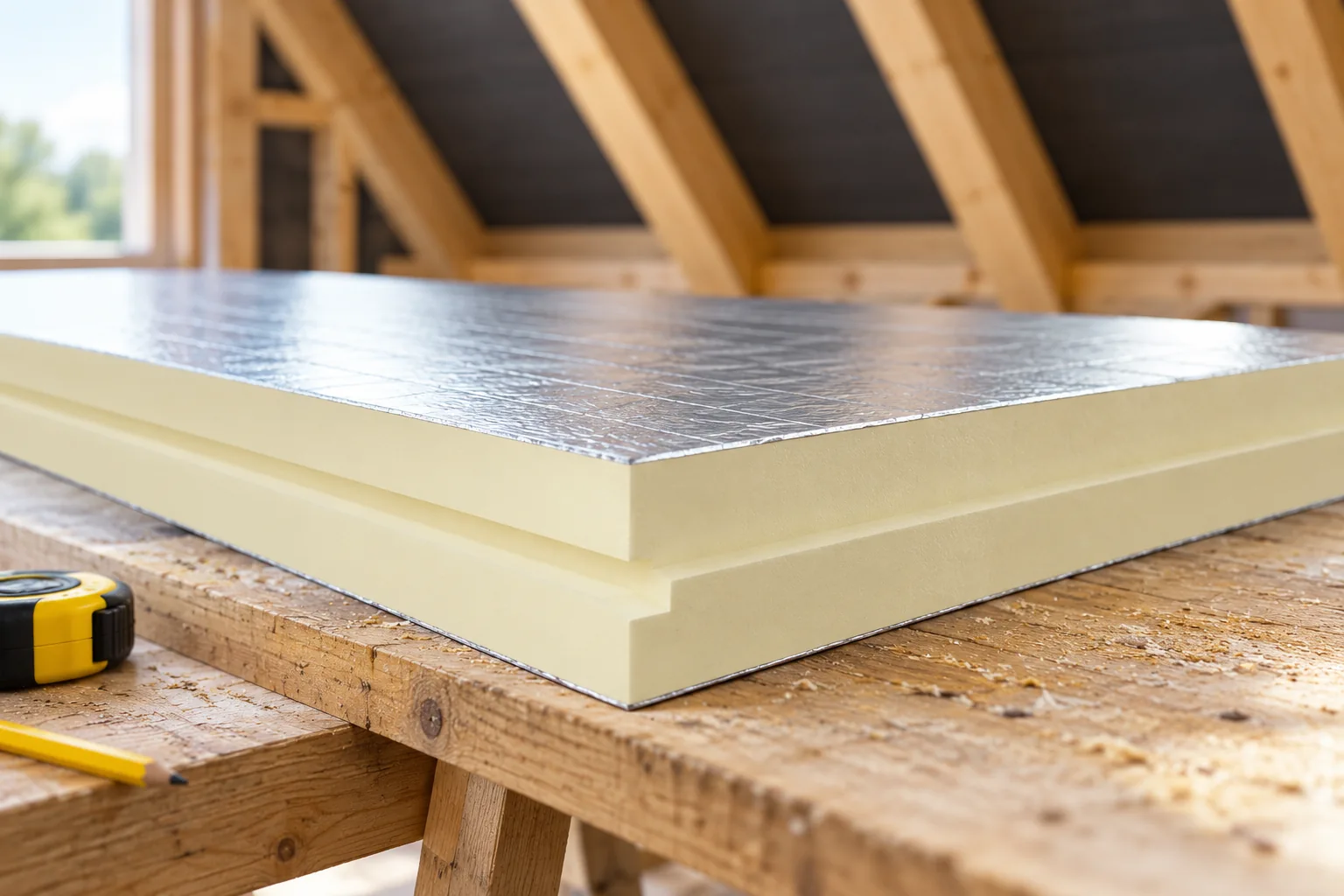
Roof insulation: which decisions come before installation?
First establish where the boundary of the heated part of the building should run, and only then choose the material. This guide sets out the sequence of decisions: insulating the roof slope or the ceiling, calculating thickness rather than guessing, a between-rafter or above-rafter layout, and protection against moisture. It also covers substrate preparation, fixings and details at the eaves, wall plate and service penetrations. Each of these choices involves different trade-offs, so leave design decisions to the designer and, before buying material, review the continuity of the insulation and the airtightness of the joints.
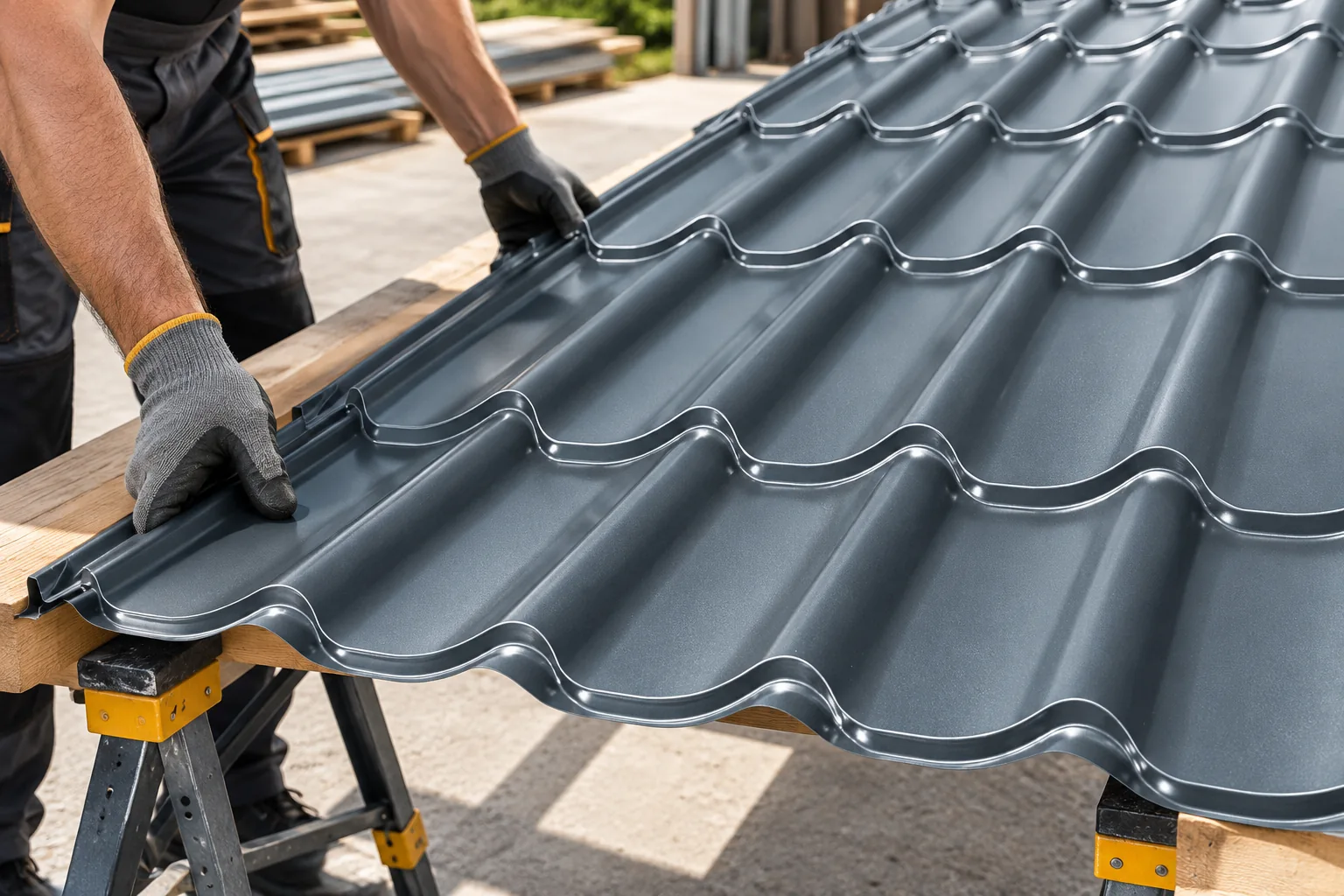
Laying tile-effect metal roofing sheets cut to length
The key decision for cut-to-size metal roofing tiles is whether the order dimensions come from an actual measurement of the roof slopes rather than the house outline alone. Readers should check the lengths, widths and diagonals, the positions of valleys, chimneys and roof windows, and how the covering length depends on eaves and ridge details. A project drawing may not be enough. These findings tie into the choice of profile and the product instructions, so design decisions are left to the designer.
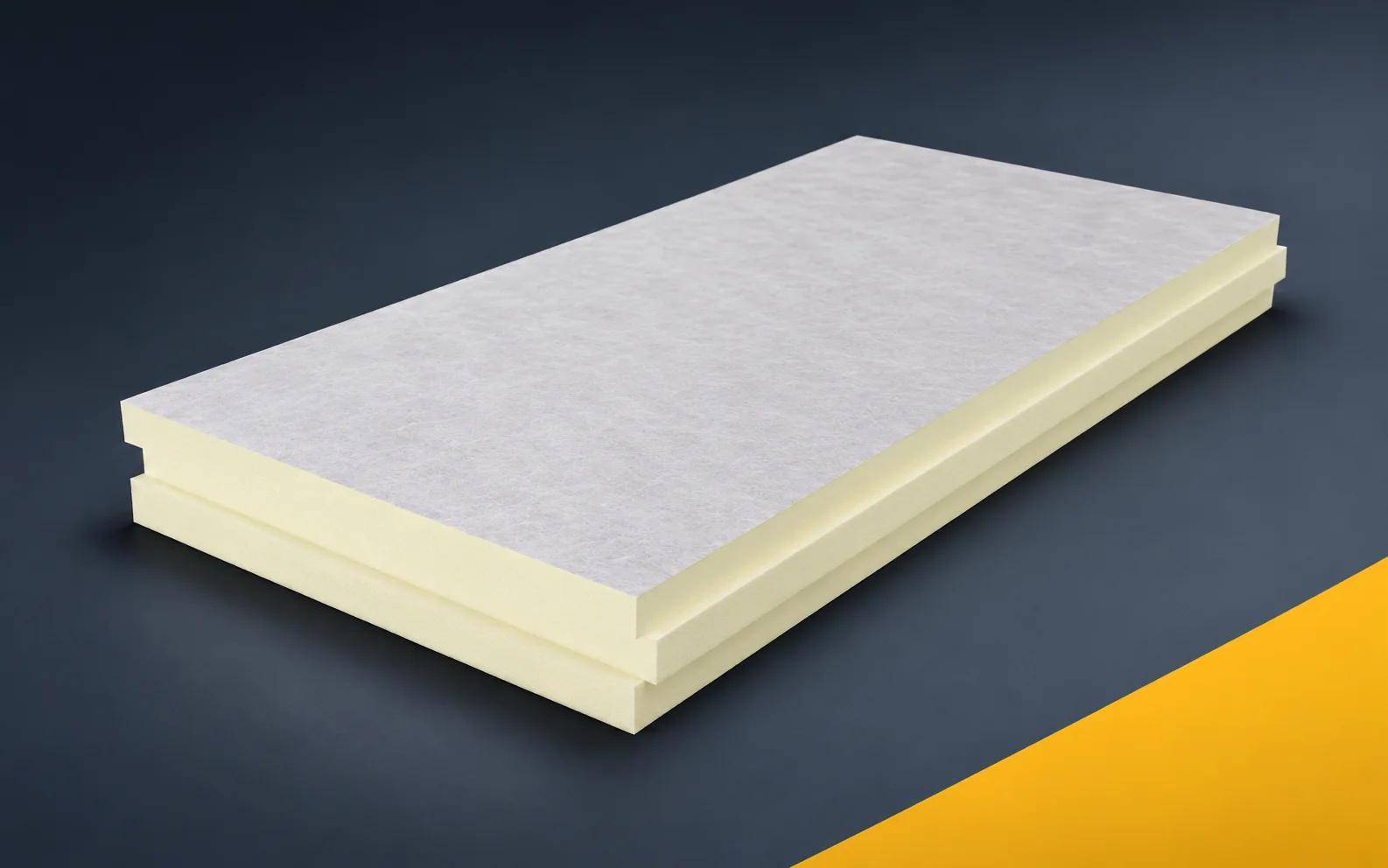
Documenting termPIR WS: lambda and system requirements
The termPIR WS specification should describe more than the PIR core. Lambda changes with thickness, and the facing has a specific structure. Without this information, substituting the product may retain the material name but change characteristics that are important for the entire roof. termPIR WS consists of a PIR core and a double-sided vapour-permeable glass fleece facing. This is a different surface from a vapour-tight aluminium laminate. In the specification for the application described as PIR boards, clearly indicate the flat roof surface on which the board facing is to work together with the covering. The termPIR WS fleece must be linked to the layers and the fixing method of the adopted roof covering, and the adopted variant must be clearly marked in the documentation.
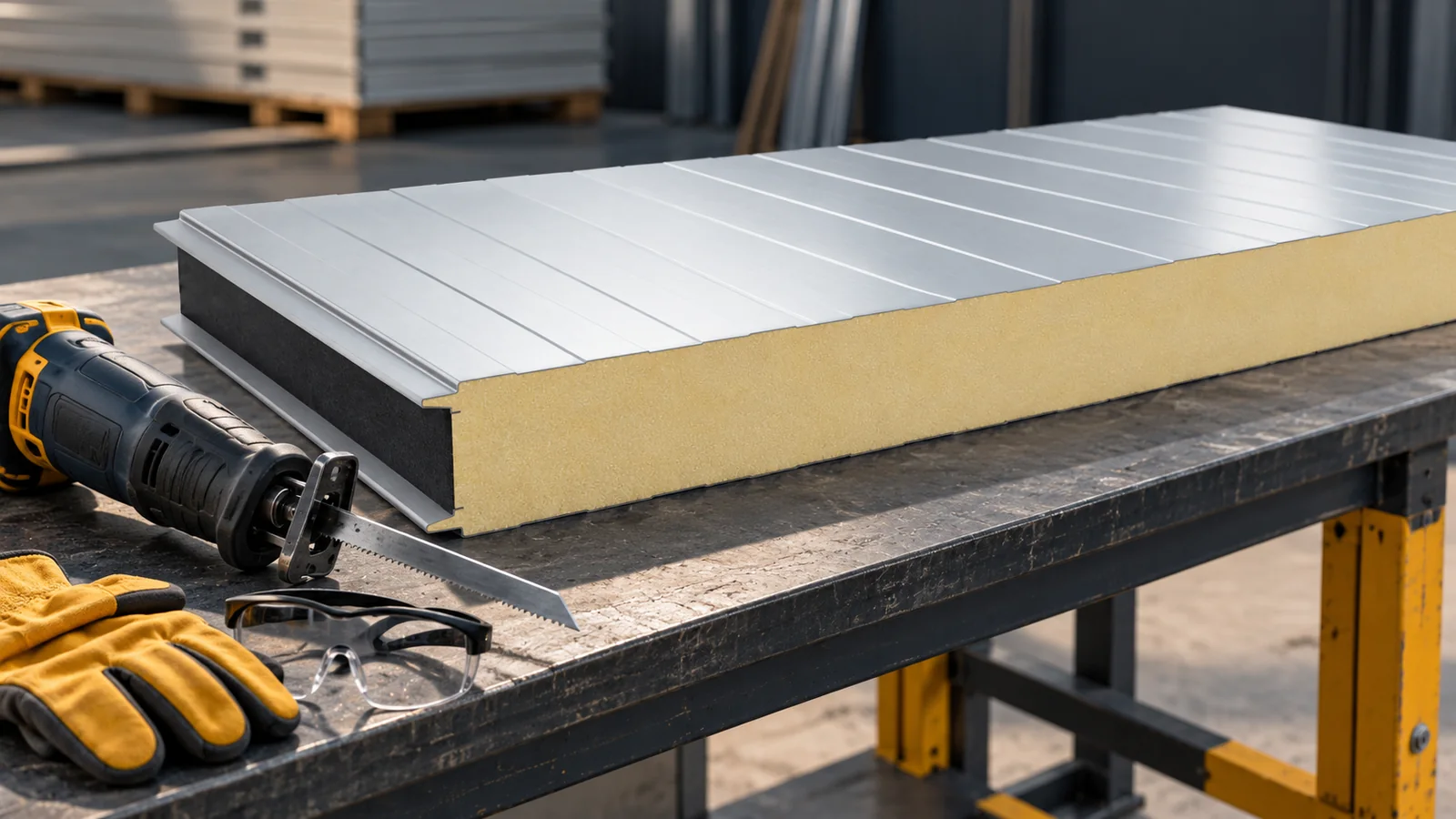
How should you cut insulated panels without damaging the facings?
Insulated panels are cut with tools suited to the metal facings and the core. Edge heating must be limited, the component well supported and swarf removed quickly. An angle grinder with a grinding disc is not the right choice for this task. Before cutting, check the instructions for the chosen system and the finishing detail. A clean cut alone is not enough if the core is left exposed or the sheet's protection is damaged after the work. The facing is thin sheet protected against corrosion. High temperature and sparks can damage its protective layers. Metal particles left on the surface begin to corrode and leave marks on the paint. They are not always visible immediately after the work is finished.
How long does an insulated panel with mineral wool last and what shortens its service life?
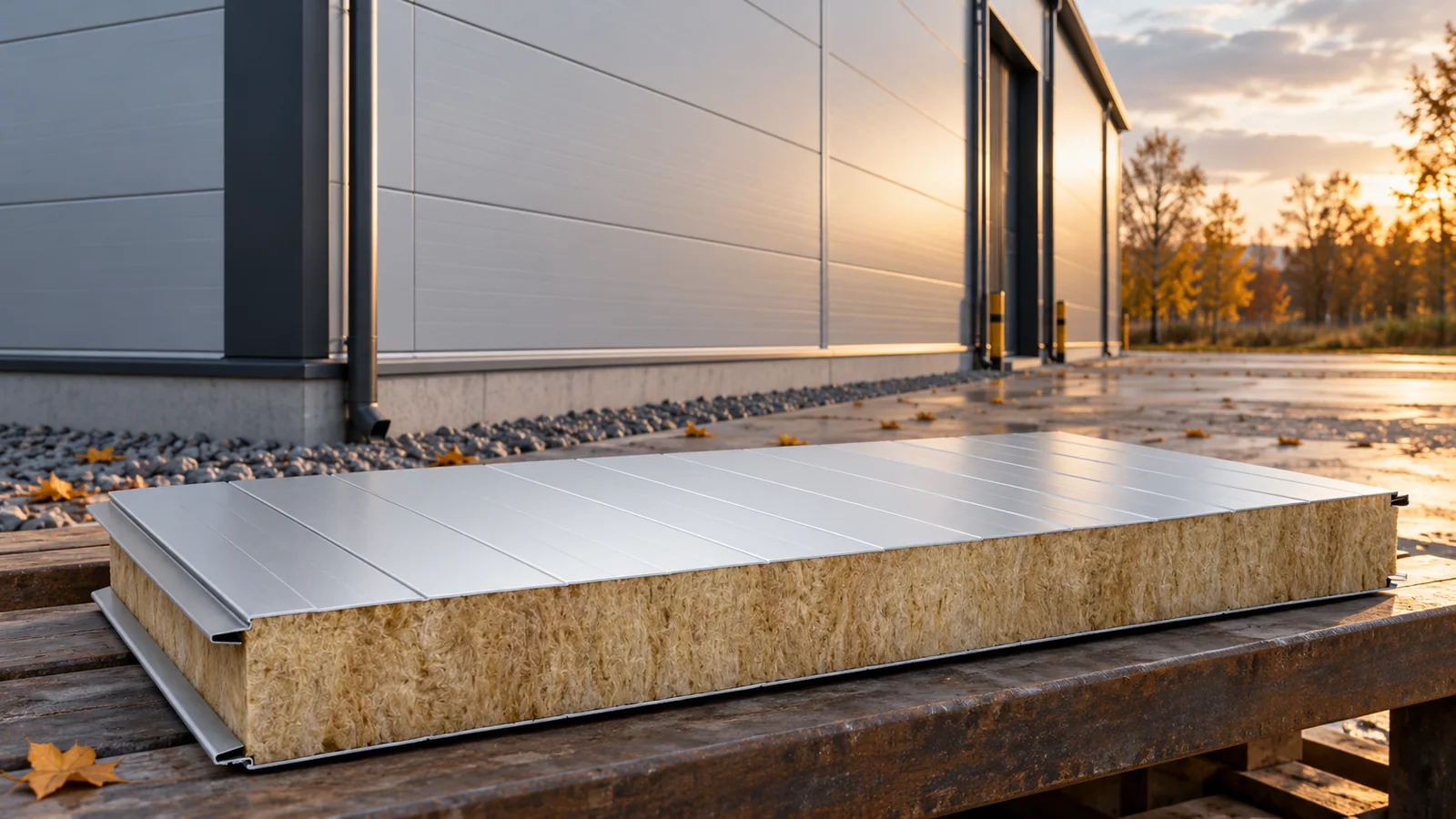
The durability of an insulated panel with mineral wool is determined by the entire element. The facings, their protection, the bond with the core and the tightness of the joints all matter. There is no single number of years that applies to every hall. A dry warehouse performs differently from a building with high humidity or an aggressive atmosphere. Good choice of coating and regular inspections help avoid repairs that seemingly start from a minor scratch. Mineral wool is an important part of the panel, but the enclosure does not consist of insulation alone. Thin facings and the core work together to carry loads. Loss of adhesion, severe denting or corrosion of the sheet can impair the element's performance even when the insulating material is still in place.
What are the advantages and limitations of insulated panels with a mineral wool core?
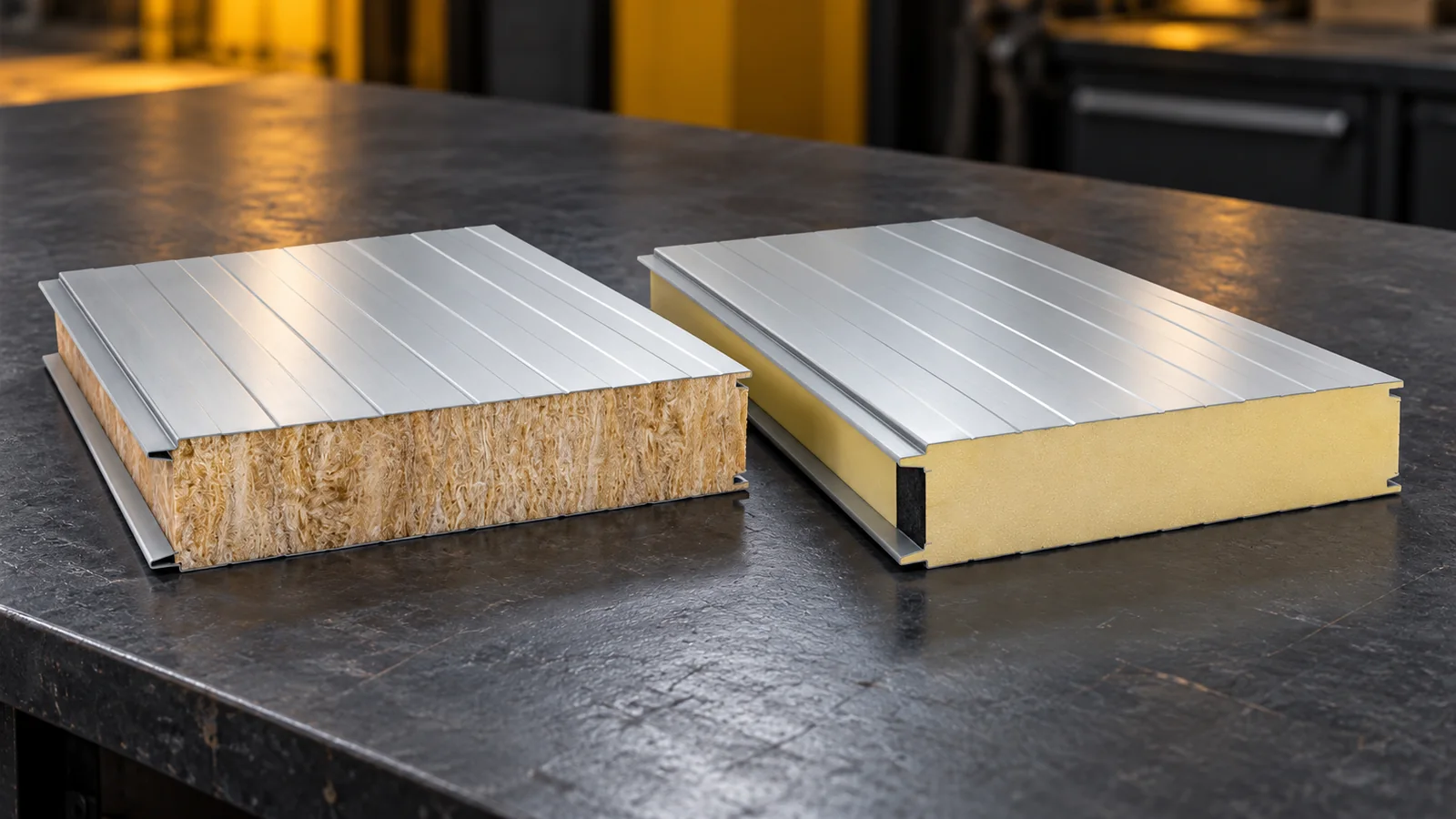
Insulated panels with a mineral wool core combine a finished facing with insulation and allow the building to be closed quickly. Their strong point is the available fire classifications. In selected systems, acoustic insulation is also advantageous. However, greater weight and the thickness needed to achieve a low U-value must be taken into account. Assessing the advantages only makes sense when comparing panels intended for the same wall or the same roof. One panel forms the external surface, the insulation and the internal facing. On a prepared structure, this reduces the number of separate operations. It is not necessary to lay each layer of the building envelope in sequence over the entire surface. However, prior adjustment of lengths and preparation of details are of great importance.