

Building handbook
The Izoprofil.eu handbook covers roofing, wall cladding and insulation, from reading specifications to preparing an order. Find guidance on sandwich panels, PIR boards, trapezoidal sheets and metal roof tiles. Understand overall sheet width and effective cover width, compare insulation options and plan installation details. The articles also cover renovation, material storage and costs that are easy to overlook. Worked examples explain the calculation method. Check the design and product documentation before making the final selection. Once you have identified the material, prepare the dimensions, quantity and delivery location for a quote.
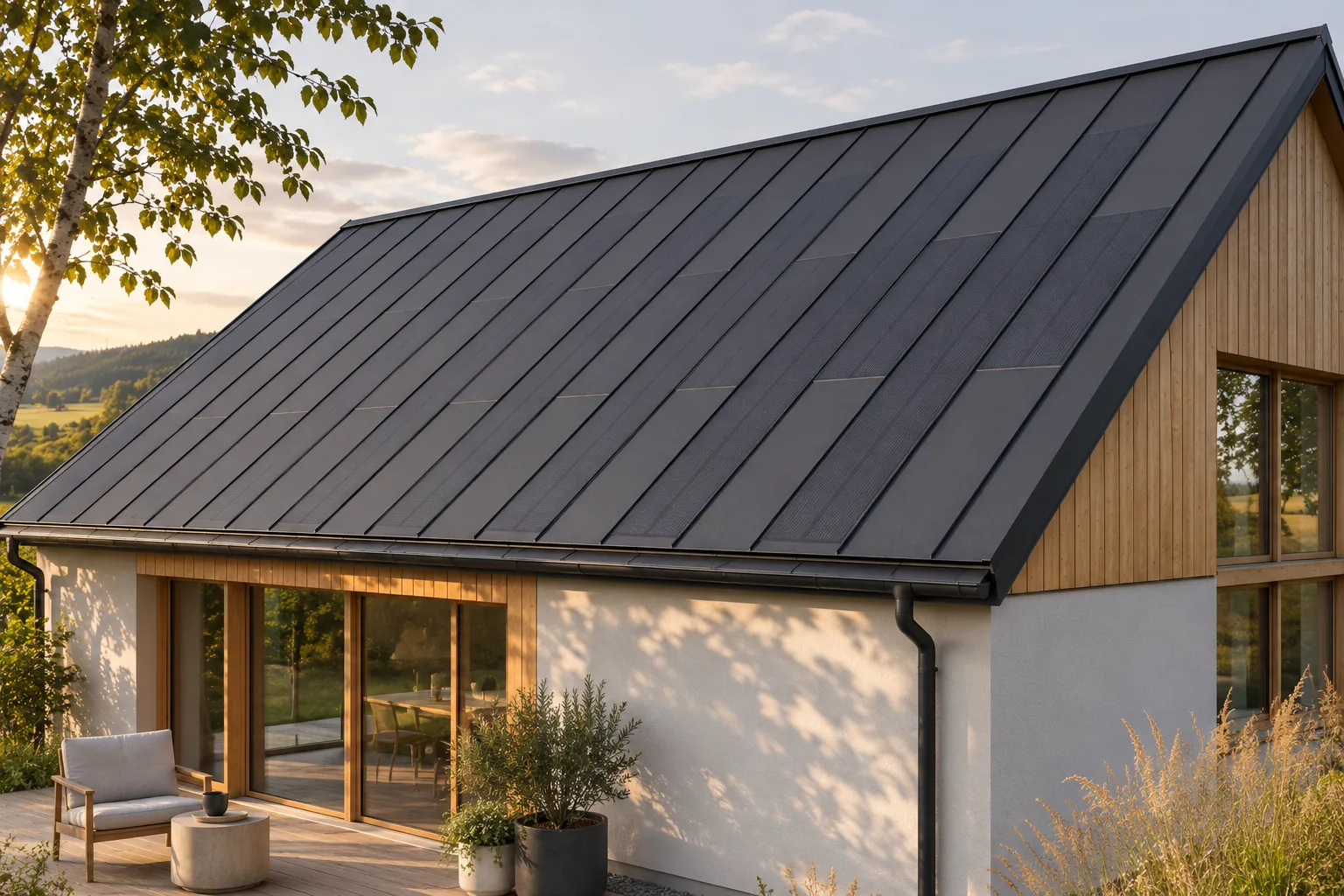
Solar roofing without a visible mounting frame above the roof
A roof that generates electricity without visible mounting above the roof surface is possible by integrating photovoltaics into the covering. In the steel variant, the cells are part of the roof panels, and passive elements complete the composition. There is no need to first cover the entire active area with ordinary material and then place modules above it. However, a complete system of structure, layers and fixings is still required. Integration means joining them properly. There is no separate structure holding standard modules above the finished covering. As a result, the roof surface keeps a more compact outline, and the installation does not look like an additional level. This is a significant benefit on a house with a simple form or on a roof clearly visible from the garden.
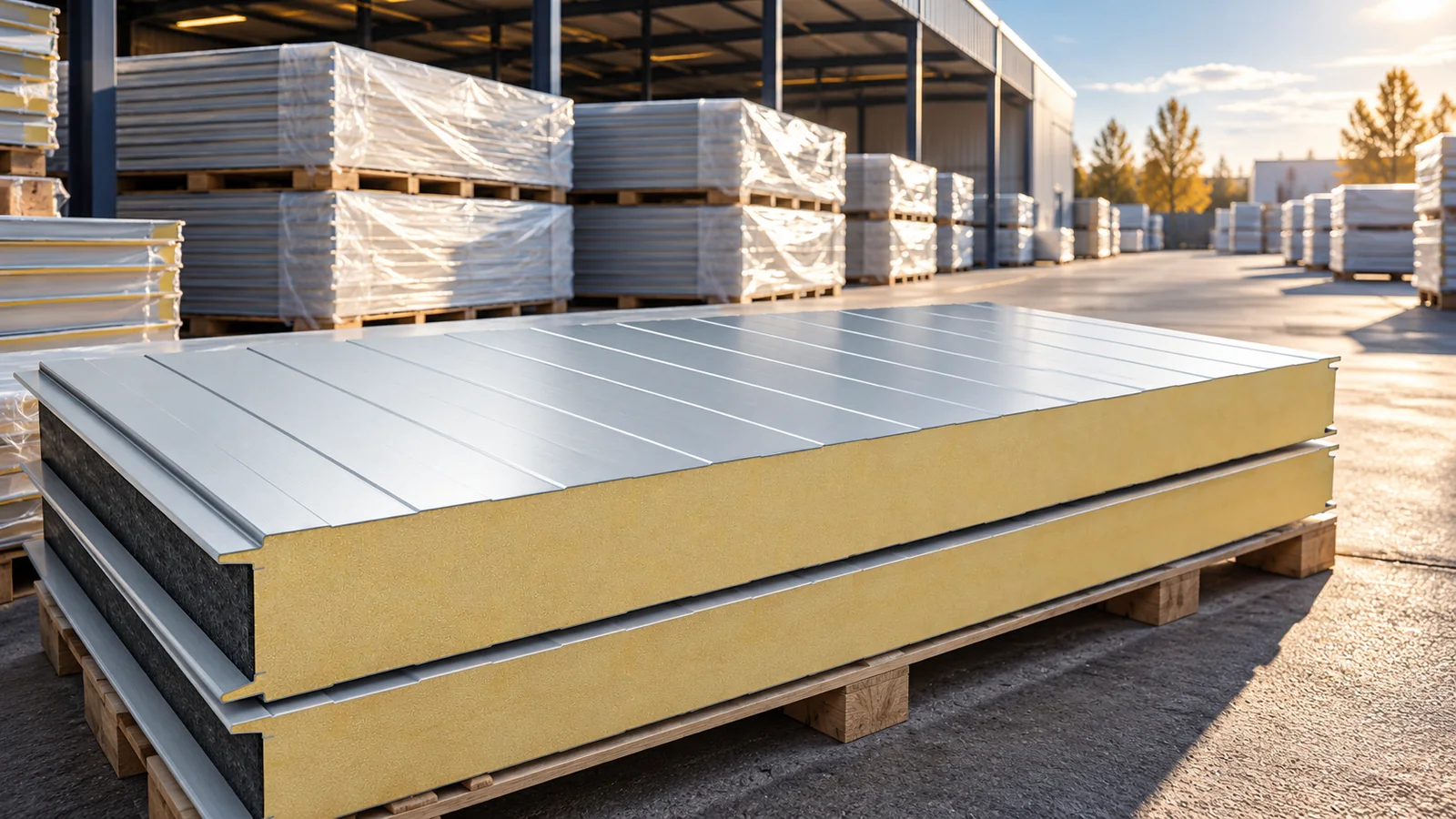
Buying sandwich panels in Lower Silesia: how to assess a supplier
When buying insulated panels in Lower Silesia, distance from the stock is not the only consideration. More important are the material's conformity with the design, the possibility of inspecting the batch and efficient delivery to the site. A local point may facilitate collection, but a more distant supplier can be more advantageous for a full load. Compare the ready delivery of the required panels, not just the seller's address. Start with the type of panel. Determine whether you need wall, roof or cold-storage panels. Specify the thickness, core and required parameters. Include lengths and quantities. The phrase '100 mm panel' alone is not enough. Different panels may have a different joint, cover width, load-bearing capacity and facing thicknesses.
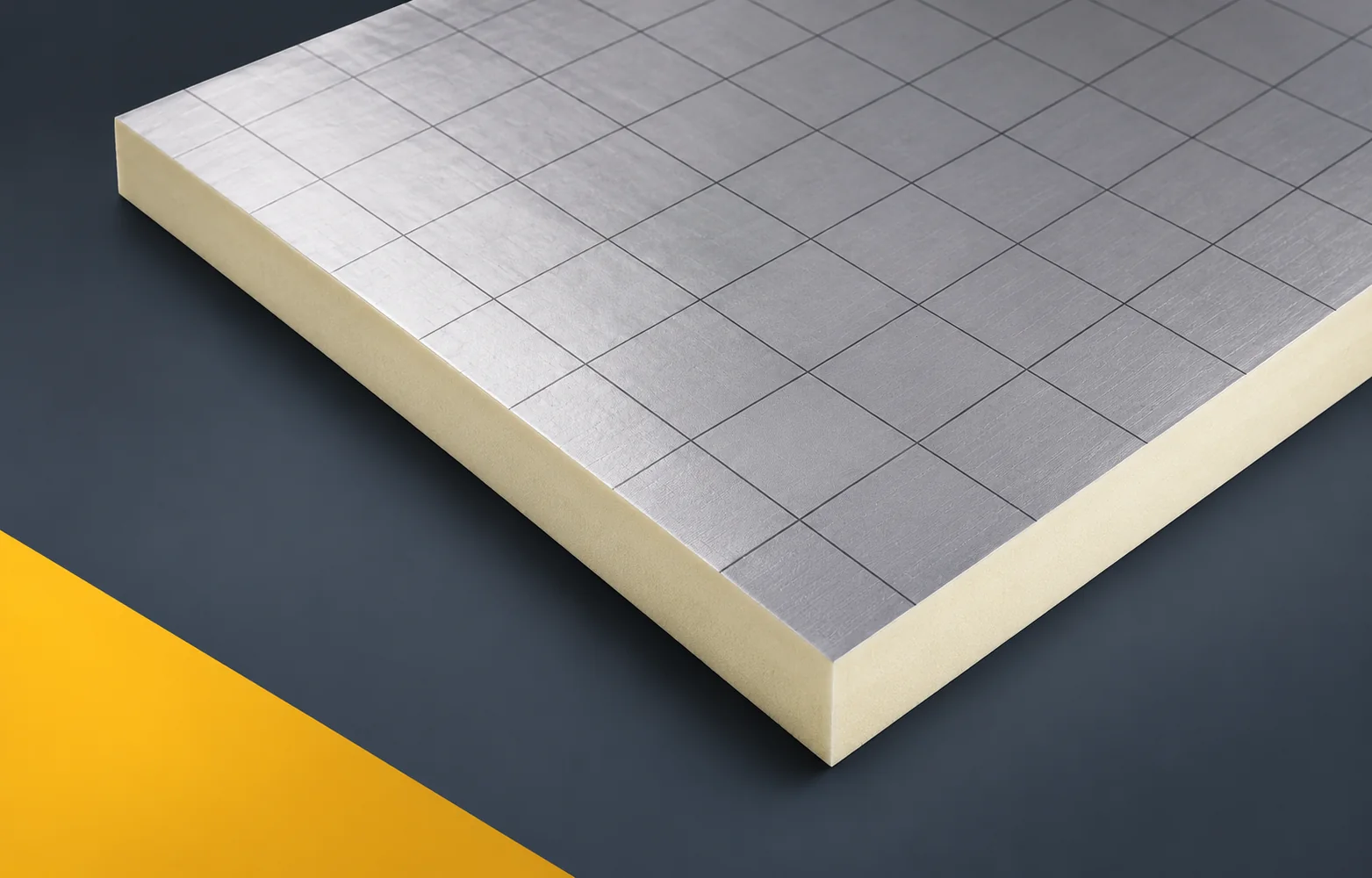
Specifying Eurothane Silver: product data, thickness and edges
The description of Eurothane Silver should refer to the current documentation and a specific thickness. In the latest data sheet, the parameters differ between the thin 20 mm variant and the other boards. Omitting this distinction makes it difficult to verify an offer and a delivery. Recticel Eurothane Silver is a PIR board with a multi-layer gas-tight foil on both sides and a printed grid. The current data sheet specifies it for flat roofs in a classic configuration. In the specification of use described as PIR boards, clearly indicate the classic flat roof, for which mechanical fastening, bonding or ballast is considered. Eurothane Silver must be assigned to a specific mechanically fastened, bonded or ballasted system, and the chosen variant must be clearly marked in the documentation.
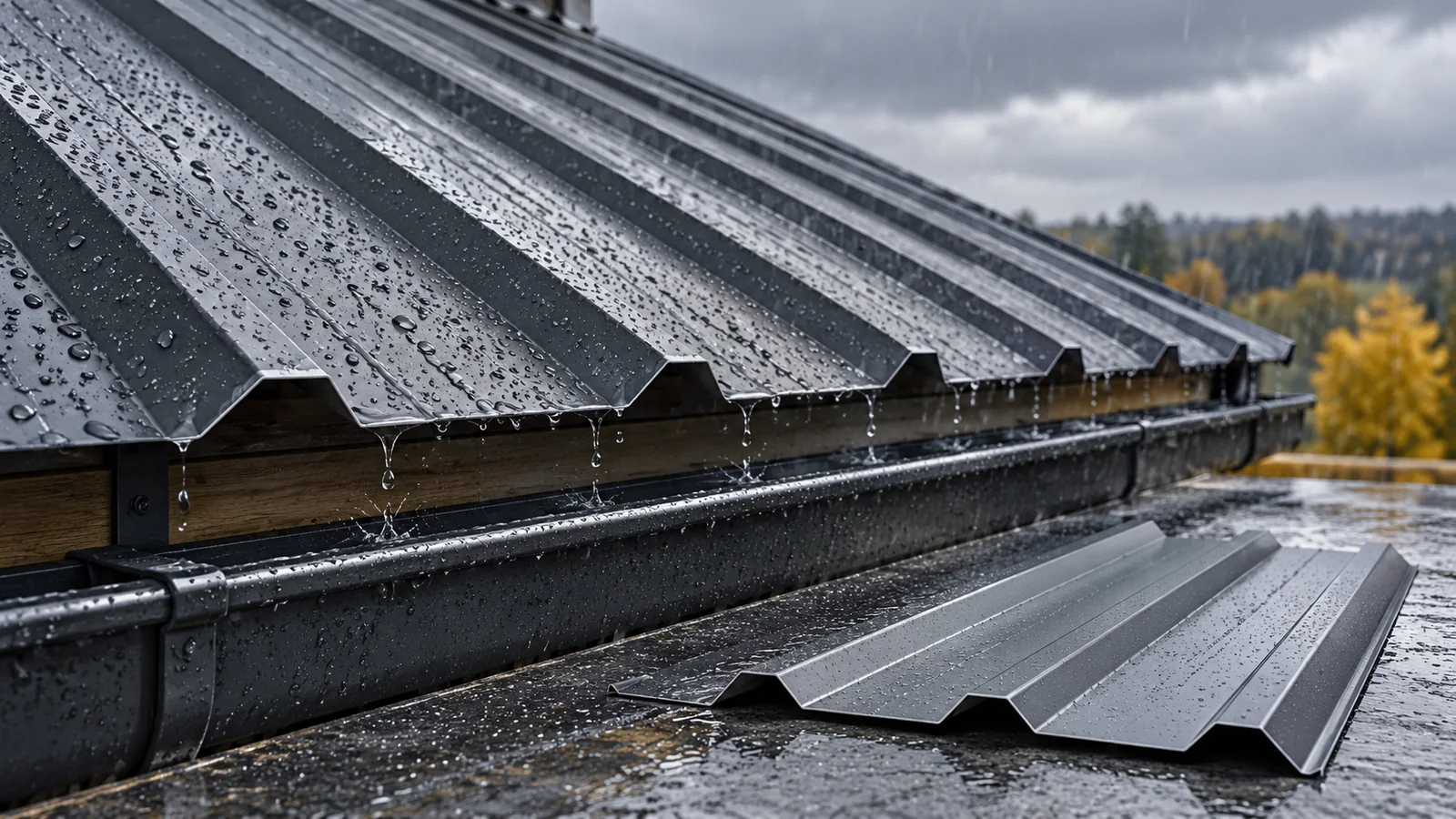
Why does a metal roof leak? Eight places to check
A leak under a metal roof can come from a loose joint, damaged flashing or condensation of water vapour. The location of the stain does not always indicate where the water enters. First establish when the moisture appears. Then check the eight areas described below. This order limits random repairs and helps distinguish a covering fault from a problem with ventilation or the layers beneath it. Note the weather and the time when the moisture occurs. A leak during rain from a particular direction may indicate a faulty lap or flashing. Droplets over a large area on the underside of the sheet metal after a cool night suggest condensation. These are clues, not a certain diagnosis.
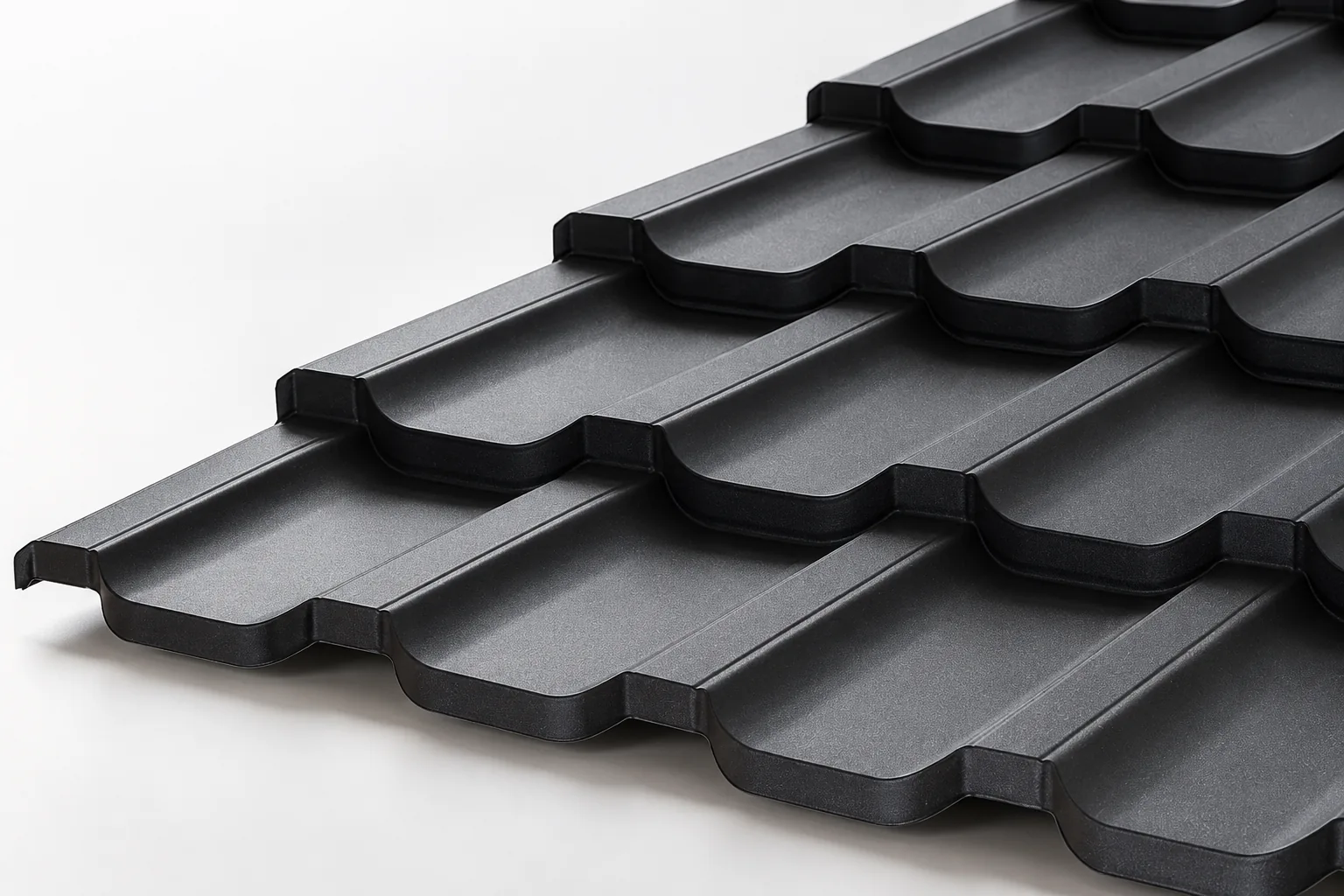
What does the protective coating on a steel roofing sheet do?
The protective layer on steel roof sheeting limits the environment's impact on the steel core, but it does not replace the required amount of steel. When choosing a covering, two decisions must therefore be kept separate: the profile and its resulting geometry, and the protection system on both sides of the sheet. It is worth checking which metallic and organic coatings are used, how their mass is declared, and whether the underside protection suits the building's conditions. Colour or coating name alone does not determine durability – continuity of the surface and how the roof is used are what count.
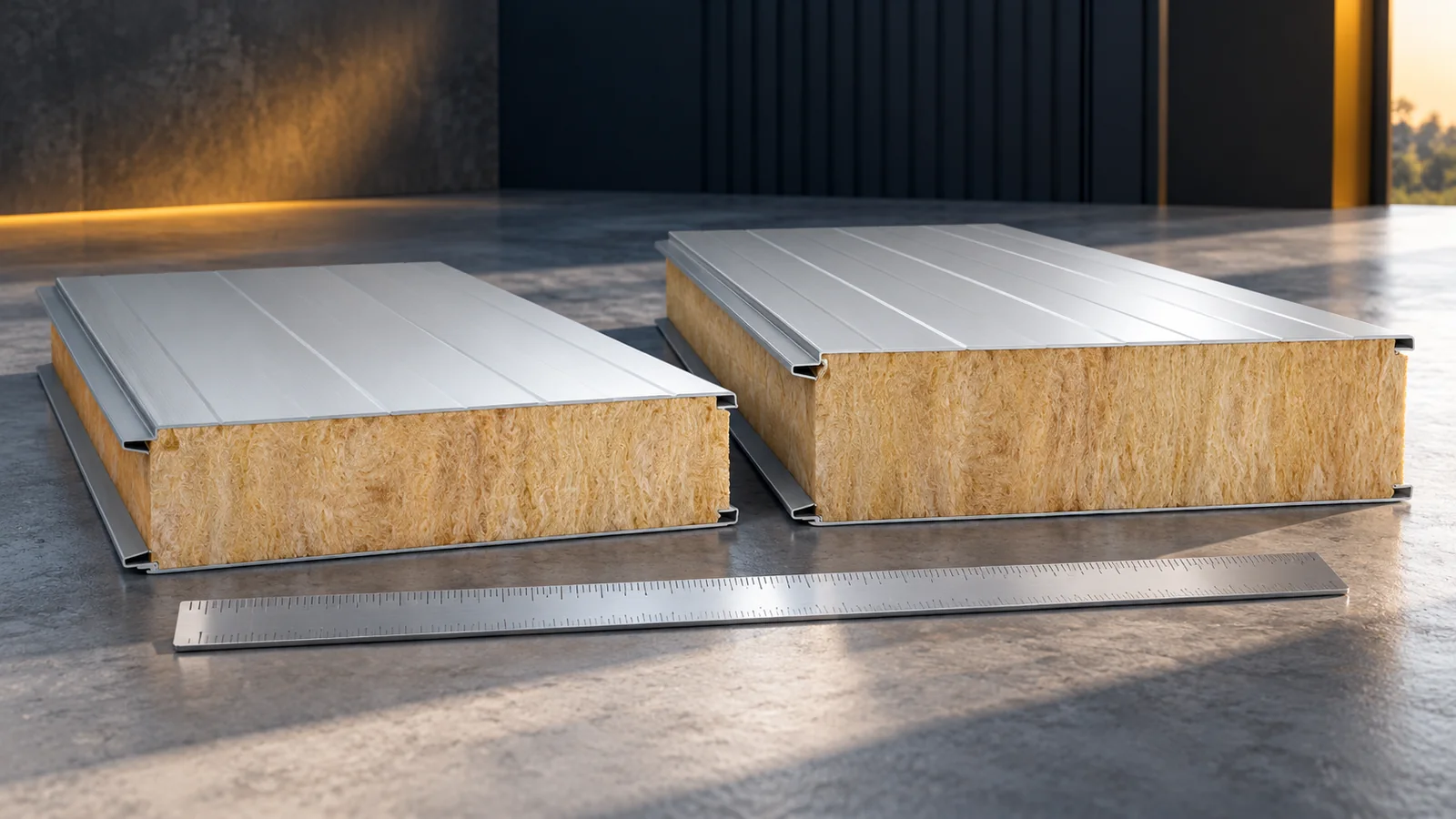
When is it worth choosing a 150 or 200 mm insulated wall panel?
150 or 200 mm wall panels are worth considering when the project requires better thermal insulation or a specific fire resistance. However, a large thickness alone does not confirm suitability. The type of core, the joint, the facings and the method of support all matter. In the case of mineral wool, the weight of long elements must also be taken into account. The choice between 150 and 200 mm should follow from calculations and the cost of the complete wall. With the same material, a greater thickness increases the thermal resistance of the layer. In one mineral wool wall panel, the 150 mm variant has Uc 0.27 W/(m²·K), while the 200 mm achieves 0.20. This is a noticeable difference, but it applies to a specific system.