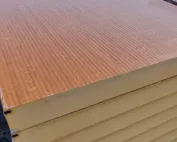
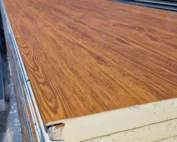
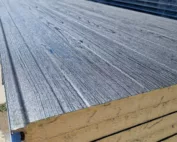
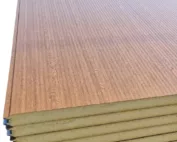
When is it worth choosing a 150 or 200 mm insulated wall panel?
Insulated panels
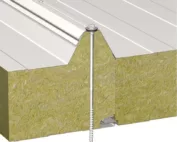
150 or 200 mm wall panels are worth considering when the project requires better thermal insulation or a specific fire resistance. However, a large thickness alone does not confirm suitability. The type of core, the joint, the facings and the method of support all matter. In the case of mineral wool, the weight of long elements must also be taken into account. The choice between 150 and 200 mm should follow from calculations and the cost of the complete wall. With the same material, a greater thickness increases the thermal resistance of the layer. In one mineral wool wall panel, the 150 mm variant has Uc 0.27 W/(m²·K), while the 200 mm achieves 0.20. This is a noticeable difference, but it applies to a specific system.
What does an additional 50 mm of core change?
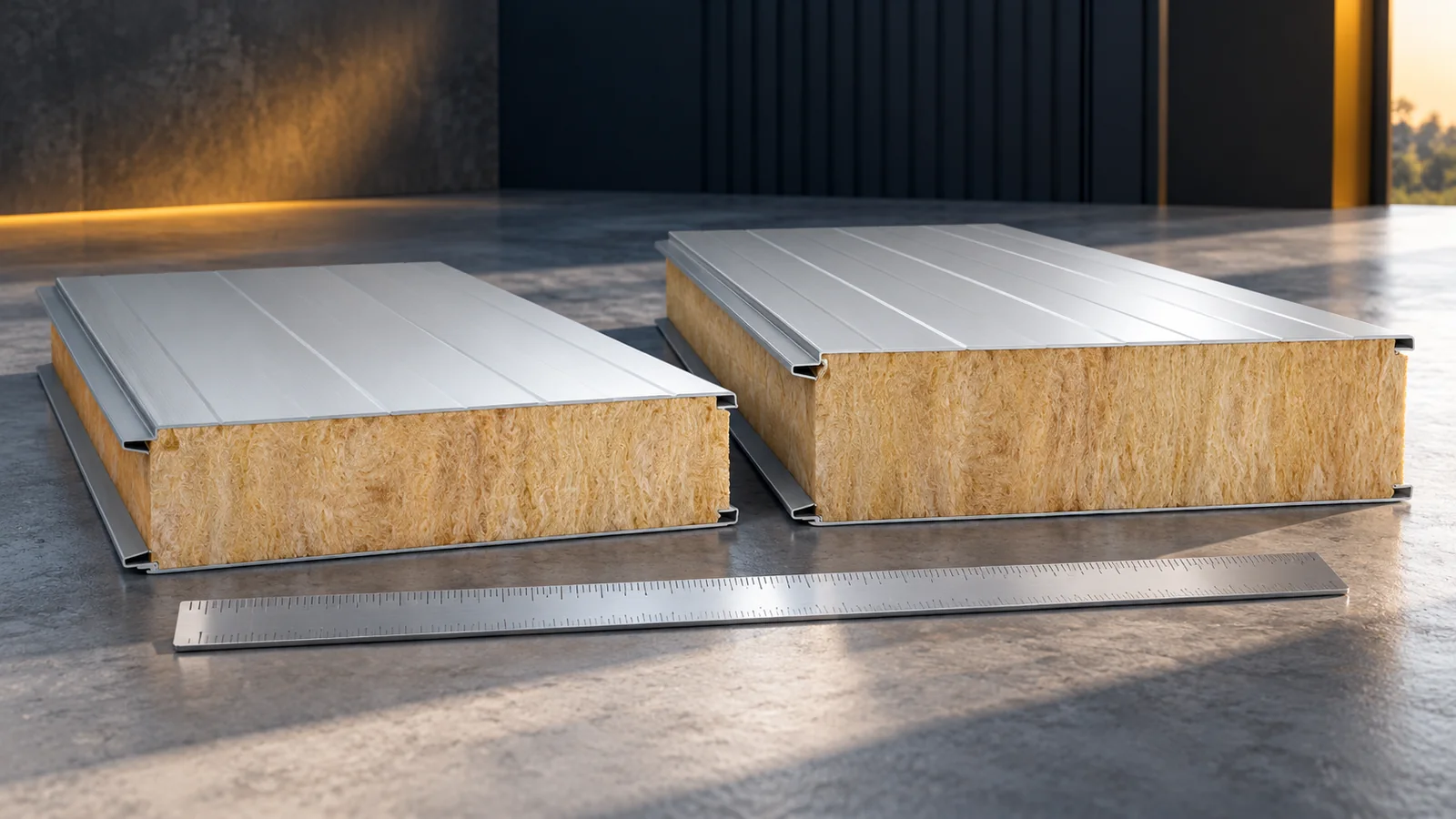
With the same material, a greater thickness increases the thermal resistance of the layer. In one insulated wall panel with a mineral wool core, the 150 mm variant has a Uc of 0.27 W/(m²·K), while the 200 mm variant achieves 0.20. This is a noticeable difference, but it applies to a specific system. A different core or joint may give different results. The relevant table must be checked before ordering.
The change also affects the building geometry. Suitable flashings, longer fasteners and matched reveals are required. When replacing old cladding, the position of windows, gates and connections to the roof must be assessed. The additional centimetres must not appear unexpectedly only during installation. The thickness must be coordinated with the details of the entire façade.
When might 150 mm be sufficient?
The 150 mm variant may be suitable if its parameters meet the assumptions for a specific building envelope. This applies to both heat and fire requirements as well as loads. There is no single answer for every warehouse. A building heated continuously and a room maintained at a lower temperature may require different solutions.
It is worth comparing the expected heat losses with the cost of increasing the thickness. The wall area, heating time and the way the facility is used are significant. When most losses are caused by open gates, changing the panel alone will not solve the whole problem. This does not mean that insulation can be omitted. It is about assessing where the additional expense gives a real benefit.
When will 200 mm be justified?
A thicker panel can help achieve a lower U-value or meet the requirements of a specific fire solution. It is also a variant to consider for a building used over many years at a constant temperature. However, it should not automatically be called “maximum insulation”. The result is also determined by thermal bridges, connections and the other parts of the building envelope.
Check whether 200 mm is needed for every wall or results from the selected system. Various solutions can be considered in the design, but combining them requires compatible details. A thick panel will not fix a leaky gate or a poorly executed plinth. Its advantages will only be realised when the entire assembly maintains continuity of insulation and adequate air tightness.

Does a thicker panel always have a higher fire class?
Within a specific series, an increase in thickness may allow a higher fire resistance to be achieved. However, this is not a simple rule covering all products. The classification may depend on the laying direction, span, seals and method of fixing. The exact variant must be checked, not just the number of millimetres in the name.
EI classification must not be transferred between products from different systems. The reaction to fire of the panel and the fire resistance of the wall are also separate parameters. For a separating partition of a defined zone, the connections to the structure and the service penetrations are what matter. A greater amount of wool does not compensate for a detail that does not comply with the documentation required for the class.
How do weight and installation change?
In an example system with mineral wool and 0.5/0.5 mm facings, the 150 mm panel weighs 23.1 kg/m² and the 200 mm panel 28.1 kg/m². For an element with an area of 6 m², the difference is approximately 30 kg. This calculation applies to the stated parameters. For greater lengths, the method of supporting the element during lifting must also be taken into account.
Check the load capacity, the spacing of the lifting points and the working position of the equipment. Thicker panels can change the size of the packs and the organisation of the delivery. The choice of substructure requires verification of the weight and the wind actions. Do not assume that a greater thickness alone allows some of the supports to be removed. The possible span results from the relevant table and from the fire and thermal limits.
How to choose between mineral wool and PIR?
If a low U-value at a limited thickness is the priority, compare the appropriate PIR panel. It can achieve a similar level of insulation with a smaller cross-section. If fire requirements justify mineral wool, the core should not be swapped merely to save space. Complete solutions in accordance with the design are compared, not a single material property.
Before deciding, order two itemised comparisons covering panels, accessories, transport and installation. Check the parameters adopted in each version. Take into account the details at openings and the intended use of the hall. A good answer to the question “150 or 200 mm” results from such a comparison. A thicker panel alone is not the goal; the goal is a wall that meets the requirements and remains reasonable in execution.
7 branches. Materials closer to your project.