How long does tile-effect metal roofing last and what causes it to wear?
Renovation and maintenance
How long a metal roofing tile lasts depends on its protective layers, quality of workmanship and service conditions, not on the age of the covering alone. Before deciding to replace it, check the condition of the coating, the protection of the steel and the tightness of joints and details, especially at the chimney. A change of shade does not necessarily mean damage, just as a good appearance from the street does not guarantee tightness. Compare the documentation with inspection findings and assess whether corrosion, deformation or dampness of the substrate has appeared.
Do the appearance and performance of a roof age at the same rate?
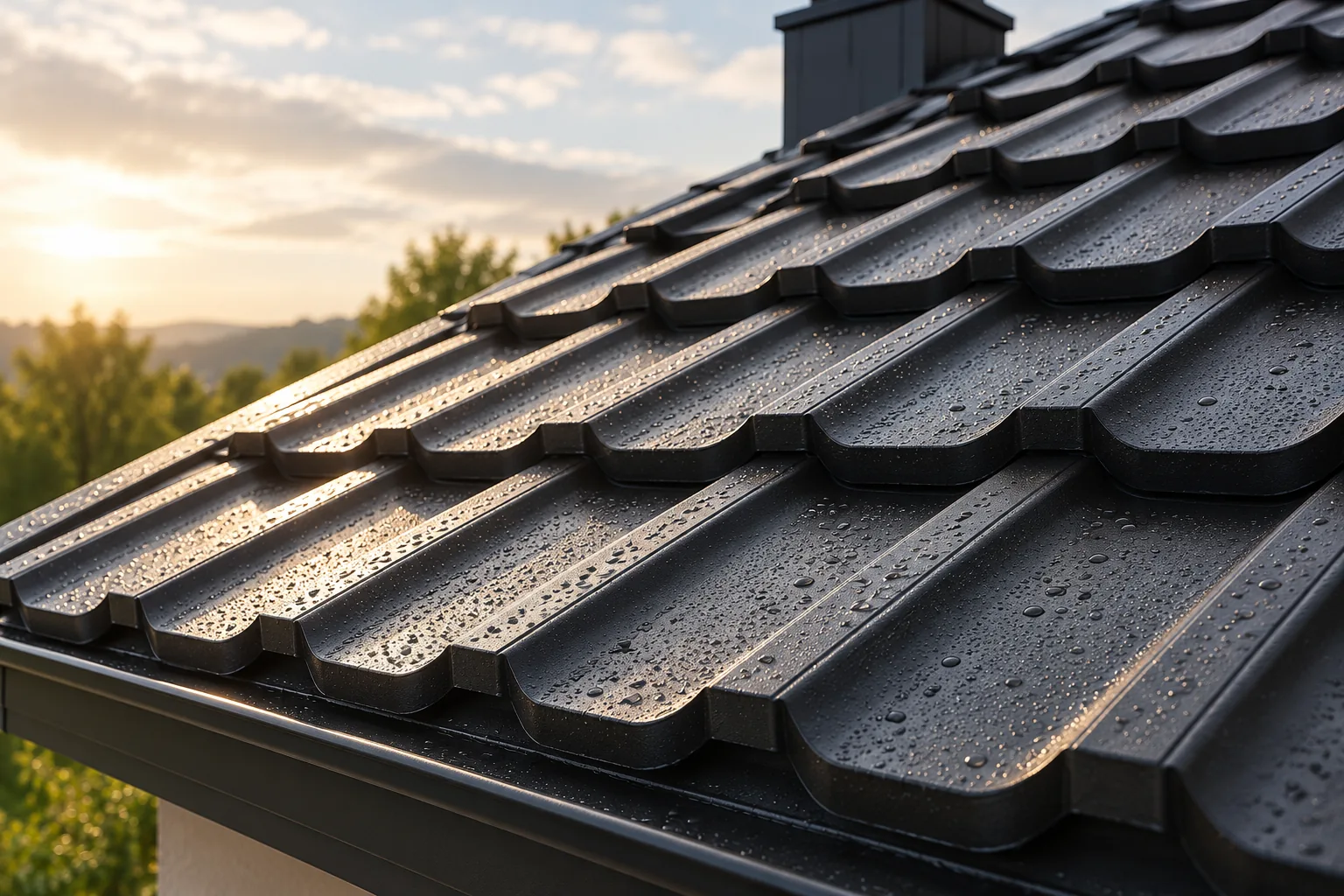
The coating may change its shade or the way it reflects light over time. Not every such change means the steel is damaged. On the other hand, a roof that looks good from the street may have a leaking detail at the chimney. The assessment should therefore be divided into the appearance of the surface, the condition of the material’s protection and the performance of the joints.
The replacement date should not be determined solely by the year of installation. What matters is whether corrosion, deformation or moisture in the substrate has appeared. A comparison of photos from successive inspections is useful. The development of damage in one place may be more important than the general impression that the covering still looks new.
Which material characteristics need to be known?
The documentation should indicate the steel thickness and the type of surface protection. The metallic and organic coatings form the protection of the core. The description matt or glossy alone does not explain its durability. What counts are the properties of the specific variant and the environment for which it is intended.
When purchasing, keep the delivery markings and product documents. After years, they can help to select a compatible repair material or to identify maintenance requirements. The colour name is usually not enough. Different batches and types of coating may look different despite a similar description on the invoice.
How does the environment affect wear of the covering?
Near chimneys, trees or sources of dust, the surface may require more frequent inspection. Deposits retain moisture, and contaminants can be aggressive to the coating. An environment with elevated salinity must be assessed similarly. The conditions of one location are not a forecast for every house in the country.
The shape of the roof also matters. Roof valleys, bends and shaded sections may accumulate more dirt than an open slope. Water should drain freely. If a structural or installation element obstructs this flow, the use of good tile-effect metal roofing alone will not solve the problem.

What traces does incorrect installation leave?
Scratches arise, among other things, when sheets are slid over one another. Cutting with a tool that overheats the sheet metal can damage the edge protection. Leftover swarf corrodes on the surface. Such errors do not always lead to a leak straight away, but they can accelerate deterioration of the material.
It is also worth checking the connections at over-tightened screws and deformed laps. The module should fit the substructure without forcing its position. Poor substrate geometry can load the edges in a way not envisaged in the instructions. Removing the cause is then often more important than a cosmetic correction of the coating.
When does repair make sense instead of replacing the entire roof covering?
If the problem concerns a single detail, the scope of work may be limited. However, an assessment of damage beneath the covering is needed. Wet insulation or weakened timber require separate action. Replacing the outer sheet will not automatically restore the properties of layers that have remained damp for a long time.
With modules, the possibility of replacing a single piece depends on the connection layout. With cut sheets, the scope of dismantling may be different. The availability of a matching geometry and shade must be checked. The repair should restore the function of the roof, and its appearance is worth agreeing before ordering material.
What role do inspections and cleaning play?
Regular inspection allows minor damage to be found before it develops into a larger defect. Observe the surface, flashings and the mounting points of equipment. Remove dirt in accordance with the coating instructions. Aggressive chemicals or an improperly directed pressure washer jet can worsen the condition of the covering.
The inspection should also cover gutters and ventilation. Leaves in the outlet or a blocked air path change the operating conditions of the roof. Leave work at height to a prepared team. For the owner, a useful task is keeping a simple record of inspections, photos and repairs carried out.
How to read the warranty period without drawing the wrong conclusions
Check the subject of the guarantee, the required actions and the exclusions. Protection of the coating may be described differently from the effects of corrosion. The period stated in the document is not a promise that all defects across the entire roof will be absent. Details executed on site and later interventions by installers also matter.
When assessing an older covering, combine the documents with the results of the inspection. If the condition is good, the passage of time alone does not require hasty replacement. If damage is developing, it is not worth postponing diagnosis just because the guarantee is still running. Actual properties and the condition of the assembly should determine further use.
7 branches. Materials closer to your project.