Roofing underlays: what they do and how to select one

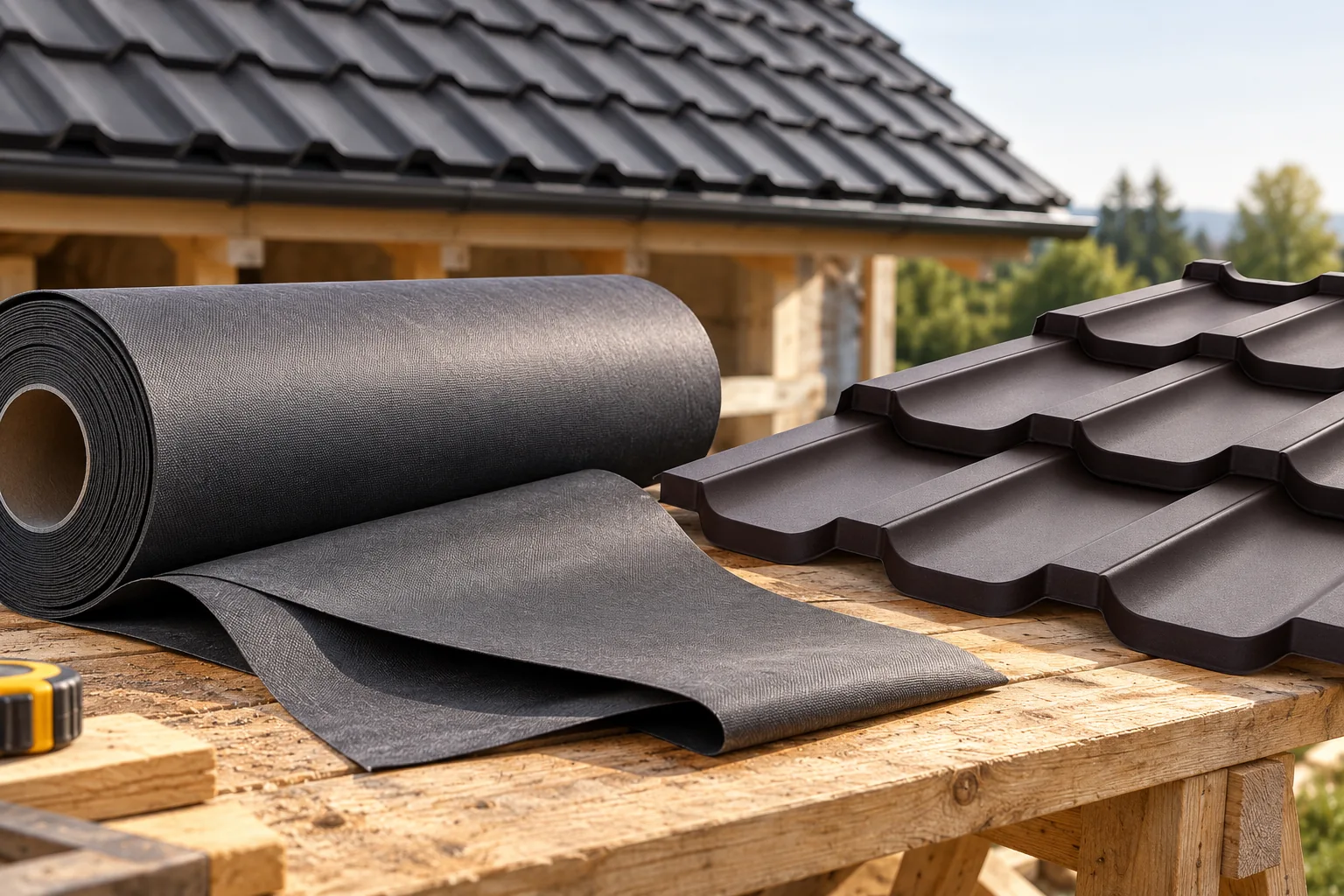
Choosing a roof membrane is not about picking the thickest roll, but about matching its parameters to the specific roof build-up. Check where the membrane will sit, its Sd value, how watertightness and durability are declared, and whether the manufacturer specifies a permitted UV exposure time. Also compare the requirements for tapes and joints. Grammage alone or the word ‘breathable’ is not enough, because suitability depends on conformity with the design and installation conditions.
By |2026-11-14T22:55:25+01:002026-05-31|Building guide|Comments Off on Roofing underlays: what they do and how to select one

Choosing roofing membranes for each layer in the roof

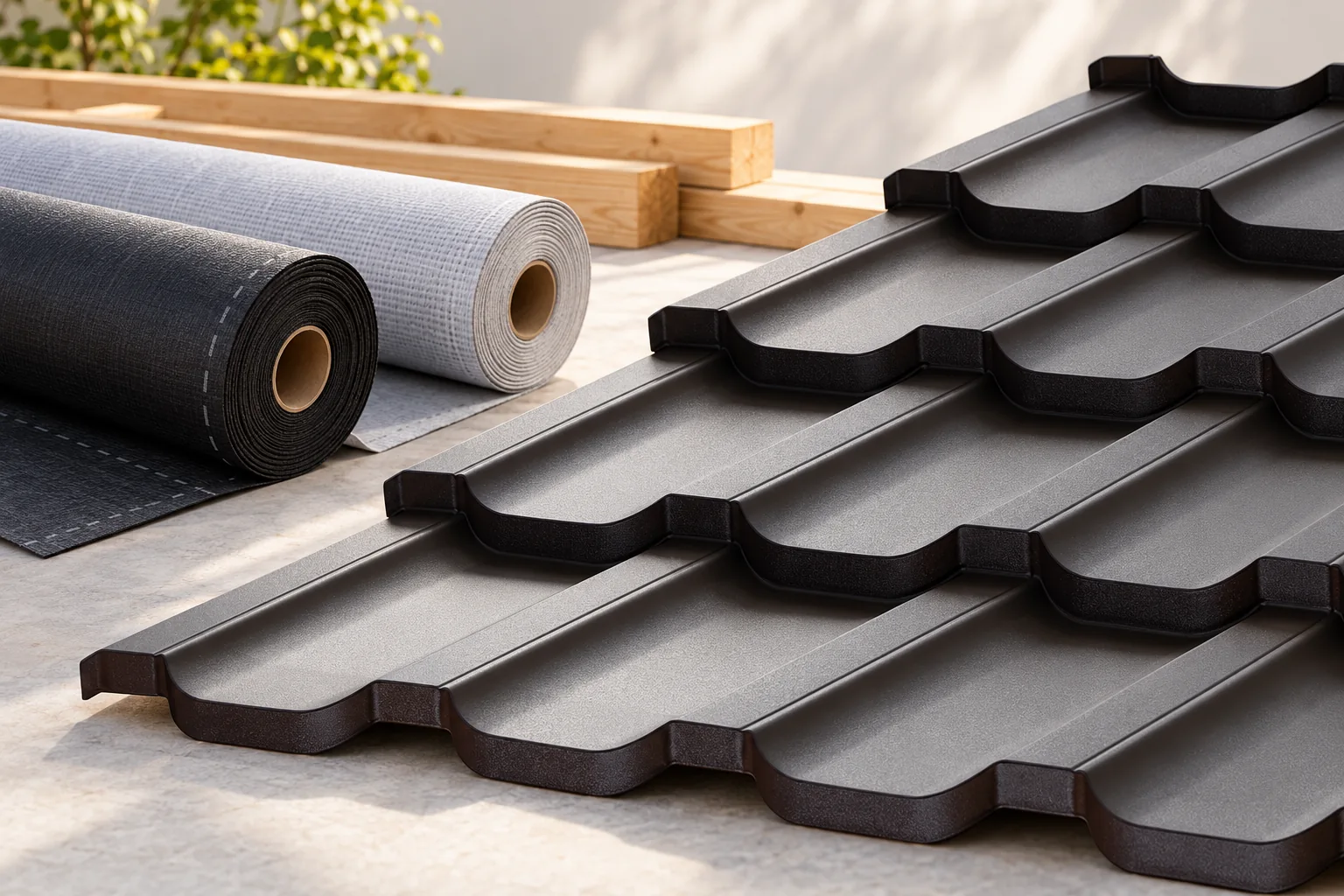
The choice of roofing membrane is determined above all by its position and role within the layer build-up, not by the weight of the roll alone. First establish whether you need an underlay membrane, a vapour barrier or both, then check how they fit the roof design. Take into account the substrate, permitted contact with thermal insulation, exposure time and how laps and junctions at walls, chimneys and services are sealed. Compare the declared properties and intended use of the product, since the term roofing membrane covers materials with different functions.

By |2026-11-15T03:01:16+01:002026-01-24|Building guide|Comments Off on Choosing roofing membranes for each layer in the roof

Preventing roof leaks during installation

Roof tightness depends primarily on roof pitch, the quality of joints and the way water is drained, not on the sheet metal alone. Check the specified pitch against the installation instructions for the selected covering. T18, T35 and tile-effect sheets need not share the same limits. It is also worth tracing the entire water path from ridge to eaves, checking the choice of underlay and planning flashings at the chimney and service penetrations. The key decision concerns the compatibility of the covering with the roof geometry and fixing system, not the number of sealants.

By |2026-11-14T19:21:59+01:002025-11-16|Building guide|Comments Off on Preventing roof leaks during installation

Why does a metal roof leak? Eight places to check

A leak under a metal roof can come from a loose joint, damaged flashing or condensation of water vapour. The location of the stain does not always indicate where the water enters. First establish when the moisture appears. Then check the eight areas described below. This order limits random repairs and helps distinguish a covering fault from a problem with ventilation or the layers beneath it. Note the weather and the time when the moisture occurs. A leak during rain from a particular direction may indicate a faulty lap or flashing. Droplets over a large area on the underside of the sheet metal after a cool night suggest condensation. These are clues, not a certain diagnosis.

By |2026-11-14T09:50:39+01:002025-09-15|Building guide|Comments Off on Why does a metal roof leak? Eight places to check

Where does mould on a cold wall come from and when does insulation help?

Mould on a cold wall is usually linked to persistent moisture. The cause may be a cold surface, poor air exchange, a leak or damp masonry. Insulation helps when it removes the significant cause of cooling and has correctly resolved junctions. It does not replace roof repair, damp-proofing or ventilation. The source of the water must first be established. A north-facing wall receives less direct sunlight. Under certain conditions it dries more slowly and has fewer heat gains than a sunlit façade. However, this does not mean that orientation alone causes mould. Surface temperature, air humidity and the condition of the building all matter. In a corner and at the ceiling the surface may be colder than in the middle of the wall.

By |2026-11-14T09:55:39+01:002025-03-30|Building guide|Comments Off on Where does mould on a cold wall come from and when does insulation help?

A leaking roof: how to trace the cause and decide what to do next

First limit damage inside and have the roof inspected, rather than immediately looking for the culprit at the wet patch. Water may travel along the membrane or structure, and a hole visible above a stain is not always the source of the leak. It is worth establishing whether the problem occurs with every rain or only with rain from a particular wind direction, and distinguishing precipitation from water-vapour condensation. The check should cover valleys, chimney flashings, wall junctions and service penetrations. An effective repair removes the cause instead of covering an arbitrary section of the roof slope.

By |2026-11-14T16:07:59+01:002024-02-26|Building guide|Comments Off on A leaking roof: how to trace the cause and decide what to do next

How can you sensibly insulate a garage, outbuilding or summer house?

A garage, workshop and summer house each need a different approach to insulation. First you need to establish whether the building will be heated and how often it will be used. PIR achieves a good thermal resistance at a small thickness. In many renovations this is a major advantage. It does not, however, relieve you of repairing leaks, sorting out ventilation or checking the substrate and finish. An unheated garage is planned differently from a workshop where people work every day. In an unheated room, insulation slows the rate of temperature change. On its own, however, it will not guarantee a temperature above freezing during a long frost. You need a heat source or another realistic balance of gains and losses.

By |2026-11-14T09:55:36+01:002024-01-03|Building guide|Comments Off on How can you sensibly insulate a garage, outbuilding or summer house?

Checking the roof before the first autumn frost

Before the first frost, start by comparing the roof's current condition with photographs from a year ago and notes on earlier defects, then check that the entire drainage path is clear, not just the leaves visible at the gutter. The inspection should cover the covering, flashings, valleys, fixings and loft, while the scope of work on the slope depends on the weather and the roof's usage instructions. Record the result with defect locations and a repair plan so that priorities can be set before winter.

By |2026-11-15T03:01:30+01:002023-03-15|Building guide|Comments Off on Checking the roof before the first autumn frost

How to choose a repair for a leaking metal roof

First establish whether water is actually penetrating the covering or is the result of condensation of water vapour beneath the metal sheet. That distinction determines the repair method, since tape and sealant will not fix every cause. Check the condition of the washers, the geometry of the laps, the flashings at the chimney and wall, and any corrosion of the sheets. Also assess the roof pitch and whether drainage is unobstructed. With sandwich panels, the core and the joint may matter. Only after locating the water path and assessing the substrate can a durable or temporary solution be chosen.

By |2026-11-14T19:21:14+01:002023-02-18|Building guide|Comments Off on How to choose a repair for a leaking metal roof

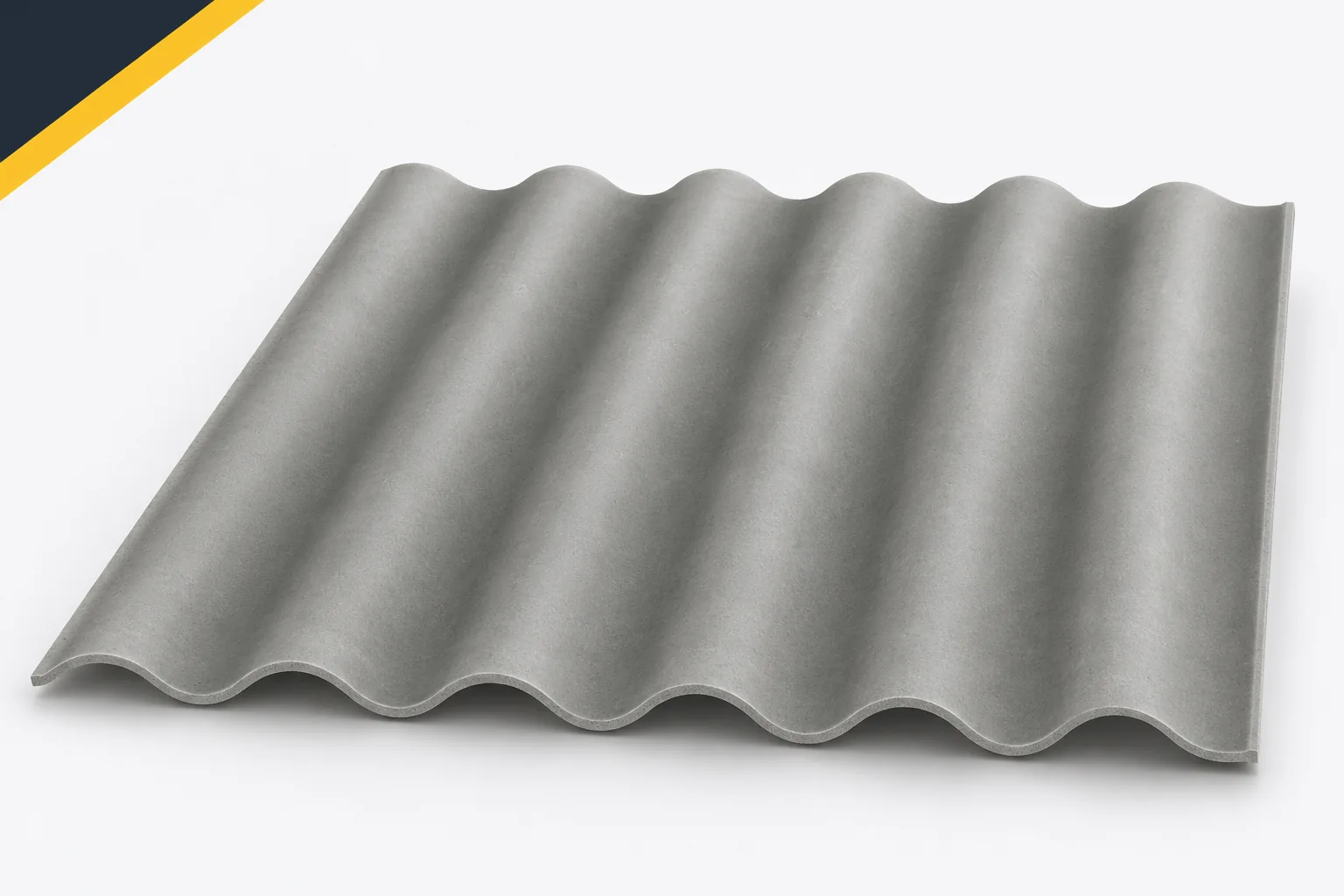
Vapour control layers beneath fibre cement roofing: when are they needed?

The need for a vapour control layer is not decided by the name of the covering alone. Temperature, indoor humidity and the layer build-up of the roof are more important. Fibre cement sheets can cover both an open canopy and a heated attic. In each case, water vapour behaves differently. Asbestos-free fibre cement does not replace a layer that controls its flow. The choice of such a solution must be linked to airtightness and the ability of the assembly to dry out. Simplified guidance usually refers to vapour diffusion through materials. In a real building, the flow of moist air through gaps is also significant. A leaky joint at a wall or duct can supply moisture to cool layers.

By |2026-11-15T17:56:34+01:002021-12-14|Building guide|Comments Off on Vapour control layers beneath fibre cement roofing: when are they needed?
Back to top