Roofing underlays: what they do and how to select one
Construction and installation
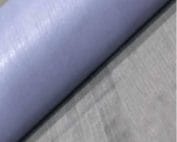
Choosing a roof membrane is not about picking the thickest roll, but about matching its parameters to the specific roof build-up. Check where the membrane will sit, its Sd value, how watertightness and durability are declared, and whether the manufacturer specifies a permitted UV exposure time. Also compare the requirements for tapes and joints. Grammage alone or the word ‘breathable’ is not enough, because suitability depends on conformity with the design and installation conditions.
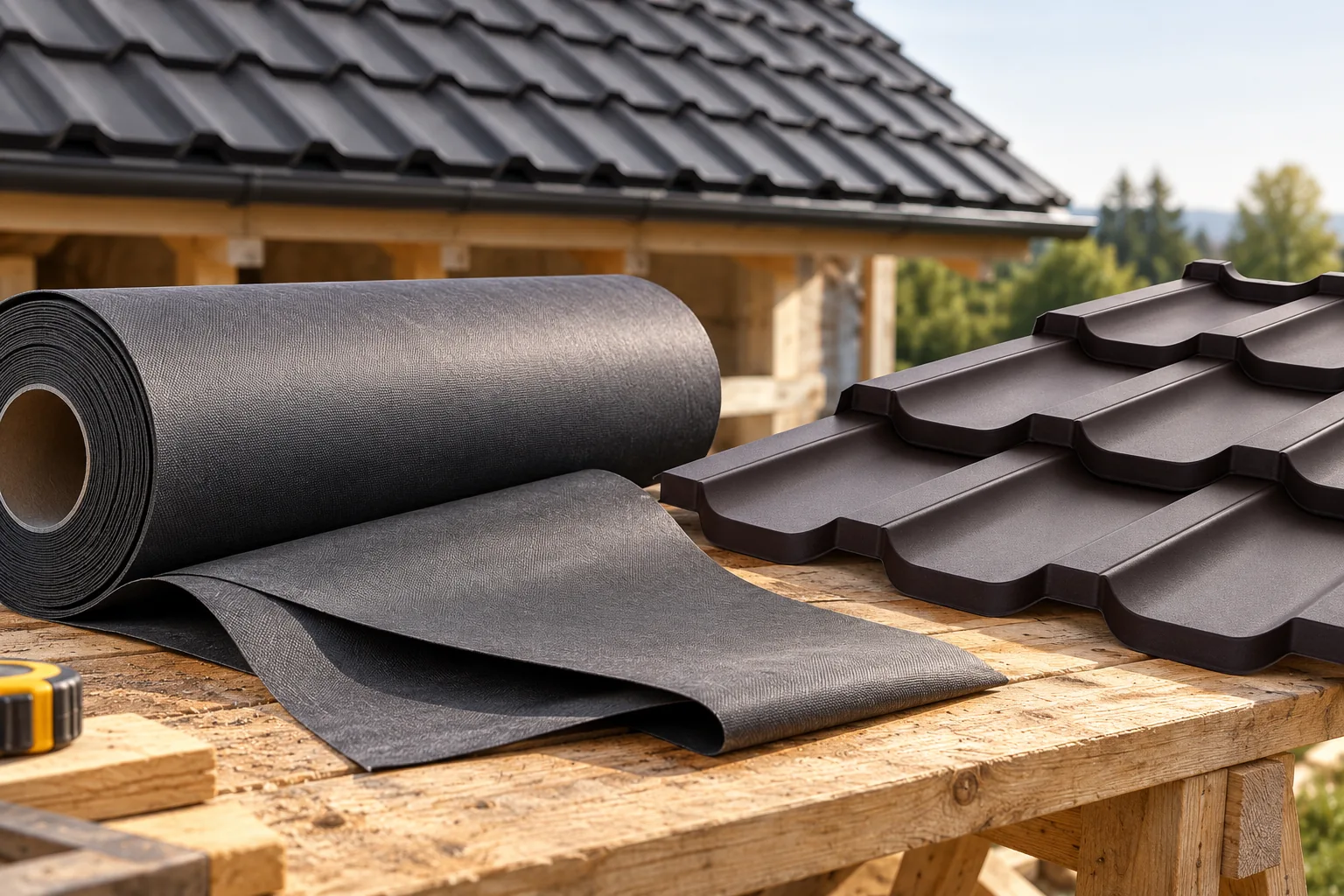
Where does the membrane work?
The underlay membrane is placed under the covering in accordance with the roof design. Its task is to direct water towards the eaves. It is not a replacement for tile-effect metal roofing or trapezoidal steel sheet. It should not be treated as the final, exposed roof surface merely because it has a declared watertightness.
The layer on the interior side serves a different purpose. It restricts the flow of vapour and leaking air into the assembly. It must not be freely interchanged with the external membrane. A similar-looking roll does not mean matching parameters or field of application.
What does the Sd value indicate?
Sd denotes diffusion resistance expressed as the thickness of an equivalent air layer. The lower the value, the easier the passage of vapour through the material. For example, a high vapour-permeable membrane may have an Sd of 0.02 m. This is a parameter of a specific product, not a mandatory value for every roof slope.
A low Sd does not mean that the material lets rain through. Vapour transport and behaviour towards liquid water are separate properties. It also says nothing about the tightness of the overlaps made. Even a good membrane needs correct connection at joints and around penetrations.
Does higher grammage always mean a better product?
Grammage specifies the mass per square metre. It may be related to construction and mechanical resistance, but on its own it is not sufficient for assessment. Compare tensile strength, tear resistance at the fastener and stability of parameters. Information on the permitted substrate is also important.
During works, the material may be subjected to loads from the installation of the batten grid and contact with component edges. It must be selected for the actual installation conditions. However, the heaviest roll should not be regarded as the solution to all problems. A durable membrane laid with depressions can still retain water.
How do you check watertightness and durability?
In the documents, look for the declared watertightness class and information on behaviour after ageing. It is worth comparing the product data sheet with the declaration of performance. A general slogan on the packaging does not show the scope of testing. The parameters of the product intended for the given application are what matters.
High temperatures under the steel sheet may impose different requirements than working in a cooler system. Check the permitted temperature range and the instructions. Do not assume that every roofing product is equally suitable under any dark covering. The construction of the specific assembly is what counts.

What does UV resistance time mean?
The manufacturer may specify the permitted exposure period before covering. This is a condition for using the material during construction. It does not mean that the roof may be left without covering in all weather conditions. Joints and penetrations require protection regardless of the resistance of the surface itself.
Excessively long exposure may impair the properties of the membrane. Also take into account light reaching it from below, for example through unclosed openings. The steel sheet delivery schedule should limit this stage. After a longer pause, check the condition of the material before closing the roof slope.
How to choose tapes and connections?
Laps are made in the direction that ensures water drainage. Their width depends on the instructions and the roof conditions. Bonding requires a clean surface and a suitable temperature. The tape that temporarily holds the lap does not have to maintain adhesion for the service life of the roof.
Penetrations at the chimney, wall and window must be detailed as separate details. In penetration areas under the counter-battens, system seals may be required. Damage must not be stuck over with random packing tape. The choice of repair material should correspond to the type of membrane.
Does the membrane replace ventilation?
It will not replace an unobstructed channel in a system that requires ventilation under the covering. Vapour passing through the layer must have conditions for further discharge. The inlet, gap and outlet should work together. A blockage at the eaves may impair the performance of the entire system.
When insulating an existing roof, it is necessary to establish what is actually under the steel sheet. An old film with a different diffusion resistance may require a different solution than a modern membrane. Do not bring the insulation up to an unknown layer solely on the basis of its colour.
How to prepare an order?
Record the type of covering, the roof pitch, whether there is a deck, and how the loft will be used. Add the planned date for covering the material and the required accessories. Check the roll area and allow for overlaps. The price per nominal metre does not accurately describe the cost of the finished layer.
On site, keep the labels and batch numbers. Once laid, inspect the joints and the water discharge point at the eaves. If in doubt, return to the instructions for the specific product. The choice of membrane is only complete when its parameters and method of installation match the same project.
7 branches. Materials closer to your project.