Thermal performance requirements for roof and wall insulation in Poland

Thermal requirements apply to the entire building envelope, not just the insulation board. The result is determined by thickness, lambda, construction and thermal bridges. Good PIR insulation can reduce the required layer height, but does not exempt you from calculations. The scope of requirements depends on the building, the type of work and the relevant legal basis. As at 1 November 2026, transitional provisions must also be taken into account. In this article we explain the difference between lambda, thermal resistance R and the U-value, the role of continuity of insulation and how to prepare data for the design. Parameters for a heated house should not be transferred to an unheated warehouse. Before ordering a specific thickness, the entire layer build-up and the documentation for the selected product must be checked.
By |2026-11-15T03:01:52+01:002026-11-01|Building guide|Comments Off on Thermal performance requirements for roof and wall insulation in Poland

How much does a sandwich panel cost and how do the different types compare?

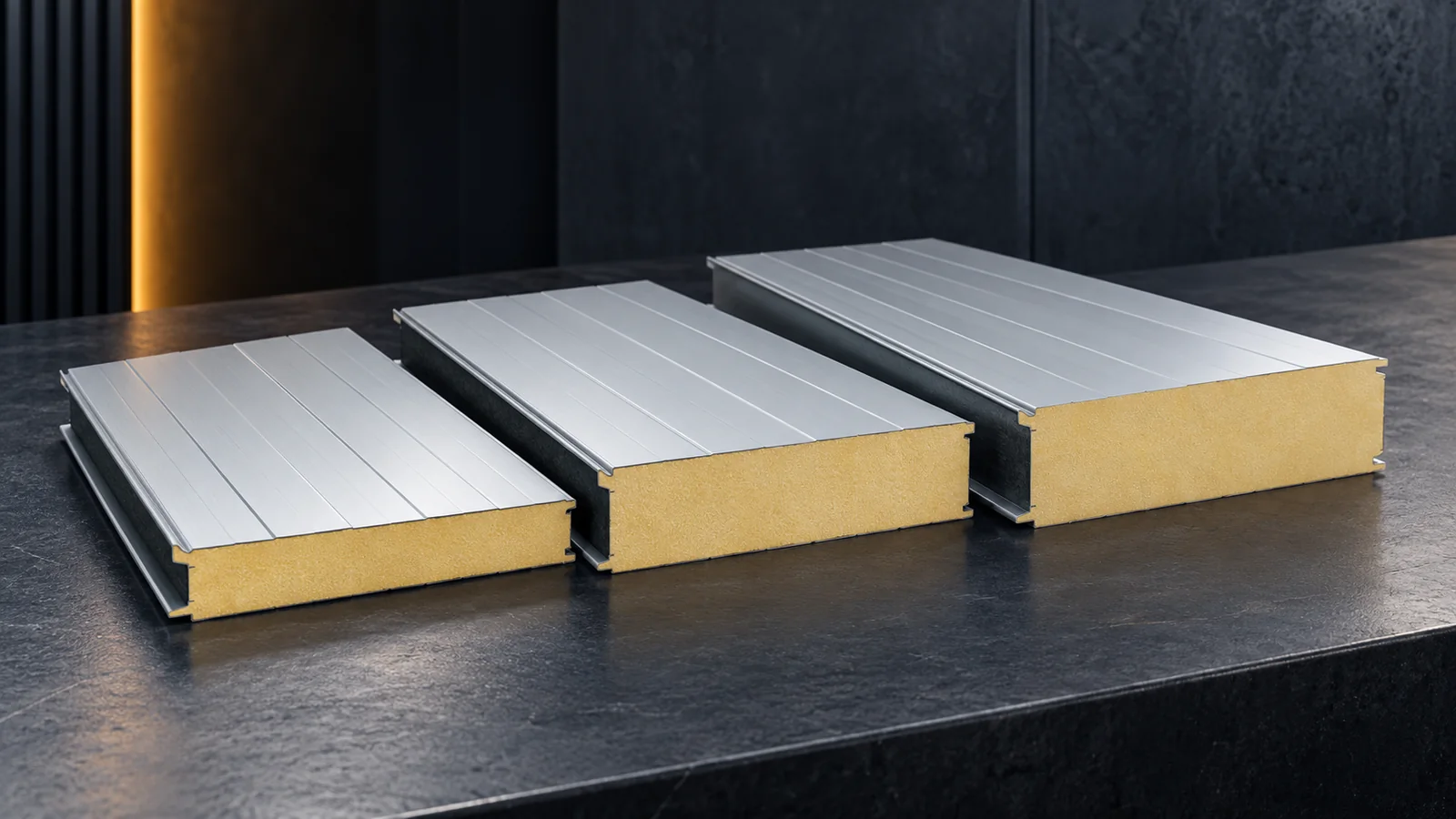
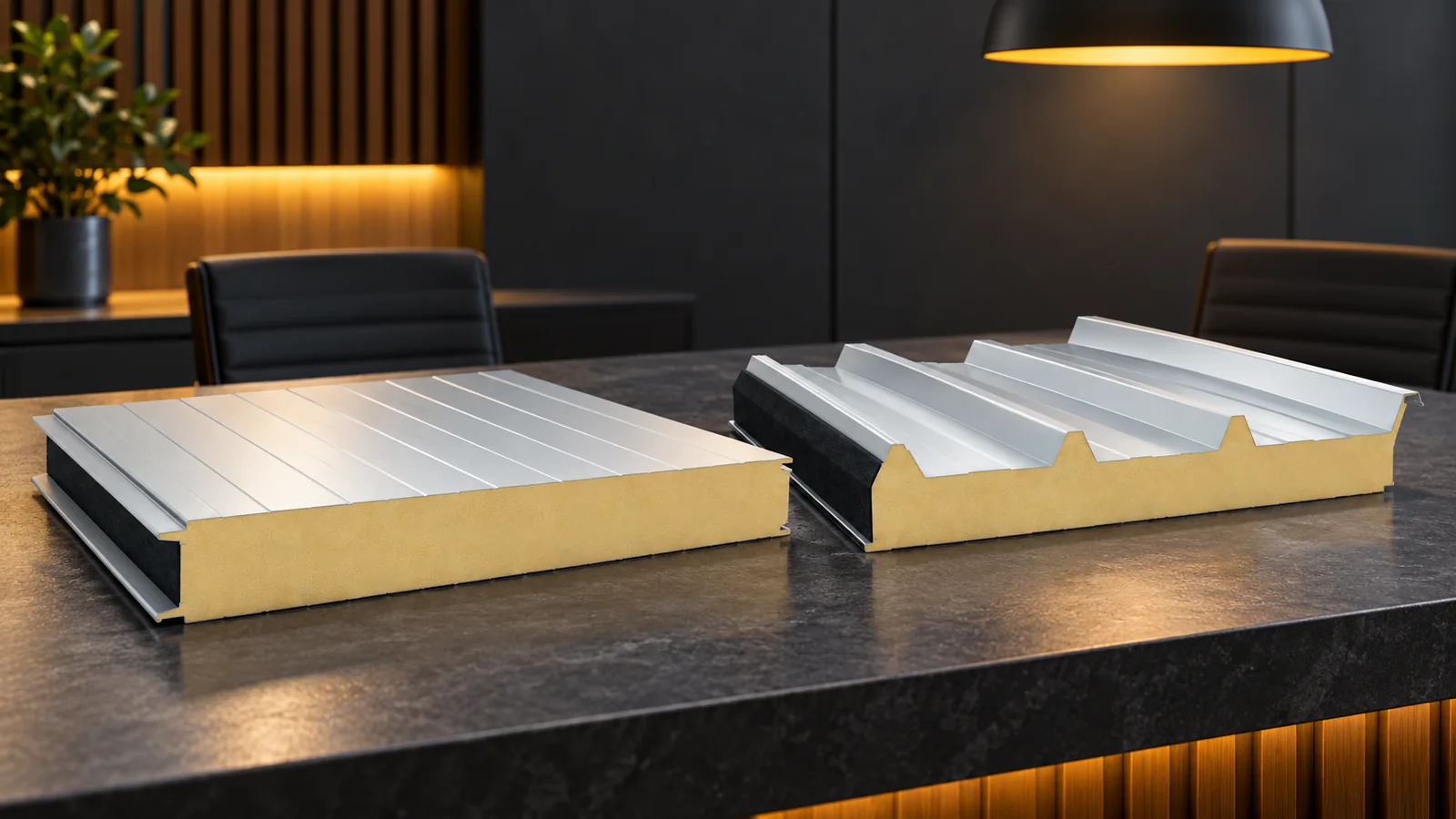
Oborniki panel is a colloquial name for a sandwich panel. It does not describe a single core, dimension or quality standard. That is why the question about its price needs clarification. First define the application, panel type and required parameters. Only then compare the price per square metre, the cost of accessories and delivery. This way you avoid comparing incomparable materials. In commercial practice, the name covers various panels with facings and an insulating core. You may find wall, roof and cold-storage panels. The core may be made of PIR, mineral wool or another material specified in the documentation. Each variant requires a separate assessment. The traditional name alone gives no information about the parameters.

By |2026-11-14T12:16:28+01:002026-10-29|Building guide|Comments Off on How much does a sandwich panel cost and how do the different types compare?

How do PIR boards compare with EPS, XPS and mineral wool?

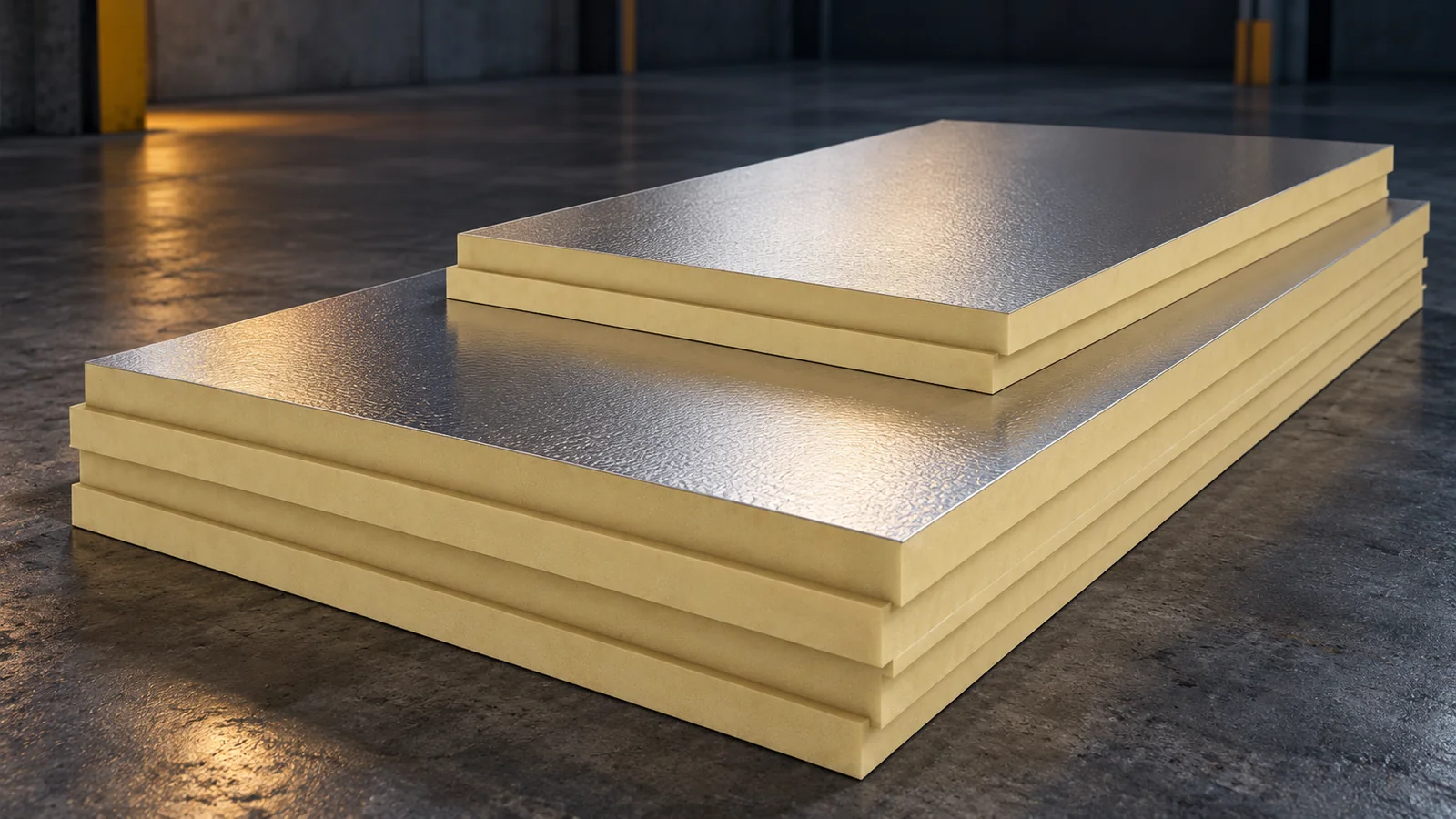
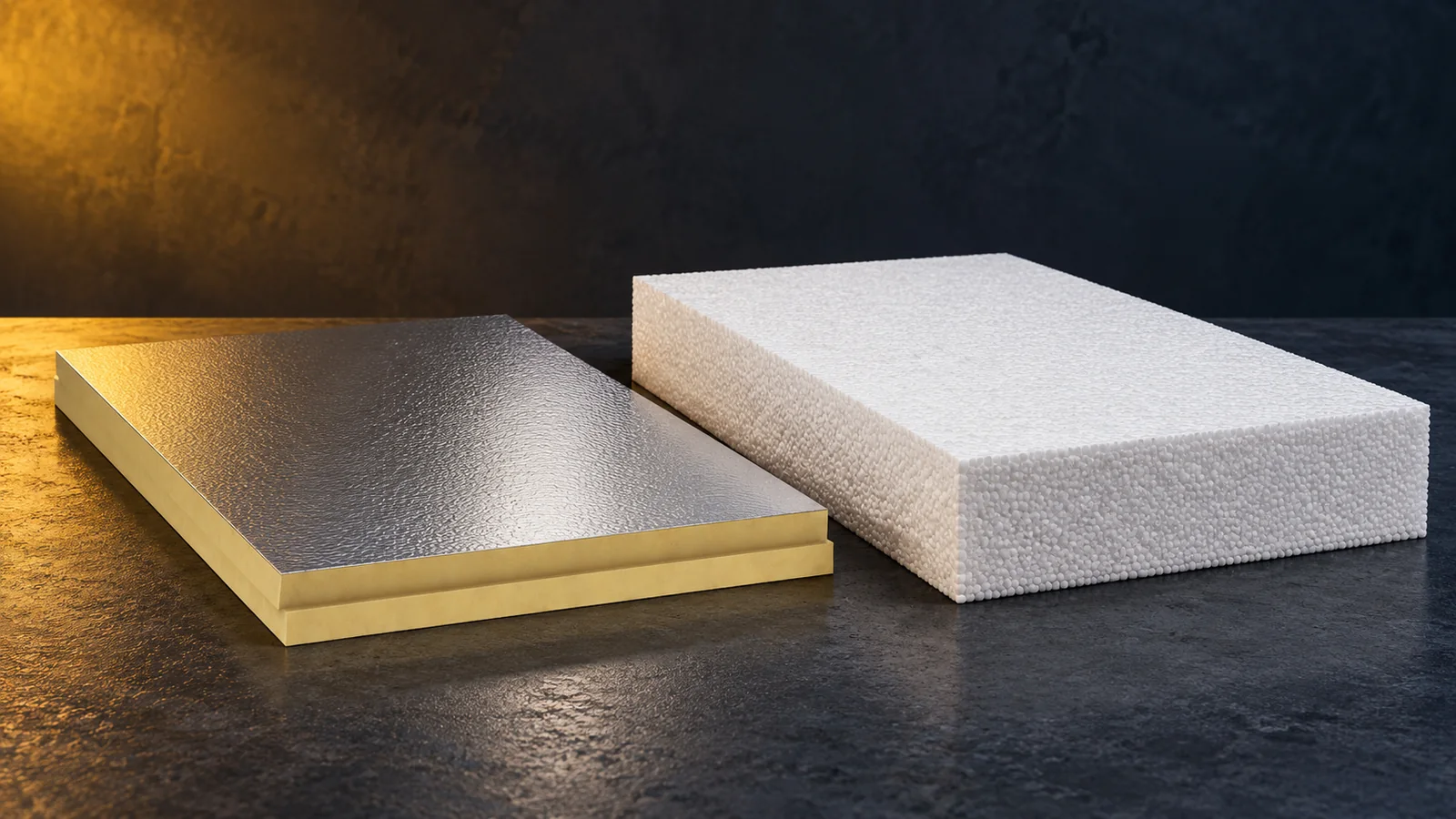
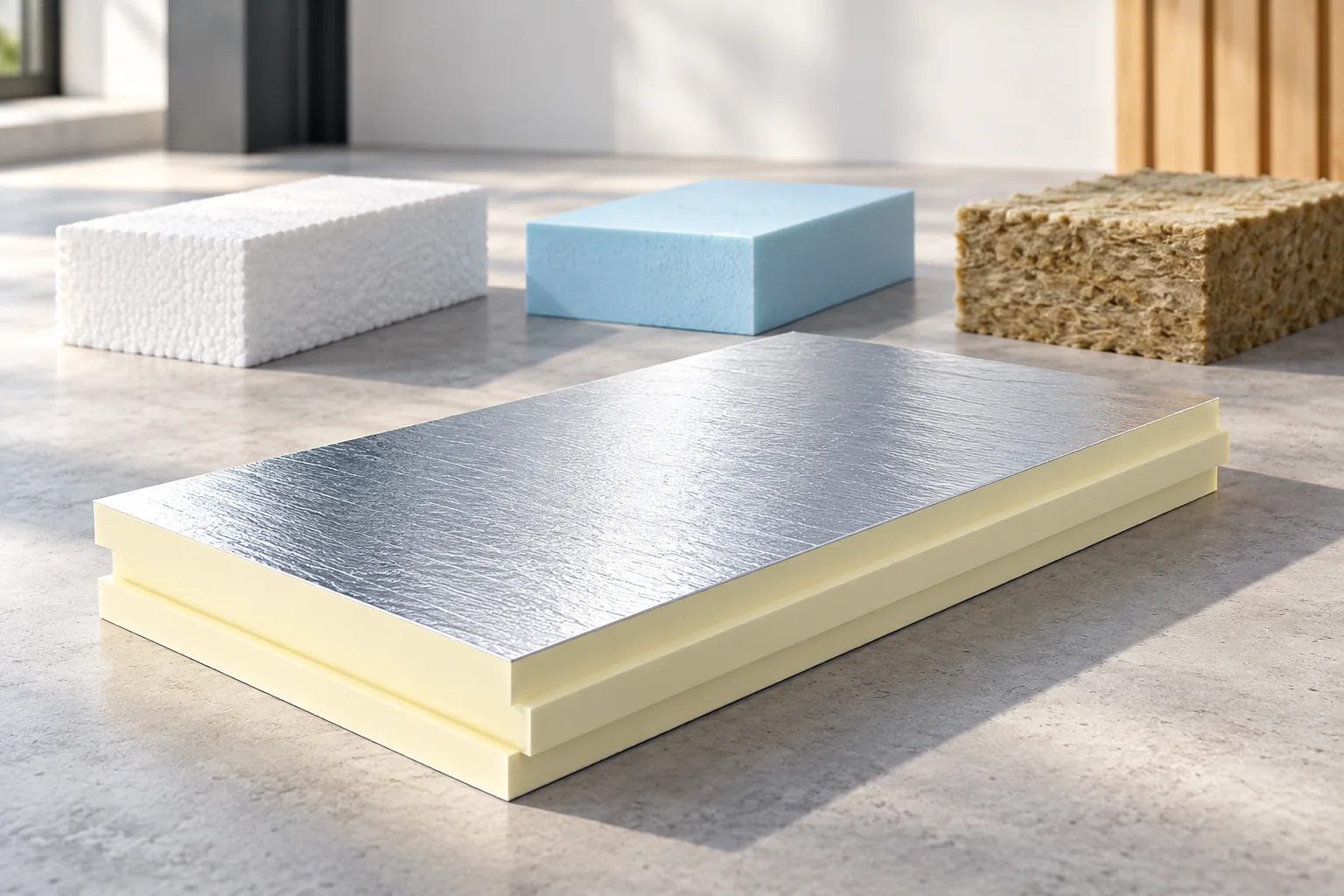
PIR boards are worth considering where a small thickness must deliver high thermal resistance, for example in a loft or on a terrace. Check not only the lambda value but also the requirements for moisture, loads, acoustics and reaction to fire. Compare the data sheets of specific products, not generic material names. Bear in mind that PIR is not the same as a sandwich panel, and low water absorption does not replace waterproofing. Leave the design of the layer build-up to the designer.

By |2026-11-14T22:54:20+01:002026-10-18|Building guide|Comments Off on How do PIR boards compare with EPS, XPS and mineral wool?

What PIR board dimensions make installation easier and reduce waste?

The format of a PIR board affects the speed of work, transport and the number of cuts. A large element fits well on an open roof slope, while a smaller one is easier to carry into a loft or fit in a tight room. In addition to the external dimension, the coverage area must be checked. A milled rebate reduces the usable dimension, so calculating solely from the length and width of the pack may underestimate the quantity required. PIR boards include formats of 1200 × 600 mm and 1200 × 2400 mm. There are also other dimensions and lengths made to order. Availability depends on the product and thickness. It should not be assumed that every facing variant is available in the same format.

By |2026-11-14T09:56:15+01:002026-09-20|Building guide|Comments Off on What PIR board dimensions make installation easier and reduce waste?

Insulating a loft to limit thermal bridging and moisture

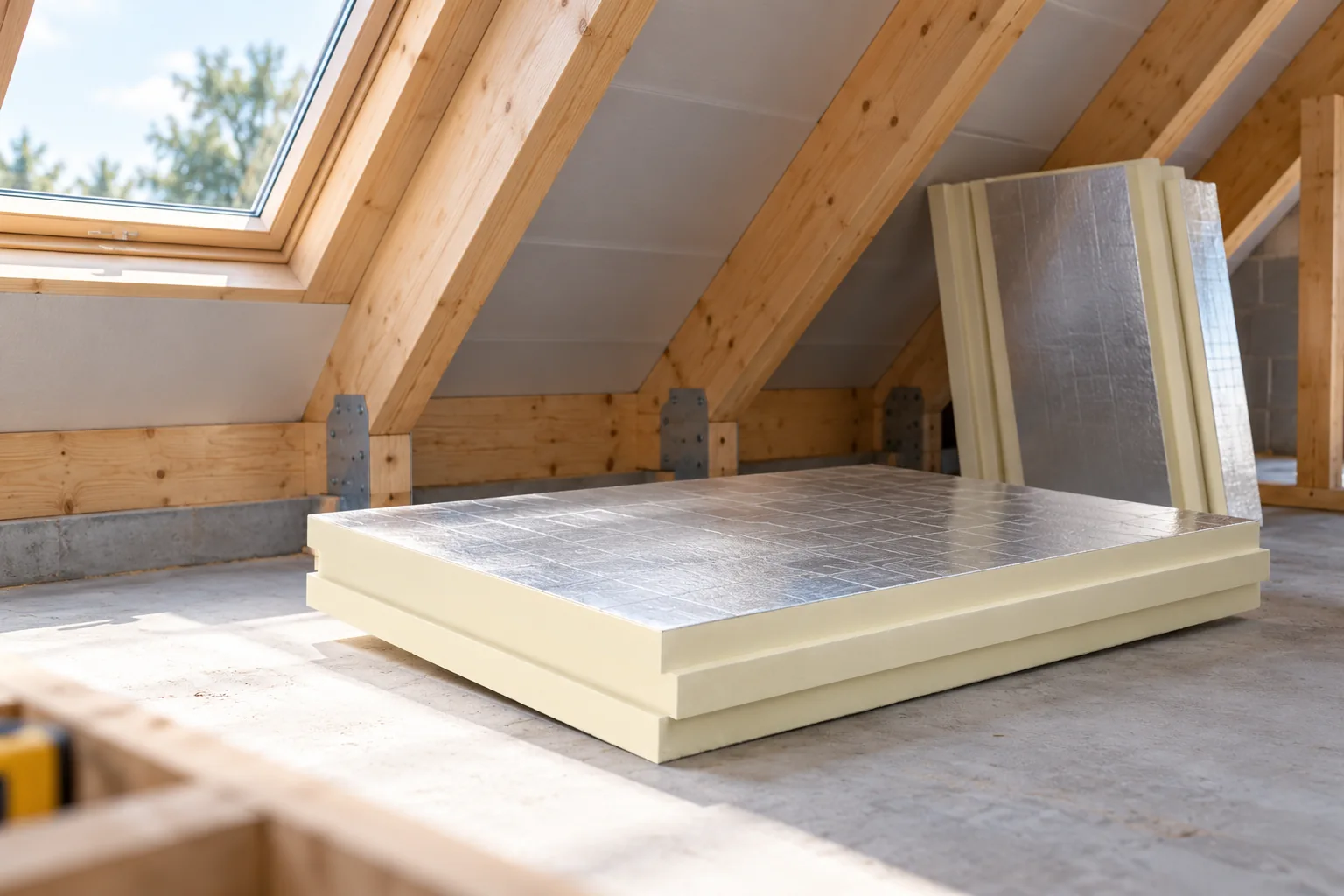
The decisive question is whether the loft will be used as living space or remains unheated – this determines where the insulation boundary should run. Readers should check the continuity of the thermal layer, how PIR boards are fixed, and the airtightness of junctions at the wall plate and windows. The article helps compare insulation between and above the rafters, and the role of lambda, fire, acoustics and moisture removal. If conversion is planned, the future layout must be considered to avoid paying for a solution that later needs rebuilding.

By |2026-11-14T19:22:23+01:002026-07-03|Building guide|Comments Off on Insulating a loft to limit thermal bridging and moisture

PIR or mineral wool in an insulated sandwich panel? How to choose the core

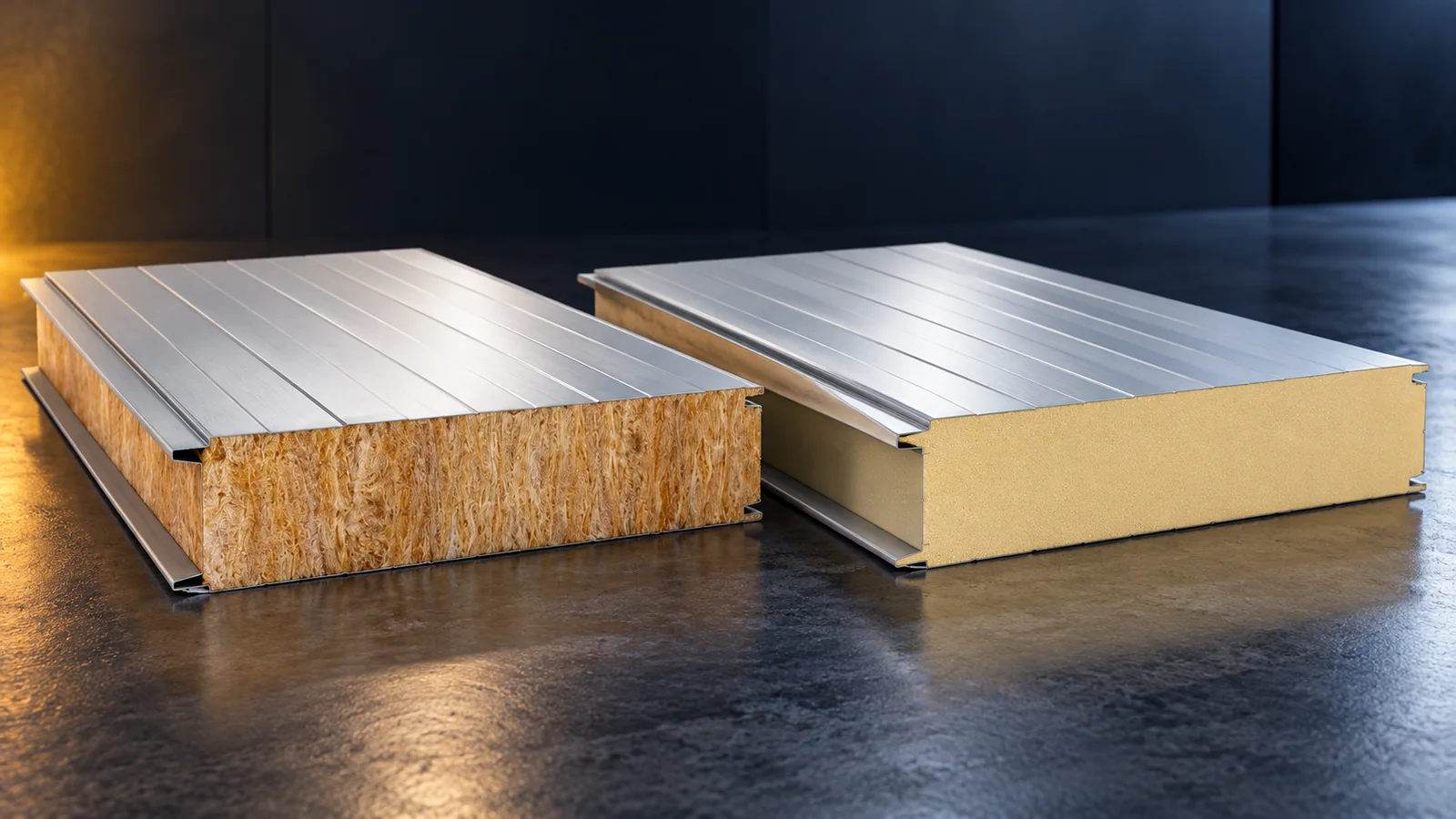
PIR and mineral wool meet different needs in an insulated sandwich panel. PIR allows good thermal performance at a smaller thickness and usually lower weight than comparable panels. Mineral wool may be the right choice for specific fire and acoustic requirements. The decision is made on the basis of the data for the whole panel and the building envelope design, not the name of the core alone. An insulated sandwich panel works as a combination of facings and core. The comparison must therefore take into account both steel sheets, the joint, thickness, length and application. A wall panel with a concealed fixing does not have to have identical parameters to a variant with an exposed fixing, even with the same core.

By |2026-11-14T12:15:08+01:002026-04-21|Building guide|Comments Off on PIR or mineral wool in an insulated sandwich panel? How to choose the core

How to assess the fire safety of a PIR insulated roof panel?

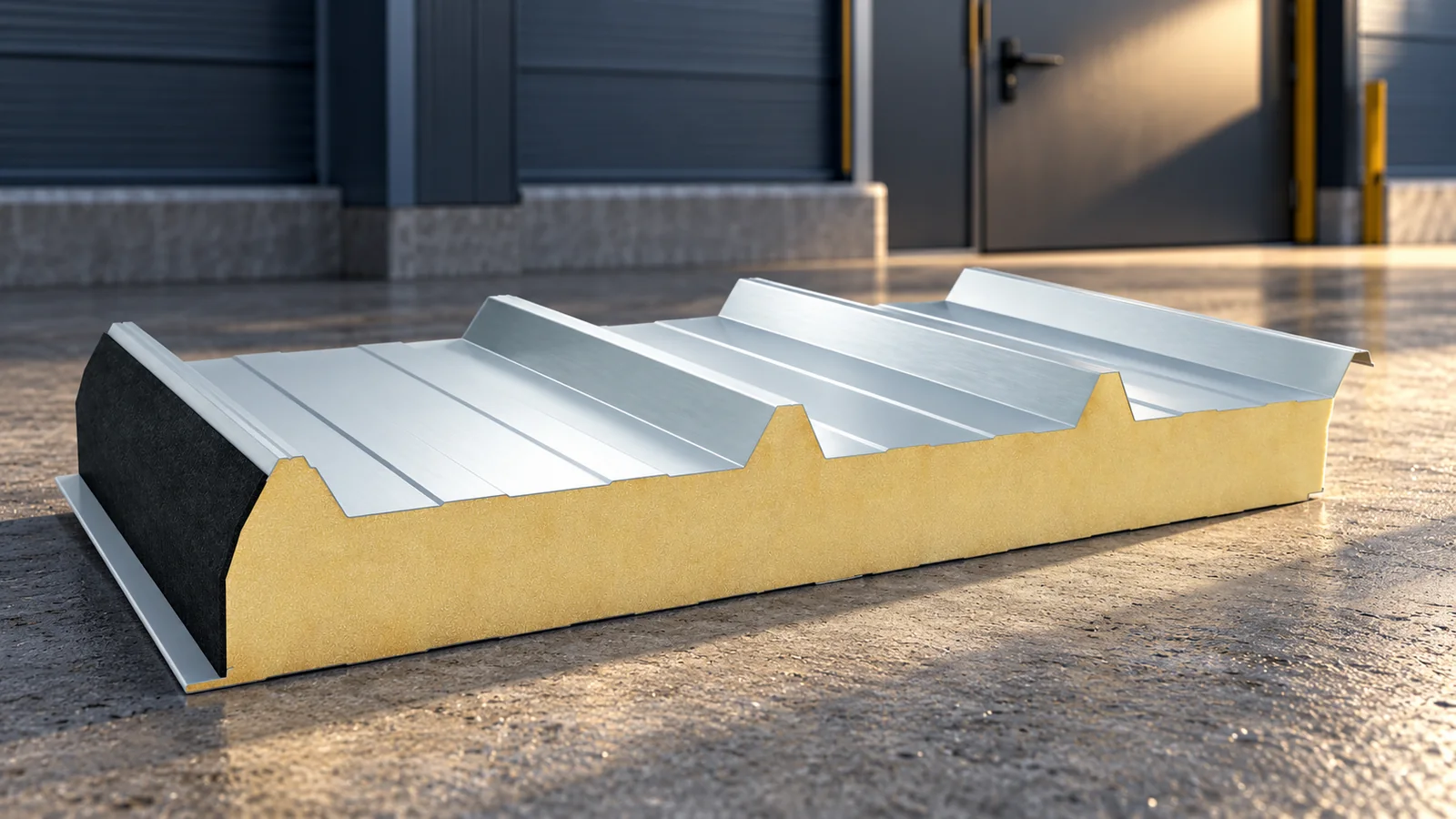
The fire safety of a PIR roof panel cannot be described with the single word "fire-resistant". A distinction must be made between reaction to fire, fire resistance of the roof and its behaviour under external fire. Each assessment applies to a specific product or assembly. PIR is not non-combustible. The suitability of the panel is determined by whether the documentation and installation comply with the requirements of the specific building. Reaction to fire describes the behaviour of the product under fire exposure. Fire resistance concerns the behaviour of a specific element over a defined period. The third piece of information relates to the effect of external fire on the roof. These assessments should not be used interchangeably. When selecting a panel, ask for the declaration of performance and documents indicating the scope of classification.

By |2026-11-14T12:18:16+01:002026-03-28|Building guide|Comments Off on How to assess the fire safety of a PIR insulated roof panel?

What thickness of PIR insulated wall panel should I choose?

The thickness of a PIR wall panel follows from the target thermal performance, the construction and the way the building is used. You do not choose it for a heated hall the same way as for an unheated warehouse. You need to compare the U-values of specific panels, the type of joint, the facings and the permissible spans. Details at the plinth and around openings also matter. The number of millimetres alone does not give a full answer. Establish the temperature and the heating regime. In a workshop used every day, heat loss through the walls matters differently than in a seasonal facility. An unheated warehouse may also need insulation, for example to limit temperature fluctuations. This does not mean, however, that the panel alone will provide the expected temperature there.

By |2026-11-14T12:17:37+01:002026-02-09|Building guide|Comments Off on What thickness of PIR insulated wall panel should I choose?

How much PIR gives the same thermal resistance as expanded polystyrene?

There is no single conversion factor by which one centimetre of PIR replaces a given thickness of every polystyrene. The thermal resistance and lambda of specific products are compared. For an example PIR with λ = 0.022 W/(m·K), a 10 cm layer gives a similar resistance to approximately 14.1 cm of EPS with λ = 0.031 or 16.4 cm of EPS with λ = 0.036. This is a comparison of layers, not a finished wall design. First it must be established whether the material alone or the whole building element is meant. The resistance of an insulation layer depends on its thickness and lambda. The U-value of a wall also takes into account the masonry, plasters, surface resistances and the relevant corrections.

By |2026-11-14T09:55:54+01:002026-02-04|Building guide|Comments Off on How much PIR gives the same thermal resistance as expanded polystyrene?

How can you insulate a wall at the plot boundary when there is not enough space on the façade?

With a wall standing close to the plot boundary, every centimetre counts. Thinner PIR insulation can make a solution easier, but it does not remove the constraints linked to the building's position. If external insulation is not possible, the internal option must be assessed. It requires checking moisture, thermal bridges and fire protection. It is not enough to choose the thinnest board from the catalogue. An accurate measurement is more important than an estimate from the façade plan. You need to know the wall's position, its unevenness and the locations of protruding elements. Adhesive, finishing layers and any substructure are added to the insulation thickness. A 100 mm board does not mean that the finished façade will increase the building's dimension by exactly 100 mm.

By |2026-11-14T09:55:41+01:002026-01-27|Building guide|Comments Off on How can you insulate a wall at the plot boundary when there is not enough space on the façade?
Back to top