What PIR board dimensions make installation easier and reduce waste?
PIR insulation
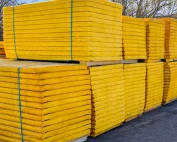
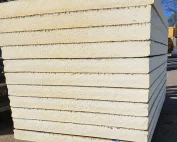
The format of a PIR board affects the speed of work, transport and the number of cuts. A large element fits well on an open roof slope, while a smaller one is easier to carry into a loft or fit in a tight room. In addition to the external dimension, the coverage area must be checked. A milled rebate reduces the usable dimension, so calculating solely from the length and width of the pack may underestimate the quantity required. PIR boards include formats of 1200 × 600 mm and 1200 × 2400 mm. There are also other dimensions and lengths made to order. Availability depends on the product and thickness. It should not be assumed that every facing variant is available in the same format.
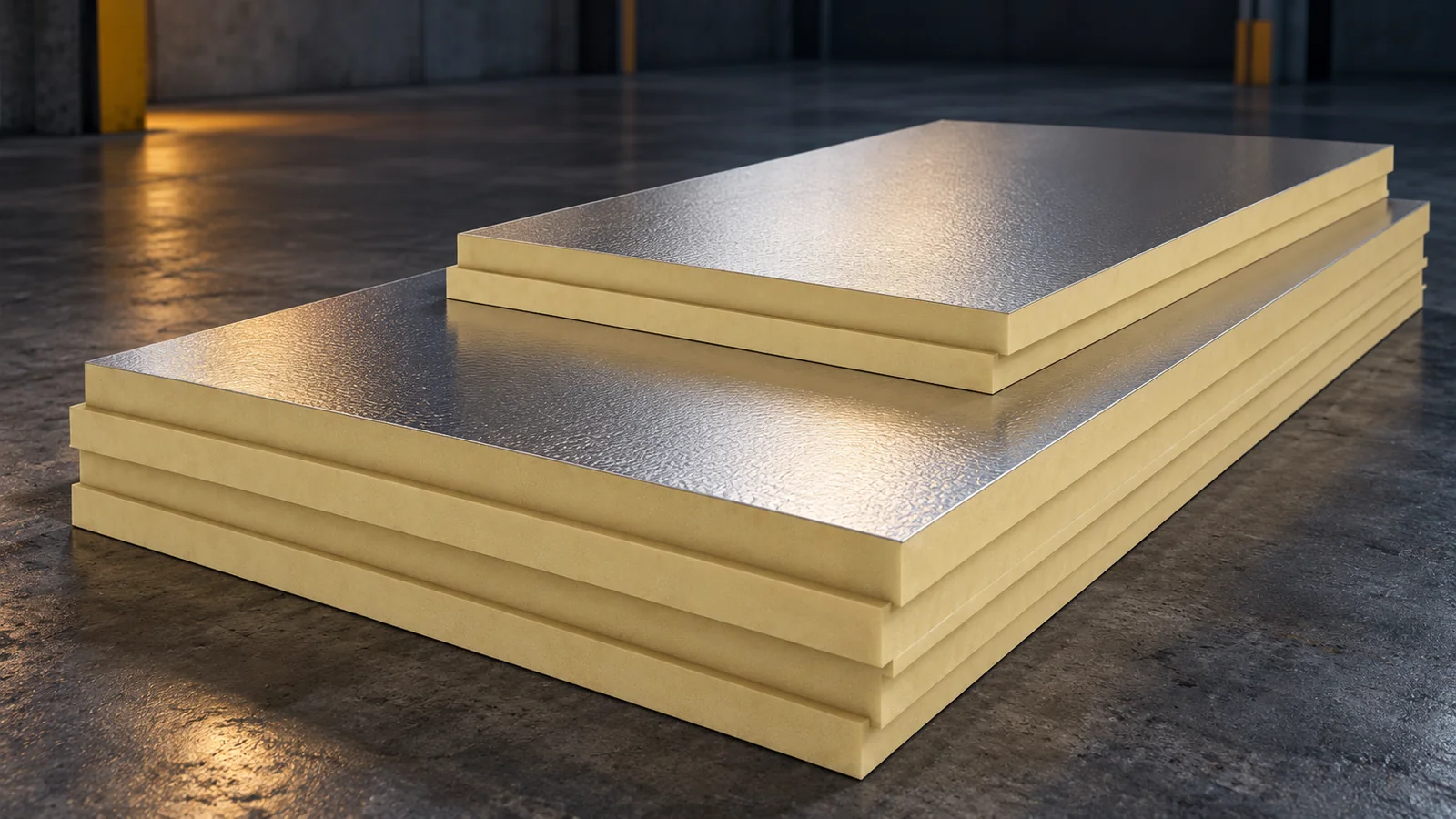
What formats are found in the documentation?
PIR boards come in formats of 1200 × 600 mm and 1200 × 2400 mm. Other dimensions and made-to-order lengths are also available. Availability depends on the product and thickness. You should not assume that every facing variant comes in the same format.
When planning a renovation, check the access route. A large board may not fit through stairs or a small hatch. On the roof, wind and the ability to safely pass material up also matter. A smaller format is easier to handle but increases the number of joints. The choice should therefore follow from the area and the working conditions, not from the belief that a larger board always speeds up installation.
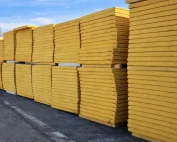
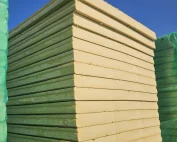
Board dimensions must also be matched to the storage space. The material should wait for installation in conditions that allow it to be kept in good condition. Unpacking all packs at once can make it harder to protect the edges and facings. On a small site, it is more convenient to plan deliveries in line with the work stages.
How does the overall dimension differ from the coverage?
A simple edge and an overlap do not give the same usable area. For a documented 1200 × 2400 mm board, the variant without a rebate covers 2.88 m². The version with a rebate on four sides has a coverage of 1185 × 2385 mm, i.e. approximately 2.83 m². The external format remains similar, but part of the surface is taken up by the joint.
For 100 m², without allowing for cuts, at least 35 boards with a coverage of 2.88 m² or 36 boards with a coverage of approximately 2.83 m² are needed. This is a simple example showing the significance of the difference. The actual quantity depends on how the area is divided. The result must not be rounded down simply because the missing piece seems small.
How to reduce waste on a simple roof?
Draw the board layout using their usable dimensions. Mark openings, parapets and places where the layer is interrupted. Check whether an offcut from the end of one row can start the next. However, the required joint pattern and support rules must be maintained. Reducing waste must not lead to the layer being accidentally assembled from narrow strips.
With two layers, their joints should be planned in accordance with the instructions. Do not assume that every cut-off piece can be used anywhere. After cutting, the rebate may be gone and the edge will require different sealing. Marking offcuts on the plan allows the material to be calculated more accurately than a fixed percentage allowance for every roof.

When is a smaller board more convenient?
A small format has advantages in the attic, in rooms with numerous recesses and for work carried out in stages. It is easier to position, hold and adjust. A narrow corridor or renovating an occupied room may favour this solution even with a larger number of joints.
More joints, however, mean additional work. Tapes or other specified sealing must be counted. In a bonded system, the method of support and the preparation of the wall are important. The format should not be selected without taking the finish into account. A large composite board with a gypsum facing has different transport and installation conditions from a small, lightweight laminated board.
How do you count full packs?
In the offer, check the number of boards, the nominal area and the coverage. These may be different figures. In one of the data sheets, boards 100 mm thick are packed five to a pack. If the cutting plan requires 36 boards, buying only full packs means eight packs, i.e. 40 boards. This is not automatically 11 per cent waste, because part of the material remains a fully usable reserve.
When ordering a larger format, allow for unloading. Delivery of a small number of packs may cost differently from a full batch. In the price list, check the logistics minimum and the lead time confirmed for the specific variant. The price per m² alone does not describe the cost of purchasing and delivering the required quantity.
What should you check on delivery and during storage?
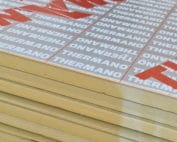
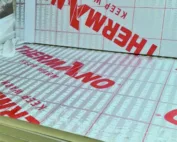
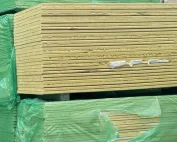
Compare the format, thickness, facing and edge type with the order. A damaged tongue can make a tight joint difficult. Also check the flatness and the condition of the film. The material should be stored in accordance with the instructions, protected from water, sunlight and damage during subsequent work.
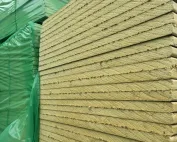
Large boards should not lie at random on an uneven surface. When carrying them, the edges that later form the joint must be protected. Cut-outs are best made after confirming the measurements on site. A sensible format is one that produces few difficult joints, fits the installation location and does not create transport problems.
Before placing the order, it is worth asking for confirmation of whether the stated pack area refers to the overall dimension or the coverage.
7 branches. Materials closer to your project.