PIR or mineral wool in an insulated sandwich panel? How to choose the core
Sandwich panels
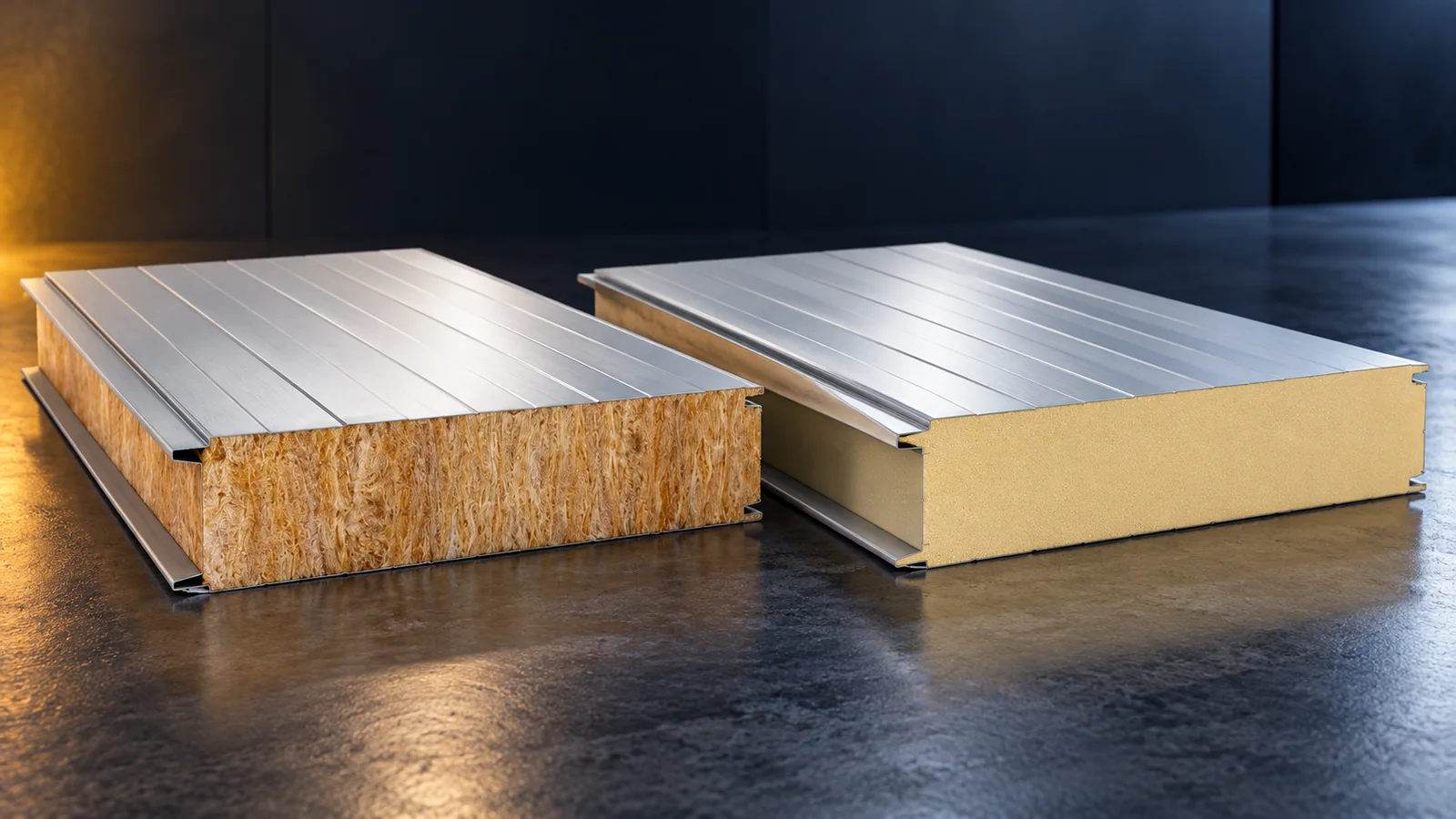
PIR and mineral wool meet different needs in an insulated sandwich panel. PIR allows good thermal performance at a smaller thickness and usually lower weight than comparable panels. Mineral wool may be the right choice for specific fire and acoustic requirements. The decision is made on the basis of the data for the whole panel and the building envelope design, not the name of the core alone. An insulated sandwich panel works as a combination of facings and core. The comparison must therefore take into account both steel sheets, the joint, thickness, length and application. A wall panel with a concealed fixing does not have to have identical parameters to a variant with an exposed fixing, even with the same core.
What should be compared beyond the core material?
An insulated panel works as a combination of facings with a core. A comparison must therefore include both steel sheets, the joint, thickness, length and application. A wall panel with a concealed fixing does not have to have identical parameters to a variant with a visible fixing, even with the same core.
First record the building requirements: temperature, loads, fire protection, acoustics and the operating environment. Only then compare specific panels. There is no single “best core” for every hall. In an unheated warehouse the criteria may differ from those in a food plant or a heated workshop.
It is also worth distinguishing between a roof panel and a wall panel. The profile of the outer steel sheet and the method of water drainage change the requirements. The same type of core does not make both products interchangeable. If a building is to have several zones with different functions, the selection may differ for each of them. A uniform façade appearance does not require the same core to be used everywhere without reflection, but the combination of different solutions must be planned for in the design.
What is the difference in thermal performance and weight?
In one of the data sheets, a 100 mm PIR wall panel has Uc = 0.22 W/(m²·K) and a weight of 12.3 kg/m². A comparable wall panel with mineral wool of the same thickness has Uc = 0.39 and a weight of 18.1 kg/m². Both examples relate to 0.5/0.5 mm steel facings. These are data for specific products, not constants for all panels.
PIR thus gives a better thermal effect at a lower weight. This can facilitate transport and installation and influence the structure. However, equal thickness does not mean equal U. If you are comparing the cost of a heated enclosure, first select variants with similar thermal insulation. Only such a comparison will show the difference in required thickness, weight and price.
How should fire classes be read?
Reaction to fire describes the behaviour of the product, while fire resistance relates to a specific element under given conditions. The designations B-s1,d0 or A2-s1,d0 do not mean the same as EI or REI. They must be read separately and the scope of the classification checked.
In the cited data sheets, selected PIR panels have B-s1,d0, and selected panels with mineral wool have A2-s1,d0. These values cannot be attributed to every product in a given category. PIR is not non-combustible. If the design requires a specific wall class, check the thickness, installation direction, span and seals. Changing the core without assessing the entire assembly may compromise the design requirements.

Will mineral wool always ensure a quiet hall?
In some of the compared mineral wool panels, a higher acoustic insulation rating is given than for PIR panels. This is useful information, but it does not describe the whole building. Doors, windows, junctions and service penetrations can create weaker sound transmission paths.
A distinction must also be made between insulating against sound and absorbing it. A panel with full metal facings does not automatically become a device that reduces reverberation simply because it has a mineral wool core. If noisy machines operate in the hall, an assessment of the sound sources and the entire enclosure is needed. A figure from the datasheet does not mean a guaranteed reduction in indoor noise by the same number of decibels.
How does the core affect installation and use?
The difference in weight matters for unloading and assembly equipment. Lifting long panels requires a solution matched to the specific product. It is not enough to select suction cups based only on an approximate weight. The facing, length and lifting instructions also count.
In both variants, the locks must be protected and the joints made tight. Selecting the coating for the environment remains equally important. Mineral wool will not protect the sheet metal from unsuitable chemicals, and PIR will not replace sealing at the base. The durability of the enclosure also depends on installation, cleaning and repair of damage. The core is an important part of the choice, but it does not act in isolation from the rest of the panel.
How do you prepare a fair comparison of quotes?
Give all suppliers the same set of requirements. The quote should cover the appropriate U-value, fire class, facings, coatings, support spacing and complete installation. Also record accessories, flashings and transport. The price of one square metre of panel without this data can lead to the wrong choice.
PIR will be a strong candidate where heat, low thickness and weight matter. Mineral wool may prevail where specific fire requirements or acoustic parameters confirmed for the product are decisive. If both solutions meet the design, compare the cost of the entire enclosure and the operating conditions. This is more useful than a ranking based on a single parameter.
7 branches. Materials closer to your project.