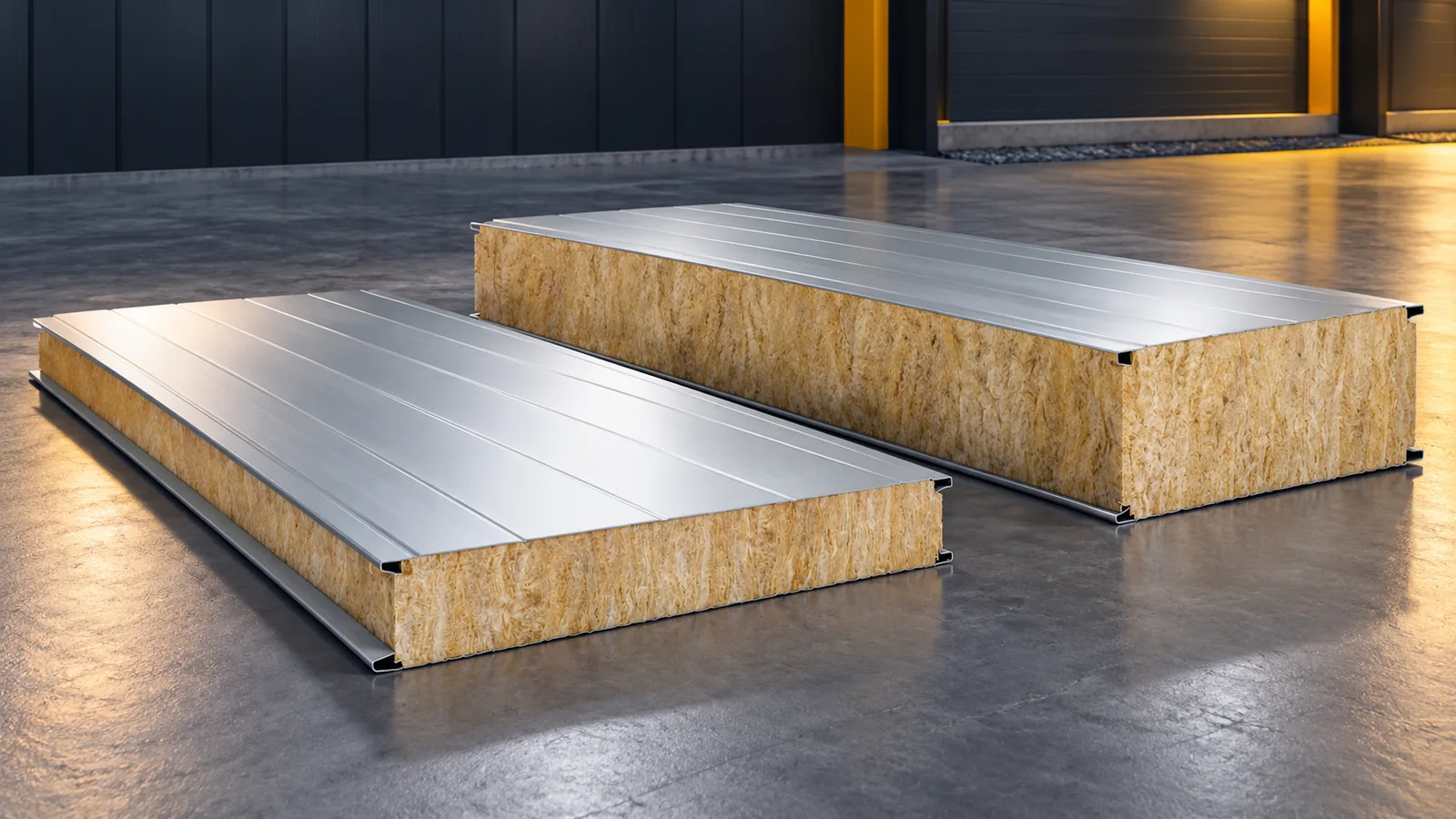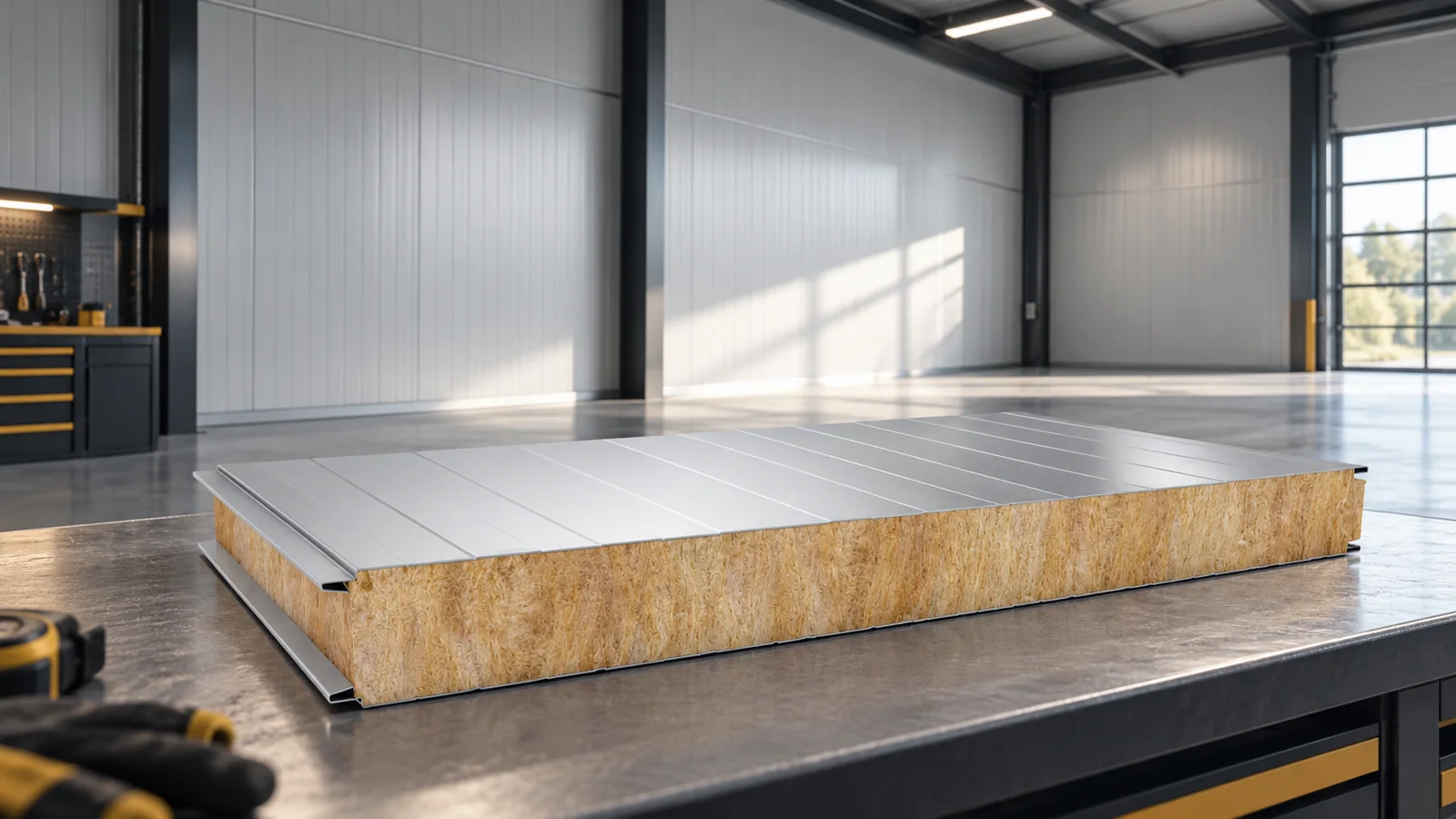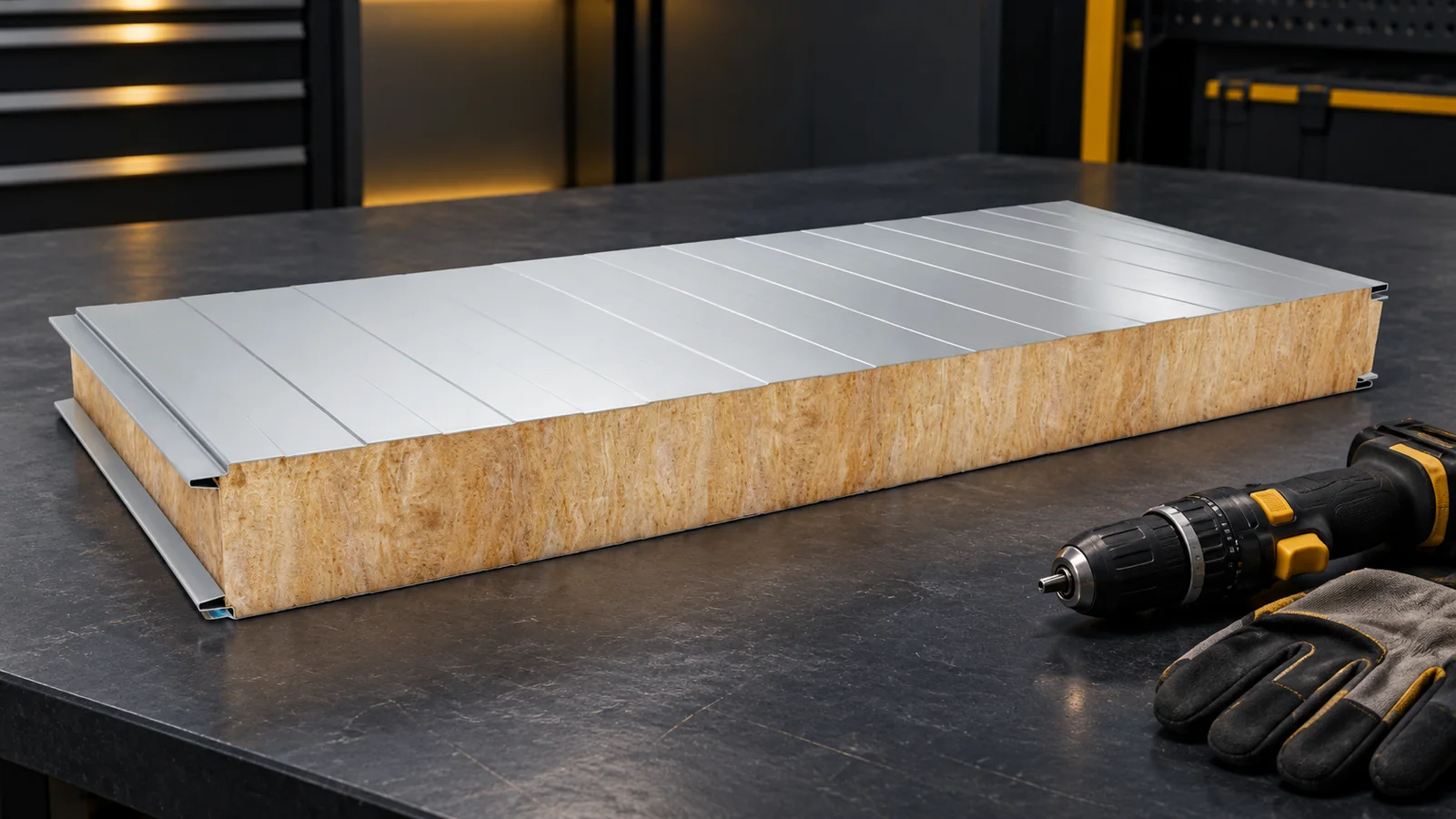
Mineral wool wall panels: what do the panels cost, and how much does the finished wall cost?

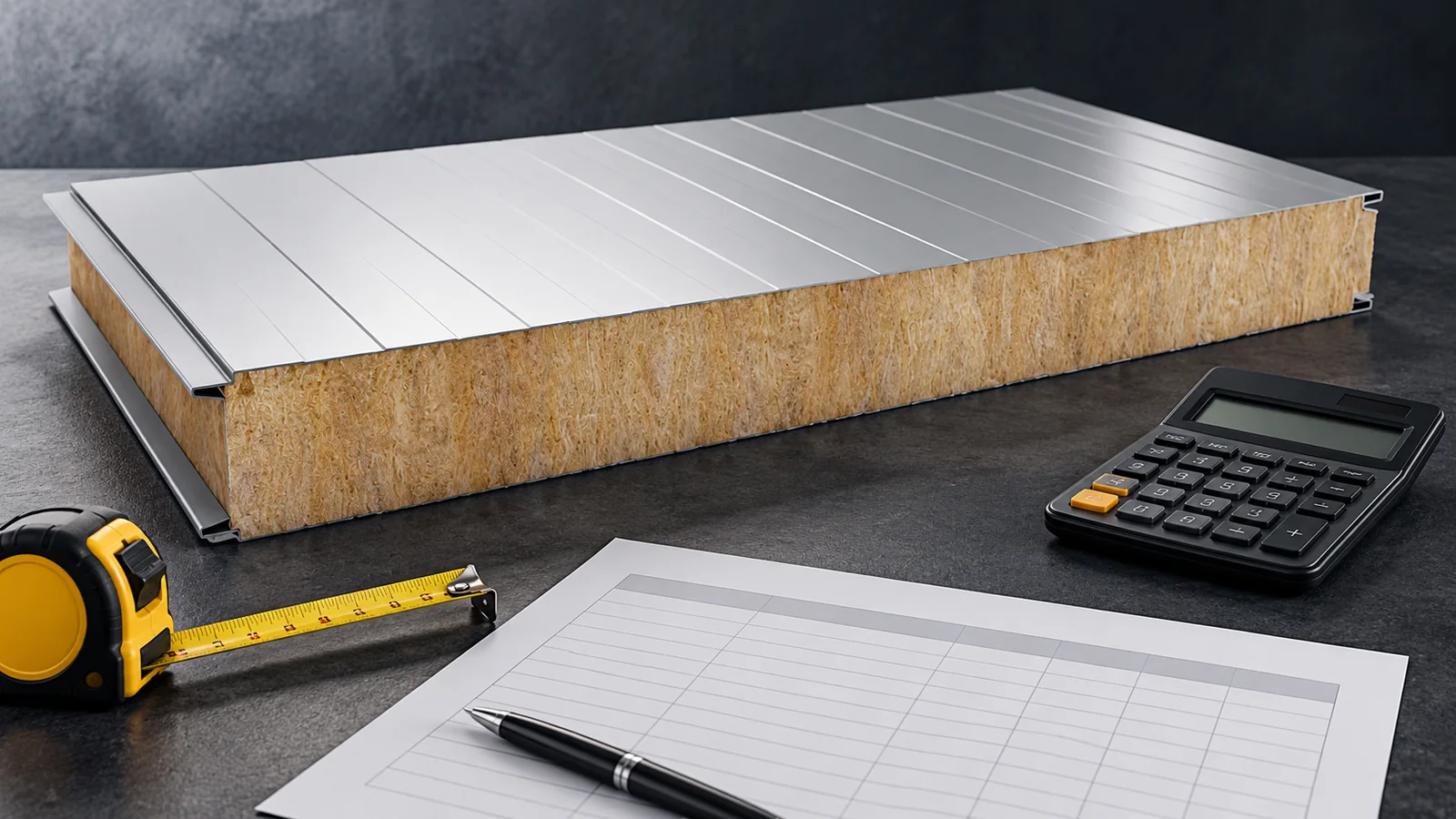
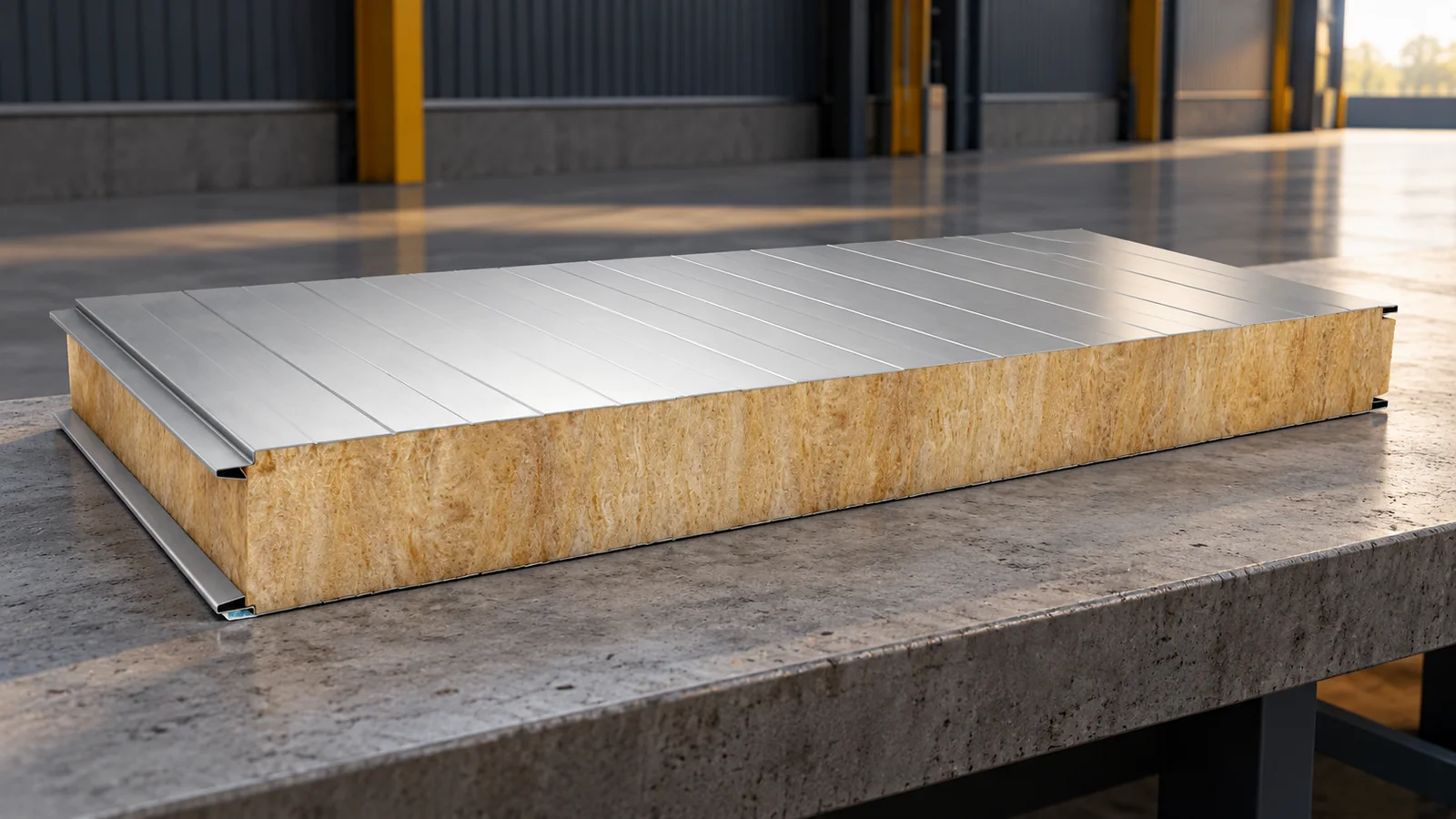
The price per square metre of a panel with a mineral wool core is only part of the wall cost. Flashings, fasteners, sealants, transport and installation are added to the order. Panel lengths and the number of openings also make a difference. A comparison only makes sense once the core thickness, facings and required parameters have been established. Without such a specification, a lower rate may simply mean a different product. The final budget is best calculated for the entire façade. The quote is influenced by the quantity of material, the mineral wool thickness, both facings and the type of coating. Colour, profiling and the joint are important. The size of the production batch may also matter. A standard element from a larger order and a small delivery in a non-standard finish do not have to cost the same, even at an identical thickness.
2026-11-14T09:54:59+01:00

How do PIR boards compare with EPS, XPS and mineral wool?

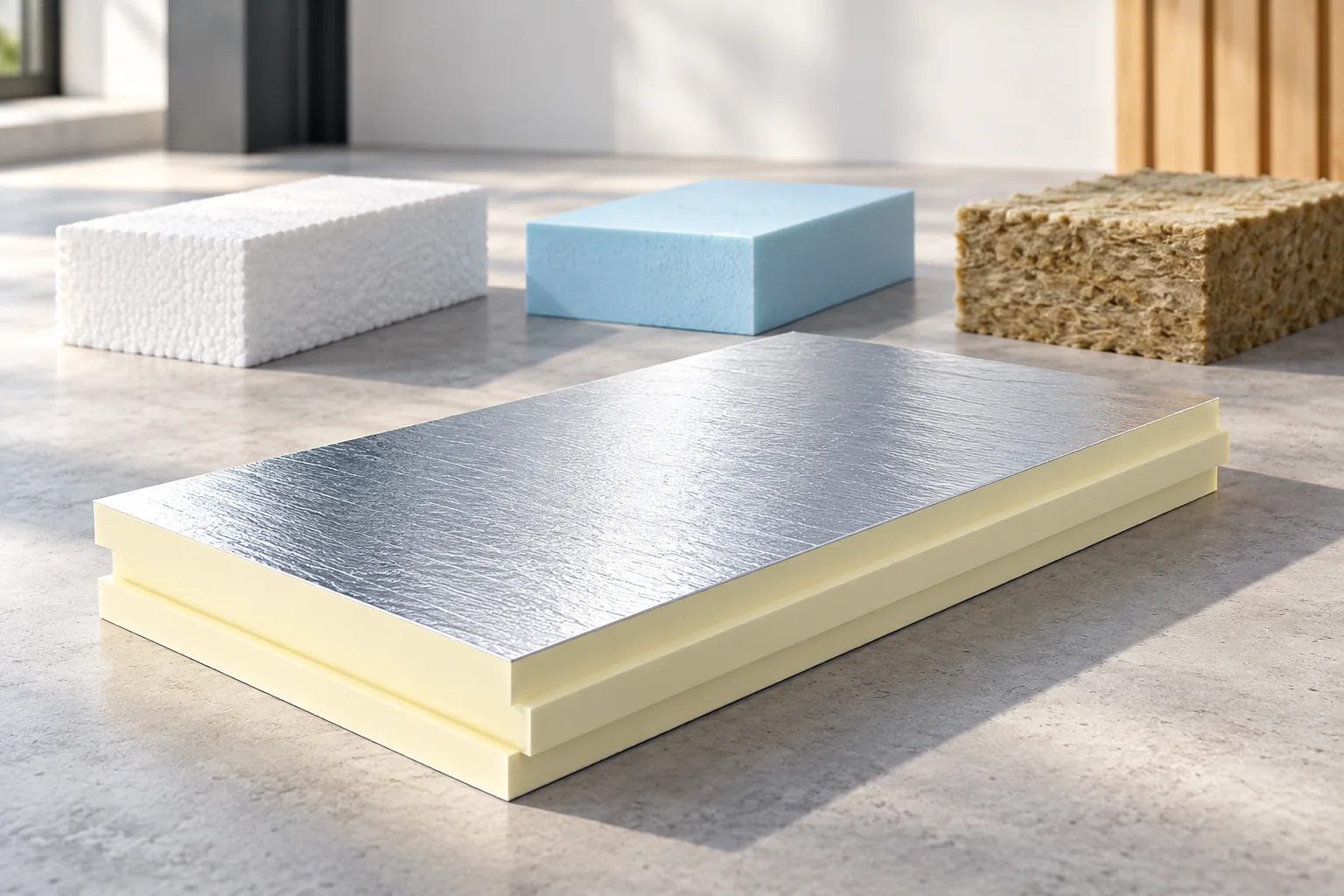
PIR boards are worth considering where a small thickness must deliver high thermal resistance, for example in a loft or on a terrace. Check not only the lambda value but also the requirements for moisture, loads, acoustics and reaction to fire. Compare the data sheets of specific products, not generic material names. Bear in mind that PIR is not the same as a sandwich panel, and low water absorption does not replace waterproofing. Leave the design of the layer build-up to the designer.

2026-11-14T22:54:20+01:00

Is an insulated wall panel with a mineral wool core non-combustible? How to read the classification

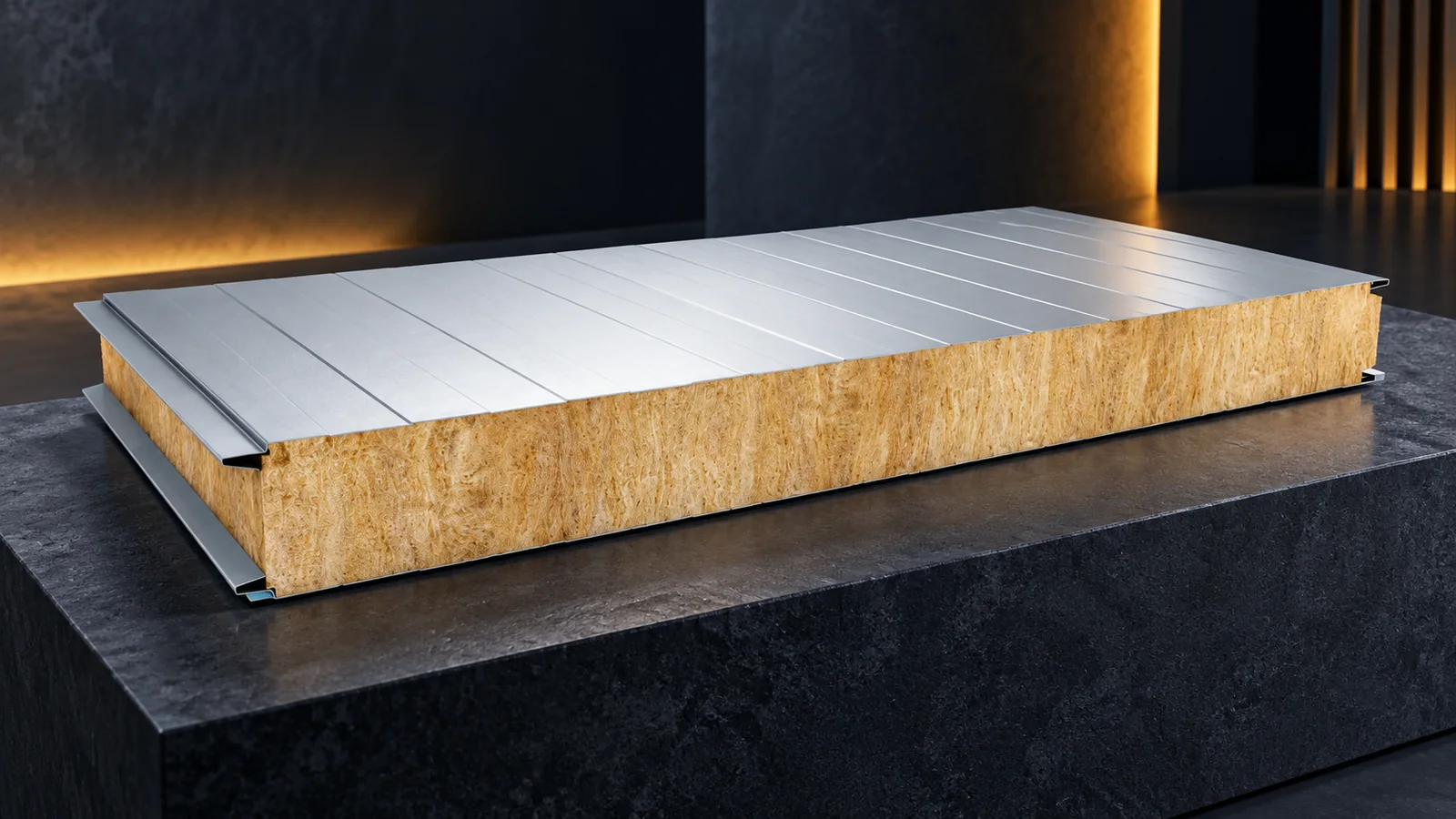
Many insulated wall panels with a mineral wool core have a declared reaction-to-fire class of A2-s1,d0. However, this should not be equated with the class of the core alone or with the fire resistance of the entire wall. The designations A1, A2, EI and REI answer different questions. Before purchase, the documents for the specific product and the installation conditions must be checked. The term “non-combustible panel” is too imprecise to design a partition on that basis. The panel consists of a core, facings, bonding layers and joint elements. The properties of one component do not automatically describe the whole. Mineral wool alone may have a different classification from the composite product. The purchase documents should therefore be checked for the data of the panel intended for the specific end use.

2026-11-14T09:55:17+01:00

Is a thin insulated panel with mineral wool sufficient for a wall?

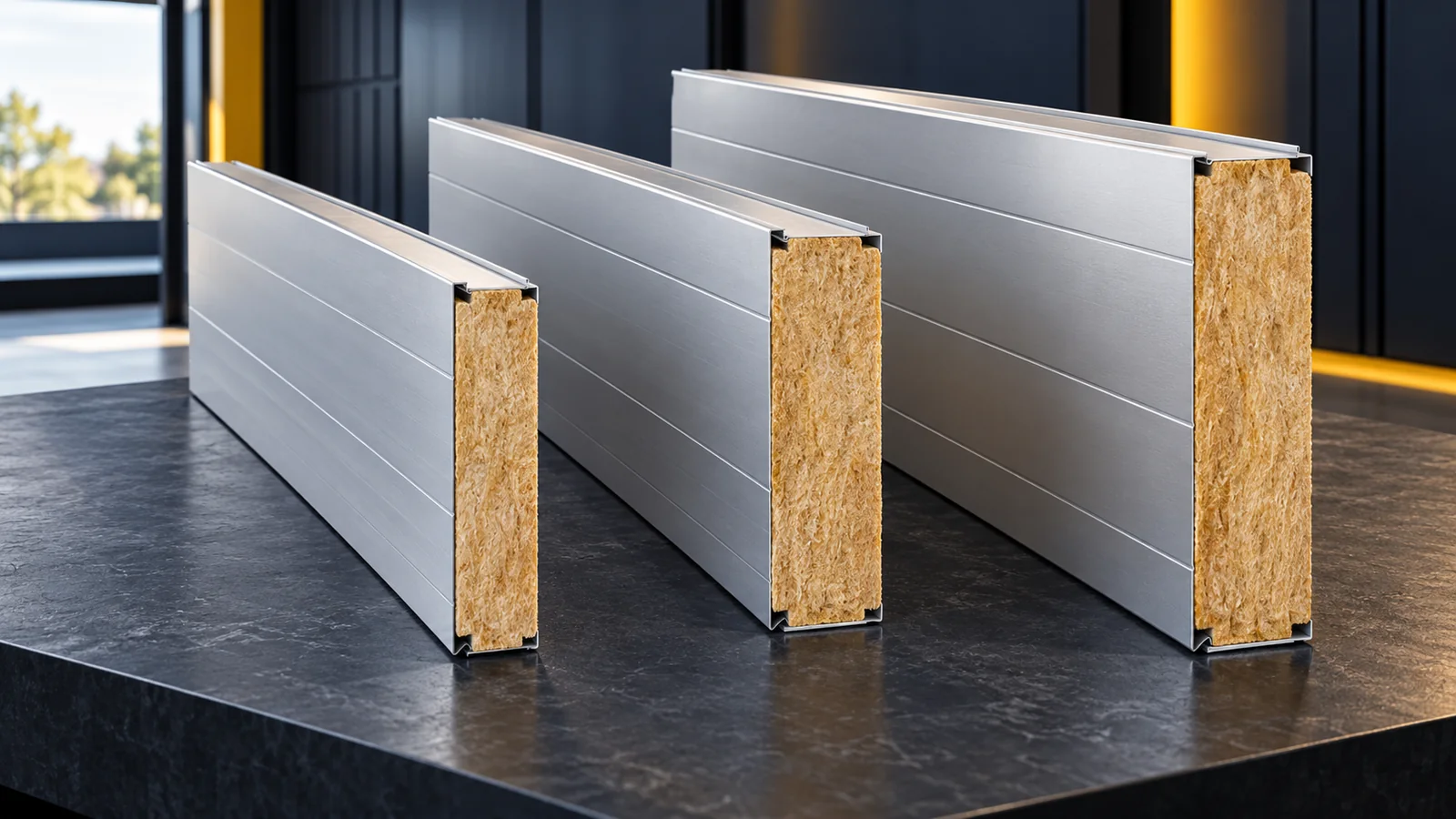
A thin panel with mineral wool may be suitable for the chosen wall, but its suitability must be verified in the project. A thickness of 60 mm does not provide the same thermal and fire performance as 100 or 200 mm. Nor can it be assumed that this is the smallest thickness available in every system. First establish the function of the partition and the requirements. Only then assess whether saving on thickness will not force changes to the entire solution. The term “thin” depends on the application. A 60 mm panel may be available in a given series, but not necessarily in every joint and finish. Dimensions and the thickness range must be checked in the current data sheet.

2026-11-14T09:55:02+01:00

How does an insulated panel with mineral wool reduce sound transmission?

An insulated panel with mineral wool can reduce sound transmission through a wall. However, the result is determined by the entire product, not by the name of the core alone. The declared ratings must be compared and the airtightness of the building envelope ensured. Large doors, leaky joints and the structure can weaken the effect. Reverberation inside the hall is a separate issue. A full metal facing does not become a sound-absorbing panel simply because there is mineral wool behind it. Insulation describes the reduction of sound passing to the other side of the partition. This matters when production noise is to be less disruptive in an adjacent room or the surroundings. The result depends on the panel construction and the sound frequency.

2026-11-14T09:56:00+01:00

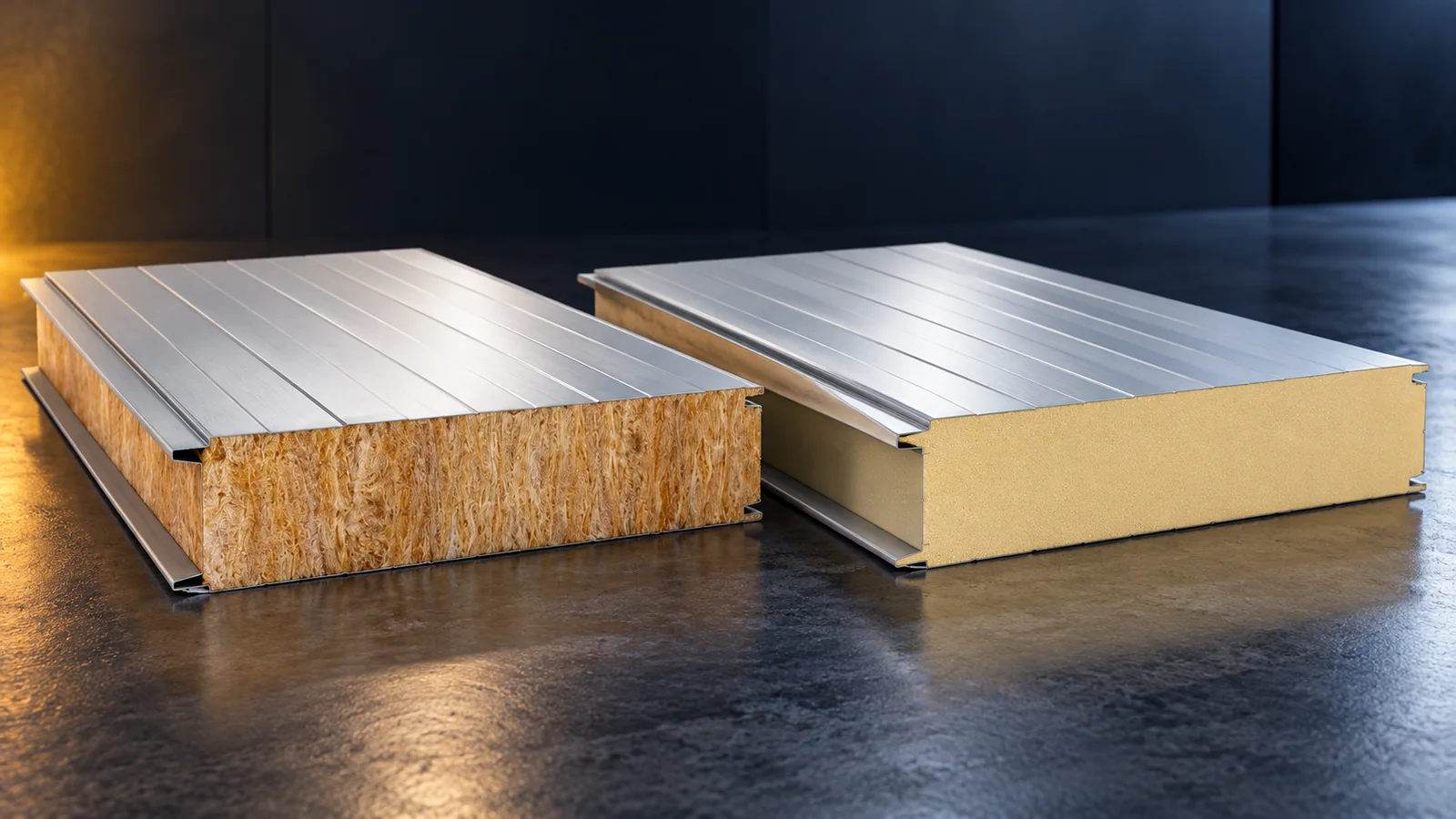
PIR or mineral wool in an insulated sandwich panel? How to choose the core

PIR and mineral wool meet different needs in an insulated sandwich panel. PIR allows good thermal performance at a smaller thickness and usually lower weight than comparable panels. Mineral wool may be the right choice for specific fire and acoustic requirements. The decision is made on the basis of the data for the whole panel and the building envelope design, not the name of the core alone. An insulated sandwich panel works as a combination of facings and core. The comparison must therefore take into account both steel sheets, the joint, thickness, length and application. A wall panel with a concealed fixing does not have to have identical parameters to a variant with an exposed fixing, even with the same core.

2026-11-14T12:15:08+01:00

How to choose screws and fix insulated wall panels with a mineral wool core?

A screw for insulated wall panels is selected for the entire connection. The panel thickness, the material and thickness of the support, the load and the corrosive conditions all matter. The geometry of the head and the sealing are also important. There is no single length or number of screws that is correct for every wall with a mineral wool core. The fixing pattern should follow from the design and the panel documentation. Correct seating is just as important as the choice of fastener itself. First establish the type and thickness of the panel and the arrangement of the joint. Then check the support. A screw for thin-walled steel profiles may have a different tip and drilling range than a fastener for thick steel. Timber and concrete require solutions intended for these substrates.

2026-11-14T09:54:44+01:00

How do you choose the thickness of an insulated wall panel with a mineral wool core?

The thickness of an insulated wall panel with a mineral wool core is selected simultaneously for thermal performance, fire requirements and the method of support. It is not enough to take 100 mm because that variant is readily available. First, the wall's task and the conditions in the building must be defined. Then the specific panel data sheets and the cost of the whole solution are compared. The right choice reduces the risk of later additional insulation or structural reconstruction. Note whether it is a façade, an internal partition or an element with a specific fire function. State the temperatures on both sides and how the rooms are used. Take into account moisture, frequent washing and the possibility of changing the hall's function. This is the information that allows the requirements to be determined.

2026-11-14T09:55:06+01:00

What is a 100 mm mineral wool insulated wall panel suitable for?

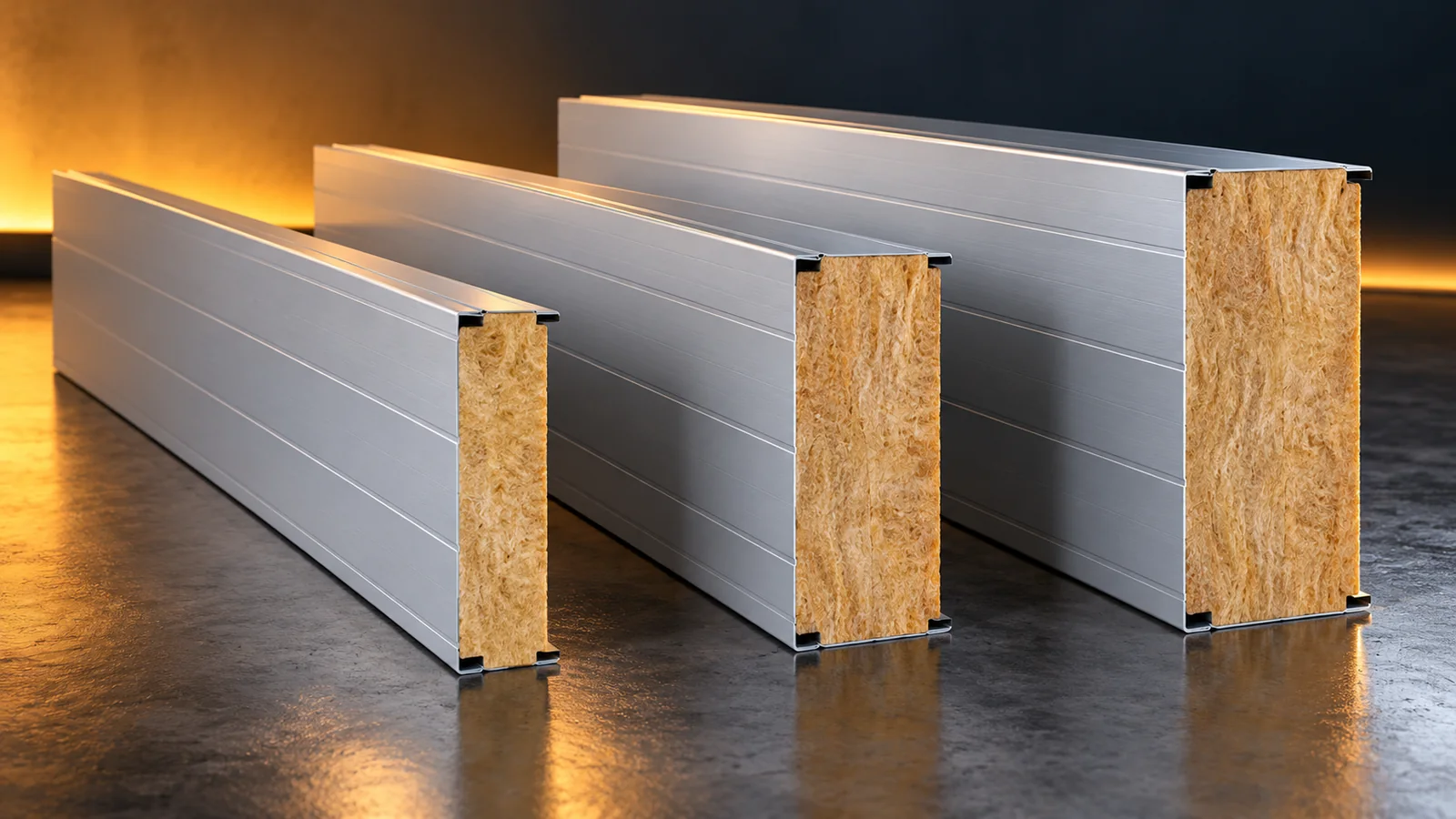
A 100 mm wall panel with a mineral wool core can be used for cladding halls and selected internal partitions. However, it is not a universal solution for every heated building. Its U-value, mass, acoustics and fire resistance depend on the specific system. Before purchase, the support, coating and locks must also be checked. The same thickness in two offers does not mean the same properties. In one of the wall panels with 100 kg/m³ stone wool, the 100 mm variant has a Uc of 0.39 W/(m²·K). With 0.5/0.5 mm facings, the mass is 18.1 kg/m². The datasheet states Rw 33 dB and a reaction to fire of A2-s1,d0.

2026-11-14T09:55:04+01:00

How to choose an insulated wall panel with mineral wool for a specific building?

An insulated wall panel with mineral wool is best chosen starting from the building's requirements. First, fire protection, thermal insulation and wind load are determined. Then the fixing arrangement, coating and dimensions are checked. A panel with a higher core density is not automatically better in every respect. A good specification allows offers for the same solution to be compared and avoids surcharges during installation. Describe the function of the facility and the temperature that will be maintained in it. State whether the wall is external, a partition or is to separate a fire zone. The enclosure of an unheated warehouse has a different task from the wall of a hall with employees and a humid process. The building's location and planned openings are also important.

2026-11-14T09:54:24+01:00
Back to top