Is an insulated wall panel with a mineral wool core non-combustible? How to read the classification
Insulated wall panels
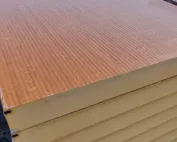
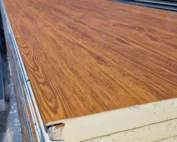
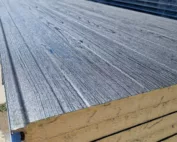
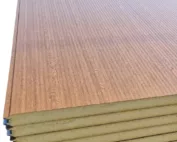
Many insulated wall panels with a mineral wool core have a declared reaction-to-fire class of A2-s1,d0. However, this should not be equated with the class of the core alone or with the fire resistance of the entire wall. The designations A1, A2, EI and REI answer different questions. Before purchase, the documents for the specific product and the installation conditions must be checked. The term “non-combustible panel” is too imprecise to design a partition on that basis. The panel consists of a core, facings, bonding layers and joint elements. The properties of one component do not automatically describe the whole. Mineral wool alone may have a different classification from the composite product. The purchase documents should therefore be checked for the data of the panel intended for the specific end use.
What is classified: the mineral wool or the finished panel?
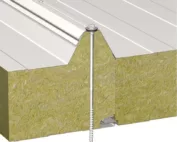
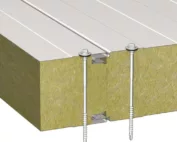
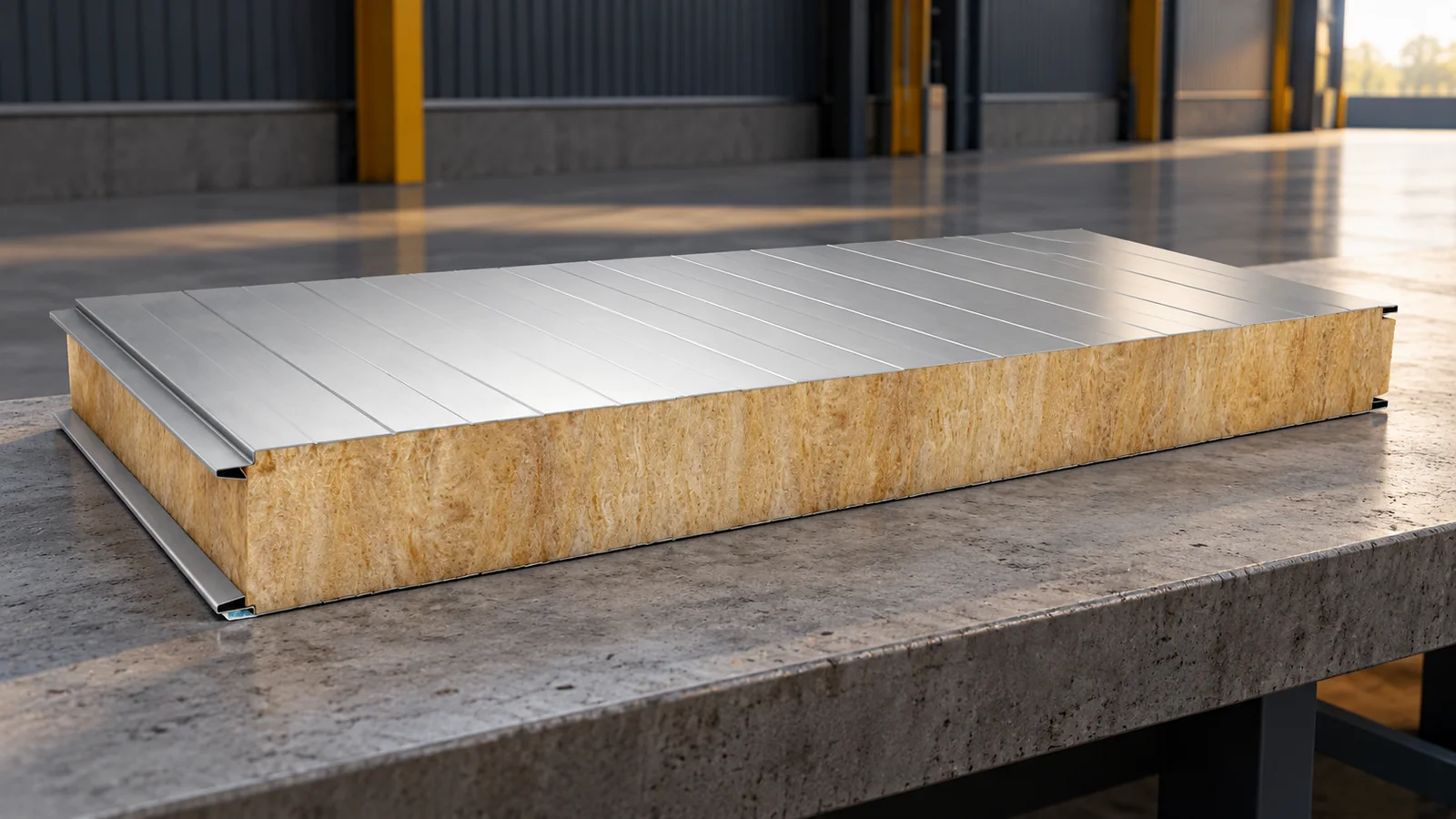
The panel consists of a core, facings, bonding layers and connecting elements. The properties of one component do not automatically describe the whole. Mineral wool alone may have a different classification than the composite product. In the purchase documents, therefore, look for the data of the panel intended for a specific end use.
The data sheet of the insulation used to produce the core is not enough. The adhesive, coatings and seals may be relevant. The finished element is assessed according to the rules applicable to the product. Transferring the A1 designation from the mineral wool to the entire panel leads to a misleading description. A reliable specification states the class actually declared for the given system, without adjusting it for the offer.
What does A2-s1,d0 mean?
A2 defines the reaction to fire class. It is not the same designation as A1. Additional symbols describe the behaviour related to smoke production and burning droplets or particles under classification conditions. S1 is a favourable smoke class, and d0 indicates the corresponding result for burning droplets. This does not mean that no smoke will appear in any fire.
The reaction class describes the product’s contribution to fire development. It does not state the time for which a wall will maintain fire integrity or fire insulation. Therefore, a panel with a defined reaction to fire may exist for which the required resistance class of a specific separating element has not been declared. In the product description, it is worth keeping the exact symbols instead of replacing them with a general promise of full safety.
How do EI and REI differ?
In the EI designation, the letter E refers to fire integrity and I to fire insulation. In REI, R is added, meaning fire load-bearing capacity. The number indicates the time in minutes defined by the classification. It is not the predicted duration of every real fire. The parameter refers to a defined element and test conditions as well as the field of application of the result.
A non-load-bearing wall and a roof covering may have different requirements. The EI class of a wall should not be used as proof of the suitability of the same panel for a roof. Also, the classification of external fire exposure on the roof is a separate issue. What designation is needed in a building is decided by the design and the function of the separating element, not by a slogan on a sales page alone.

Why does the installation method change the result?
The classification may cover a specific panel thickness, laying direction and maximum support spacing. Fasteners, seals and the connection to the structure are relevant. A panel installed horizontally does not necessarily have the same scope as the same panel installed vertically. The relevant variant of the document must be read.
Changing the interlock, increasing the span or omitting the seal may go beyond the verified solution. This is not remedied by using more wool elsewhere. When substituting a product, it is worth comparing the full classification conditions. The designer should check whether the new proposal still fulfils the same function. Similarity of the two panels in cross-section alone is insufficient.
How should openings and the NPD designation be treated?
Openings for services, doors and gates require solutions consistent with the function of the wall. A service penetration must not remain an incidental gap in a partition with the required EI class. The appropriate connection at the floor slab, roof and floor must also be maintained. The panel field is only part of the entire protection system.
NPD for a given property means that it has not been declared. It does not give the right to adopt a value from another thickness or a similar product. Nor should it be interpreted as proof of zero resistance. In practice, where a design requirement applies, a product with appropriate confirmation is needed. Missing data must be clarified before purchase rather than filled in by assumption.
Which documents should be checked before ordering?
The product type designation, declaration of performance and classification documentation for the required application are needed. Check whether they relate to the current variant of facings, core and interlock. Pay attention to the conditions of support and sealing. If the supplier offers a second grade, it must be confirmed separately which declarations relate to that batch.
Pass the required details to the contractor and do not leave the choice of seals to chance. At acceptance, compare the workmanship with the documentation. A mineral wool panel can be a very good component of a fire solution, but it does not work on its own. Achieving the required class depends on a compliant product, structure and installation. These three elements are precisely what must be checked, instead of settling for the word “non-combustible”.
7 branches. Materials closer to your project.