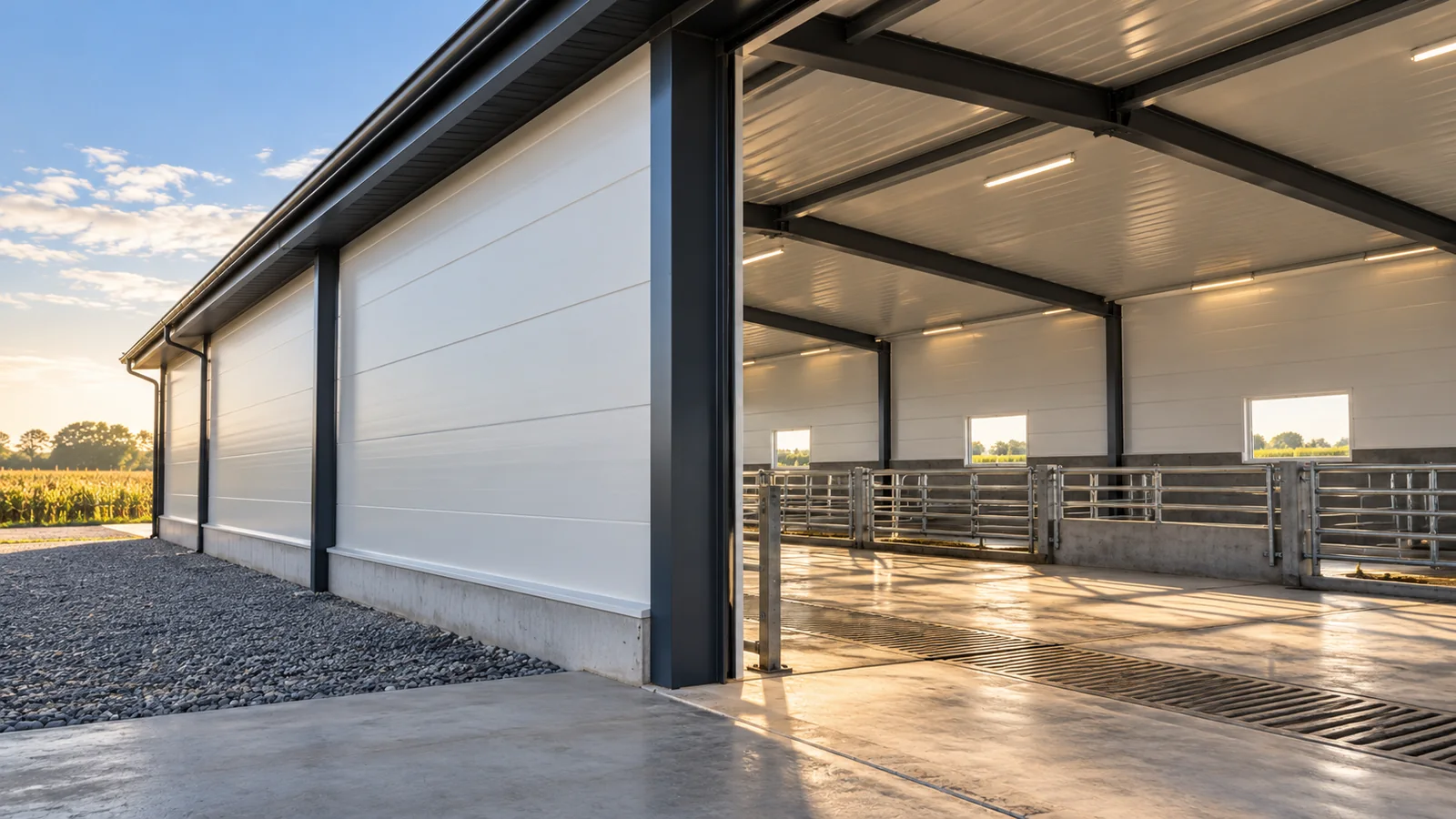
Insulating farm buildings in stages while keeping the farm running

Insulating an active farm must be planned together with how production, storage and handling in the buildings are organised. Choosing PIR boards or sandwich panels is part of this task: equally important are access to the area being renovated, protection of supplies and continuity of ventilation. On Izoprofil.eu we explain how to prepare the staging of works in a warehouse, workshop or livestock building. The starting point is a description of how the rooms are used and an assessment of the existing building envelope. Next, the scope of works, the conditions for handing a sector over to the contractor and the criteria for putting it back into operation are defined. The material is selected for the environment and the function of the layers, not according to a single scheme for the whole farm. Such a schedule helps to limit conflicts between the works and the day-to-day operation of the facility.
By |2026-11-15T17:55:09+01:002023-09-27|Building guide|Comments Off on Insulating farm buildings in stages while keeping the farm running

How can I check the available lengths of insulated roof panels from stock?

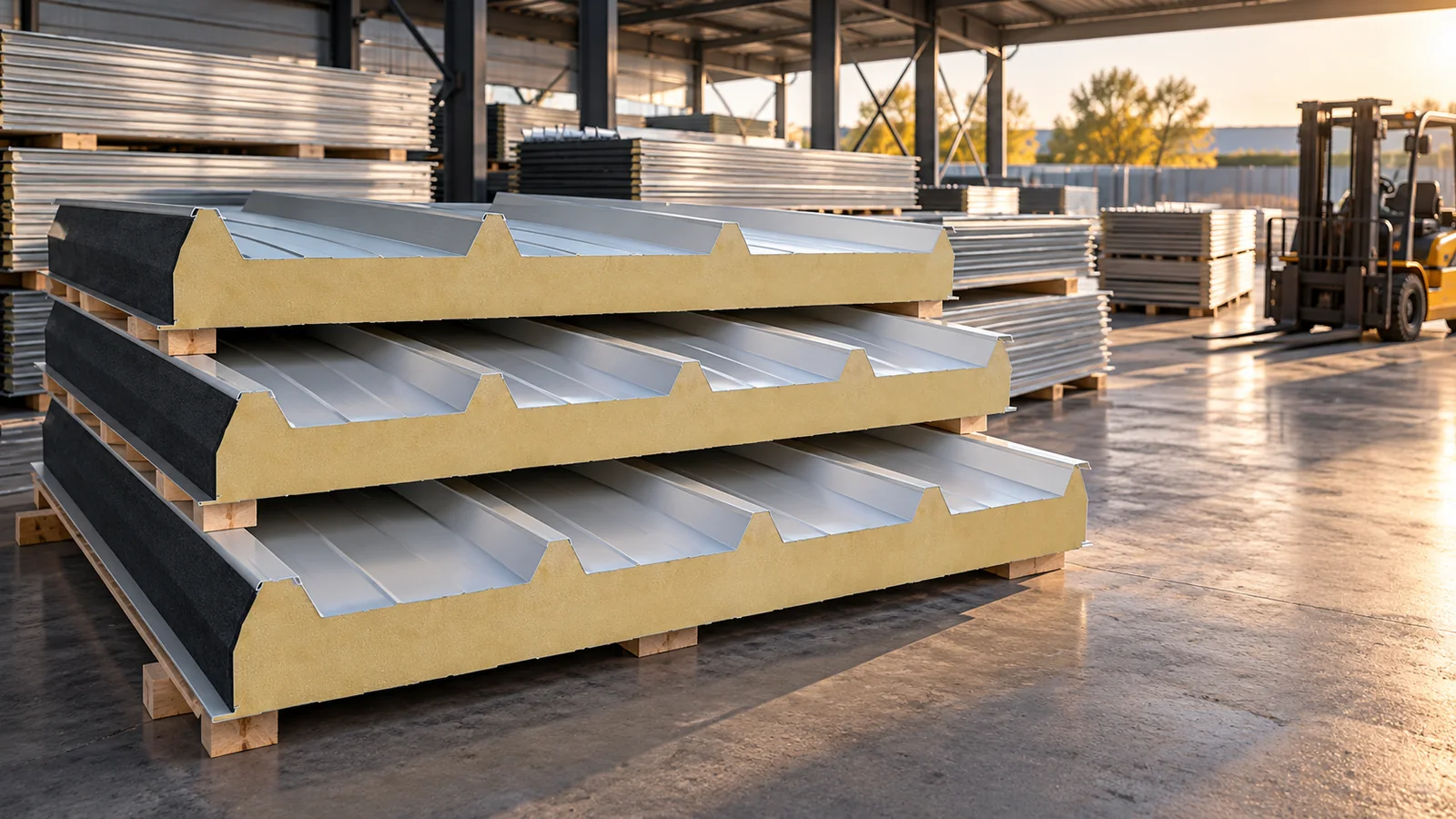
The available lengths of insulated roof panels must be checked for a specific stock batch. The catalogue states production possibilities, not the current stock level. Roof slope measurements, a support plan and details for the eaves and ridge are needed for selection. Also record the module, sheet thicknesses, overlap direction and edge condition. A well-chosen panel from stock can reduce waiting time, but requires just as precise fitting as a made-to-order product. Ask for the number of pieces in each length, not just the total area. Check the product designation, core, thickness, cover width and both facings. Determine the colour of each side and the reason for any price reduction.

By |2026-11-14T12:18:22+01:002023-09-19|Building guide|Comments Off on How can I check the available lengths of insulated roof panels from stock?

When do 40 mm second-grade roof panels offer a saving?

A 40 mm second-grade insulated roof panel can be economical only if it meets the project requirements and has a known condition. Check the core, sheets, profile, locks and batch documents, and confirm the load capacity for the actual support spacing and the slope conditions. A thickness of 40 mm alone does not guarantee insulation performance or universal application. Add waste, repairs and installation to the price; the saving disappears when the covering has to be rebuilt.

By |2026-11-14T16:06:16+01:002023-07-14|Building guide|Comments Off on When do 40 mm second-grade roof panels offer a saving?

How should you cut insulated panels without damaging the facings?

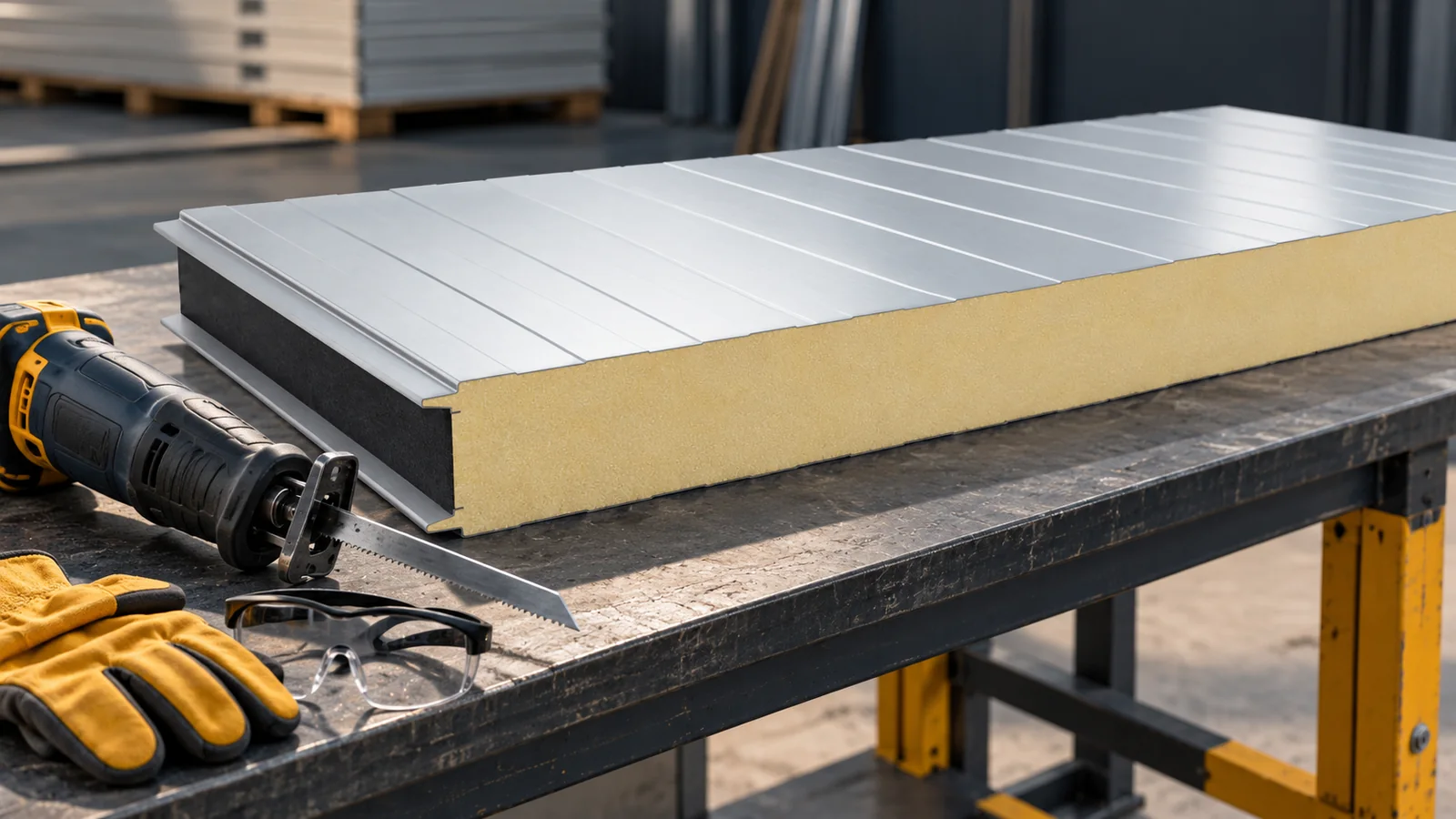
Insulated panels are cut with tools suited to the metal facings and the core. Edge heating must be limited, the component well supported and swarf removed quickly. An angle grinder with a grinding disc is not the right choice for this task. Before cutting, check the instructions for the chosen system and the finishing detail. A clean cut alone is not enough if the core is left exposed or the sheet's protection is damaged after the work. The facing is thin sheet protected against corrosion. High temperature and sparks can damage its protective layers. Metal particles left on the surface begin to corrode and leave marks on the paint. They are not always visible immediately after the work is finished.

By |2026-11-14T09:56:13+01:002023-05-28|Building guide|Comments Off on How should you cut insulated panels without damaging the facings?

How long does an insulated panel with mineral wool last and what shortens its service life?

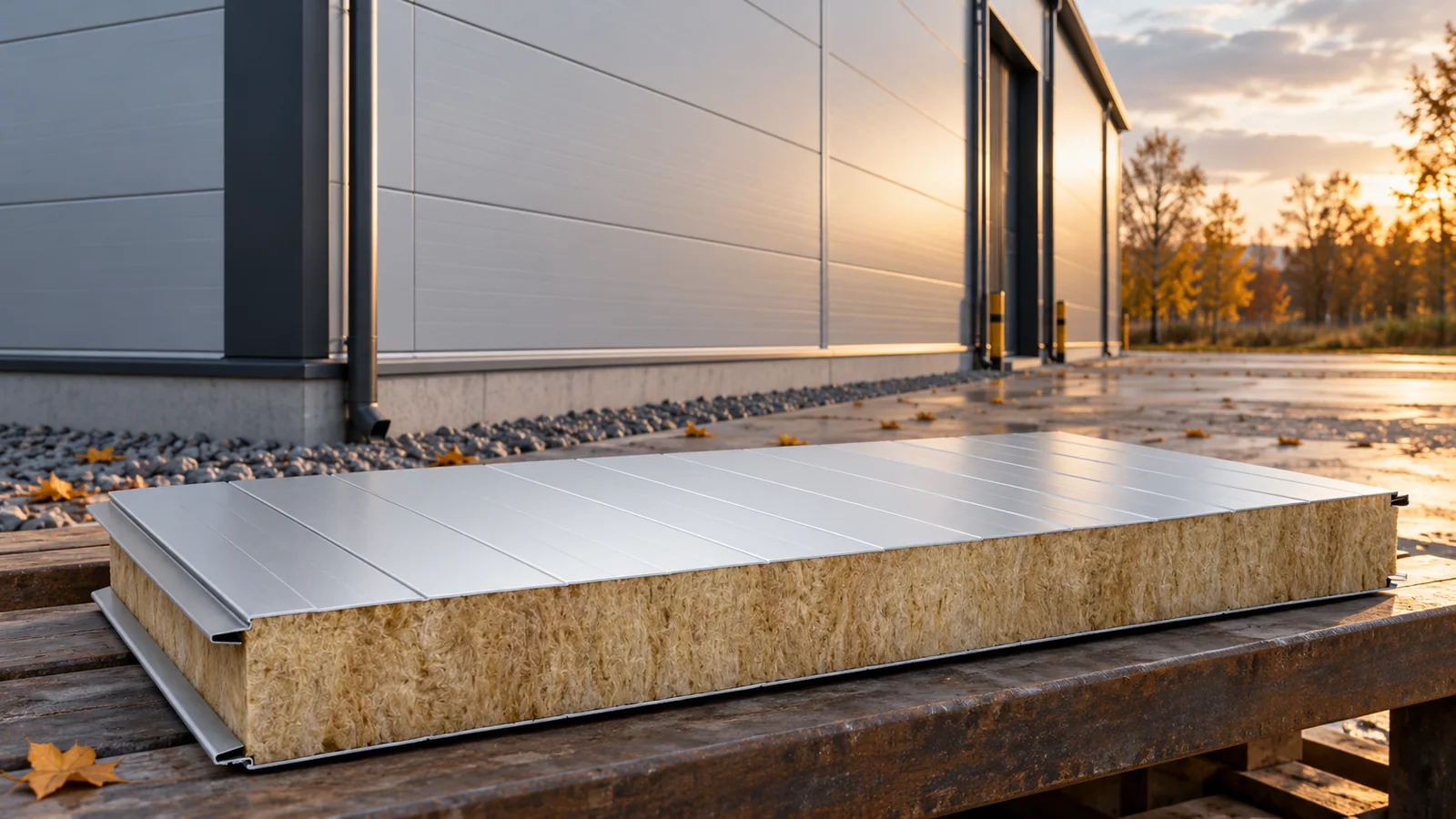
The durability of an insulated panel with mineral wool is determined by the entire element. The facings, their protection, the bond with the core and the tightness of the joints all matter. There is no single number of years that applies to every hall. A dry warehouse performs differently from a building with high humidity or an aggressive atmosphere. Good choice of coating and regular inspections help avoid repairs that seemingly start from a minor scratch. Mineral wool is an important part of the panel, but the enclosure does not consist of insulation alone. Thin facings and the core work together to carry loads. Loss of adhesion, severe denting or corrosion of the sheet can impair the element's performance even when the insulating material is still in place.

By |2026-11-14T09:54:22+01:002023-05-24|Building guide|Comments Off on How long does an insulated panel with mineral wool last and what shortens its service life?

What are the advantages and limitations of insulated panels with a mineral wool core?

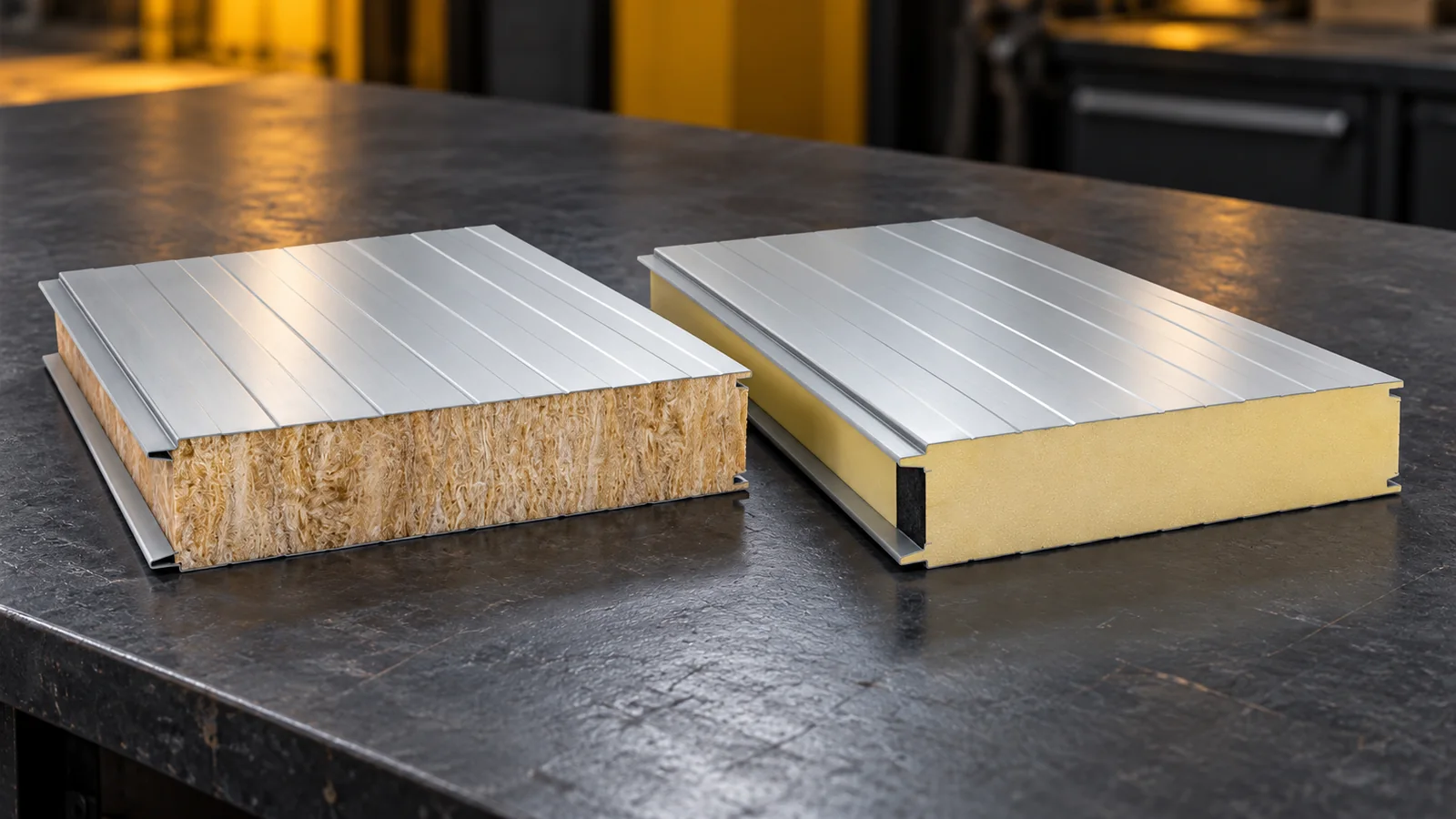
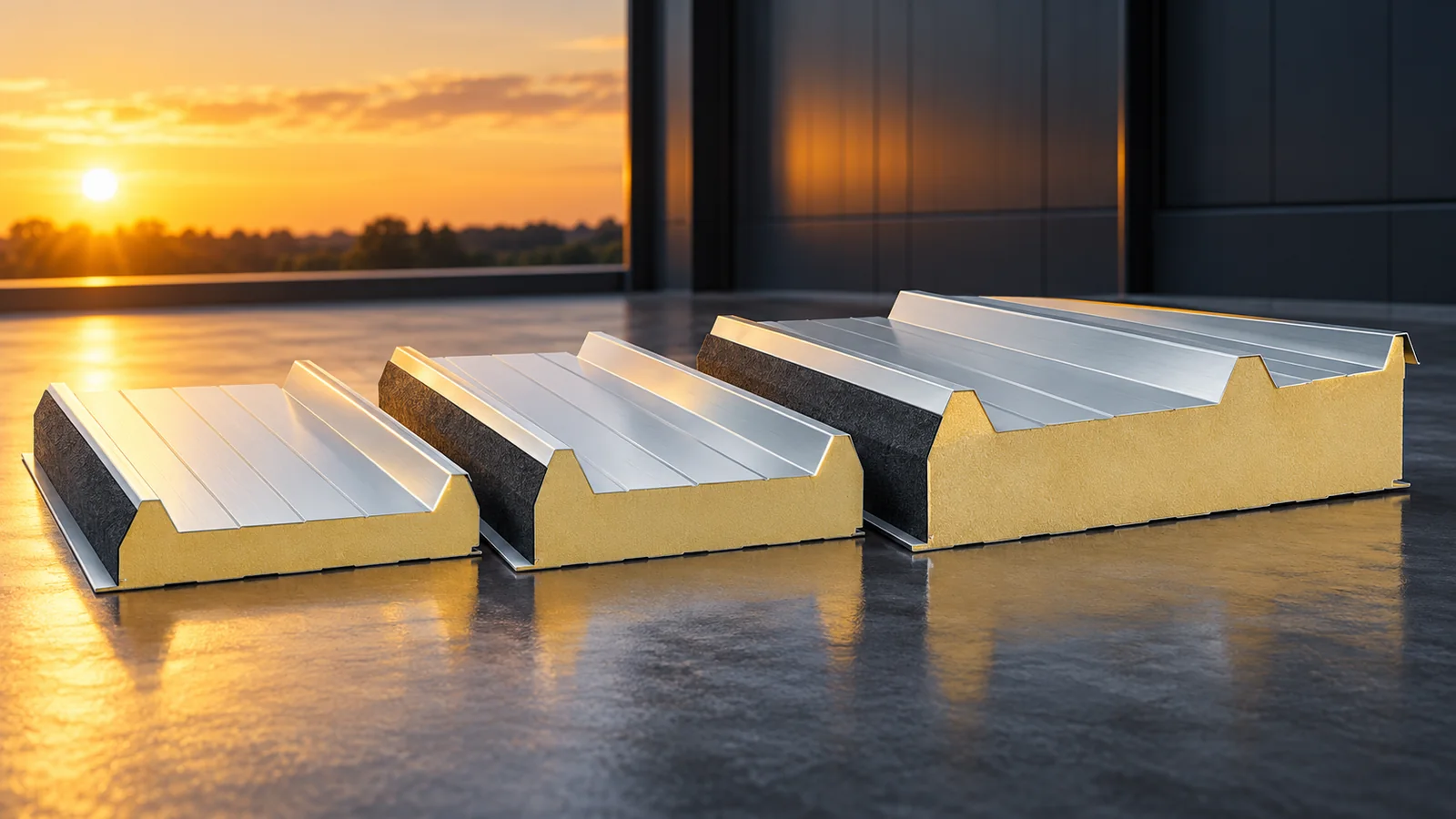
Insulated panels with a mineral wool core combine a finished facing with insulation and allow the building to be closed quickly. Their strong point is the available fire classifications. In selected systems, acoustic insulation is also advantageous. However, greater weight and the thickness needed to achieve a low U-value must be taken into account. Assessing the advantages only makes sense when comparing panels intended for the same wall or the same roof. One panel forms the external surface, the insulation and the internal facing. On a prepared structure, this reduces the number of separate operations. It is not necessary to lay each layer of the building envelope in sequence over the entire surface. However, prior adjustment of lengths and preparation of details are of great importance.

By |2026-11-14T09:54:28+01:002023-05-23|Building guide|Comments Off on What are the advantages and limitations of insulated panels with a mineral wool core?

What should you check before buying 100 mm second-grade wall panels?

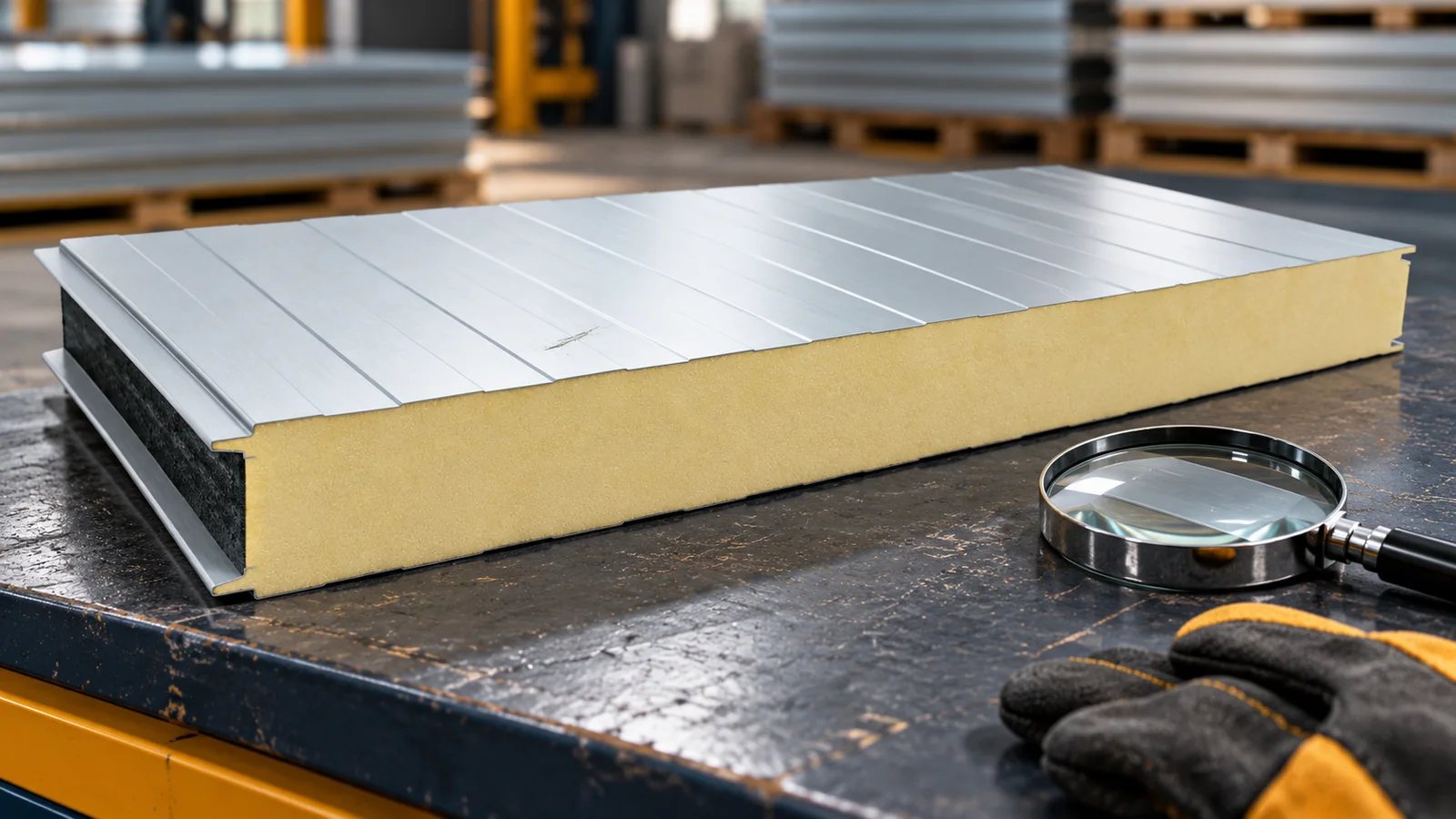
To check a 100 mm second-grade sandwich wall panel, first establish whether the specific batch meets the project requirements, not just the thickness. Inspect the locks along their full length, the condition of the facings and core, and the documents confirming the properties. Assess whether the defects are purely visual or affect the panel's construction. Compare the full specification, because PIR and mineral wool variants may have different insulation, weight and fire classification. Leave the suitability decision to the designer.

By |2026-11-14T16:06:13+01:002023-02-02|Building guide|Comments Off on What should you check before buying 100 mm second-grade wall panels?

Which sandwich panels suit cattle, poultry and pig housing?

Insulated panels for a cattle shed, poultry house and piggery are selected according to the livestock conditions and the way the building is maintained. Heat, ventilation, moisture, chemical compounds and washing are important. A PIR core can help achieve good insulation performance at a small thickness, but on its own it does not protect the facings against corrosion. The entire wall and roof system must be selected, including coatings, fasteners, seals and details around installations. A cattle shed, poultry house and piggery may operate at different temperatures, humidity and air exchange rates. The conditions also depend on stocking density and technology. A single panel thickness should not be assumed for every agricultural building. The material must be matched to the assumptions for the specific facility.

By |2026-11-14T12:15:06+01:002023-01-26|Building guide|Comments Off on Which sandwich panels suit cattle, poultry and pig housing?

How thick should insulated roof panels be for a heated building?

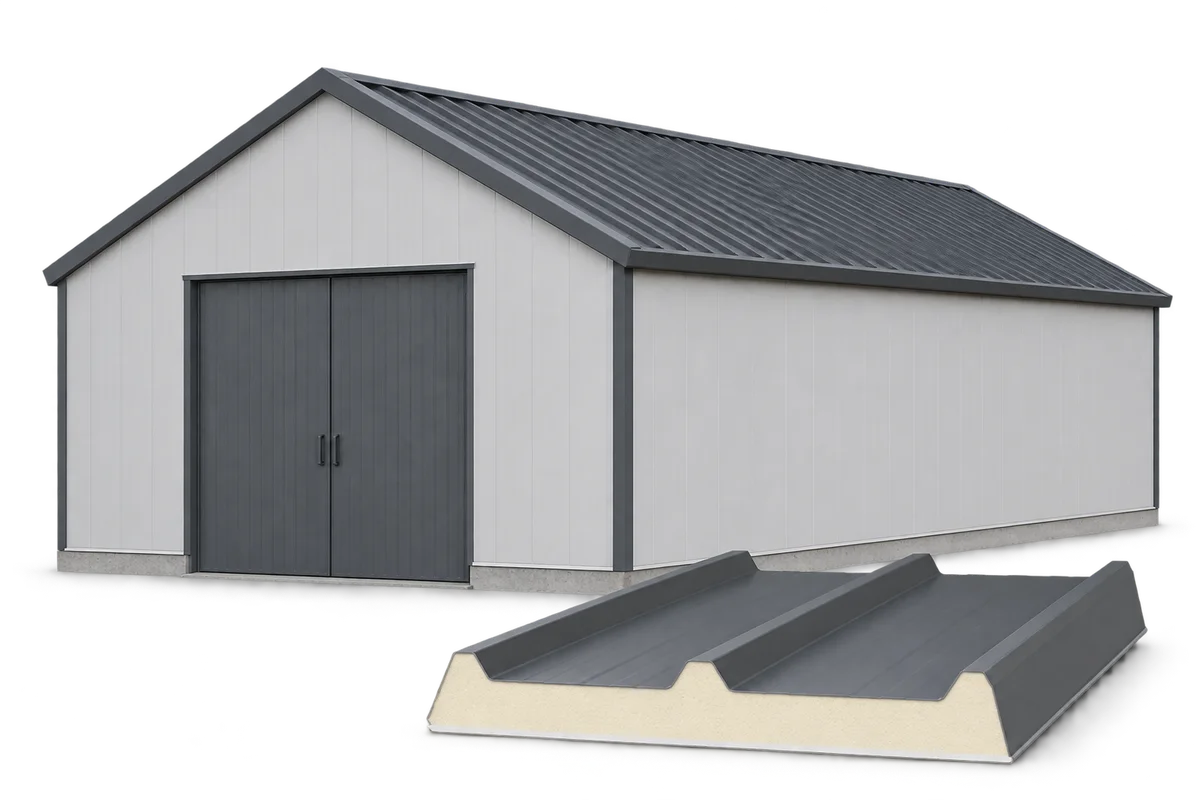
The thickness of a sandwich panel roof in a heated building should be selected primarily according to the required U-value for the specific product, not solely from a thermal table. Check the declared Uc, load-bearing capacity and deflection for the given support arrangement, the effect of the facing colour, and the airtightness of joints and service penetrations. PIR allows good performance at a small thickness, but the core alone does not ensure airtightness – the entire installation determines the result. Determine the target U for the building's conditions of use.

By |2026-11-14T16:06:11+01:002023-01-26|Building guide|Comments Off on How thick should insulated roof panels be for a heated building?
Back to top