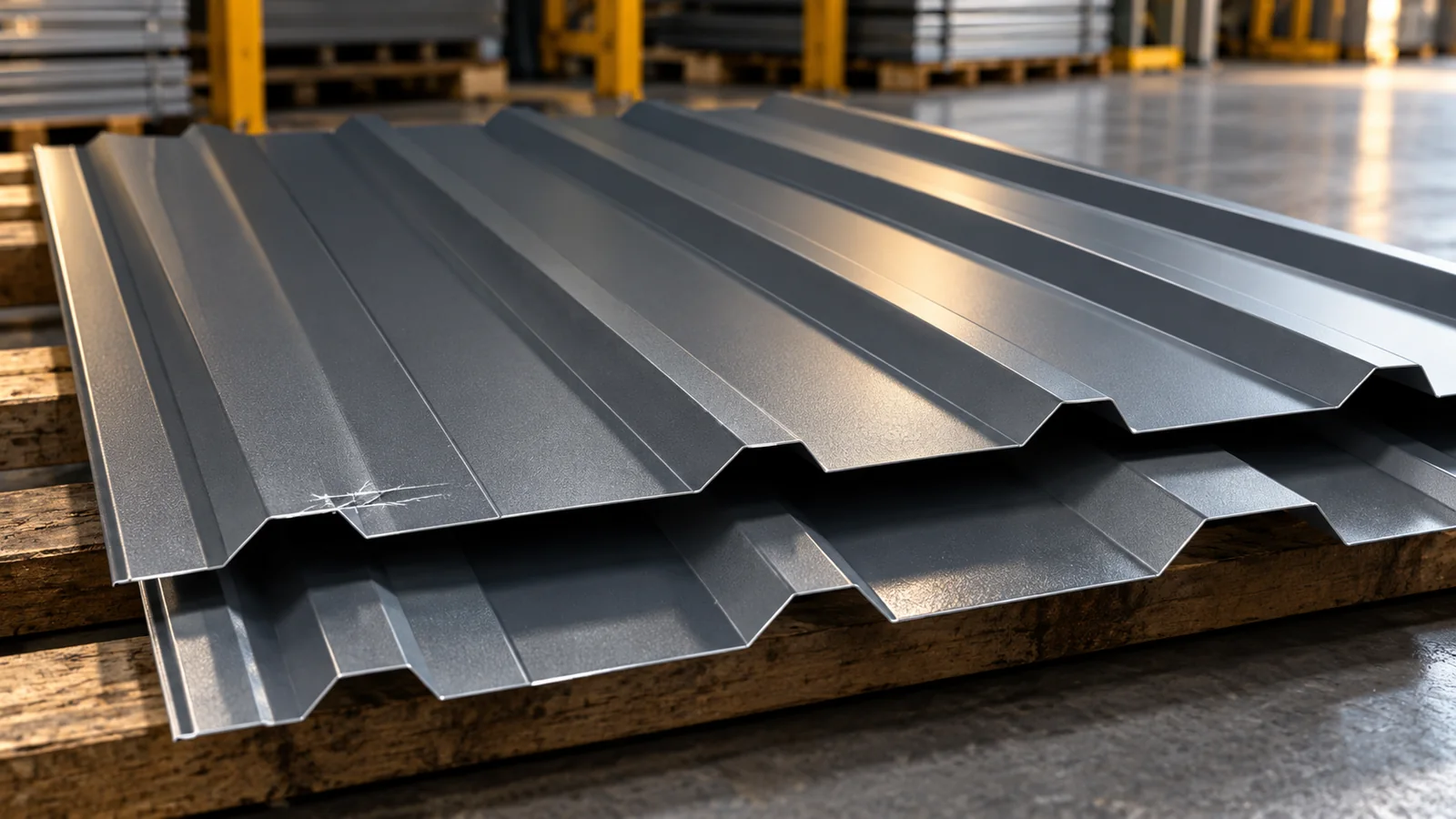
When can you use second-grade trapezoidal steel sheets for roofs and façades?

Second-grade trapezoidal sheet may be suitable for a roof or façade only when the parameters of the specific batch and the reason for the price reduction are known. It is necessary to establish whether the issue is an appearance defect or damage that hinders tight installation or affects load-bearing capacity. The term “second grade” alone does not indicate what deviates from the requirements. Before deciding, the profile, thickness, steel grade and coating must be confirmed, and the geometry and connections assessed. The final selection is left to the designer.
By |2026-11-14T16:06:29+01:002023-12-14|Building guide|Comments Off on When can you use second-grade trapezoidal steel sheets for roofs and façades?

Which roof covering is cheapest once the whole installation is taken into account?

The cheapest covering must be assessed on the cost of a complete roof that meets the building's requirements. The price of a sheet or a roll is not enough. The substrate, flashings, waste, installation and transport all count. Trapezoidal steel sheet often gives a simple material layout on uncomplicated roof slopes, but it will not be right for every pitch. A saving only makes sense when the chosen solution complies with the design and allows all details to be executed correctly. One quote may cover only the covering, while another also includes accessories. The price per total square metre of sheet metal looks different from the price per square metre of covering. With rolled material, laps and the number of layers add to it. Until the units and the scope are standardised, the comparison leads to a random result.

By |2026-11-14T12:17:07+01:002023-10-13|Building guide|Comments Off on Which roof covering is cheapest once the whole installation is taken into account?

Gable, hip or another roof shape for a detached house?

The roof shape should be chosen mainly for how the loft will be used and how simple the details will be, not for the name of the form alone. It is worth checking how many slopes, hips and valleys the planned footprint will create, and how that affects flashings and drainage. A simple duo-pitch roof makes the water flow easier to read and the sheets easier to lay out, while a more complex geometry demands more careful drawings. The final choice of covering and layers should be left to the designer, as angles, supports and details decide it.

By |2026-11-15T03:00:33+01:002023-09-30|Building guide|Comments Off on Gable, hip or another roof shape for a detached house?

Ordering trapezoidal steel roofing: from roof measurements to sheet sizes

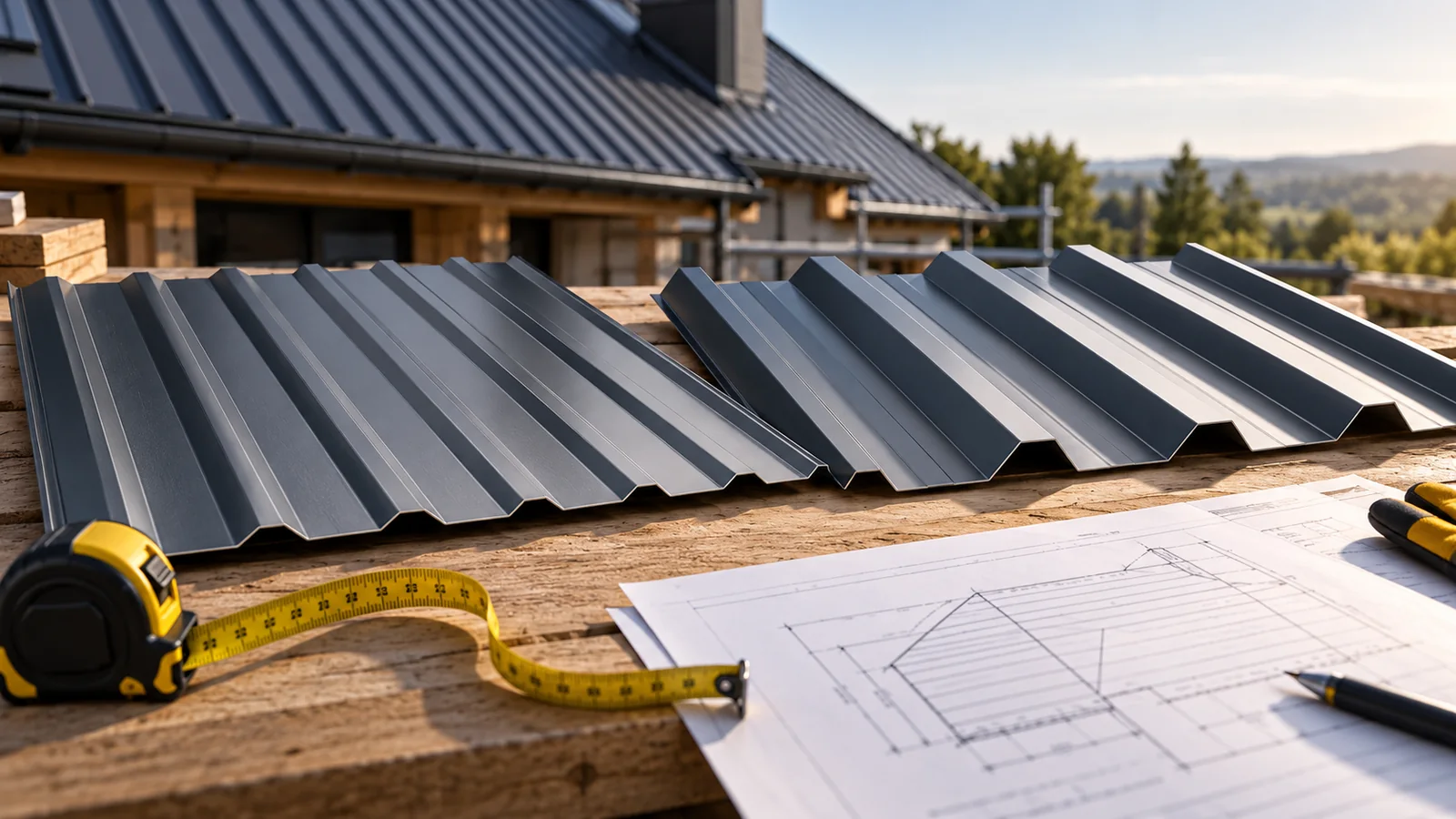
Begin by establishing what function the trapezoidal sheet is to serve: whether it will be external cladding, wall lining, or a load-bearing element of another system. This determines the choice of profile and documentation. Next, check whether the building is heated and where moisture may come from, and plan for rooftop equipment and point loads. Prepare a sketch with dimensions of the roof slopes, eaves, ridges and pitch. In an existing building, check the plane and condition of the supports. Remember that T18 and T35 designations do not define a single geometry – verify height, rib pitch and coverage width.

By |2026-11-14T16:06:27+01:002023-07-02|Building guide|Comments Off on Ordering trapezoidal steel roofing: from roof measurements to sheet sizes

What do roof battens do beneath the covering?

Roof battens form the framework that supports the covering and mark where sheets are fixed, so before buying material it is worth agreeing with the contractor whether their spacing and cross-section match the geometry of the chosen profile and the expected loads. An even-looking finished frame is not enough — batten positions must suit the shape of the ribs, and for trapezoidal sheets the support method follows from the design and the tables for the specific profile. Also check that battens are not confused with counter-battens, which create a ventilation gap above the underlay.

By |2026-11-14T16:07:17+01:002023-05-11|Building guide|Comments Off on What do roof battens do beneath the covering?

Choosing a new covering after an asbestos cement roof is removed

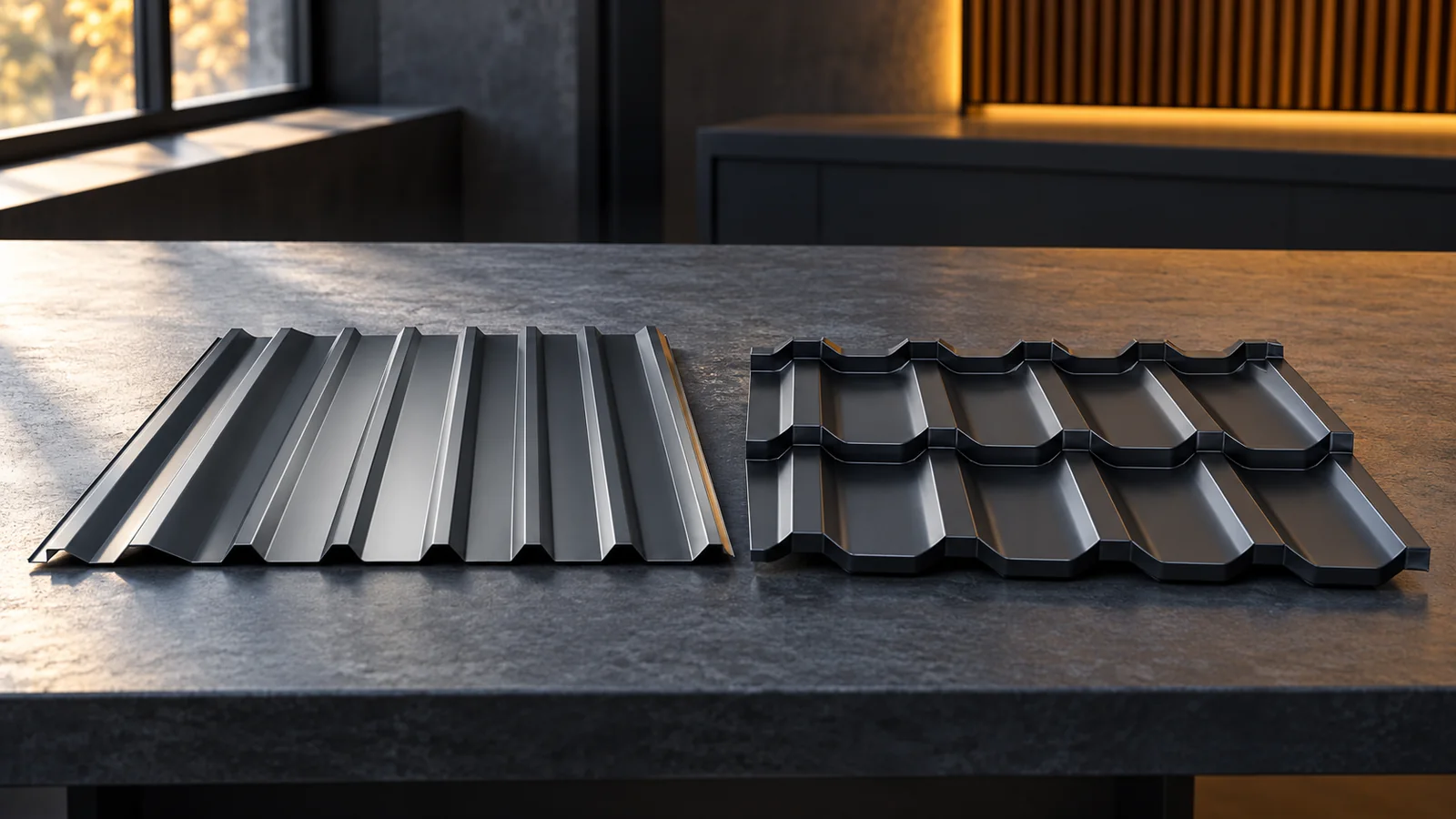
First establish whether the old sheets contain asbestos and plan their safe removal — only then choose the covering. The key variable is the condition of the roof structure, not just the weight or price of the new material. Check rafters, purlins, wall plates and connections, especially near chimneys and former leaks; do not judge the load-bearing capacity of the timber from a photograph. The colloquial term “eternit” is used for various sheets, so determine the covering’s composition from documentation and expert assessment. Before setting a date, ask your municipality about collection rules and possible support. Only after these steps should you compare trapezoidal sheet with modular metal tile.

By |2026-11-14T19:20:32+01:002023-01-11|Building guide|Comments Off on Choosing a new covering after an asbestos cement roof is removed

Reading trapezoidal sheet designations: T18, T35 and structural profiles

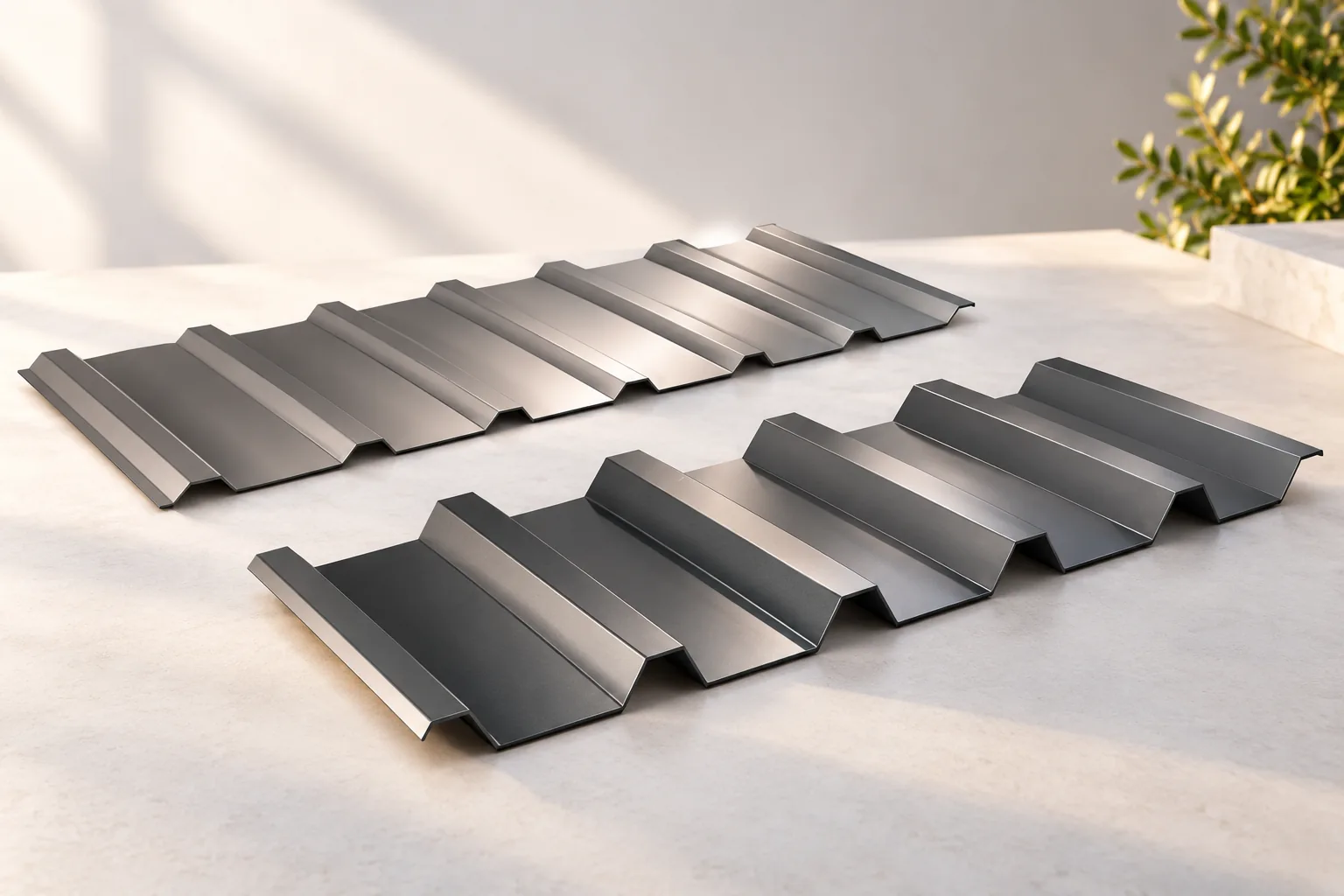
A profile name alone is not enough to order trapezoidal sheet – you also need to check the technical data sheet for the specific product. The designation T18 or T35 helps initially identify the family and rib height, but it is not a common description of all products on the market. Before purchase, verify thickness, cover width, coating and length, as well as the cross-section drawing. Two products with a similar name may have different rib spacing and sheet width. Do not read load capacity from the name alone – it requires tables for the given product.

By |2026-11-14T16:09:25+01:002023-01-03|Building guide|Comments Off on Reading trapezoidal sheet designations: T18, T35 and structural profiles
Back to top