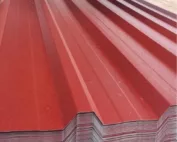
Reading trapezoidal sheet designations: T18, T35 and structural profiles
Trapezoidal steel sheets
A profile name alone is not enough to order trapezoidal sheet – you also need to check the technical data sheet for the specific product. The designation T18 or T35 helps initially identify the family and rib height, but it is not a common description of all products on the market. Before purchase, verify thickness, cover width, coating and length, as well as the cross-section drawing. Two products with a similar name may have different rib spacing and sheet width. Do not read load capacity from the name alone – it requires tables for the given product.
What does the letter and number in the name indicate?
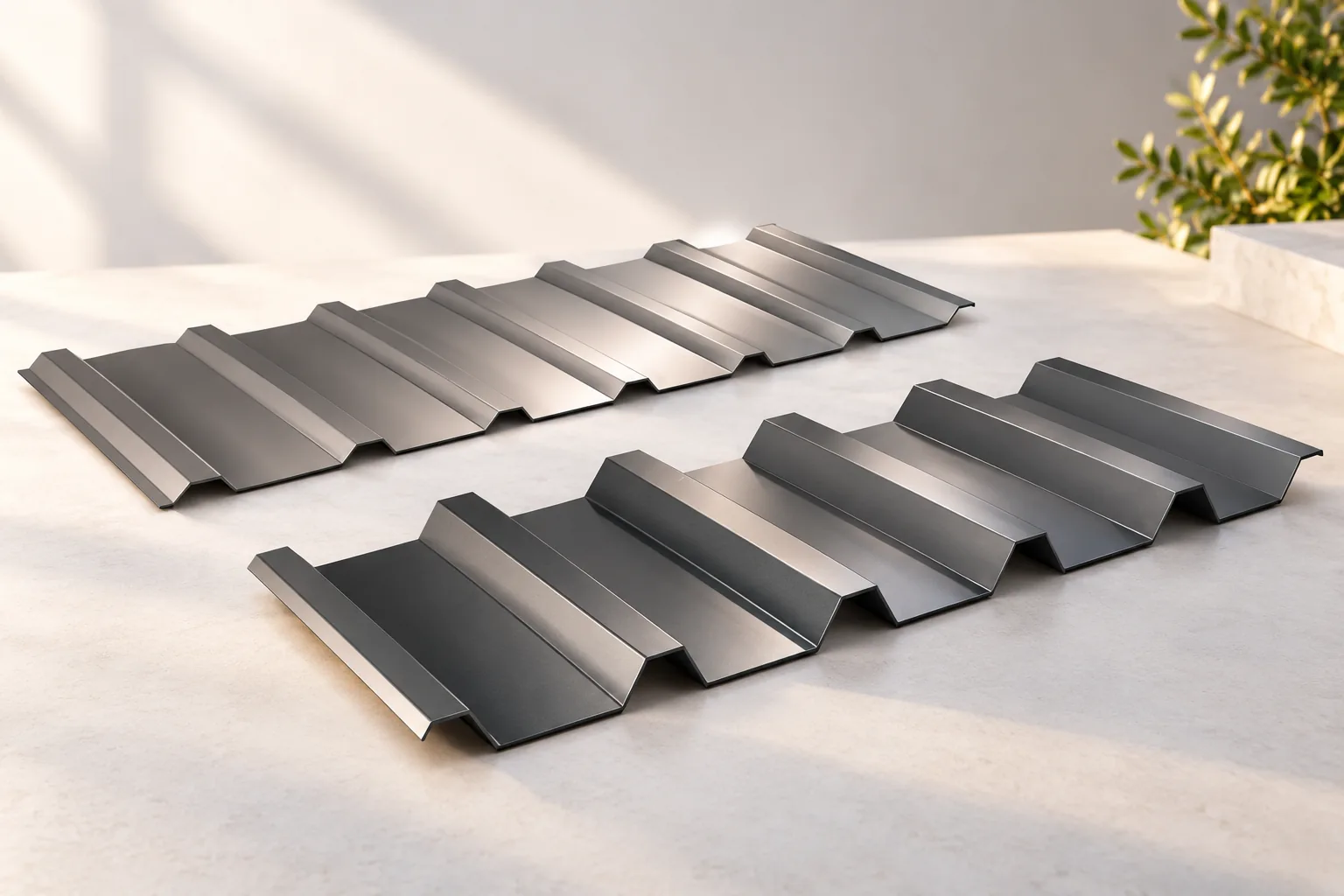
The letter T is commonly used in the names of trapezoidal steel sheets. The number allows a preliminary identification of the profile height. However, it is not a common, complete description of all products available on the market. Two products with a similar name may have different rib spacings and sheet widths.
The cross-section drawing and the stated dimensions should be examined in the data sheet. For example, within the family designated T18, a profile with a height of 18 mm may be found, but also a variant with a different actual height. When replacing a section of old covering, a matching T18 label alone does not guarantee that the laps will fit.
How to distinguish overall width from cover width?
The overall width covers the entire sheet. The usable width, also called effective width, defines the covering width after the lap has been made. These values are used for different calculations. When planning the number of covering strips, the usable value and the laying rules for the specific profile are required.
The difference also affects price assessment. The rate per overall square metre may look more favourable than the price per square metre of covering, although it describes the same material. In quotations, the unit must be standardised. For billing the entire roof, a sheet plan is still required, taking into account cuts and joints.
Why is thickness separate information?
T18 and T35 do not specify the sheet thickness. Each of these profiles can be available in different material variants. A change in thickness affects the weight and properties of the sheet, but its significance must be assessed together with the geometry and the steel grade. It is not enough to compare two products solely by the number in the name.
In the order, it is worth recording the full thickness designation and how it is determined in the documentation. If the quotation is unclear, ask for confirmation of the product parameters. An additional protective layer does not automatically turn a thinner material into a thicker structural variant. These are different product characteristics.

What does the coating information mean?
The coating description identifies the surface protection, not the colour itself. The specification may contain abbreviations for the coating type and designations of its variant. Their full form must be checked in the documentation of the product being sold. Similarly sounding trade names do not necessarily mean identical parameters.
The choice requires the ambient conditions, the expected appearance and the maintenance requirements. Matt and gloss do not form a simple ranking of resistance. Also note the protection of the underside of the sheet. On a canopy or on a façade it may be visible and may perform under different conditions than on a closed roof.
How should the roof and façade variants be read?
The manufacturer may distinguish variants intended for the roof or for the wall. The differences concern, among other things, the geometry, the laying direction and the overlaps. The designations of additional letters are not uniform across the whole market. Therefore, no meaning known from another catalogue should be attributed to every symbol.
Before installation, it must be established which side of the sheet is to face outwards and how the side connection is to be made. The cross-section drawing should correspond to the material actually supplied. Turning the profile over at one’s own discretion may change the behaviour of the detail. The appearance of both sides does not determine their interchangeability.
What does the name not tell you about load-bearing capacity?
The name T35 does not specify the permissible support spacing or the number of screws. Tables for the specific product are needed for assessment. They take into account, among other things, the thickness, the steel grade, the support pattern and the deflection conditions. The data must be related to the loads envisaged for the building.
For structural profiles the matter is equally important. A deep sheet can form the roof substrate with insulation and waterproofing, but its selection requires calculations. The profile symbol alone does not confirm the load-bearing capacity of the entire assembly. The supports, connections and additional loads from equipment are checked separately.
What should a clear order description look like?
Record the full technical name of the profile, the application variant, the thickness and the material grade. Add the coating type, the colour, the cover width as well as the lengths and number of sheets. If anti-condensation fleece is required, indicate it separately. It is not the same as insulation or the vapour barrier of a heated roof.
Attach the drawing or the designation of the technical data sheet on which the selection is based. On delivery, compare the documents with the order before installation begins. Such a description limits misunderstandings with similar names. It also makes it easier later to determine the correct material for repair or extension.
7 branches. Materials closer to your project.