

Building handbook
The Izoprofil.eu handbook covers roofing, wall cladding and insulation, from reading specifications to preparing an order. Find guidance on sandwich panels, PIR boards, trapezoidal sheets and metal roof tiles. Understand overall sheet width and effective cover width, compare insulation options and plan installation details. The articles also cover renovation, material storage and costs that are easy to overlook. Worked examples explain the calculation method. Check the design and product documentation before making the final selection. Once you have identified the material, prepare the dimensions, quantity and delivery location for a quote.
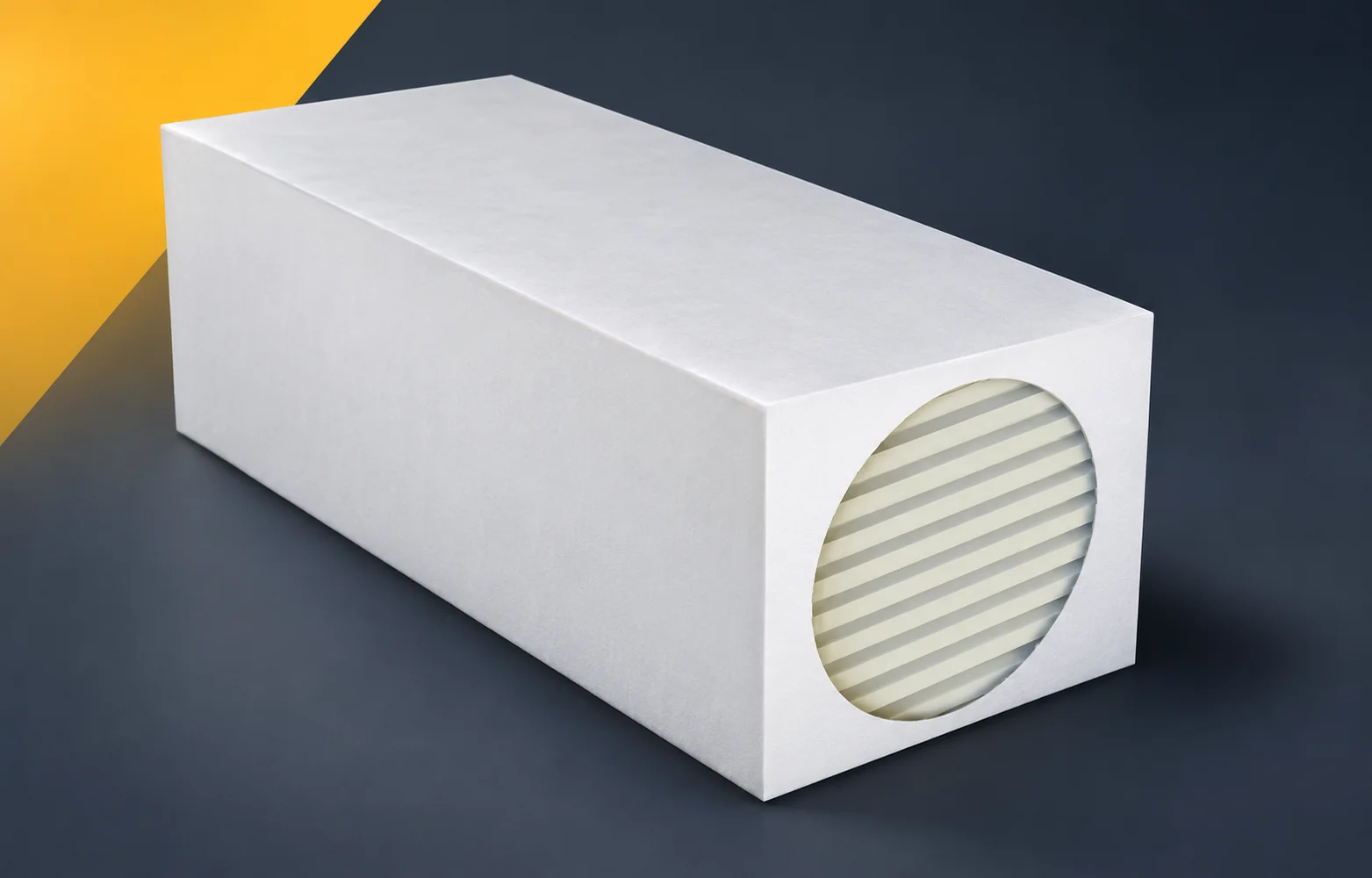
Thermano Compact in construction details: dimensions, lambda and limitations
A detail should not leave the installer with nothing but the instruction “top up the PIR”. For Thermano Compact, the thickness, the edge and the connection to the surrounding construction must be specified. This ensures that the smaller board retains a specific function instead of becoming a random insert in a gap. Thermano Compact is a PIR board in the 600 × 1200 mm format, with a multi-layer facing containing aluminium. The smaller format is an important practical feature. In the application specification described as PIR boards, clearly indicate the small working area into which a 600 × 1200 mm board is easier to bring. The Thermano Compact format must be matched to the size of the working area and the available transport route, and the adopted variant must be clearly marked in the documentation.
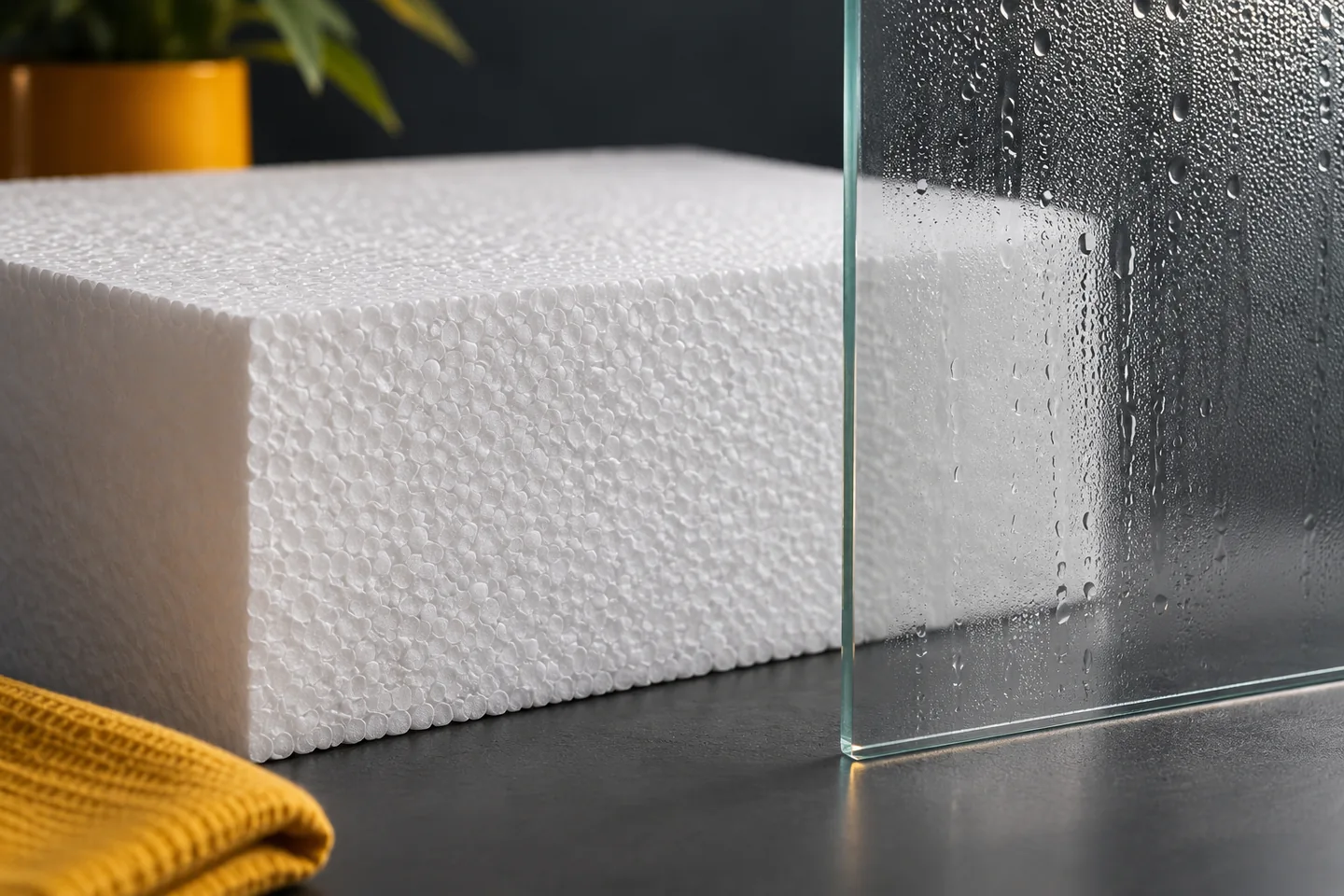
What does the water vapour diffusion resistance factor μ mean for EPS?
The μ factor states what resistance a material offers to water vapour diffusion compared with air. It does not describe thermal insulation performance or water absorption. For the entire layer, the thickness also matters, which is taken into account by the parameter sd = μ × d. EPS data must be read for the specific grade and used in the analysis of the whole building component. μ is a dimensionless diffusion resistance factor. It relates the resistance of the material to the resistance of an air layer of the same thickness under comparable conditions. A higher value means greater hindrance to vapour flow by diffusion. It does not mean greater tightness against liquid water or resistance to flooding. These properties are checked with other parameters and methods.
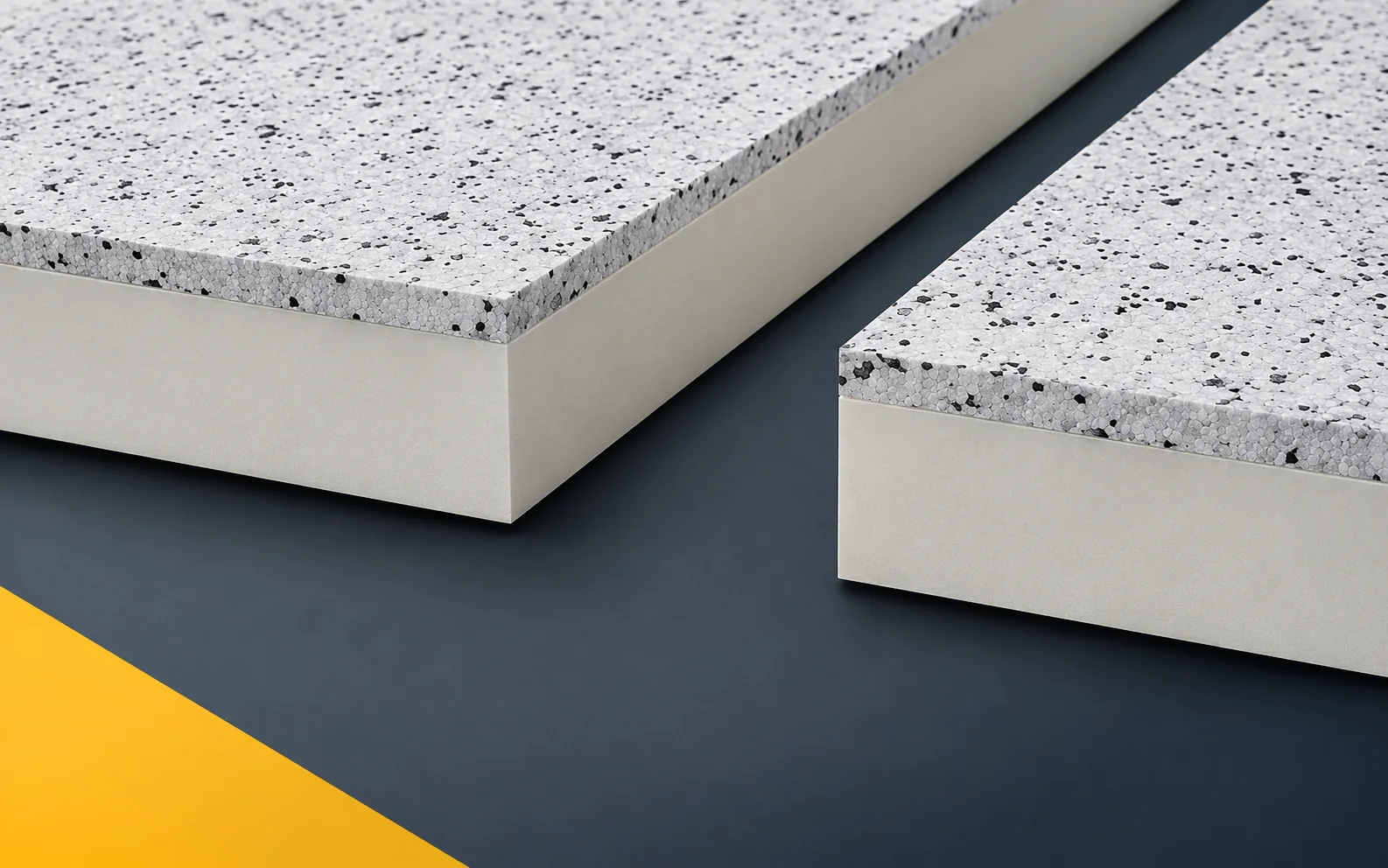
Thermano ETICS calculations: why PIR and EPS must be distinguished
Thermano ETICS comprises two layers with different thermal properties. The lambda of PIR must not be applied to the combined thickness of PIR and EPS. The design should use the thermal resistance of the finished board or correctly separate the materials in the calculation. Thermano ETICS is a composite board consisting of PIR with an outer EPS layer 20 mm thick. The PIR part has gas-tight multilayer facings incorporating aluminium. In the specification of use described as PIR boards, clearly indicate the cross-section of the façade board with a PIR core and an outer EPS layer 20 mm thick. The surface of Thermano ETICS must be recognised as the outer EPS layer belonging to the composite, and the adopted variant must be clearly marked in the documentation.
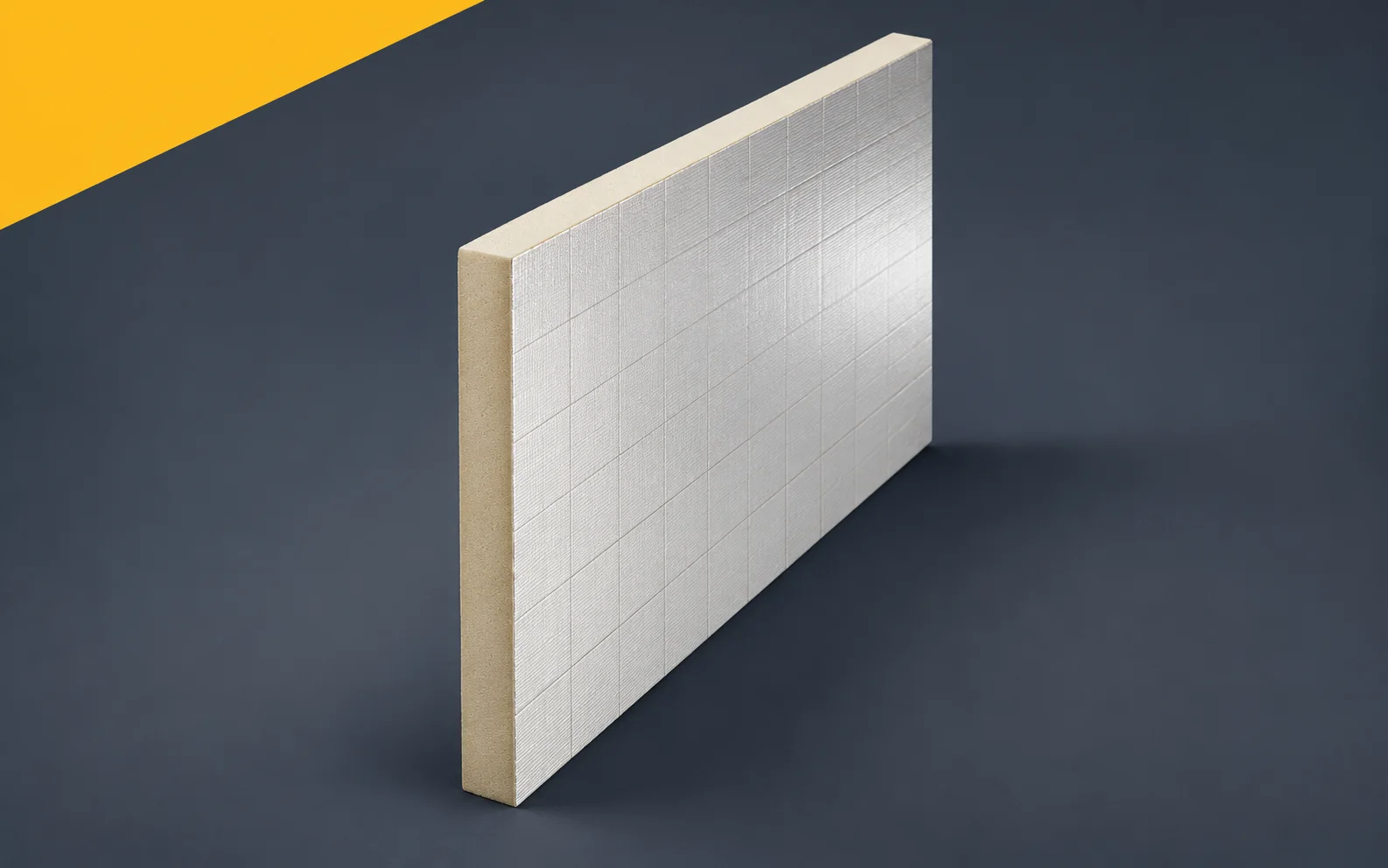
IKO enertherm ALU: documenting properties and fire classifications
The requirement for ALU should distinguish between the reaction of the product itself and the result of a specific end use. A more favourable class must not be transferred without the test conditions. The specification must relate it to the actual substrate and assembly. This is particularly important when assessing proposals to substitute the material. The IKO enertherm ALU specification should identify the function that the building envelope assembly with aluminium-faced PIR boards is to perform. An element requiring an unambiguous description is the penetration of services through the continuous insulation layer. The input data should include the thickness of the layer and the position of the elements penetrating the insulation, and not only the area intended for insulation. The coordinating document remains the cross-section with the full ALU designation and the required protective layers.
When do fixings affect the corrected Uc value?
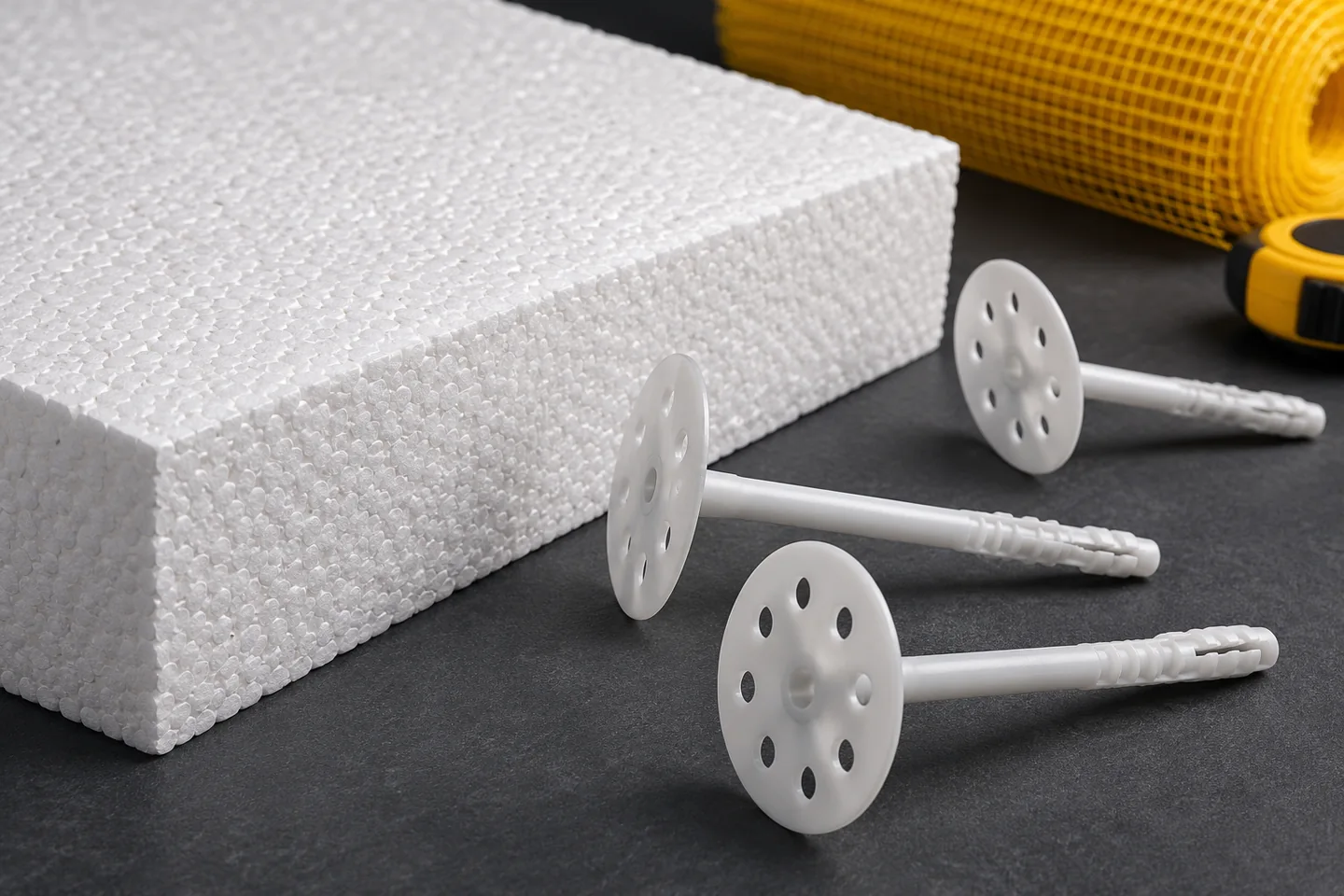
Fasteners passing through EPS can increase heat flow through an insulated wall. Their effect depends on the construction, the installation method and their number. Therefore, the U-value for the layers alone is not always the final Uc result. Thermal data for the fixings and a layout plan are needed. Saving on the number of fasteners is not a way to improve insulation performance. A fixing creates a local disturbance in the homogeneous insulation layer. Heat can flow differently around it than through the EPS field alone. The effect of a single element may be small, but there are many of them on a façade. The better insulated the undisturbed wall is, the greater the relative share a given addition from fixings can have.
Why thicker EPS insulation cannot replace airtightness
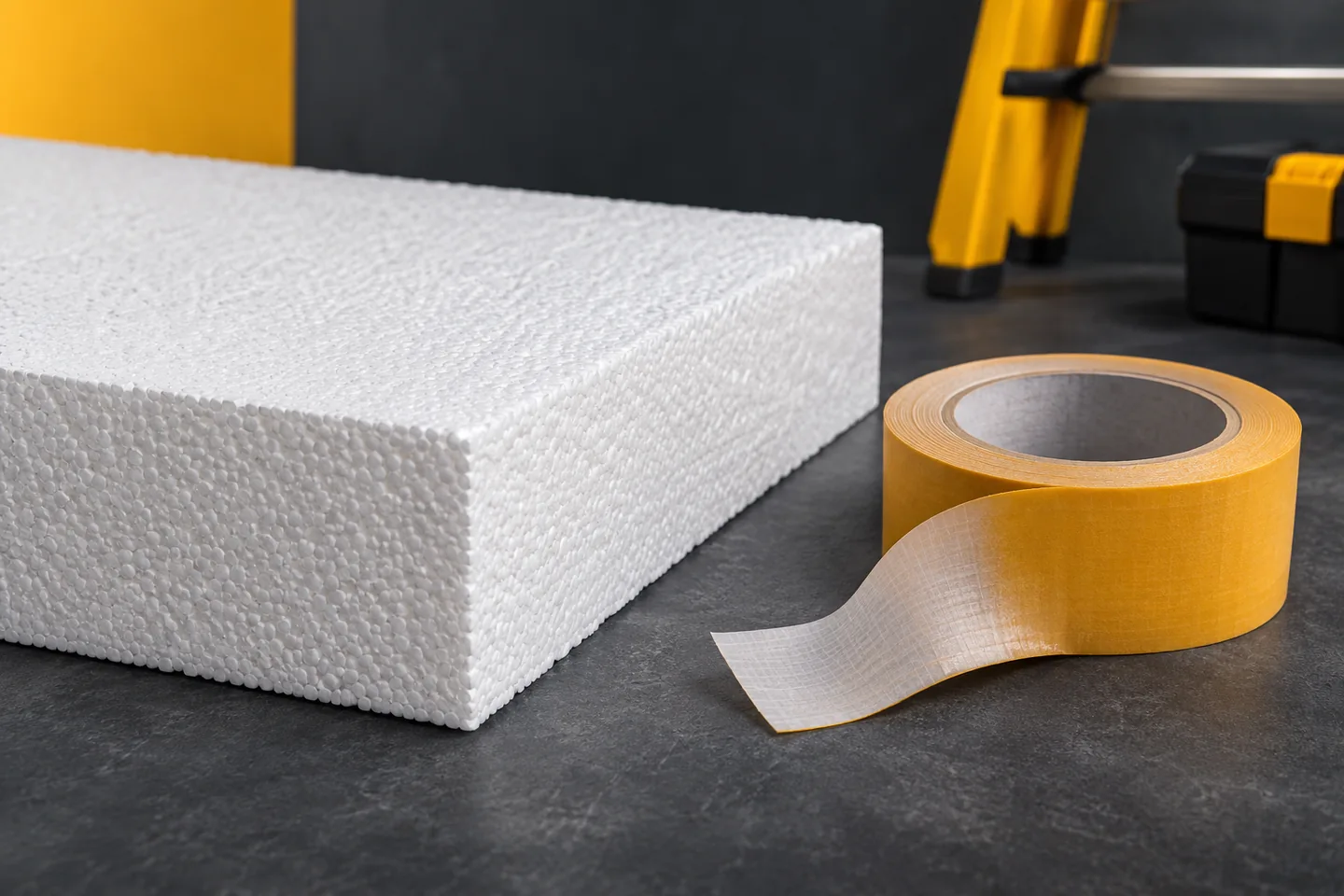
Thicker EPS increases the thermal resistance of the layer, but does not automatically close the air flow paths through the building. Airtightness must be addressed separately at windows, the roof, floors and installations. Good insulation and a continuous airtight layer work together. Their effectiveness also depends on the quality of the joints, which are usually no longer visible once the works are complete. EPS limits heat conduction through the building envelope. Its effect depends on the lambda value, thickness and correct installation. An airtight layer, by contrast, limits uncontrolled flow between the interior and the exterior. It can be formed by correctly executed plaster, a membrane or another designated component. Its material and joints must be specified in the design.