

Building handbook
The Izoprofil.eu handbook covers roofing, wall cladding and insulation, from reading specifications to preparing an order. Find guidance on sandwich panels, PIR boards, trapezoidal sheets and metal roof tiles. Understand overall sheet width and effective cover width, compare insulation options and plan installation details. The articles also cover renovation, material storage and costs that are easy to overlook. Worked examples explain the calculation method. Check the design and product documentation before making the final selection. Once you have identified the material, prepare the dimensions, quantity and delivery location for a quote.
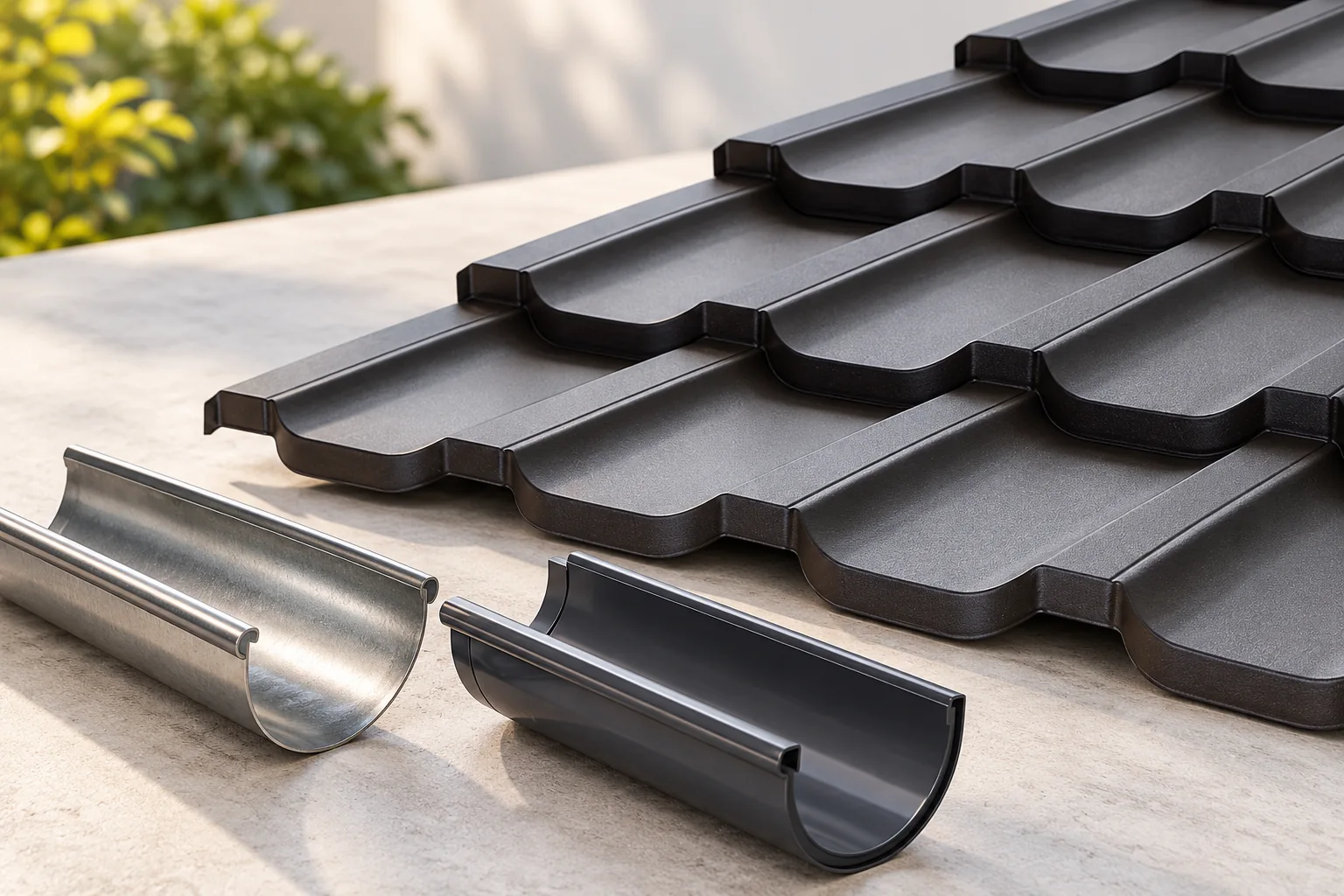
Steel or PVC gutters: which system suits your roof?
First decide whether stiffness and a match with metal roofing matter more, or lightness and freedom from corrosion of a metal core — only then compare materials. Check that the gutter will collect water from its assigned roof area and that the downpipe will carry it away safely; with a long eaves line or concentrated runoff, a different layout may prove necessary than on a small rectangular roof. A larger cross-section alone will not fix poorly planned outlets. Compare complete sets with pipes and accessories, not the price of the gutter alone.
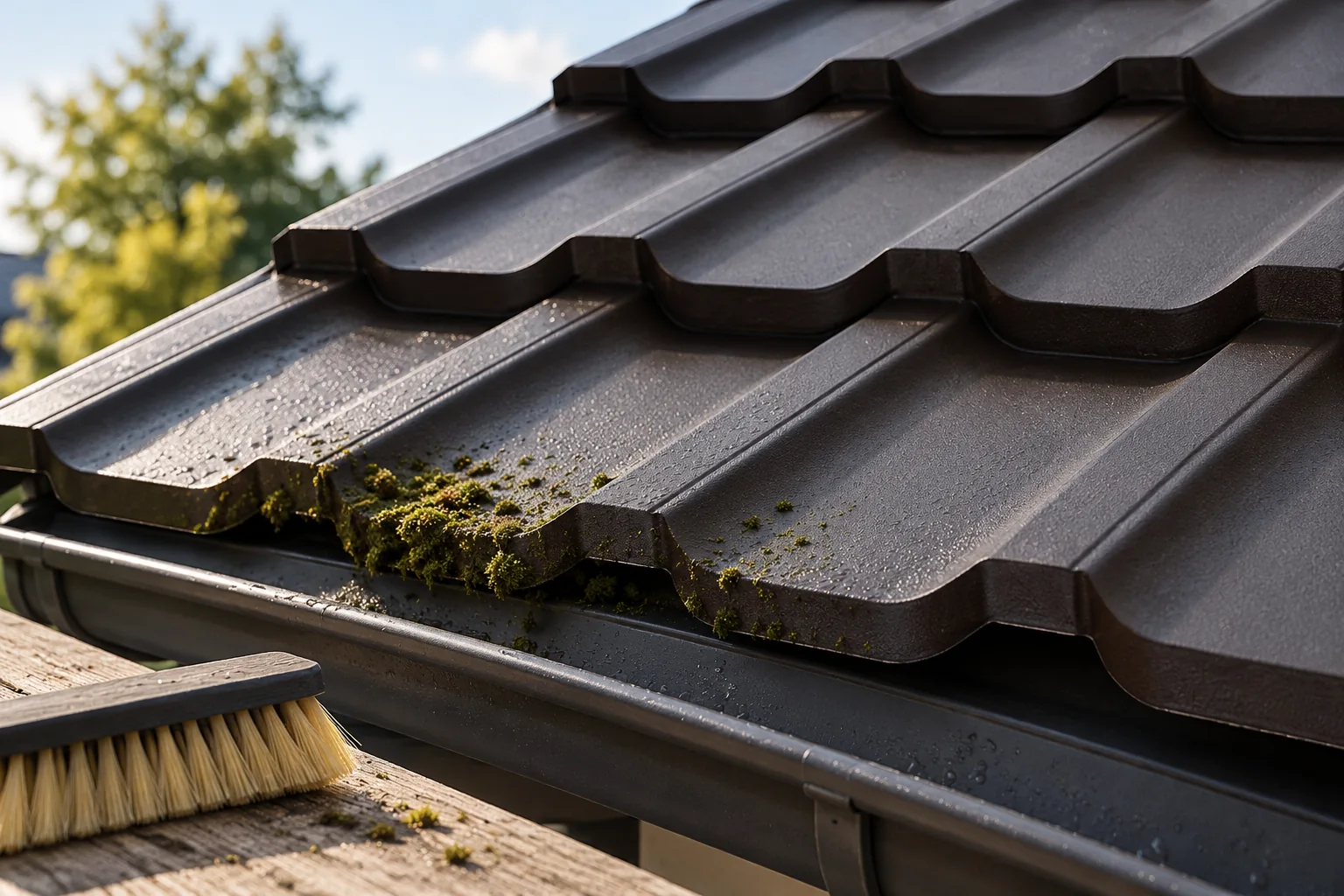
Removing moss from tile-effect metal roofing without damaging the coating
Begin by establishing which coating covers the metal roof tiles and what condition it is in, since this determines the permissible cleaning method. Check whether the green deposit is moss, algae or another biological growth, and where it concentrates — in depressions, around flashings or in shade, where the roof slope dries more slowly. Inspect the water drainage and remove loose leaves and twigs before washing. When choosing a method and product, follow the coating instructions; leave design decisions to the designer.
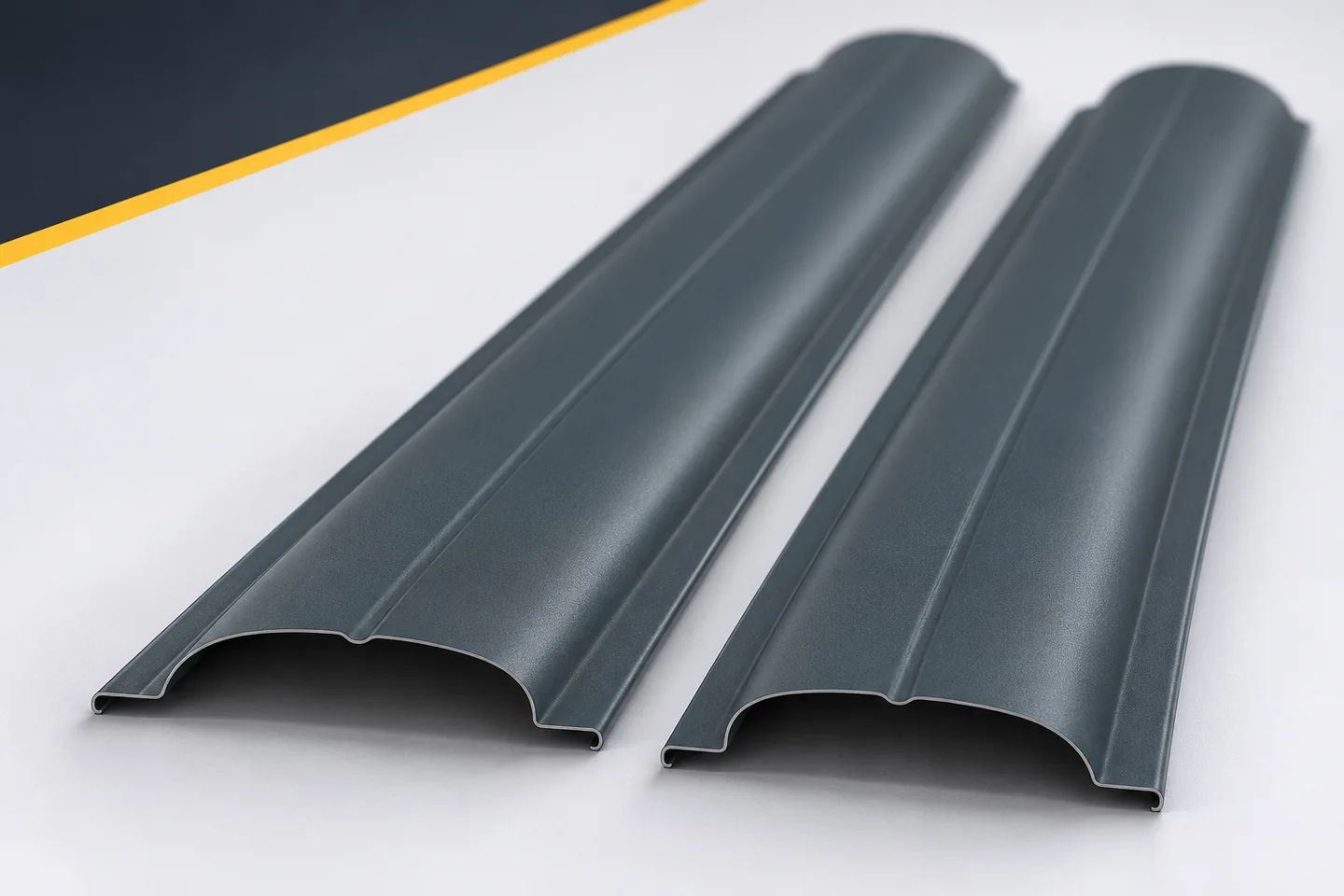
Choosing a metal fence colour to suit the façade
The fence colour is best chosen with reference to the actual façade. A small sample on a white screen does not show the full composition. Metal fence pickets stand in front of the house, cast shadows and reveal the background through the gaps. Therefore the same shade can look different on different properties. The selection should be based on a few simple steps. First determine the role of the fence, then choose the colour relationship, and finally compare real samples in appropriate light. A dark infill against a light wall creates a clear contrast. Similar shades can produce a calmer division. There is no single better answer. It depends on whether the fence is to be a strong element of the frontage or a discreet boundary. It is worth recording this decision before viewing the whole palette. This limits the choice of random colours that appeal only in isolation.
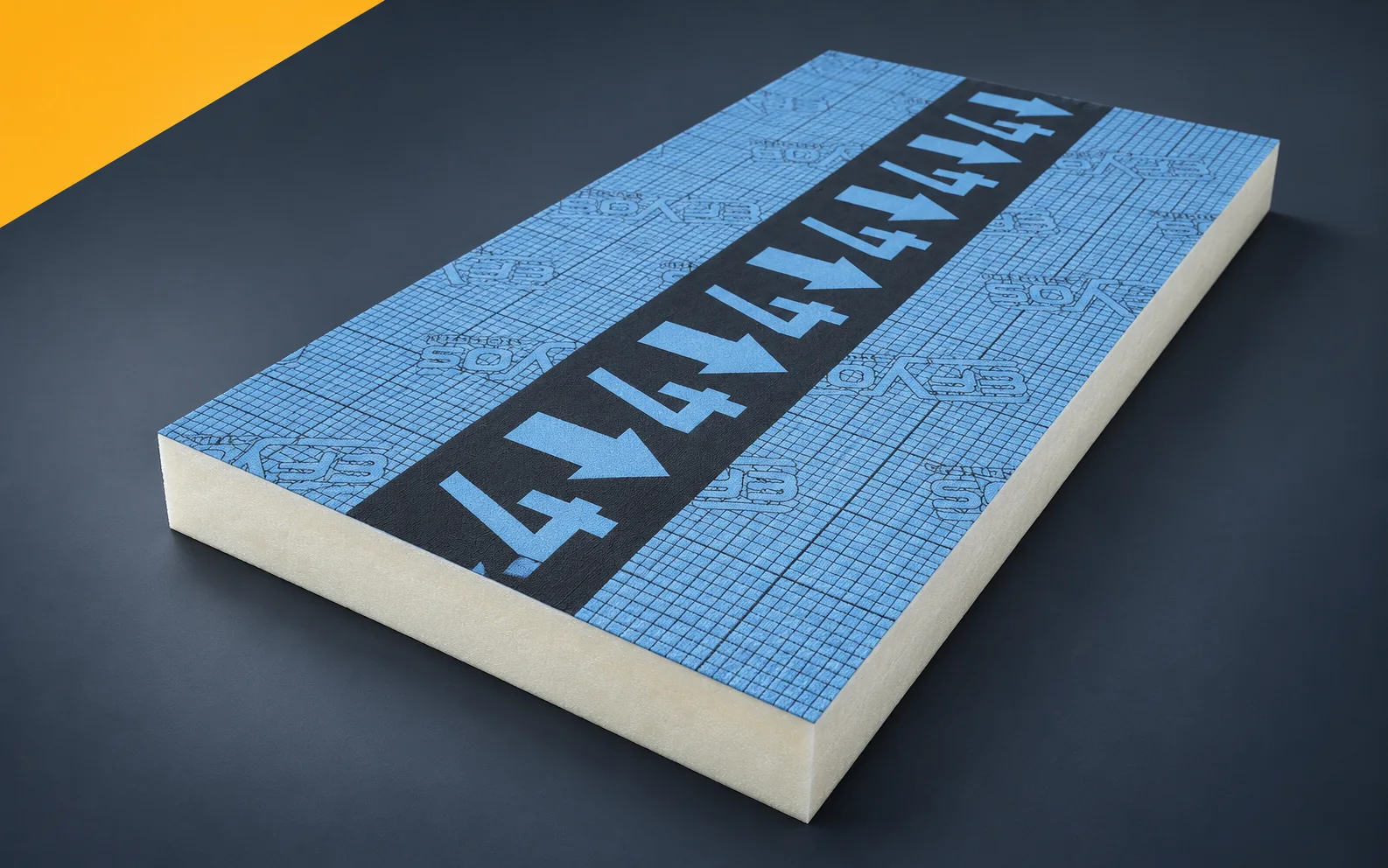
Designing with EFYOS BLUE SMART A: geometry and thermal calculations
For SMART A, the schedule should be derived from the falls plan, not from the roof area alone. The taper markings must lead to specific locations. The specification should also indicate how the thickness at the outlets is to be verified. This allows the delivery to be checked against the calculation and the geometry of the roof slopes. The EFYOS BLUE SMART A specification should identify the function that the flat roof with tapered insulation and point drainage is to fulfil. The lowest section of the thermal insulation next to the outlet is an element requiring an unambiguous description. The input data should include the outlet level and the end heights of each fall field, not only the area to be insulated. The coordinating document remains the falls plan with the markings for the individual tapers.
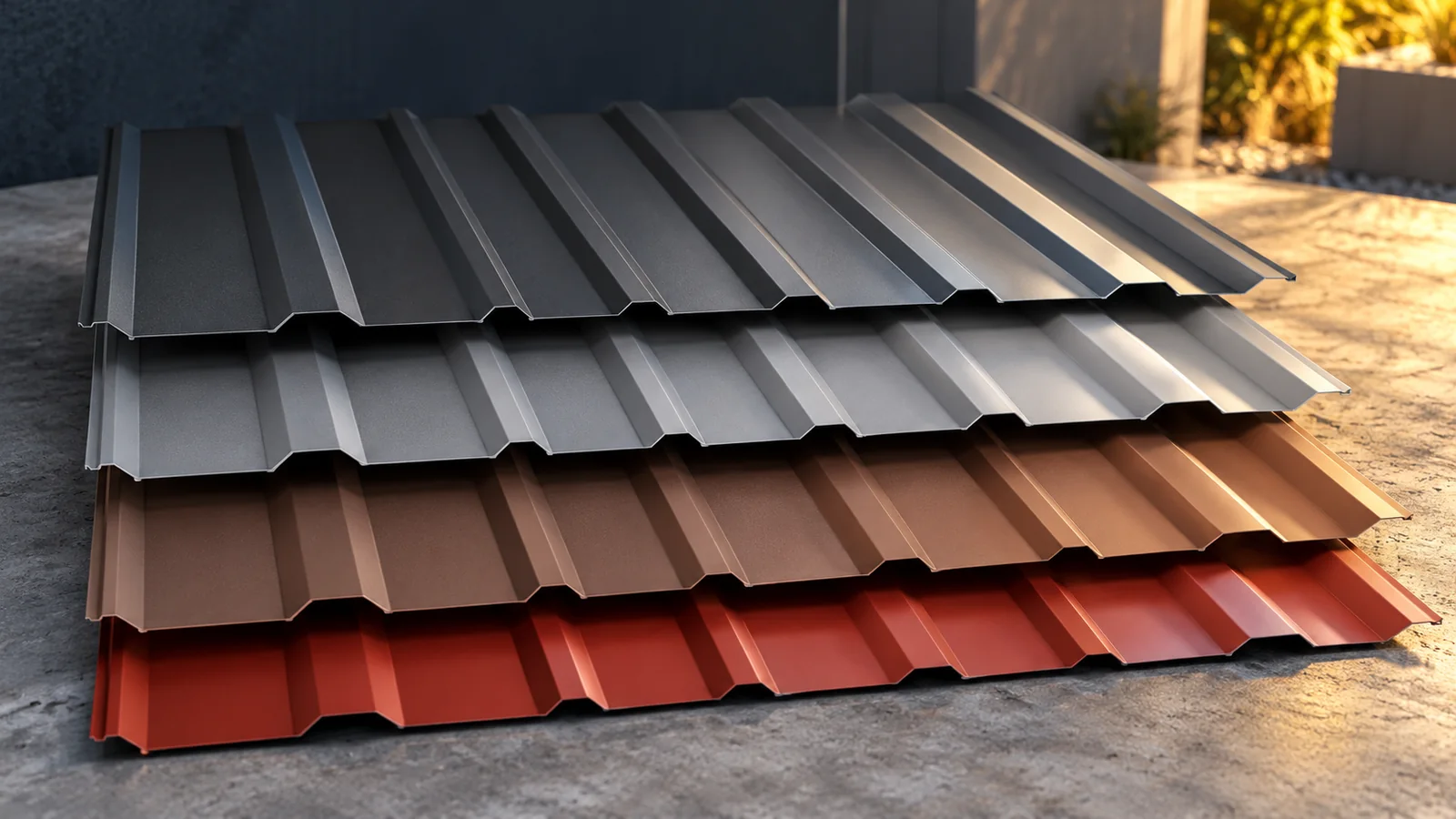
Which colour of trapezoidal steel sheet should you choose and what should you check beyond the swatch?
The colour of trapezoidal steel sheet should be chosen together with the coating, texture and the way the building is used. The RAL number helps to indicate the shade but does not describe the gloss level or the resistance of the surface. A matt graphite may look different from a gloss graphite, even though both have the same number. Before ordering, check a real sample, the compatibility of flashings and the availability of the whole batch. On a roof, the behaviour of the coating in a specific environment also matters. The shade number makes communication between the investor, the seller and the contractor easier. It does not constitute a full specification of the surface. Two steel sheets of the same colour may differ in texture, degree of gloss and type of paint. The difference is often particularly visible on adjacent sheets or flashings.
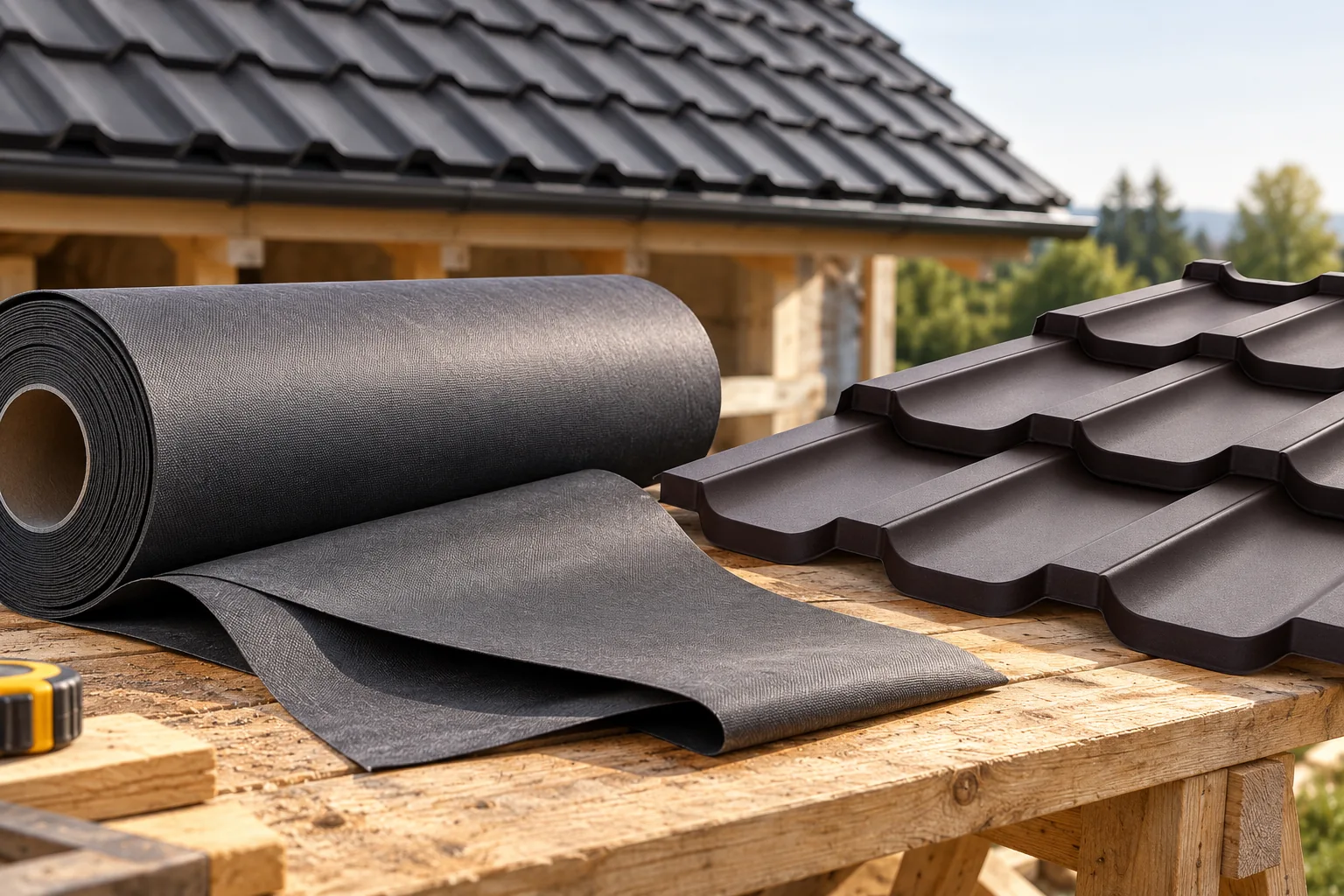
Roofing underlays: what they do and how to select one
Choosing a roof membrane is not about picking the thickest roll, but about matching its parameters to the specific roof build-up. Check where the membrane will sit, its Sd value, how watertightness and durability are declared, and whether the manufacturer specifies a permitted UV exposure time. Also compare the requirements for tapes and joints. Grammage alone or the word ‘breathable’ is not enough, because suitability depends on conformity with the design and installation conditions.