Announcements are hard to hear under a grandstand roof. How do you specify the acoustic treatment?
Metal roofing
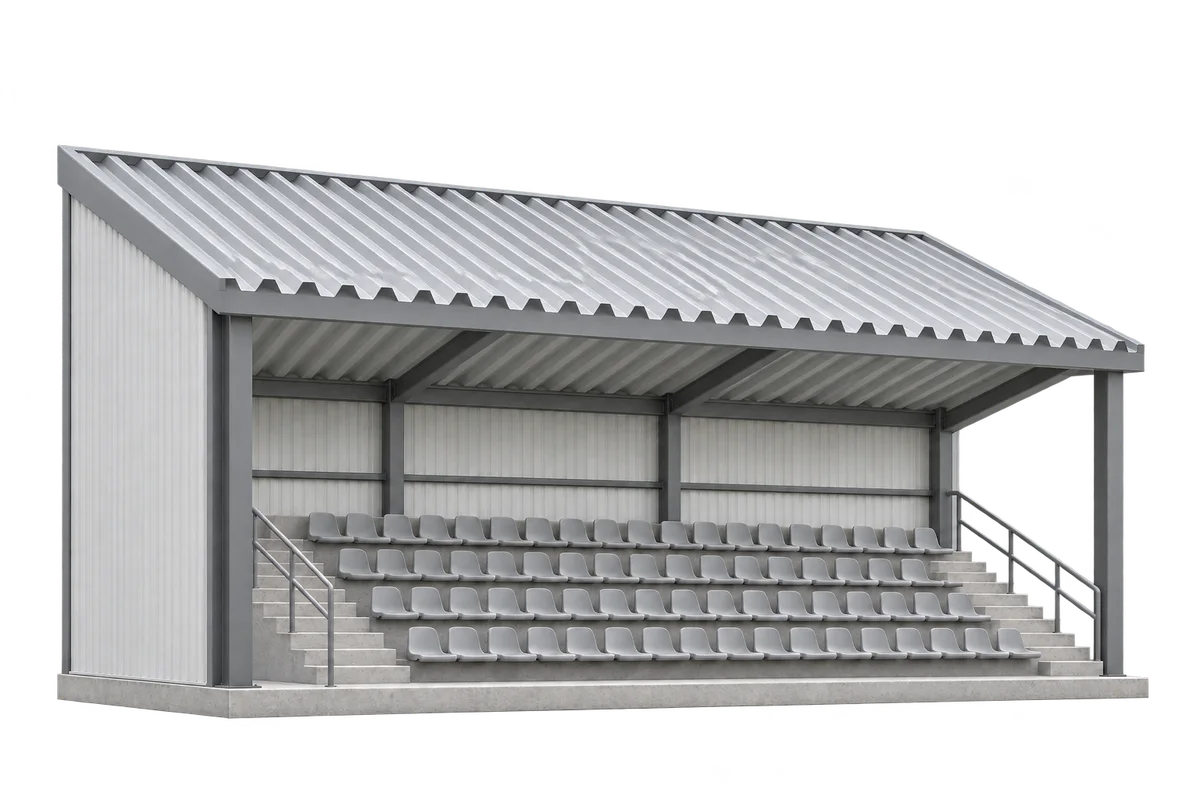
Under a grandstand canopy, the word “noise” can describe several different problems. Rain strikes the roof covering, a loudspeaker announcement reflects from the soffit, or the crowd masks the words in particular rows. Each calls for a different check before roof sheeting or an additional lining is selected. Start by marking where listeners lose individual words and recording the conditions under which it happens. An acoustician can use those observations to decide which features of the canopy, loudspeaker layout and surroundings to include in the design.
In this guide
Describe what the spectator hears
Ask someone in the affected row to describe one announcement. Did the opening words sound clear while the ending merged with a delayed repetition? Did all the words disappear during heavy rain? A specific observation is easier to investigate than a general loudness rating.
Compare the same seats under different conditions
Mark a seat near the eaves, one in the middle and one at the back wall if there is one. Record the system settings and the announcement used. Repeating the same material on the next visit helps establish whether the difference follows the listener’s position.
Log occupancy, activity around the venue and rainfall for each listening session. If the problem is audible in the rain even with the loudspeakers off, record that event separately. This flags rain striking the roof as another source for the designer to investigate.
Read the sound absorption data
In the lining documentation, look for absorption coefficients by frequency band and the description of the tested assembly. The weighted coefficient αw is useful for comparing options. The frequency data give the acoustician more detail for assessing announcements. Keep the report reference and variant identifier with the table.
If the supplier proposes a reduction in rain noise, ask for rain-noise data for the offered roof construction. An absorption table describes how a surface responds to incident sound. Agree how the effect during rainfall will be assessed and under which conditions.
Check the proposed lining in section
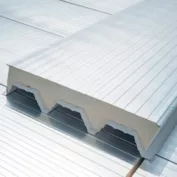
The acoustic detail should show the perforations, the absorbent infill and the layer that provides weather protection. Compare these with the assembly for which the manufacturer reports performance. A change in infill position or material calls for a check that the data still apply.
On an open-sided stand the lining can be exposed to moisture and dirt. Establish its permitted exposure and how it can be inspected. Where the perforated profile also carries load, the structural engineer needs the data for that perforated variant.
Consider the roof and loudspeaker layout together
On one drawing, show loudspeaker aiming, the extent of the lining and the listening positions. Two people describing the same stand may have been under different loudspeakers. The drawing provides that context for interpreting their comments.
Before ordering a large area, agree with the acoustician what a sample can establish. A small mock-up can demonstrate the detail, appearance from below and access to fixings. The expected effect across the seating area also depends on the extent and distribution of the treatment.
Agree on an acceptance test
Specify listening positions, system operating conditions and the agreed assessment method in the acceptance record. If the design calls for speech intelligibility measurements, make these assumptions available to the person taking the measurements before the site visit.
Keep an as-built drawing of the treated area and the sound system configuration used at handover. If another seating section is added or a loudspeaker is re-aimed, the test can be repeated with a record of what has changed.
7 branches. Materials closer to your project.