Attic insulation: measuring slopes, openings and separate insulation zones

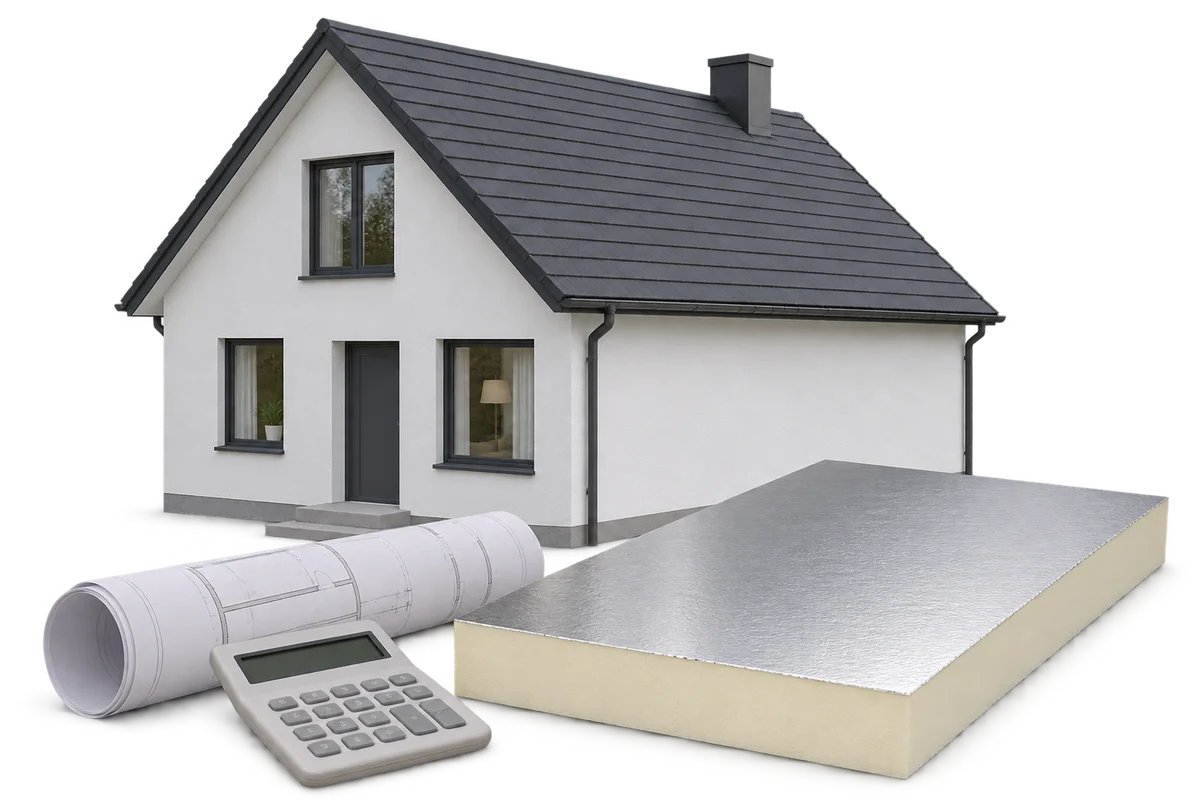
The floor area of an attic is not automatically the roof insulation area. Before ordering PIR, EPS, XPS or mineral wool, identify the elements covered by the design and the products specified for each location. Slopes, horizontal ceiling sections and walls may form separate zones with different thicknesses and installation arrangements. Measurements should show the geometry of each zone, openings and interruptions in the layer. This guide explains how to prepare an understandable area schedule, distinguish geometric quantities from order quantities and avoid errors when handing over measurements. The numerical example calculates area only; it does not specify insulation thickness or make any material suitable for a roof slope.
By |2026-11-09T16:40:48+01:002026-11-09|Uncategorized|Comments Off on Attic insulation: measuring slopes, openings and separate insulation zones

Façade insulation costs: agree the measurements, quotation scope and additional work

Façade insulation costs become comparable only when the area and scope behind each price are clear. The same house may be described using wall areas including openings, areas after deducting openings, or several separately measured tasks. None of these figures defines a complete order without explanation. This guide moves from an elevation sketch to a usable comparison: identifying openings and reveals, separating purchased material from completed work, and recording items requiring site verification. It also covers documenting scope changes. It does not prescribe a universal price per square metre or a mandatory measurement method. The aim is an agreed, understandable basis for discussing a quotation with the contractor.

By |2026-11-09T17:29:07+01:002026-11-09|Uncategorized|Comments Off on Façade insulation costs: agree the measurements, quotation scope and additional work

Can PIR insulation be combined with mineral wool, EPS or XPS?

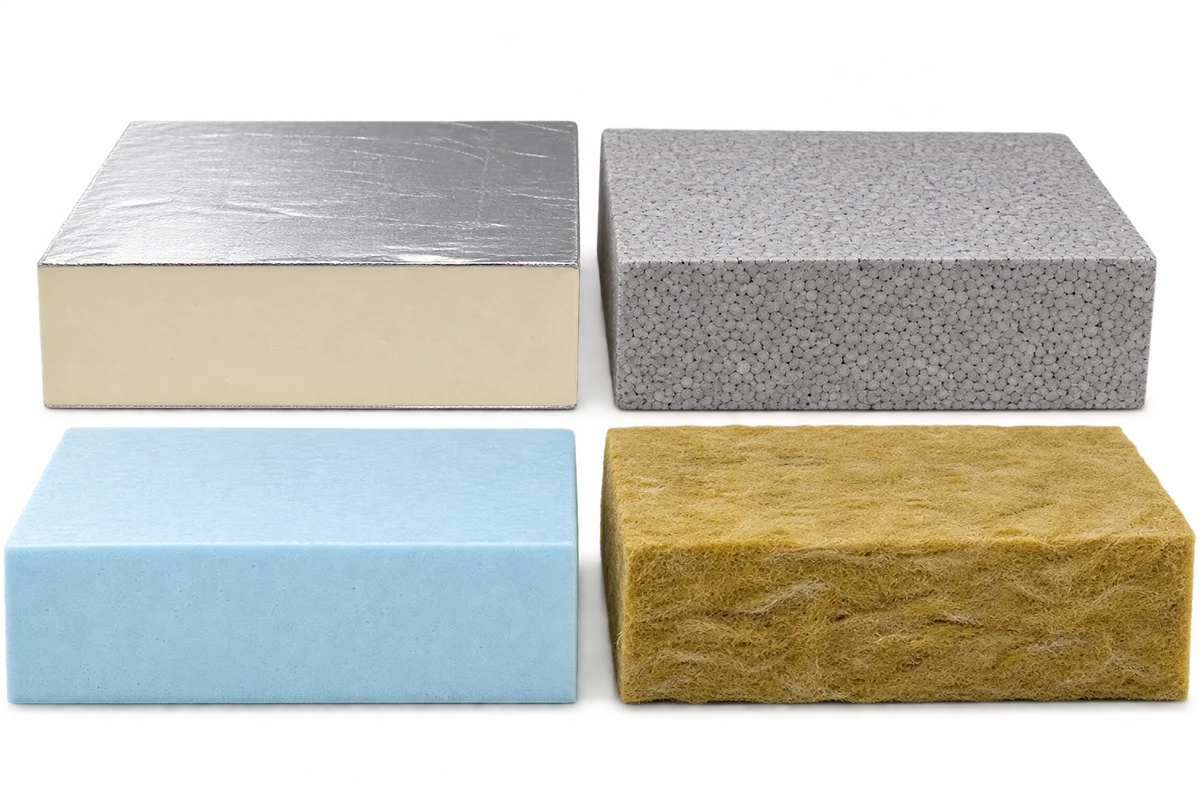
Different insulation materials can work together in one building element when each solves a specific problem. PIR can keep the build-up thin, mineral wool can contribute to fire protection or acoustics, and XPS suits certain applications exposed to moisture and compressive loads. The order of the layers, how they interact and the details of their installation determine whether the combination works. Adding their thermal resistances is not enough. In a roof retrofit, serviceable insulation can often stay in place while a new layer improves the whole assembly. In a floor, thermal insulation and a resilient layer for impact sound have different jobs. Combining materials is a design decision.

By |2026-11-09T07:02:51+01:002026-11-09|Uncategorized|Comments Off on Can PIR insulation be combined with mineral wool, EPS or XPS?

How do PIR boards compare with EPS, XPS and mineral wool?

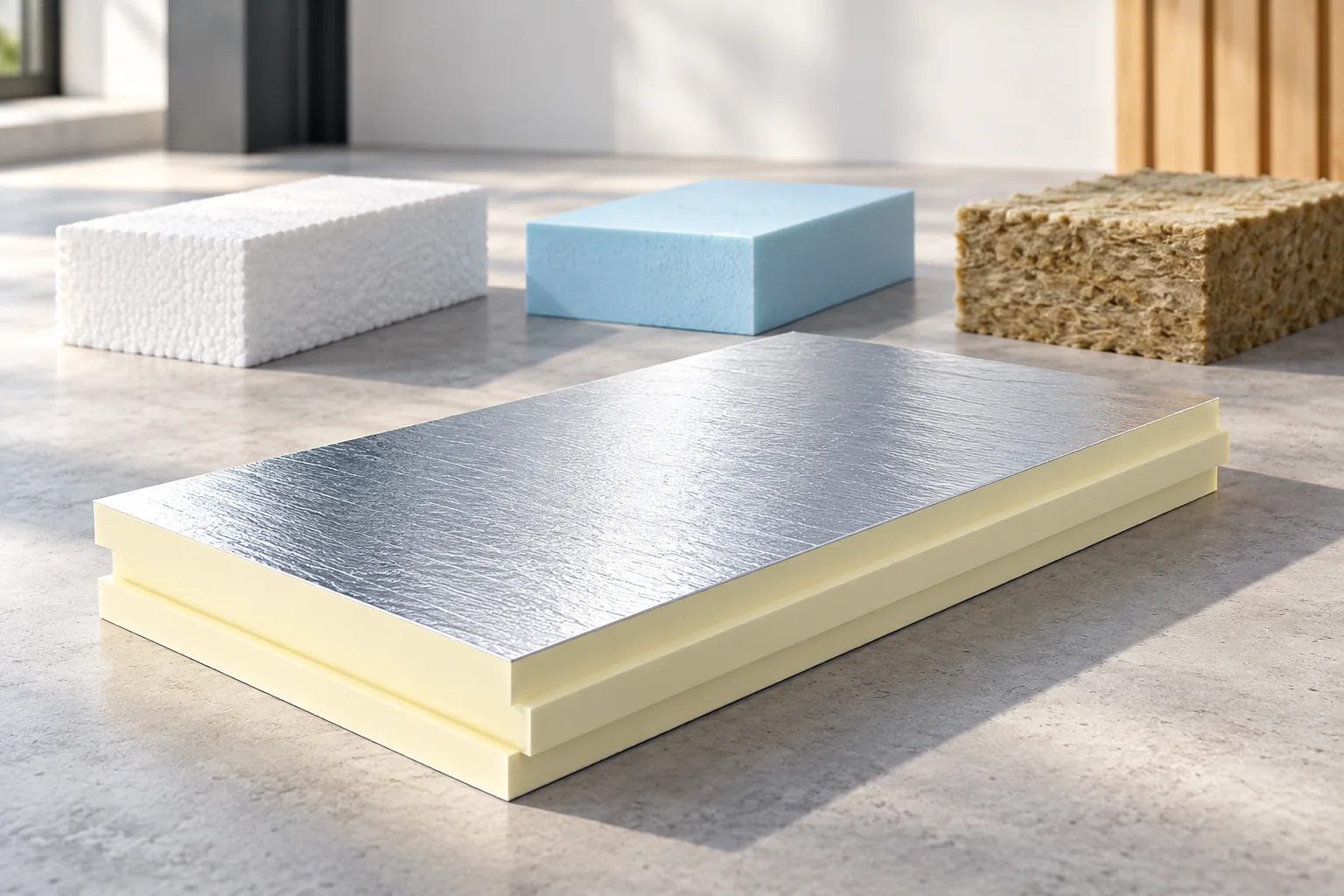
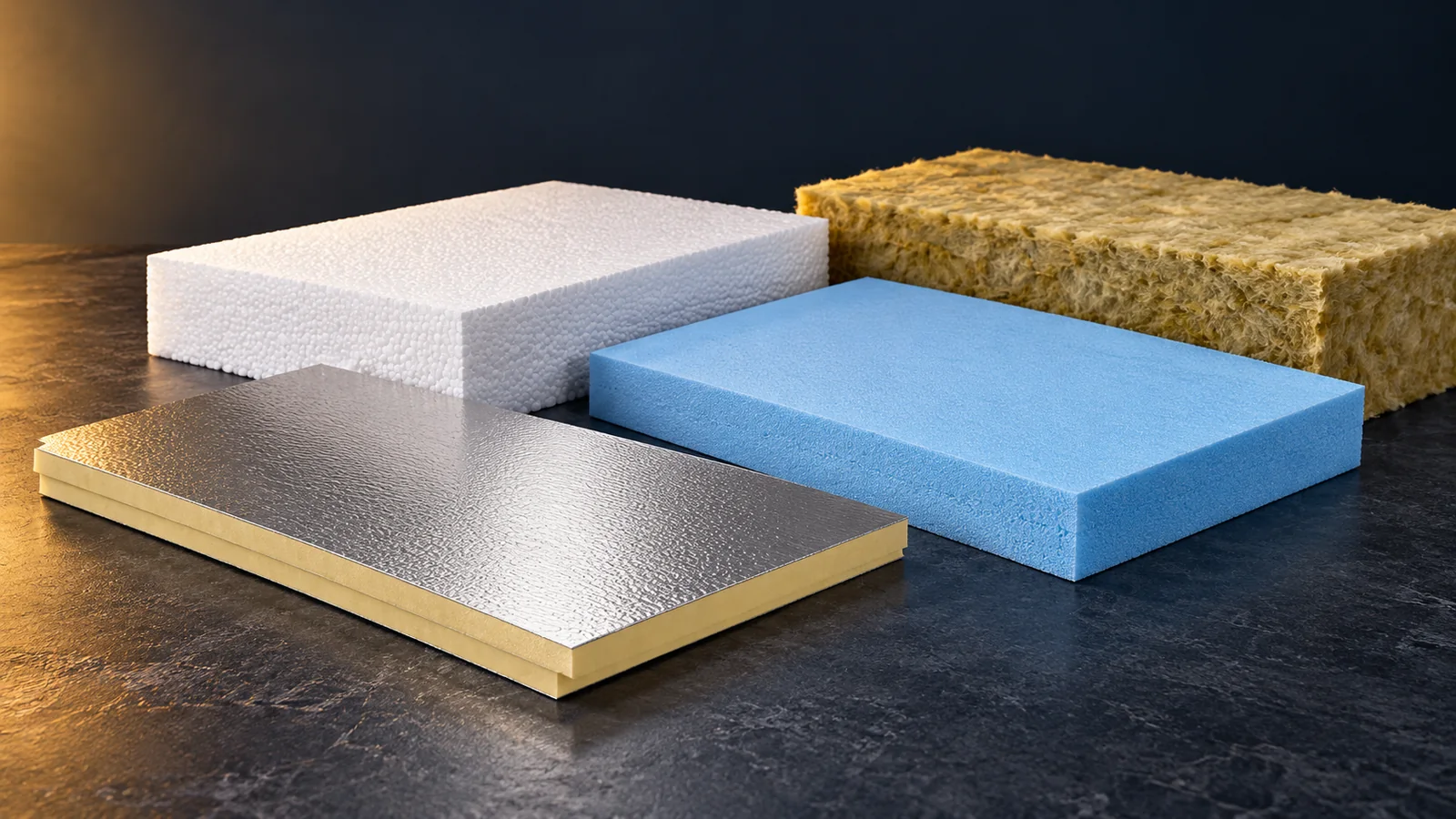
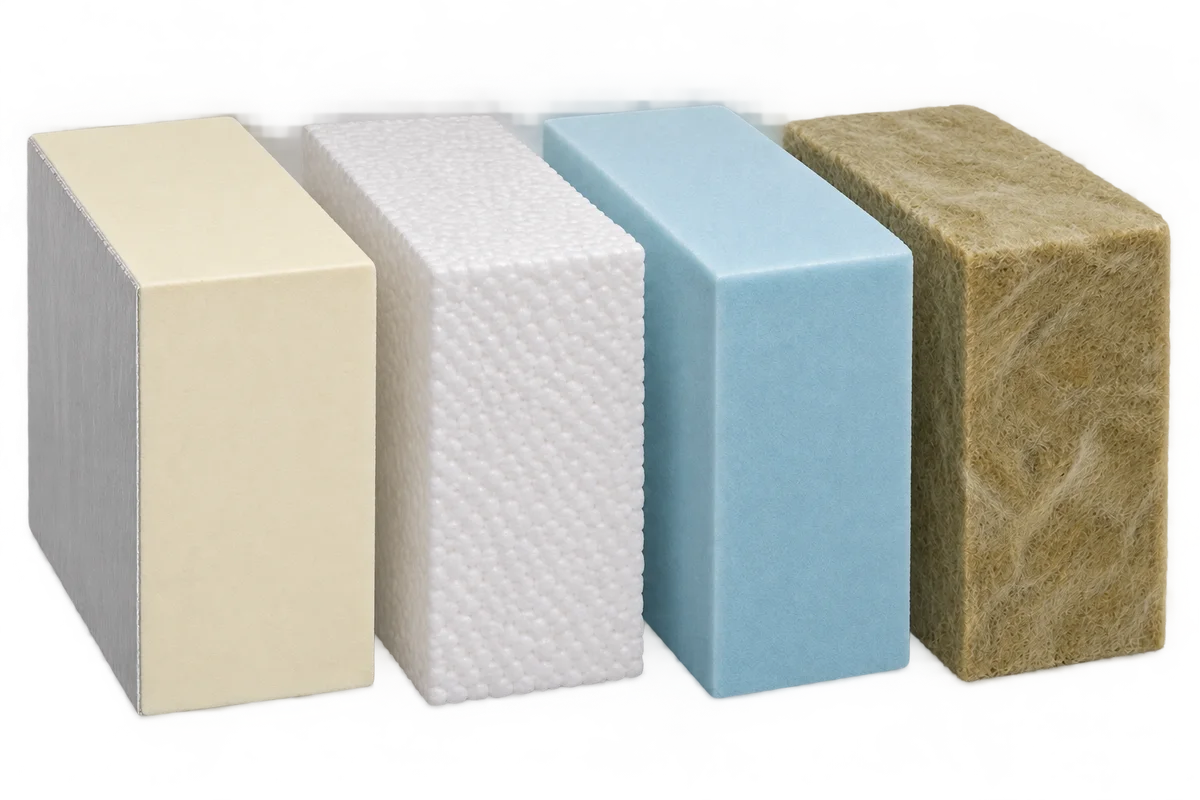
PIR boards are worth considering where a small thickness must deliver high thermal resistance, for example in a loft or on a terrace. Check not only the lambda value but also the requirements for moisture, loads, acoustics and reaction to fire. Compare the data sheets of specific products, not generic material names. Bear in mind that PIR is not the same as a sandwich panel, and low water absorption does not replace waterproofing. Leave the design of the layer build-up to the designer.

By |2026-11-14T22:54:20+01:002026-10-18|Building guide|Comments Off on How do PIR boards compare with EPS, XPS and mineral wool?

PIR roof panel or EPS-core panel? How to compare the options

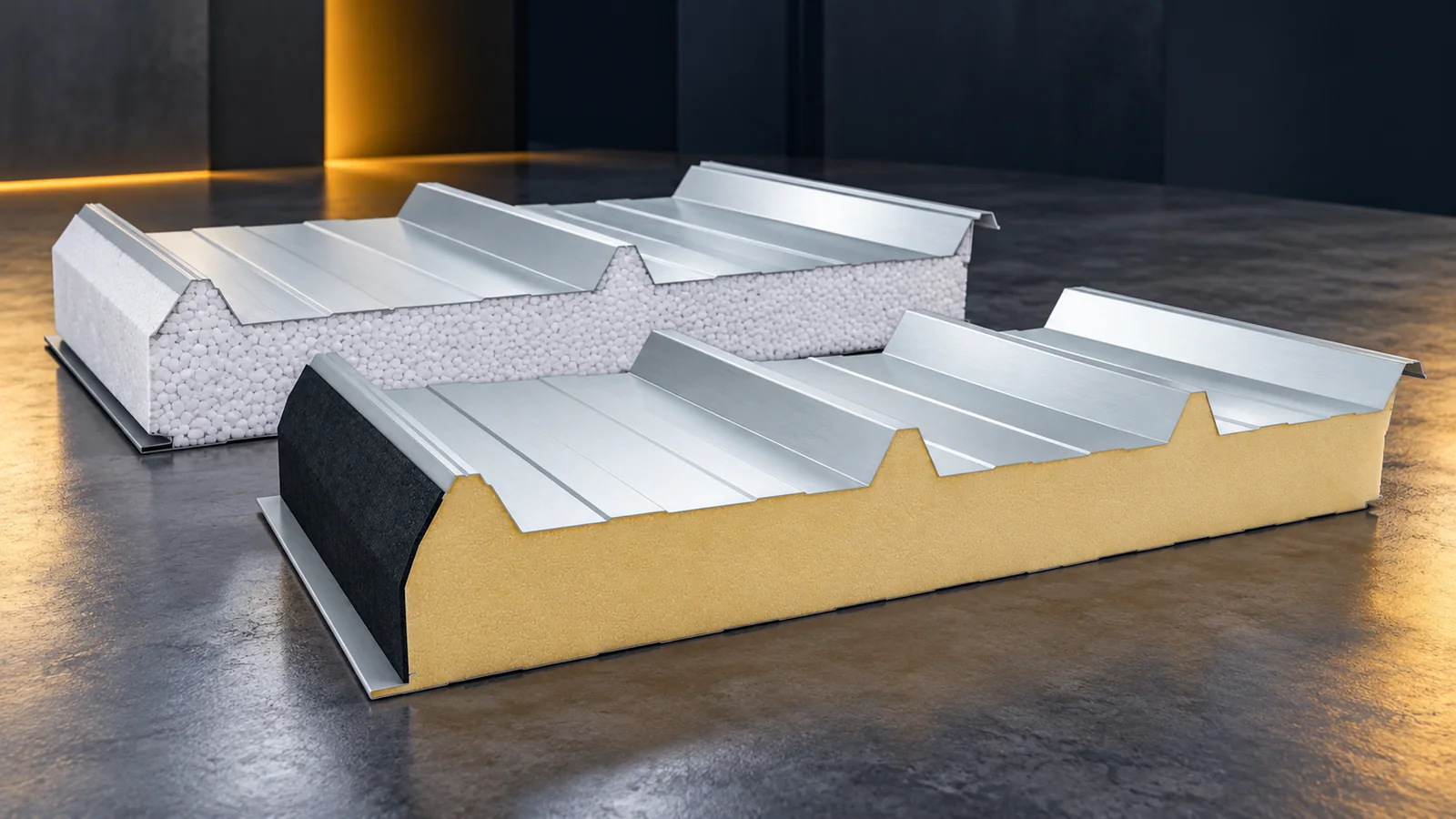
A PIR roof panel usually achieves better thermal insulation at a smaller thickness than a comparable EPS-core panel. The polystyrene variant can be cost-effective and lightweight. However, the choice should be governed by the requirements of the entire roof. U-value, loads, the range of fire classifications, coatings and installation cost must be compared. The same thickness does not mean the same thermal function. An insulated roof panel has metal facings and a bonded core. Its price should not be compared directly with a PIR insulation board alone or a pack of EPS. These materials require other layers to form a roof. In both panel variants, the outer profile and the joints are part of the roofing system.

By |2026-11-14T12:18:14+01:002025-10-24|Building guide|Comments Off on PIR roof panel or EPS-core panel? How to compare the options

PIR, EPS, XPS or mineral wool? When thin insulation delivers the greatest benefit

PIR has a clear advantage where high thermal resistance is needed at low thickness. This does not mean it is superior in every application. EPS can be cost-effective, XPS under specific moisture and pressure conditions, and mineral wool where fire or acoustic requirements apply. A good choice follows from the installation location and the properties of the specific product. Lambda alone does not describe the whole insulation. A low terrace threshold, a short eaves overhang or a small room can limit insulation thickness. In such places PIR achieves greater resistance than many materials of the same thickness. For example, a 100 mm layer at a lambda of 0.022 W/(m·K) has a resistance of approximately 4.55 m²K/W.

By |2026-11-14T12:15:48+01:002025-04-20|Building guide|Comments Off on PIR, EPS, XPS or mineral wool? When thin insulation delivers the greatest benefit
Back to top