Fitting gutters so that rainwater drains off the roof

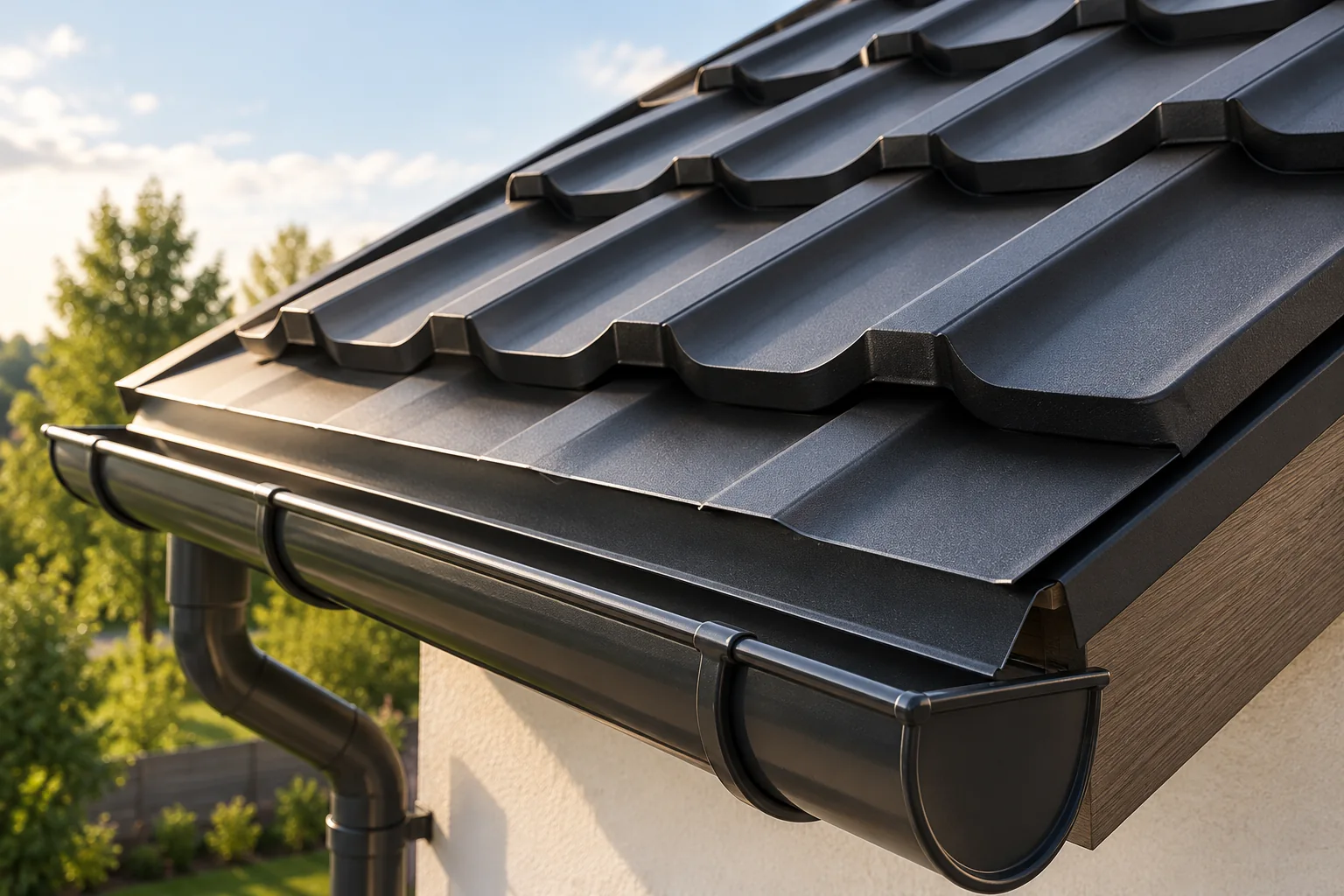
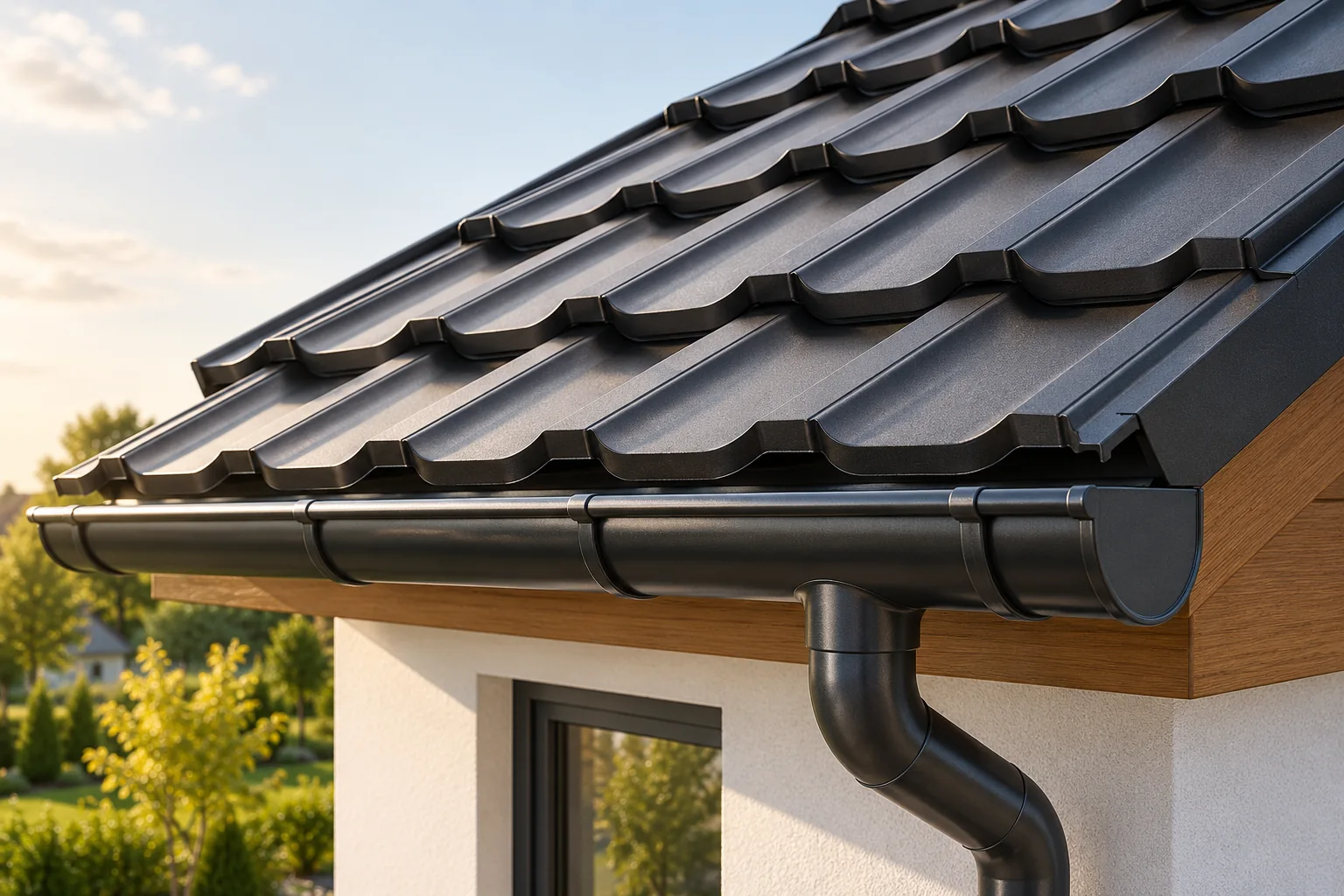
Whether gutters will efficiently carry water away from the roof depends on sizing the whole system to the roof areas draining to each eaves section, not on the gutter profile alone. Before buying, plan outlet positions, check the substrate for brackets and confirm that the components fit together. Set the fall and the gutter's position relative to the roof covering edge, allow for thermal movement and keep servicing access. Finally, carry out a flow test and record any observations; where a canopy adjoins a higher roof, allow for water draining from that roof too.
2026-11-14T22:54:44+01:00

Steel or PVC gutters: which system suits your roof?

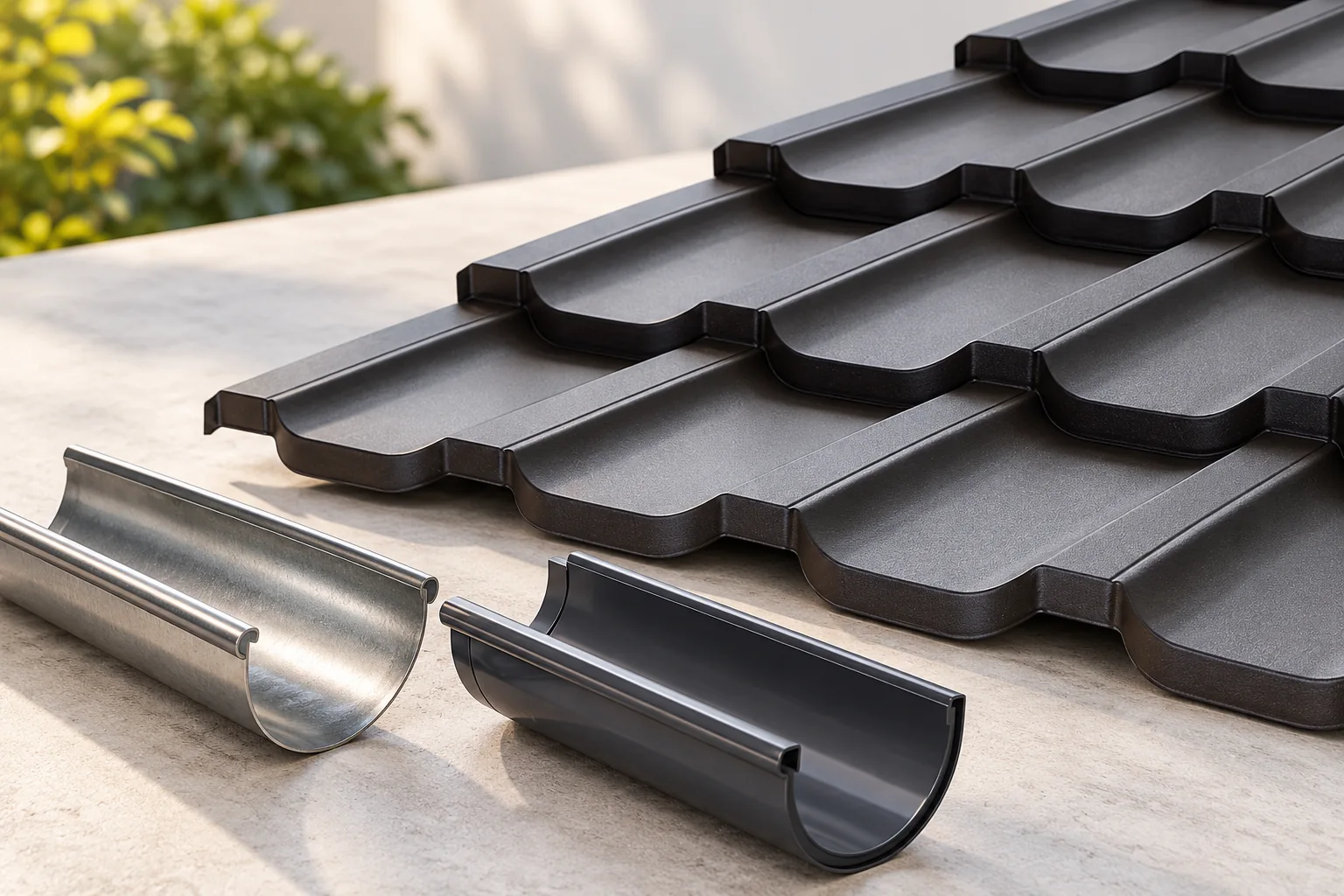
First decide whether stiffness and a match with metal roofing matter more, or lightness and freedom from corrosion of a metal core — only then compare materials. Check that the gutter will collect water from its assigned roof area and that the downpipe will carry it away safely; with a long eaves line or concentrated runoff, a different layout may prove necessary than on a small rectangular roof. A larger cross-section alone will not fix poorly planned outlets. Compare complete sets with pipes and accessories, not the price of the gutter alone.

2026-11-14T19:20:36+01:00

How coating and drainage protect gutter aprons from moisture

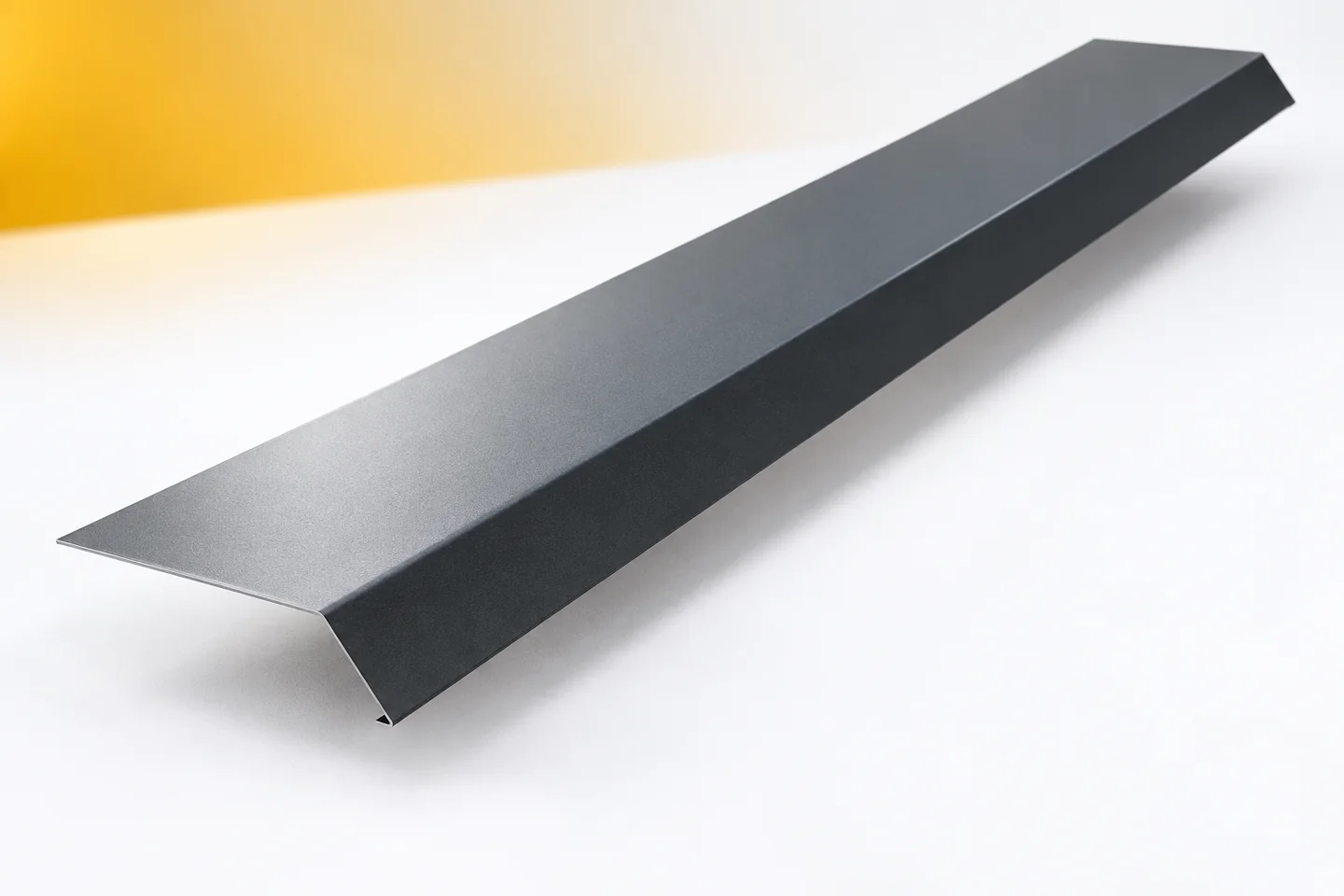
The gutter aprons (drip-edge flashings) work where water leaves the roof covering and enters the gutter. Their durability depends on both the material and unobstructed drainage. Even well-protected sheet metal will not solve the problem of standing water or accumulated debris. When choosing, it is therefore worth combining an assessment of the coating with an assessment of the entire eaves detail. This makes better use of the flashing's advantages and reduces the places requiring later repairs. At the eaves, water runs off a larger roof area. The gutter apron should carry it away in a planned manner. The position of its end relative to the gutter is important. Choosing a more expensive coating alone will not fix incorrect positioning.

2026-11-15T03:03:33+01:00

What does an eaves flashing do at the gutter?

The over-gutter flashing is the trim that takes water from the roof slope and directs it into the gutter, but it works effectively only when matched to the specific eaves detail. Before ordering, check whether its profile suits the gutter height, the roof covering overhang and the membrane layout. Its cooperation with ventilation is also crucial, as is distinguishing it from the under-gutter flashing, which serves a different purpose. The article discusses these relationships and the consequences of incorrect selection and installation.

2026-11-14T22:54:49+01:00

Snow stops or snow fences to keep snow from sliding off a roof?

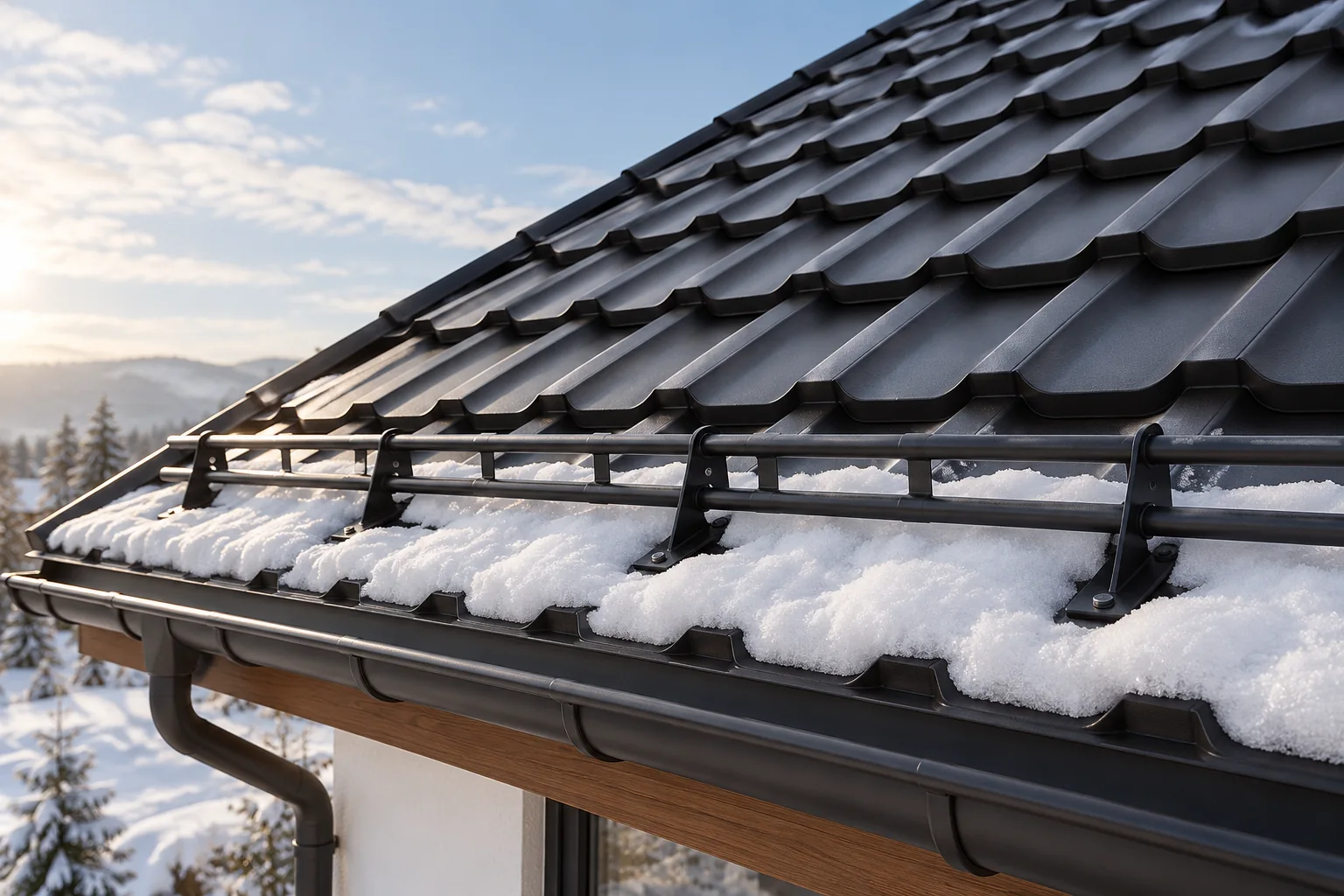
The choice between point snow guards and snow fences depends above all on what is to be retained and where. Rather than being guided by price, you need to establish the system's function, its permitted application and how the load is transferred to the roof. It is worth checking whether the solution matches the roof geometry, the covering type and the places at risk below the eaves. Location, pitch and roof length should also be taken into account. The designer should verify how the covering, brackets and fixings work together, since retaining snow alone does not increase the structure's load-bearing capacity.

2026-11-15T03:01:55+01:00

How a mono-pitch roof is built and when to choose it

A mono-pitch roof is worth considering when a simple form and a single direction of water runoff matter more than freedom in shaping the cross-section. Above all, the reader should check whether the chosen covering and its minimum pitch suit the planned slope and whether drainage from the low edge has been thought through. Supports at different heights and the treatment of the high edge are equally important. The article helps compare these dependencies without imposing a ready-made solution.

2026-11-14T19:22:19+01:00

Roofs without overhanging eaves: what to plan before building

A roof without eaves is one where the edge of the slope sits close to or flush with the façade rather than projecting beyond it. Before building, it is worth establishing how water will drain away and where the service points will be. Check the junction detail between roof and wall, the continuity of insulation, and access to the gutter and downpipe. Whether the gutter stays visible or is concealed depends on the chosen detail. Also remember ventilation and the coordination of roofing, insulation and façade work.

2026-11-14T22:52:53+01:00

What distinguishes square gutters on a metal roof?

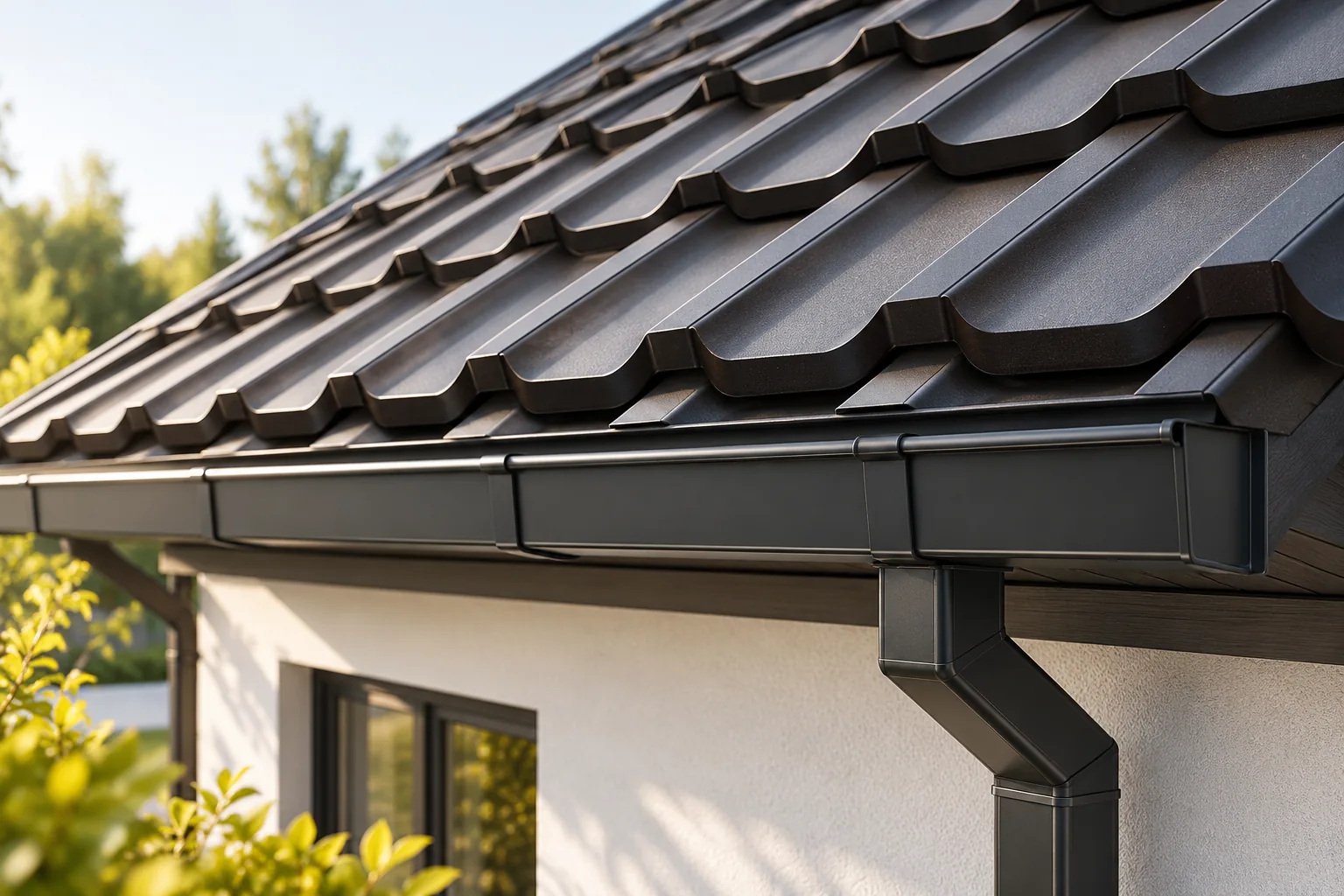
The choice of a square gutter is determined not by shape alone but by the parameters of the whole drainage system. Check the cross-section dimensions, the positions of outlets and the mounting method, as well as the width of the visible band and the colour relative to the eaves trim. On a complex roof, also assess the corners and the routing of downpipes. A rectangular profile alone guarantees neither concealment in the façade nor performance. Best verify the decision on an elevation drawing with real dimensions marked before comparing ready-made schedules.

2026-11-14T16:09:08+01:00

How to size and choose gutters for a metal roof

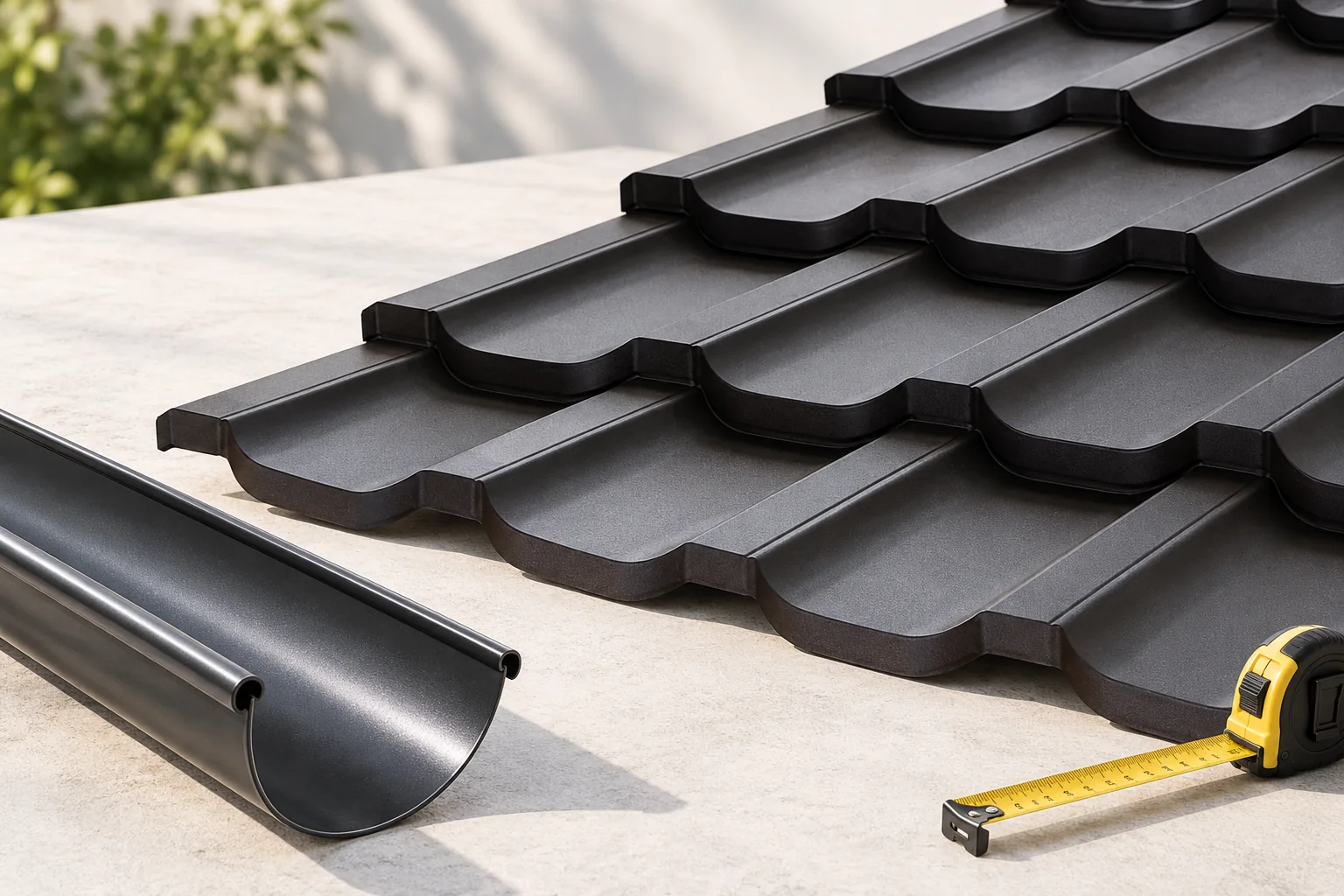
Gutters for a metal roof should be selected primarily by the amount of water drained, the roof geometry and the arrangement of outlets, not by the building's total area alone. It is worth establishing the water path right down to the point where it is received at ground level. Prepare a roof plan with eaves dimensions, roof pitch angles and the positions of valleys, and mark the possible routes for downpipes. Check that the chosen system includes all necessary components, including unusual corners and transitions. Remember that a single gutter run may collect water from different parts of the roof, so the total area is not enough to determine the size of each section.

2026-11-14T16:09:23+01:00

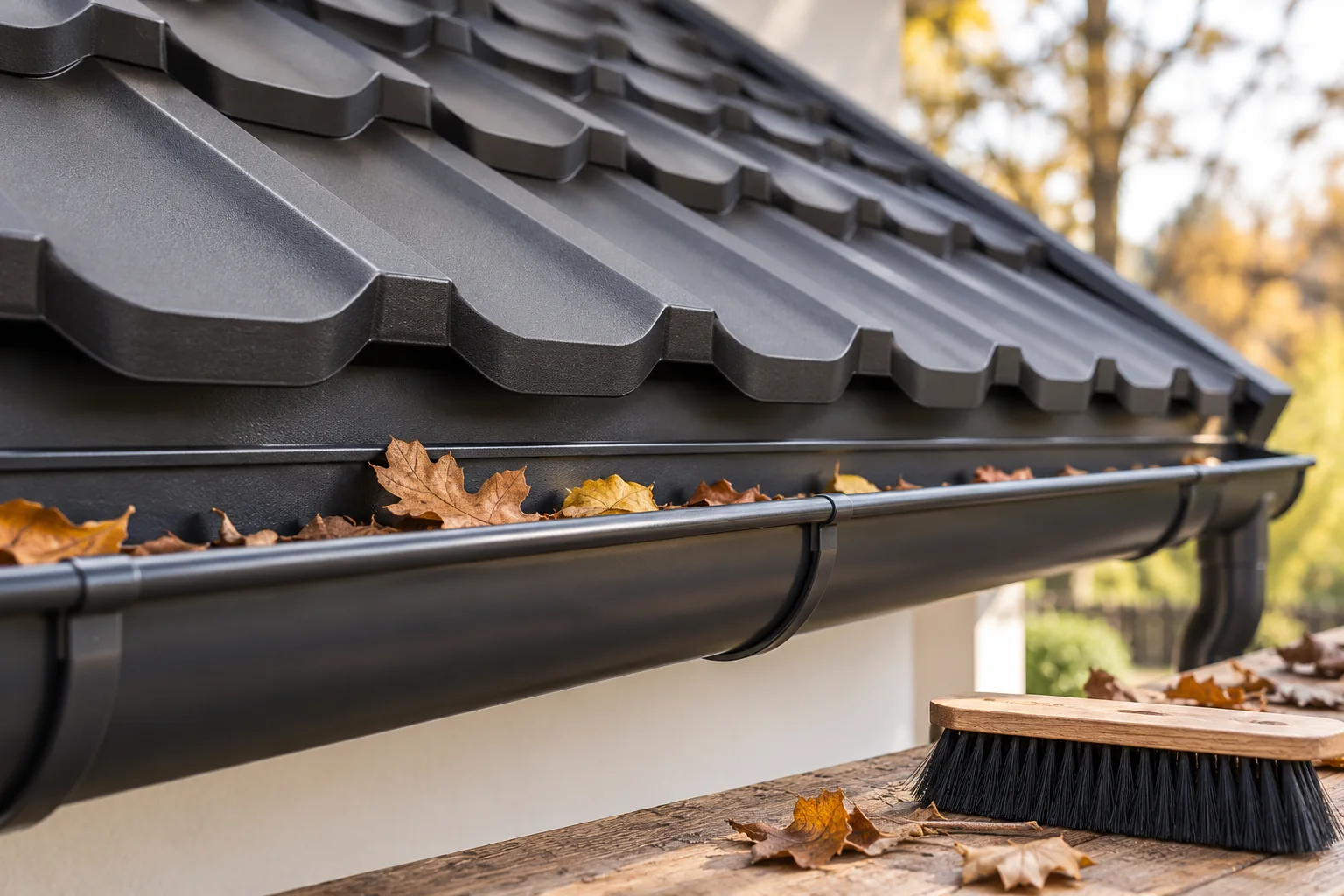
Why vacuuming the gutters alone may leave them unready for winter

Vacuuming the gutters alone is usually not enough before winter, as it mainly removes loose leaves and does not confirm that the whole drainage system works. The owner should check sediment at the base and joints, the flow through outlets and downpipes, and the tightness of connections. Whether a vacuum suffices depends on the home's surroundings and the actual condition of the system, so it is worth assessing what remains after cleaning. The inspection also covers fixings and drainage without standing water, so cleaning is only one of its stages.

2026-11-15T03:01:38+01:00
Back to top