Insulating a loft to limit thermal bridging and moisture

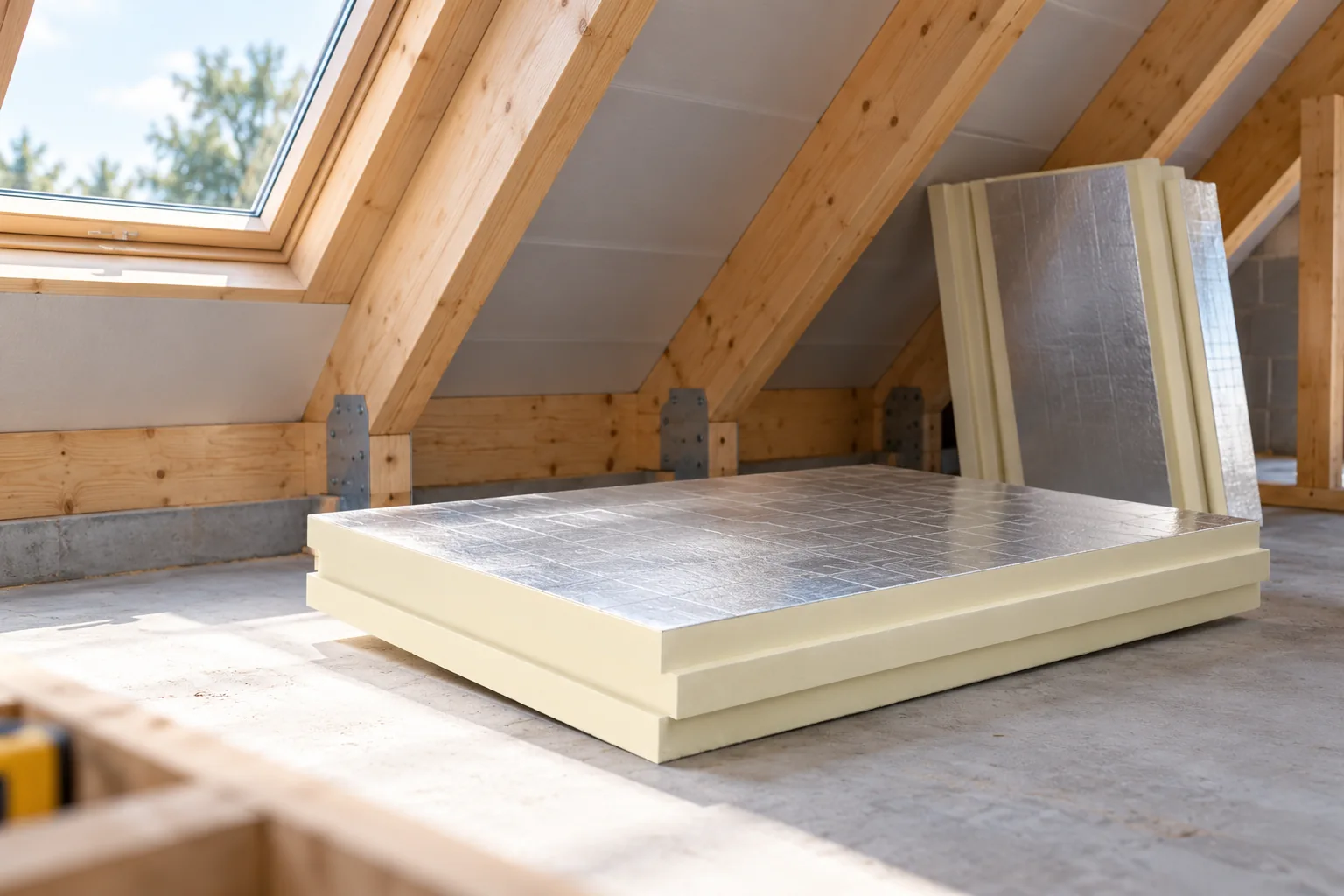
The decisive question is whether the loft will be used as living space or remains unheated – this determines where the insulation boundary should run. Readers should check the continuity of the thermal layer, how PIR boards are fixed, and the airtightness of junctions at the wall plate and windows. The article helps compare insulation between and above the rafters, and the role of lambda, fire, acoustics and moisture removal. If conversion is planned, the future layout must be considered to avoid paying for a solution that later needs rebuilding.
2026-11-14T19:22:23+01:00

How does an insulated panel with mineral wool reduce sound transmission?

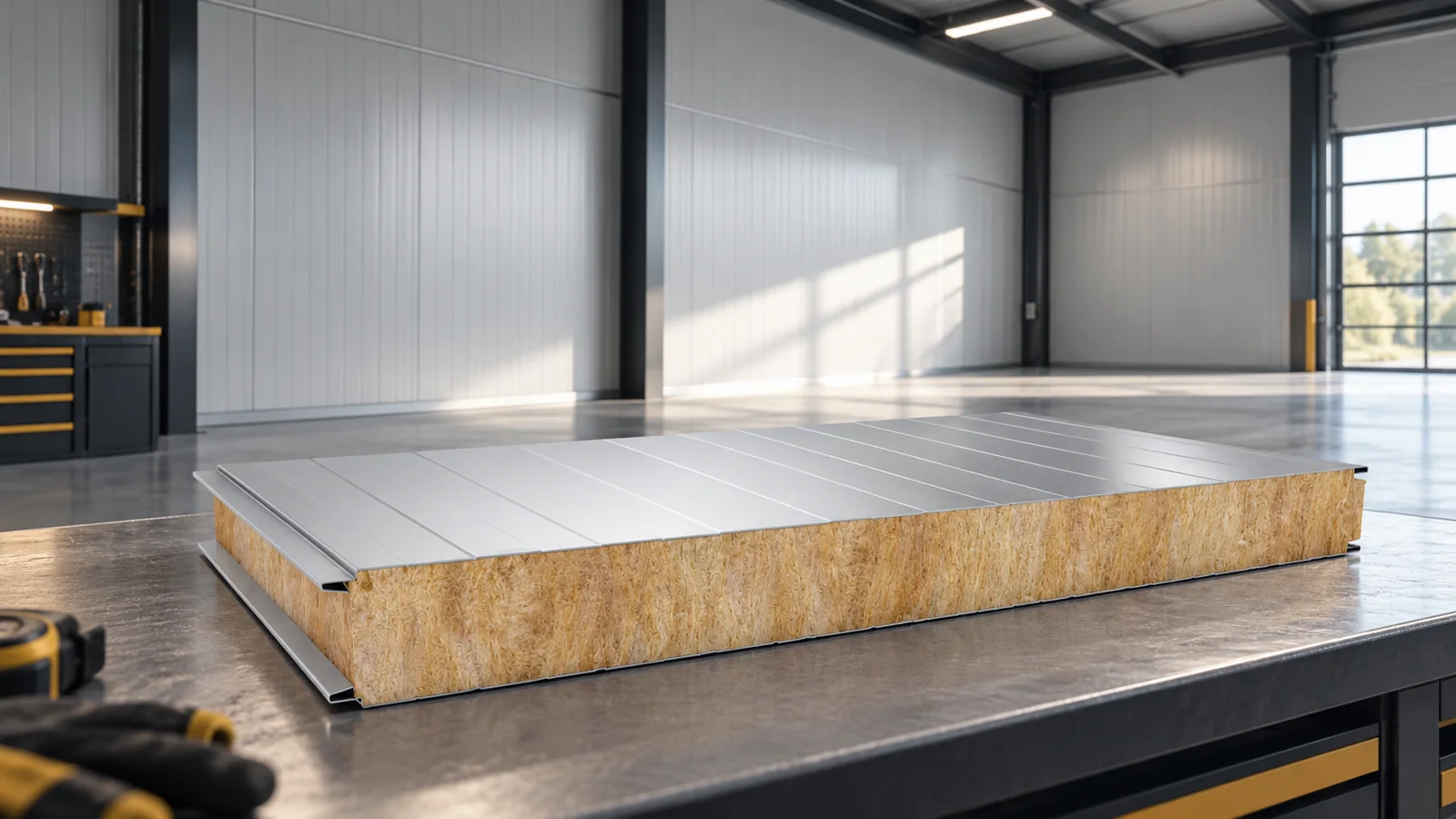
An insulated panel with mineral wool can reduce sound transmission through a wall. However, the result is determined by the entire product, not by the name of the core alone. The declared ratings must be compared and the airtightness of the building envelope ensured. Large doors, leaky joints and the structure can weaken the effect. Reverberation inside the hall is a separate issue. A full metal facing does not become a sound-absorbing panel simply because there is mineral wool behind it. Insulation describes the reduction of sound passing to the other side of the partition. This matters when production noise is to be less disruptive in an adjacent room or the surroundings. The result depends on the panel construction and the sound frequency.

2026-11-14T09:56:00+01:00

Controlling noise and reverberation in a steel-framed building

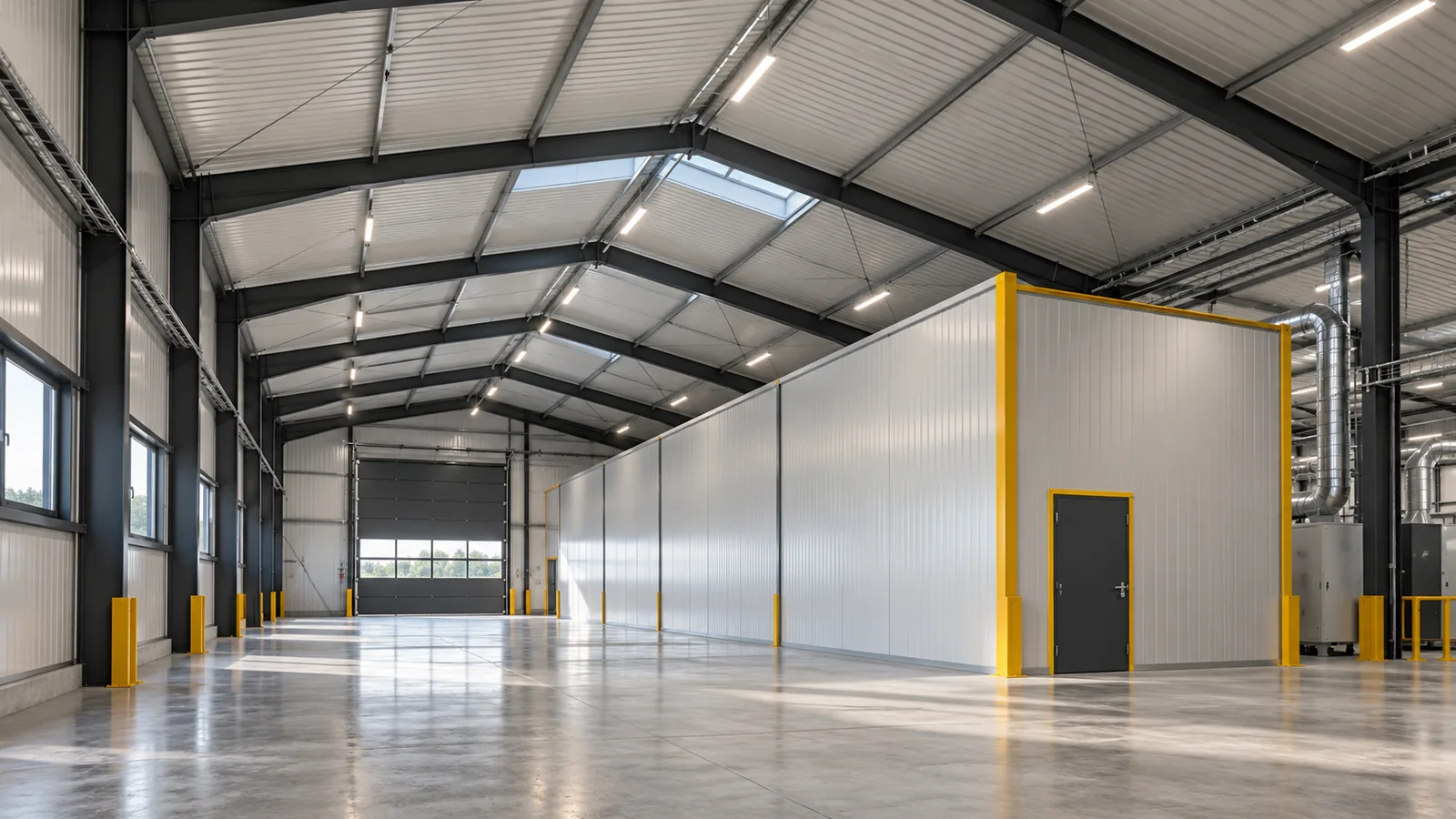
In an empty building, conversation can echo off the walls and roof. Once machinery starts up, further sound sources are added to these reflections. A steel-framed hall therefore needs a well-considered acoustic solution. Changing the core of the panel is not always enough, because noise reaches people and the surroundings by several different routes. The source may be machinery, fans, transport and impacts of materials. The nature of the work and the operating time of the equipment matter. A steel-framed hall with a single loud workstation requires a different approach from a facility with many distributed sources. The assessment should include measurements and the conditions in which the problem is greatest.

2026-11-15T03:02:57+01:00

Rain noise on corrugated fibre cement roofing: what affects indoor sound?

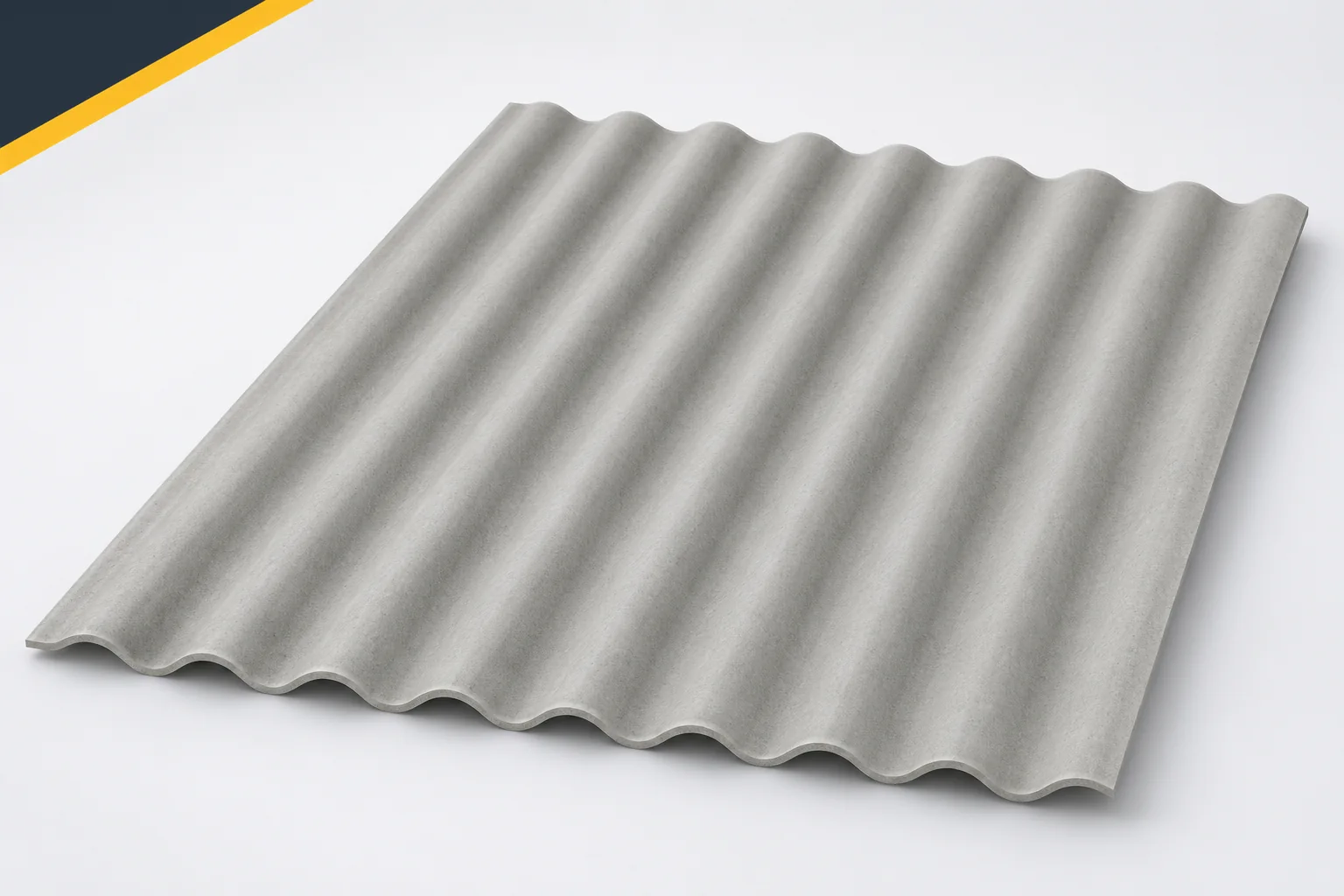
The sound of rain is assessed inside the building, not only at the surface of the sheet itself. The covering material matters, but the effect also depends on the roof layers, the supports and the room. Fibre cement sheets are sometimes chosen for their favourable acoustic behaviour. However, this does not guarantee a specific level of quiet in every hall. Asbestos-free fibre cement is worth considering as part of the whole building envelope, particularly above work and rest areas. Drops strike the surface, and the resulting energy can be transmitted through the material and the connections. The character of the sound depends on stiffness, mass, damping and the method of support. This is why different coverings do not sound identical.

2026-11-15T17:56:23+01:00
Back to top