Controlling noise and reverberation in a steel-framed building
Steel halls and structures
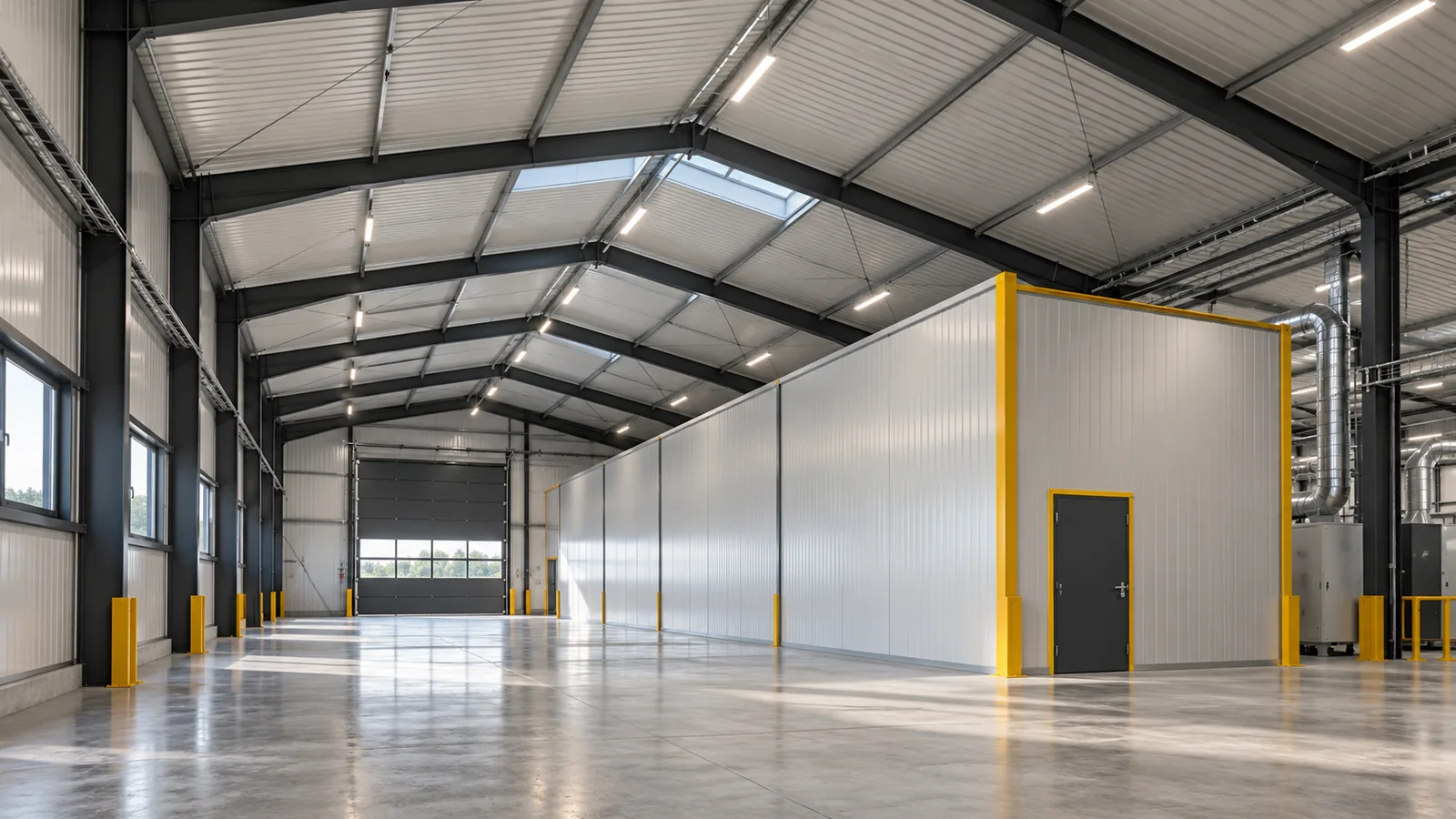
In an empty building, conversation can echo off the walls and roof. Once machinery starts up, further sound sources are added to these reflections. A steel-framed hall therefore needs a well-considered acoustic solution. Changing the core of the panel is not always enough, because noise reaches people and the surroundings by several different routes. The source may be machinery, fans, transport and impacts of materials. The nature of the work and the operating time of the equipment matter. A steel-framed hall with a single loud workstation requires a different approach from a facility with many distributed sources. The assessment should include measurements and the conditions in which the problem is greatest.
In this article
First establish where the noise comes from
On this basis, measures can be selected at the source, along the transmission path or at the receiver. It is not worth starting with the purchase of a random material for the entire wall. The steel structure, equipment and layout of workstations determine the options for installing enclosures. Access for operation and safe walkways must also be maintained.
Insulation and absorption are different properties
The acoustic insulation of a partition describes the reduction of sound transmission to the other side. Absorption concerns the energy that does not return to the room as a reflection. In a steel hall, improvement of both characteristics may be needed, but different solutions are selected for each. A high wall parameter does not automatically mean short reverberation inside.
A sandwich panel with a smooth metal facing has a hard surface. The mere use of wool in the core does not turn it into an arbitrarily effective absorber. The properties of the complete product must be checked. Steel structures can be supplemented with designed acoustic systems if loads and operating conditions permit.
Reflections matter in a large interior
Sound reaches the workstation directly and after reflections from surfaces. Acoustic adaptation can reduce the part associated with reflections. Its effect depends on the arrangement and properties of the materials. In a steel hall, the same result should not be expected right next to a noisy machine and in a distant part of the room.
Absorbing elements must also be selected with regard to cleaning, moisture and fire requirements. Not every material is suitable for a dusty or wet process. The method of suspension requires verification of the steel structure. Roof panels should not be loaded with equipment that was not allowed for in the design.
A machine enclosure must preserve the ability to work
If the main problem comes from one device, an enclosure or another solution at the source can be considered. It requires account to be taken of cooling, operation and material access. An opening left in the wrong place can reduce the effectiveness of the entire enclosure. The steel hall should allow such measures without collision with transport.
Vibrations transmitted to supports and the substrate are also significant. Sealing the wall alone will not solve the problem of transmission via this path. The selection of the device foundation and any vibration isolation is part of the design. Steel structures and foundations must correspond to the actual actions from machines.

Noise also passes to the outside through openings
A good wall can work together with a door of different properties. Opening it causes an even greater change. In a steel hall, intake vents, exhaust vents, windows and gaps matter. When assessing emission to the surroundings, the whole building and its actual operating schedule must be taken into account.
The position of a noisy workstation near a door can matter for the neighbourhood. Sometimes reorganising the interior or reducing unnecessary opening helps. Such measures must be combined with ventilation and safety requirements. A steel hall must not improve acoustics at the expense of air conditions at workstations.
For an existing building, it is helpful to prepare a map of sources and places where people stay. It should also cover short but loud activities, such as setting down components or unloading. An average picture of a quiet shift may not reveal the whole problem. After changing the work organisation, the conditions must be checked again. Moving a machine closer to a wall or corner can change how sound propagates. That is why the assessment does not end with selecting a material and should not be based solely on the declaration of a single panel manufacturer. Measurements matter.
Check effectiveness after making changes
The acoustic design should indicate the expected target and the method of assessing the result. Measurement before and after modernisation requires comparable operating conditions. An improvement cannot be attributed to the material if only some machines were running during the second survey. Well-kept documentation also makes it easier to assess subsequent technological changes.
Modular steel structures allow work areas to be separated conveniently, but acoustics depend on the specific partitions and openings. A steel hall for production, storage or a workshop needs its own investigation. The right selection starts with the noise source and ends with checking conditions at people and outside the building.
7 branches. Materials closer to your project.