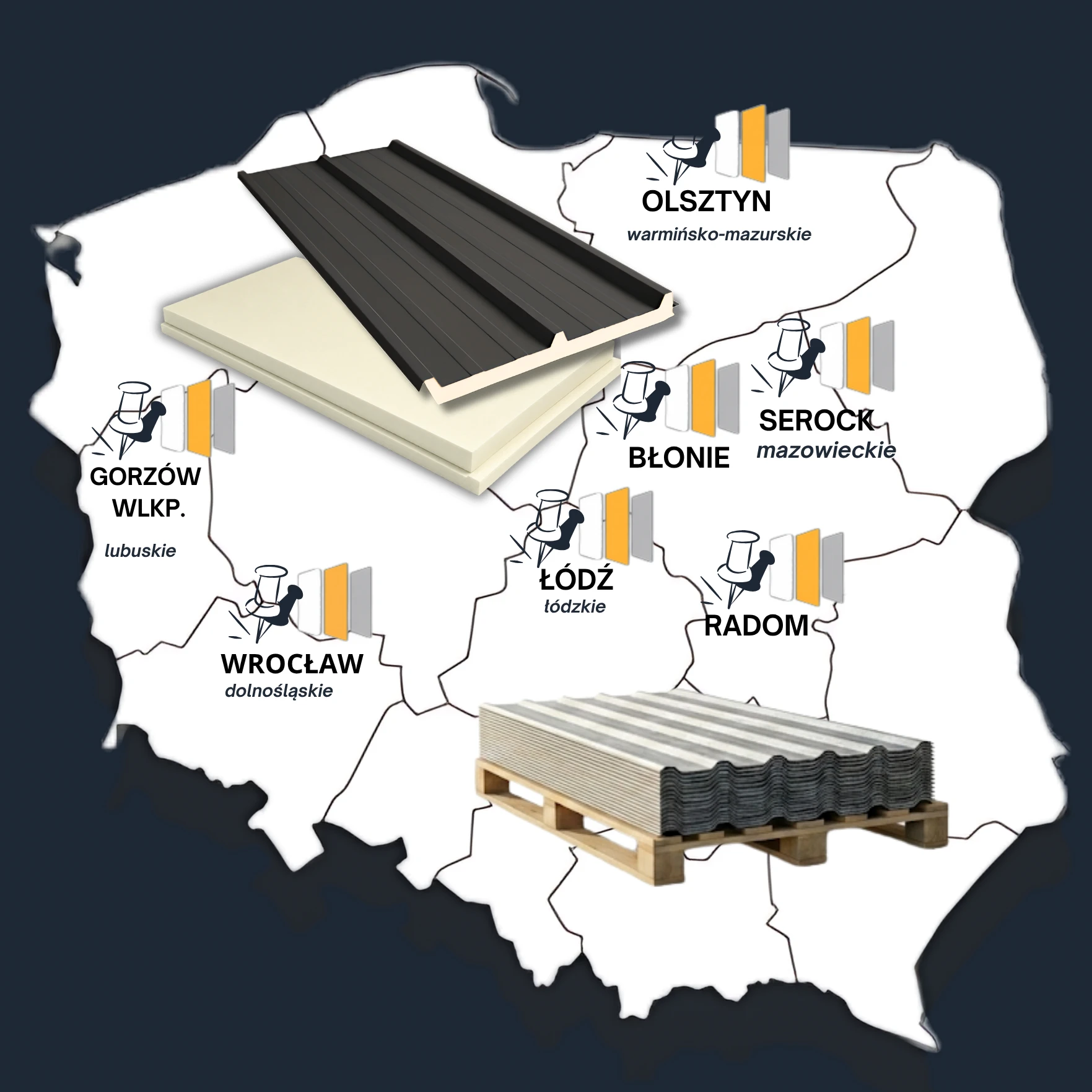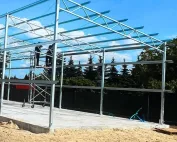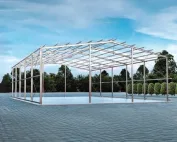
Choosing the envelope for a warehouse kept at a low temperature
Halls and steel structures
Not every warehouse needs office-like temperatures. That does not mean, however, that its building envelope can be chosen without analysis. A steel hall maintained at a low temperature should protect goods against the conditions that actually harm them. Sometimes frost and moisture are the most important factors, and sometimes it is limiting fluctuations when gates are opened. First, the requirements of the stored materials must be checked. A temperature above zero may be needed for products containing water, but it is not a universal rule for the entire product range. Humidity and the permissible rate of change also matter. A steel hall should be designed for the described range of conditions, without guessing the warehouse’s needs.
In this article
Define the permissible limits for the goods
It is worth distinguishing between ordinary weather protection, a heated warehouse and a cold storage room. Each of these facilities has different tasks. The steel structure may be similar, but the envelope and services will differ. The name of the warehouse therefore does not determine the correct panel thickness or the method of sealing.
Even a small temperature difference matters
If the interior is to be warmer than the surroundings, heat still flows through the envelope. A smaller temperature difference changes the scale of the phenomenon but does not eliminate it. In a steel hall, the walls, roof, floor and gates must be taken into account. Well-selected insulation should match the design conditions and the planned service life.
Thickness should not be assumed solely on the basis of the term cold warehouse. What counts is the specific panel, its coefficient and the joints. Steel structures also require correct details where they pass through the envelope layers. Continuity of insulation is important also in a building heated only to a moderate level.
A temperature margin does not replace moisture control
Goods and packaging may be damaged even without frost. Condensation on cold surfaces or excessively high humidity can be the problem. In a steel hall, water brought in with deliveries, wet vehicles and moisture from the floor must be taken into account. In winter and in transitional periods, conditions can change quickly.
Ventilation is selected according to the needs of the warehouse and of people. A tight envelope limits incidental air ingress but does not by itself ensure proper air quality. A steel hall for agricultural produce additionally requires analysis of the specific type of products. Grain, vegetables and machinery do not have the same storage requirements.
Gates can change conditions faster than walls
With frequent handling, a large amount of air is exchanged through the openings. The position of the gates, the opening time and the organisation of deliveries are therefore important. In a steel hall, a separate goods receiving zone can be considered. It should suit vehicle movement and storage requirements without creating unnecessary downtime.
Closing the openings after operations are completed is part of normal building operation. Even a very good panel will not compensate for a large gate being permanently open. The steel structure around the opening must also retain proper stiffness. Deformations can affect the adjustment of the leaf and the compression of the seals.

Human requirements remain important
A low-temperature warehouse can be a workplace. Conditions for employees depend on the type and duration of the tasks performed and on the requirements specific to the workstation. It is not possible to justify any temperature by the building’s function name alone. In this respect, a steel hall requires an analysis of the work organisation and appropriate solutions.
The welfare and office area may need a separate zone. The partition between it and the warehouse then has its own thermal role. This also applies to the ceiling, doors and service penetrations. Modular steel structures allow such rooms to be planned, but they do not replace the design of their envelope and services.
Conditions should be monitored at several representative locations, not only at a single thermometer. The area around the gate, the space by the external wall and the centre of the racking may react differently. Sensors should show the conditions relevant to the goods. They should not be placed where they are accidentally heated by equipment or in a sunlit window. Recording the measurements helps identify the influence of deliveries and weather changes. When selecting the installation, it is also necessary to define how the user is to respond to exceeding the specified range. Measurement alone will not maintain the required storage conditions. The location of data recording must also be established.
Consider a change of function before purchase
A seasonal warehouse is sometimes later converted into a workshop or production area. Increasing the required temperature changes the heating requirements and may require a better envelope. It is therefore worth defining the likely direction of development. This does not mean having to buy the thickest panels just in case.
A better solution is a conscious choice of variant. A steel hall can meet the target requirements from the outset or have a planned method of later modernisation. In that case, the supports, fixings and additional loads must be checked. Clear assumptions allow the cost of both routes to be compared and avoid accidental insulation upgrading of a completed building.
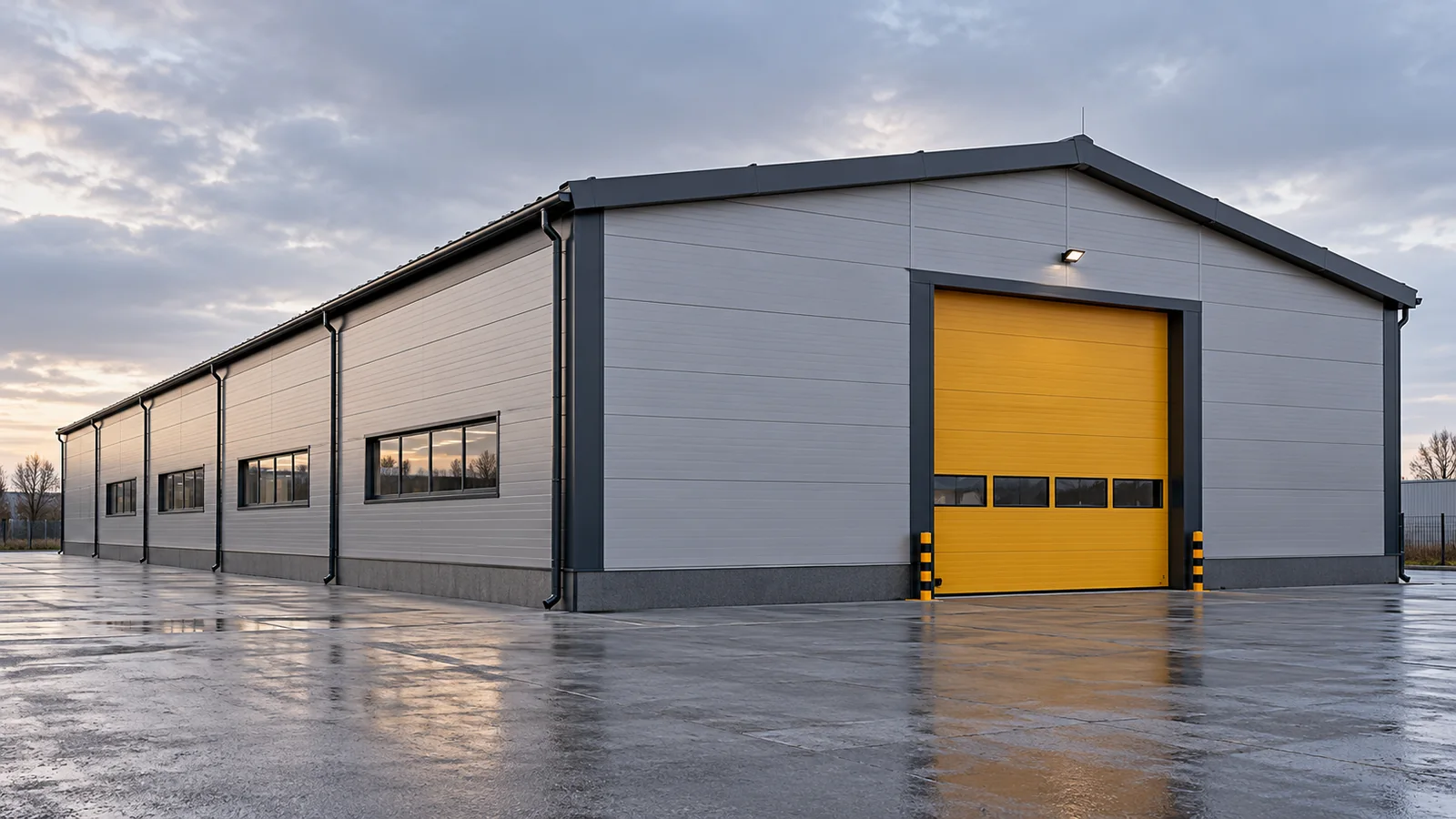
7 branches. Materials closer to your project.