

Building handbook
The Izoprofil.eu handbook covers roofing, wall cladding and insulation, from reading specifications to preparing an order. Find guidance on sandwich panels, PIR boards, trapezoidal sheets and metal roof tiles. Understand overall sheet width and effective cover width, compare insulation options and plan installation details. The articles also cover renovation, material storage and costs that are easy to overlook. Worked examples explain the calculation method. Check the design and product documentation before making the final selection. Once you have identified the material, prepare the dimensions, quantity and delivery location for a quote.
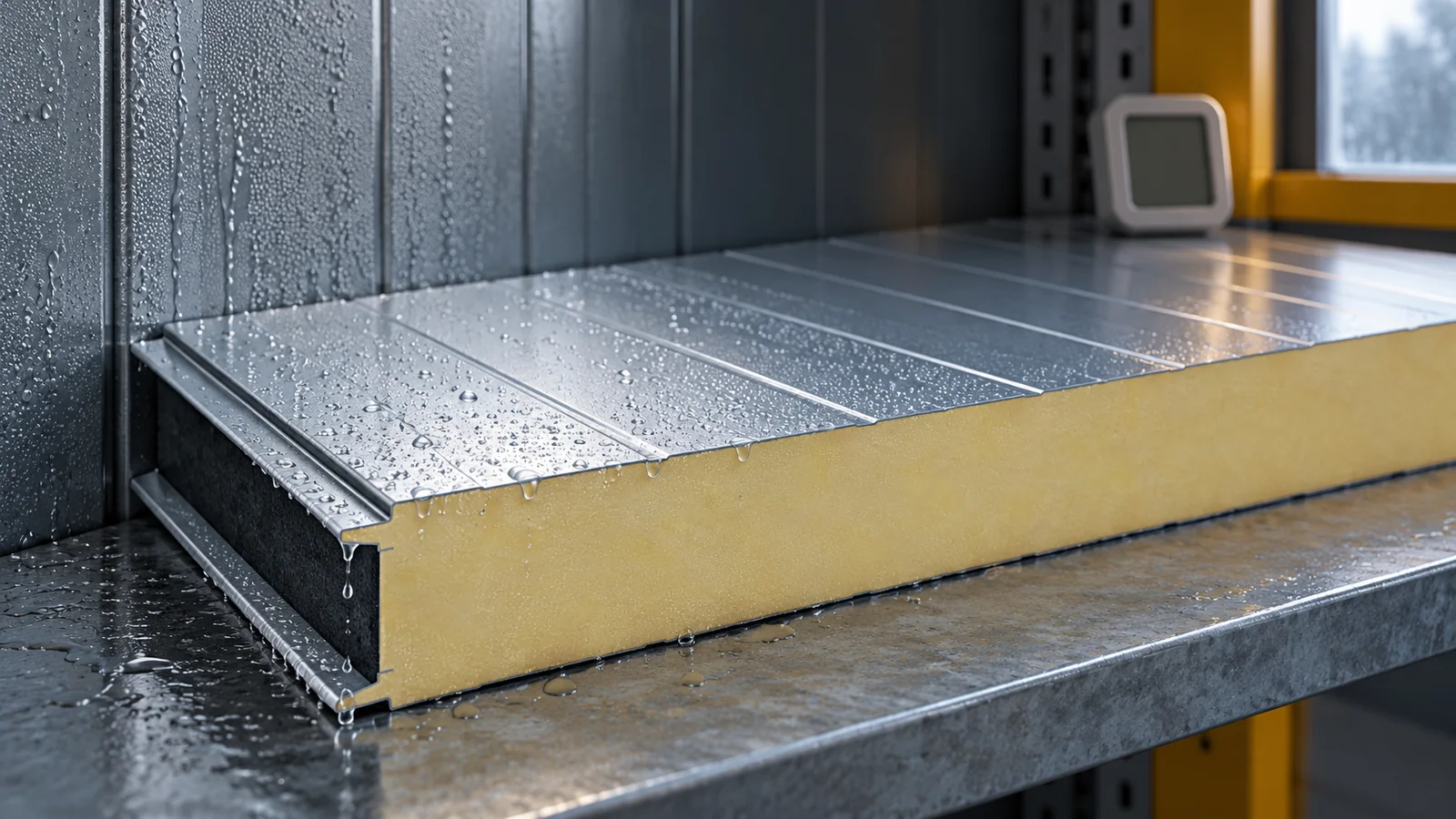
Why does water appear on insulated sandwich panels and how can condensation be limited?
Droplets on an insulated sandwich panel do not necessarily mean a leak. Water can form from the vapour contained in the air when the facing or the detail is sufficiently cold. The cause is sometimes high humidity, a thermal bridge or a non-tight joint. Before you seal the roof or add a membrane, establish the source of the water. Repairing the interlock will not replace ventilation, and intensive ventilation will not remove a wrongly executed roof penetration. Note when the water appears. A leak is usually connected with rain, melting snow or a specific wind direction. Condensation can also occur during dry weather. It often appears when the enclosure cools down and the humidity in the hall is high.
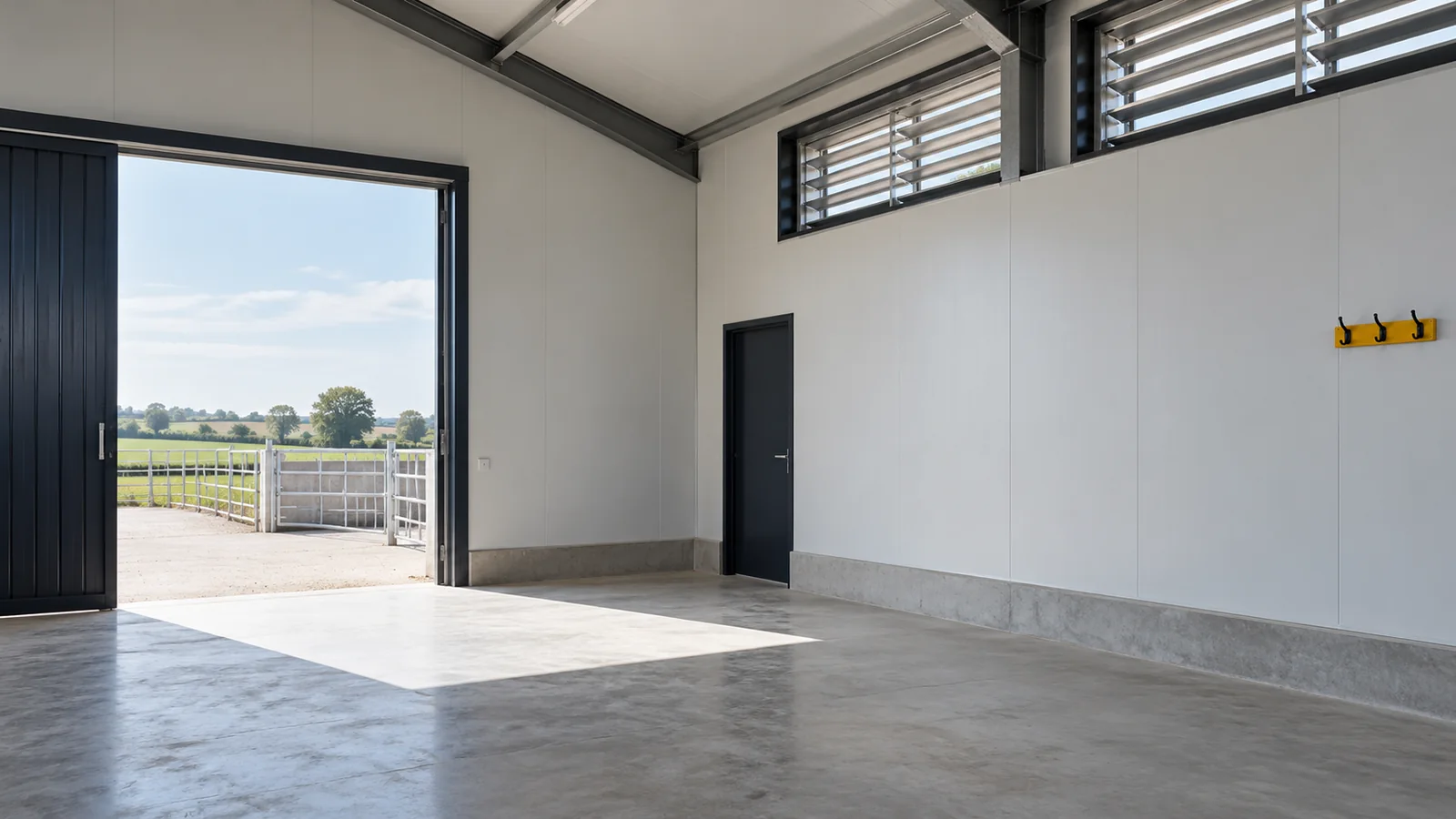
When is laminate-faced board suitable for a damp livestock building?
A board with an internal laminate facing can be a good solution in a damp livestock building if its documentation covers the intended conditions. The choice depends on the type of livestock, contact with chemicals and the cleaning method. Fixings, flashings and ventilation must also be assessed. A more resistant surface does not eliminate leaks or excess vapour. The best result comes from matching the whole envelope to actual service conditions. Before purchase, describe the temperature and humidity in a typical use cycle. Include areas above the animals, near channels and close to ventilation equipment. Conditions need not be the same throughout the building. How long the surface stays wet also matters for durability.
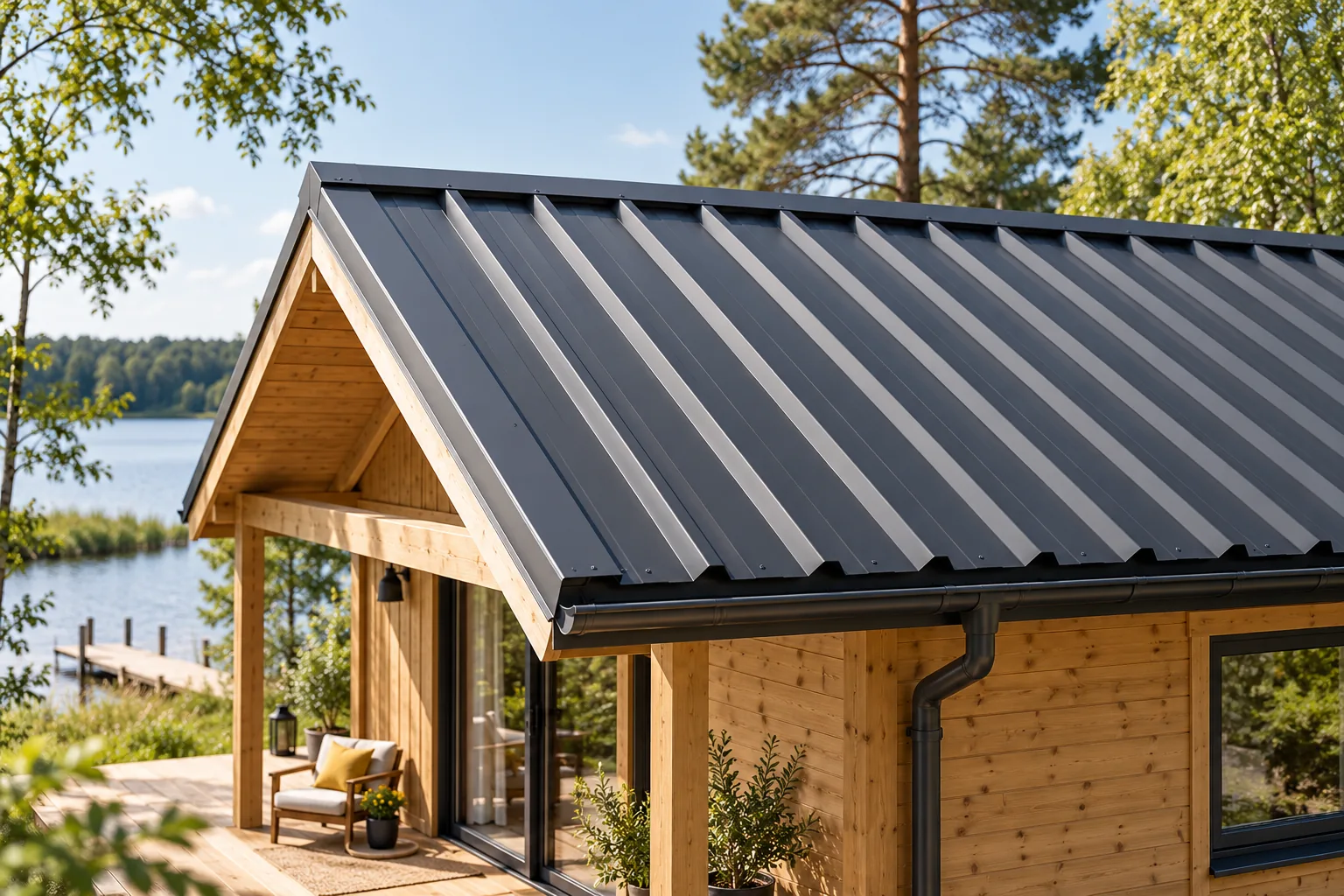
Which roof covering suits a holiday cottage?
Before choosing a covering, decide whether the cabin will be used only in summer or also in winter — this is the first question before making a decision. The answer affects the layer arrangement, ventilation and the risk of condensation. Check whether a simple T18 or T35 trapezoidal profile suits the structure, and whether a modular metal tile suits a more residential form. Consider rain noise, pitch, batten spacing and site access. Remember that the metal sheet alone does not solve temperature and moisture issues.
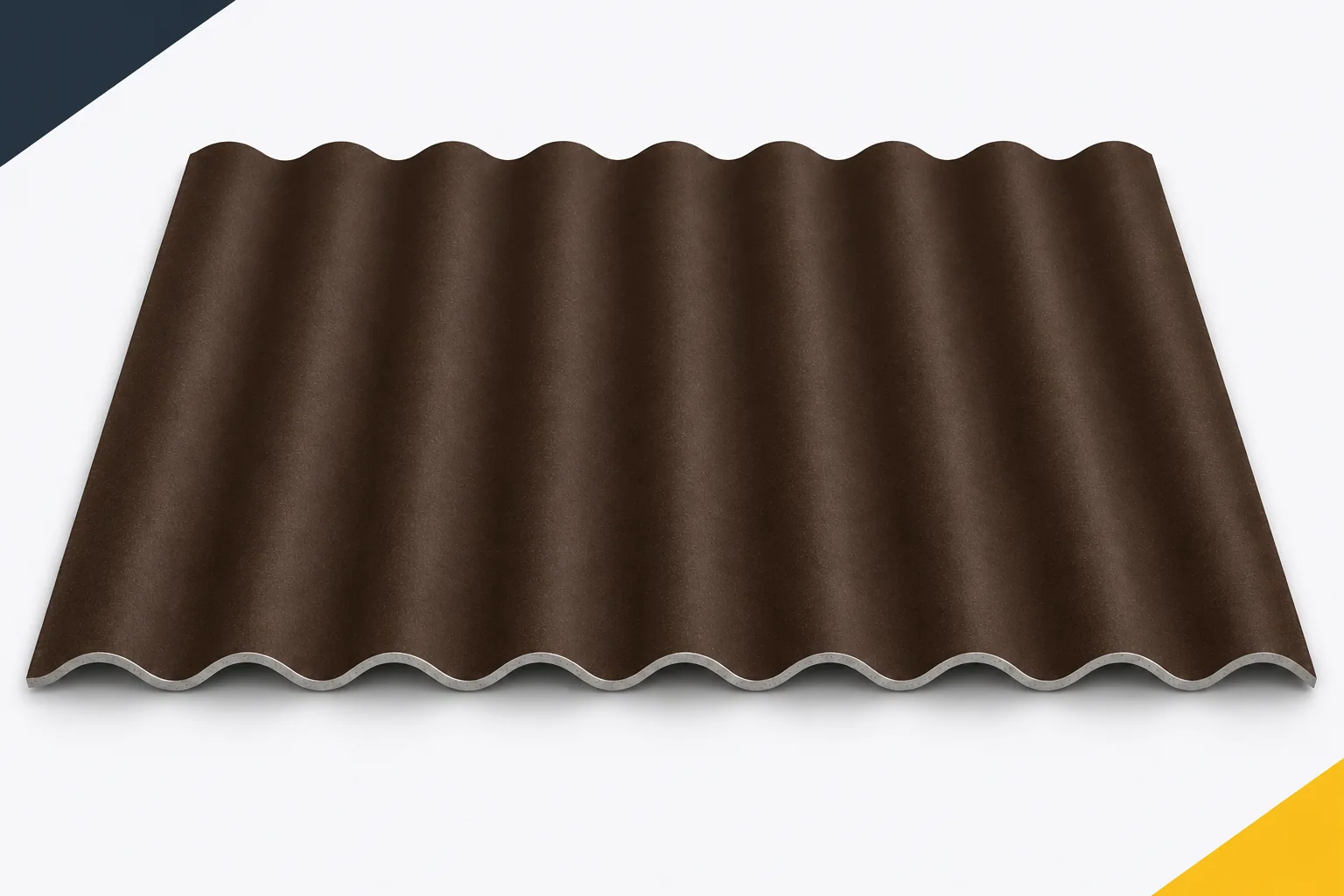
Assessing a roof after its first winter in an occupied building
The first winter shows how the roof behaves in real use. Precipitation, wind, temperature fluctuations and moisture from inside all come into play. Fibre cement sheets should then be assessed together with the accessories and the layers beneath the covering. Asbestos-free fibre cement does not require hasty correction of every mark on the surface. What is needed is a calm inspection, documentation of the symptoms and a distinction between a change in appearance and a defect affecting how the roof performs. The installation plan, photos of details and material markings help establish what is actually being checked. It is also worth having the acceptance report and information about changes made during the works. This makes it possible to compare the current condition with the original execution.
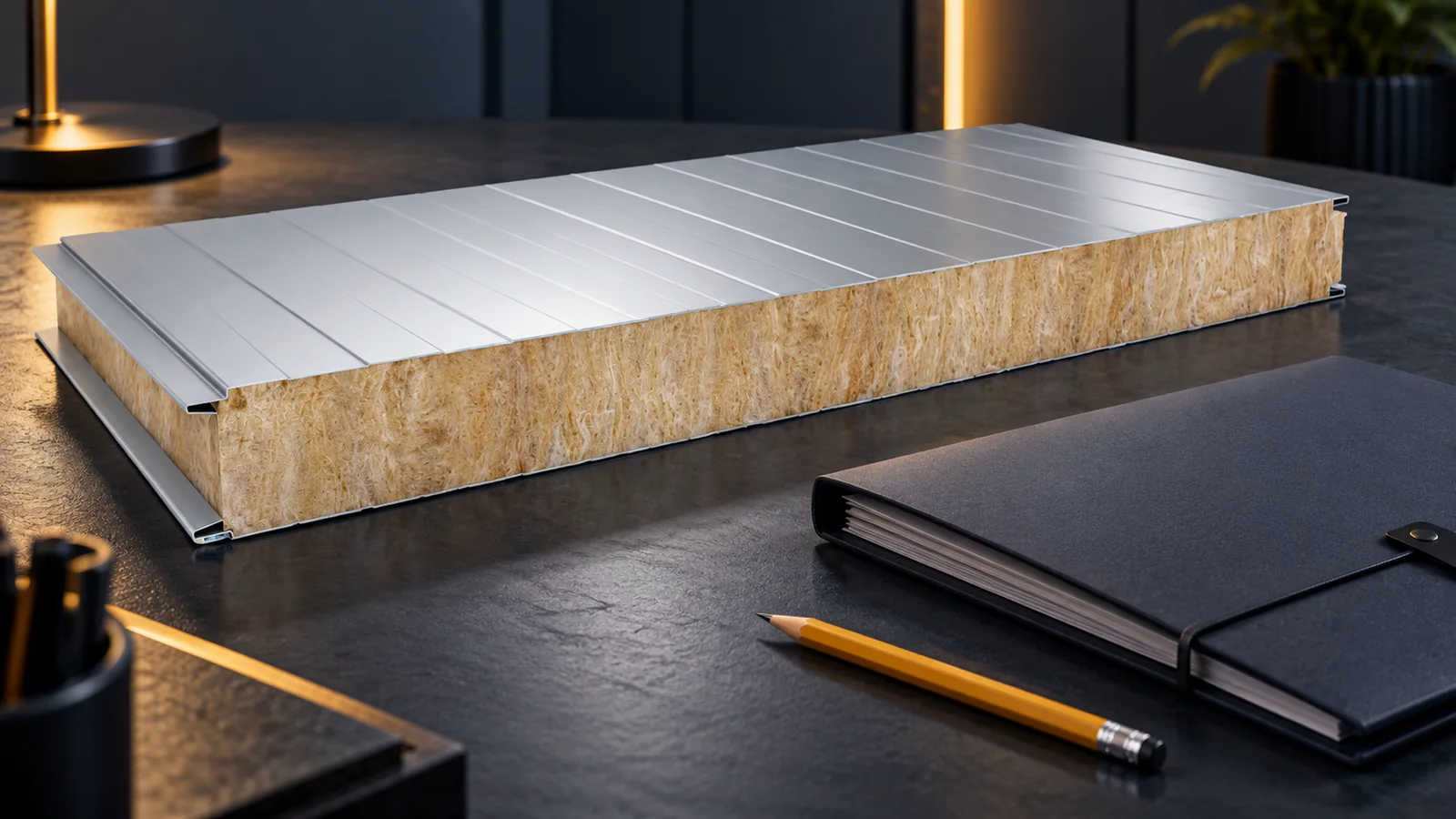
How do wall panels with enhanced mineral wool differ?
Panels with enhanced mineral wool can differ in core, facings, joint and scope of classification. There is no single common standard for the 'better' version. Higher wool density does not automatically guarantee lower U-value, better acoustics and greater fire resistance all at once. You need to establish which parameter matters in the given building, then compare the datasheets of specific products. The offering may concern better fire resistance, greater permissible span or a different surface finish. Sometimes the core construction changes, and sometimes the sheet thickness. The trade name alone does not explain the scope of improvement. You need to check what result is declared and under what conditions.
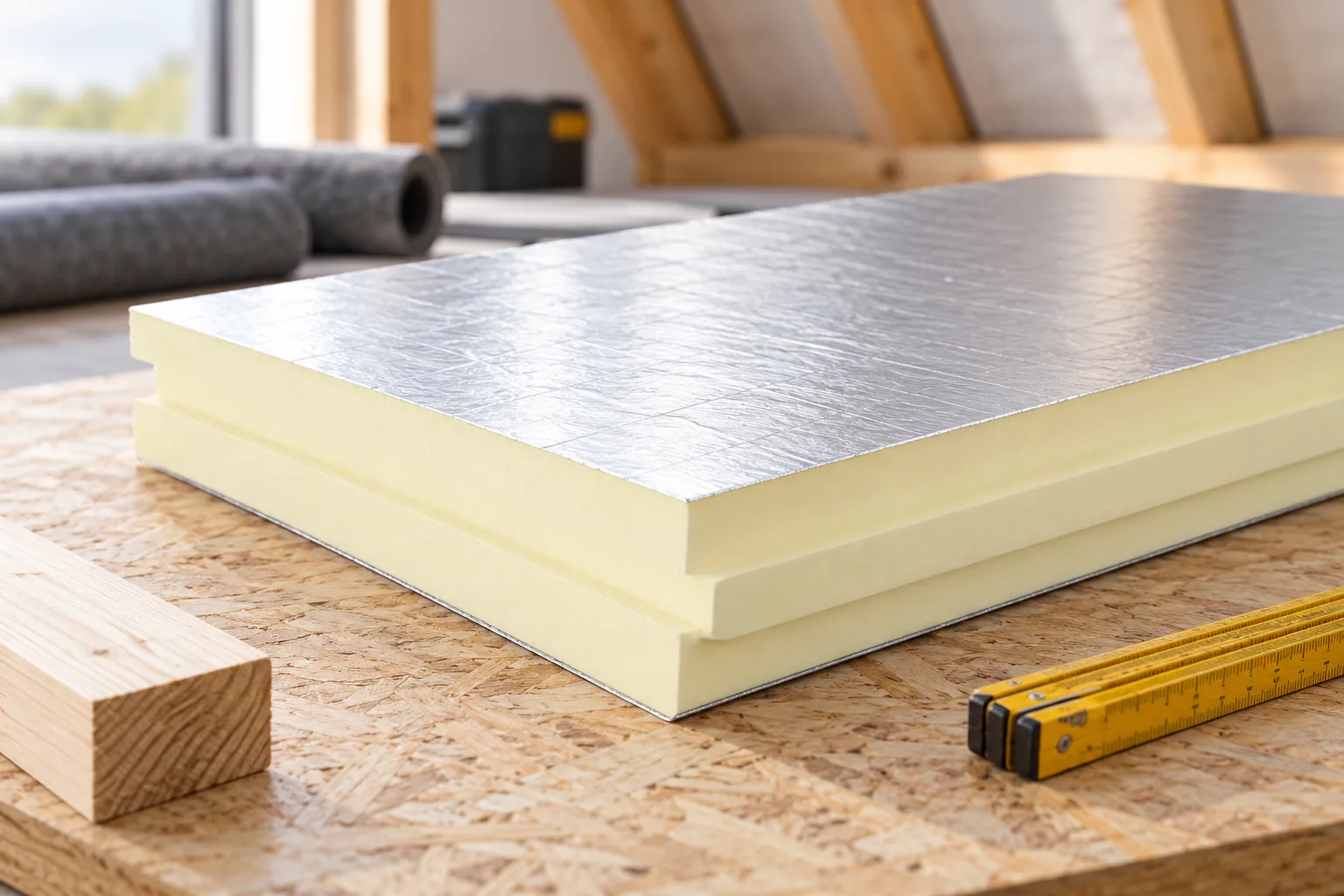
How to insulate a roof and when to choose PIR boards
The choice of roof insulation material depends above all on the layer build-up and the space available for insulation. PIR boards are worth considering where a slim layer with high thermal resistance matters, but the deciding factor is the boundary of the heated part of the building. Check whether you are insulating a sloping roof plane above rooms or a ceiling under a cold loft, then examine airtightness, thermal bridges and water protection. Compare complete systems, not just the declared lambda.