

Building handbook
The Izoprofil.eu handbook covers roofing, wall cladding and insulation, from reading specifications to preparing an order. Find guidance on sandwich panels, PIR boards, trapezoidal sheets and metal roof tiles. Understand overall sheet width and effective cover width, compare insulation options and plan installation details. The articles also cover renovation, material storage and costs that are easy to overlook. Worked examples explain the calculation method. Check the design and product documentation before making the final selection. Once you have identified the material, prepare the dimensions, quantity and delivery location for a quote.
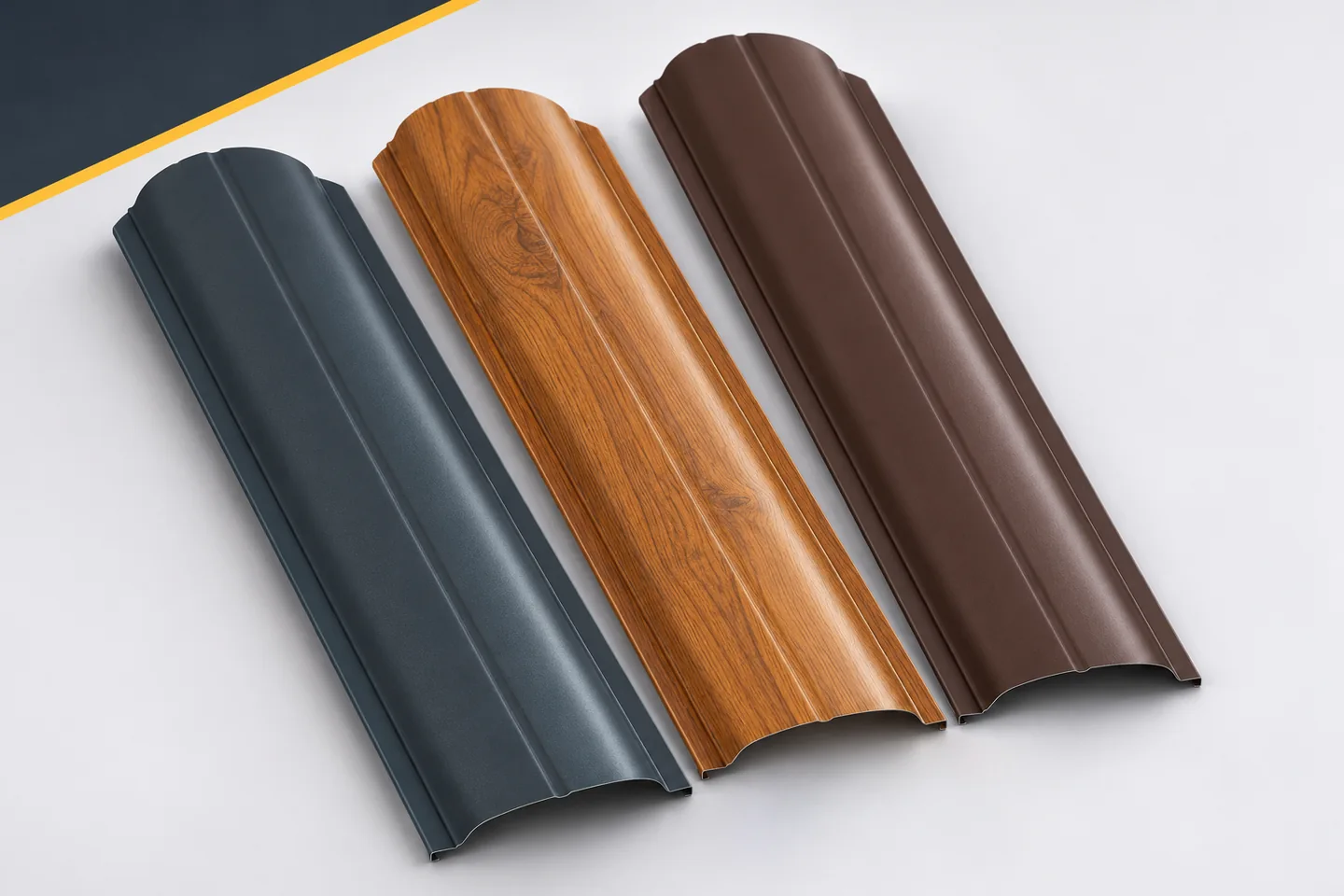
The top line of a metal picket fence: straight, curved or stepped?
The appearance of the top edge of a fence comes down to two decisions. The first concerns how an individual picket is finished. The second concerns the length and position of all the elements within a bay. Rounded ends do not automatically mean the whole fence is arched. Metal pickets of equal length can have level tops even if each end has a gentle curve. It is worth separating these two questions before ordering. Make two sketches of the same bay, changing only one element. First compare the ends at equal height, then check how the outline changes. That way you will see more easily which decision really gives the fence the character you want. This makes it easier to achieve the intended effect and prevents mistakes during production.
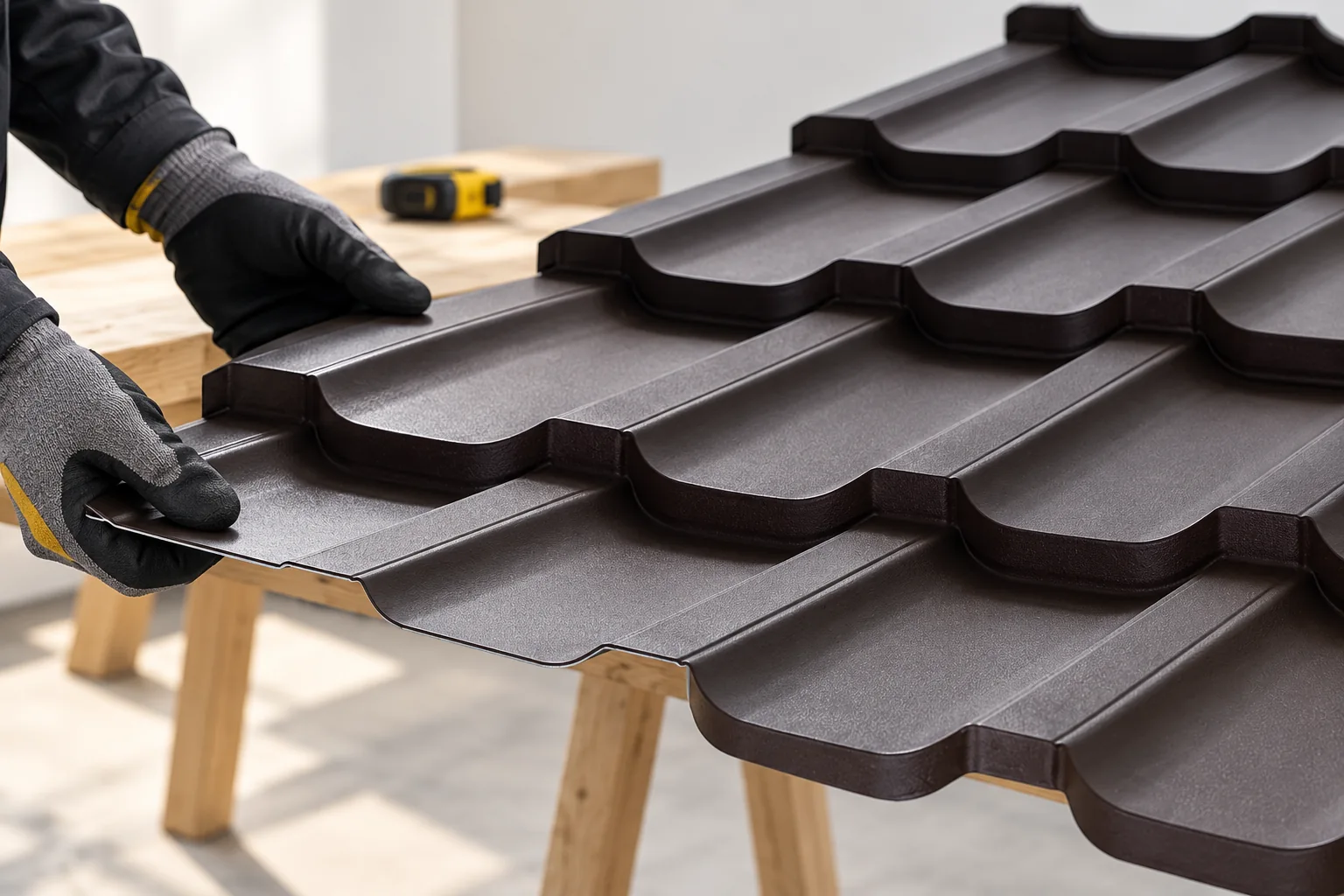
Which roof coverings put the least weight on the structure?
The covering that places the least load on the structure is the one with the lowest mass per square metre of finished roof surface, not per individual sheet. When choosing, check whether the stated value refers to the covering area and what purlins and additional layers are required. It is also necessary to establish where these loads act and how they reach the walls. A comparison made for the same roof area avoids a misleading impression of lightness. Final design decisions remain with the structural designer.
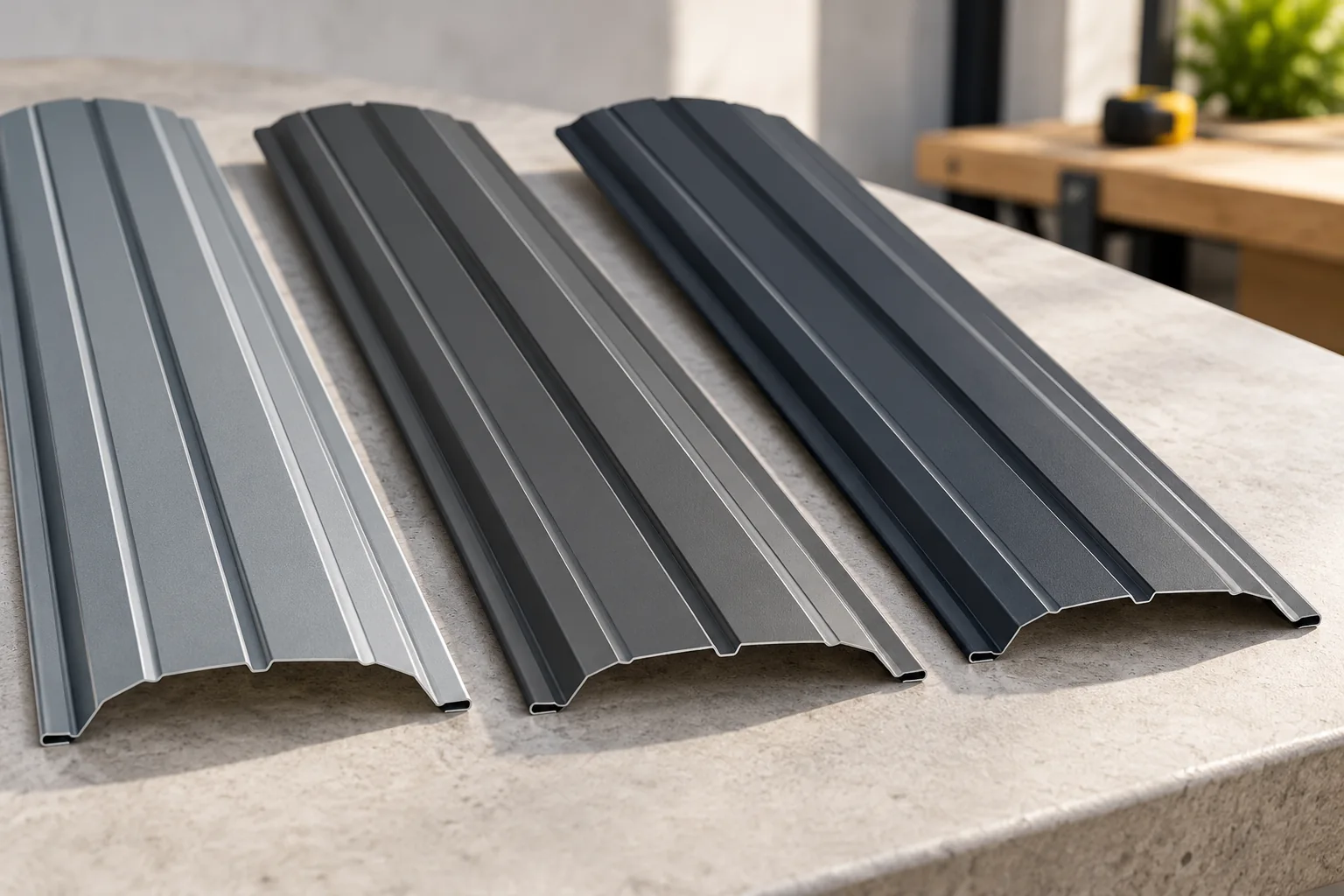
Metal fence pickets: how they work and when to choose them
Metal fence pickets are profiled infill elements for fence bays, available in various widths and profile depths. Before buying, check whether the chosen profile suits the existing structure and the desired gap, not just the façade colour. By examining a real sample, you can assess the surface on the street and garden sides and the finish of the edges. Bear in mind that a similar front appearance does not guarantee identical installation requirements. The decision on a double-sided layout or denser spacing should account for wind loads and fixing to the rails.
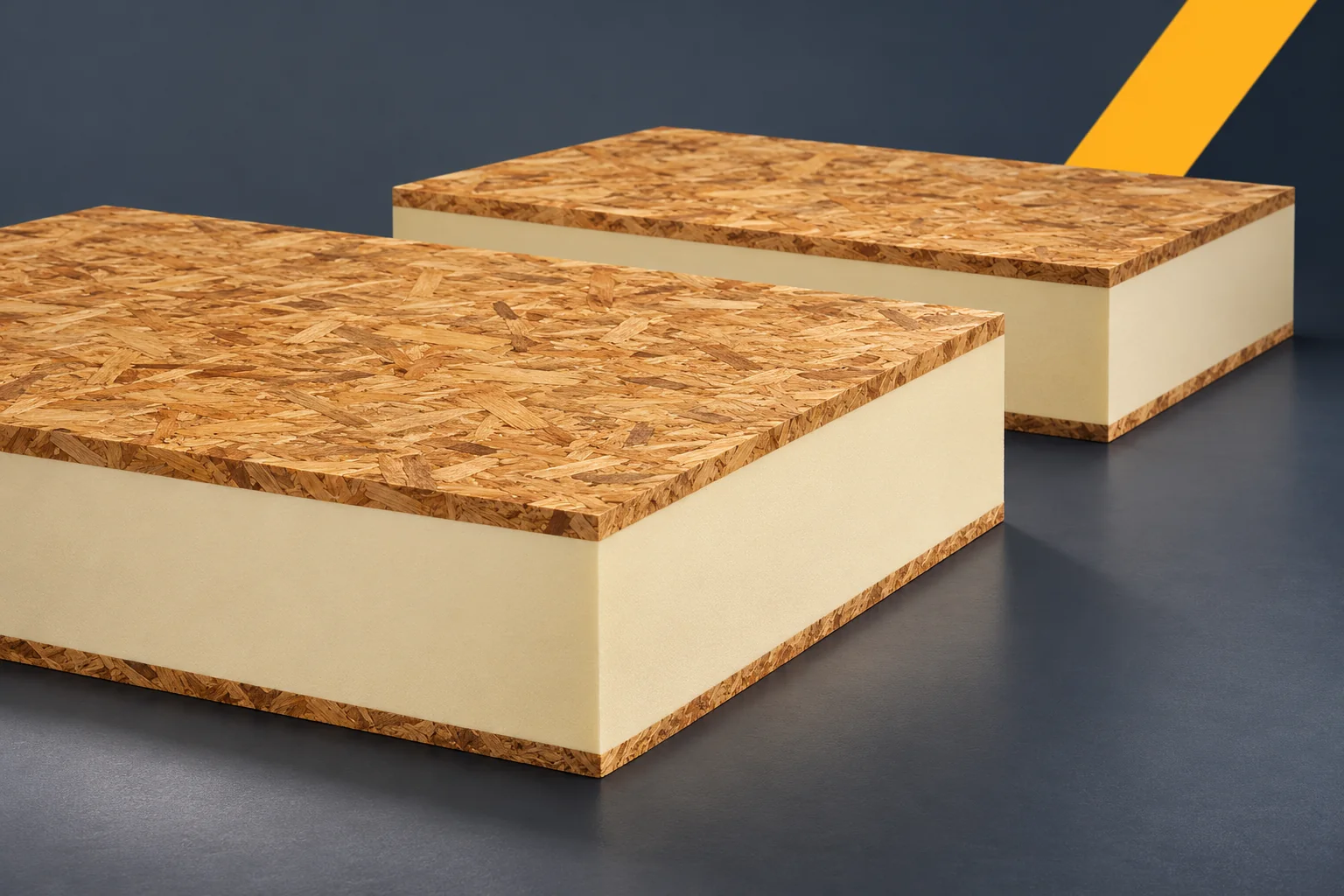
What a SIP panel’s lambda value alone cannot tell you
With SIP panels, the lambda value is often the first thing that comes up. It is worth knowing what it means so as not to attribute too many functions to a single number. SIP Panels, i.e. structural insulated panel, means a structural insulating panel. In solutions with a polyurethane core, a low lambda helps to limit the insulation thickness. Nevertheless, the thicknesses of the individual layers, the joints and the properties of the finished building component still have to be checked. The thermal conductivity coefficient is expressed in W/(m·K). At the same thickness, a lower value means a greater thermal resistance of a homogeneous layer. In a SIP panel, the core, the OSB and additional materials can have different lambda values. The value given for the foam does not automatically become the coefficient of the entire composite element.
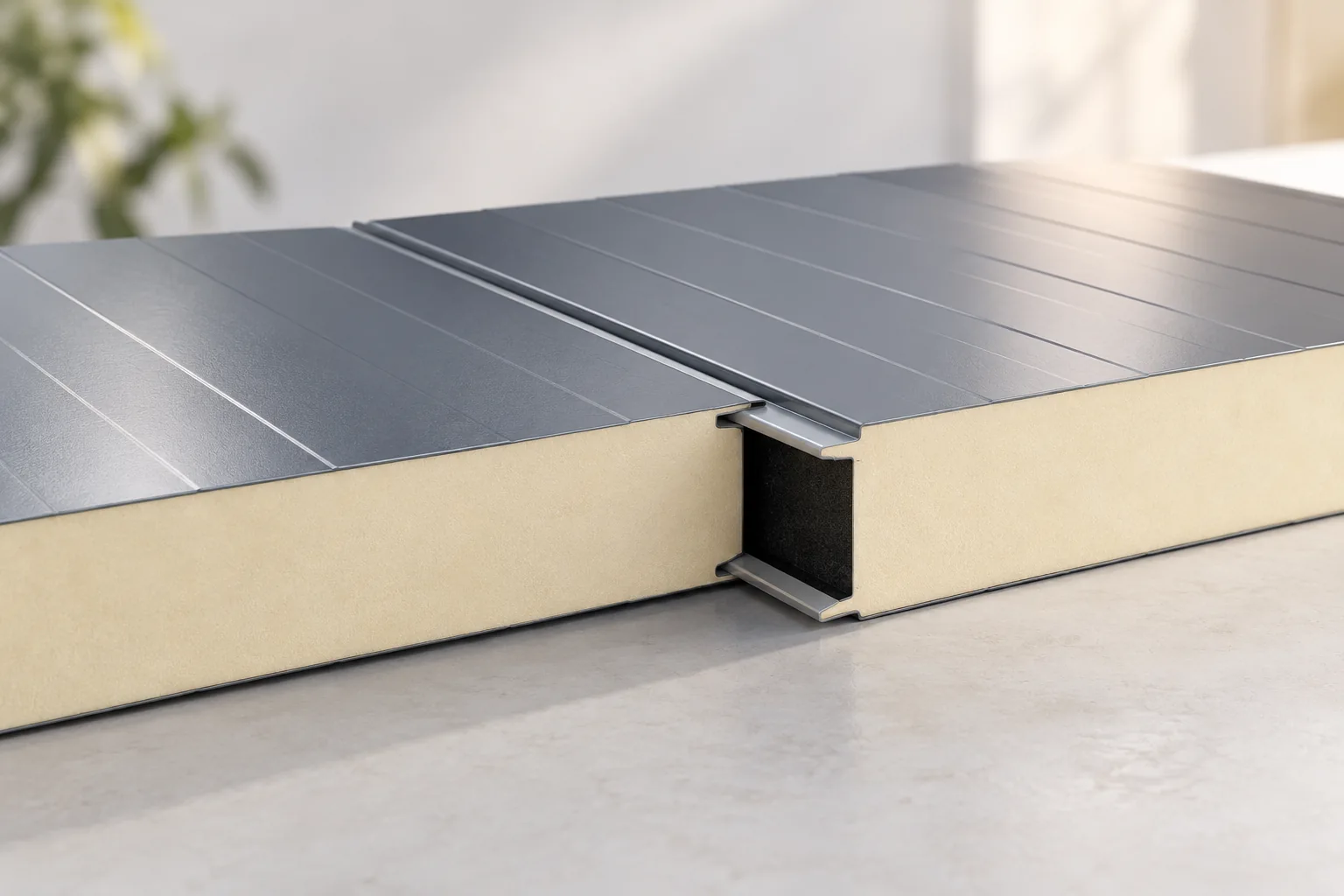
Choosing wall sandwich panels for the façade finish you want
First decide whether the panel is also to serve as the finished surface on the inside, as this determines the choice of both faces. Then check whether the chosen surface profile and panel layout suit the building's form, and whether visible or concealed fixing matches the intended facade rhythm. Compare PIR and mineral wool cores for insulation, reaction to fire and acoustics, bearing in mind that the parameters relate to a specific product and the whole assembly. A dark colour may require a different colour group and affect span. Include trims, corners and seals in the quotation.
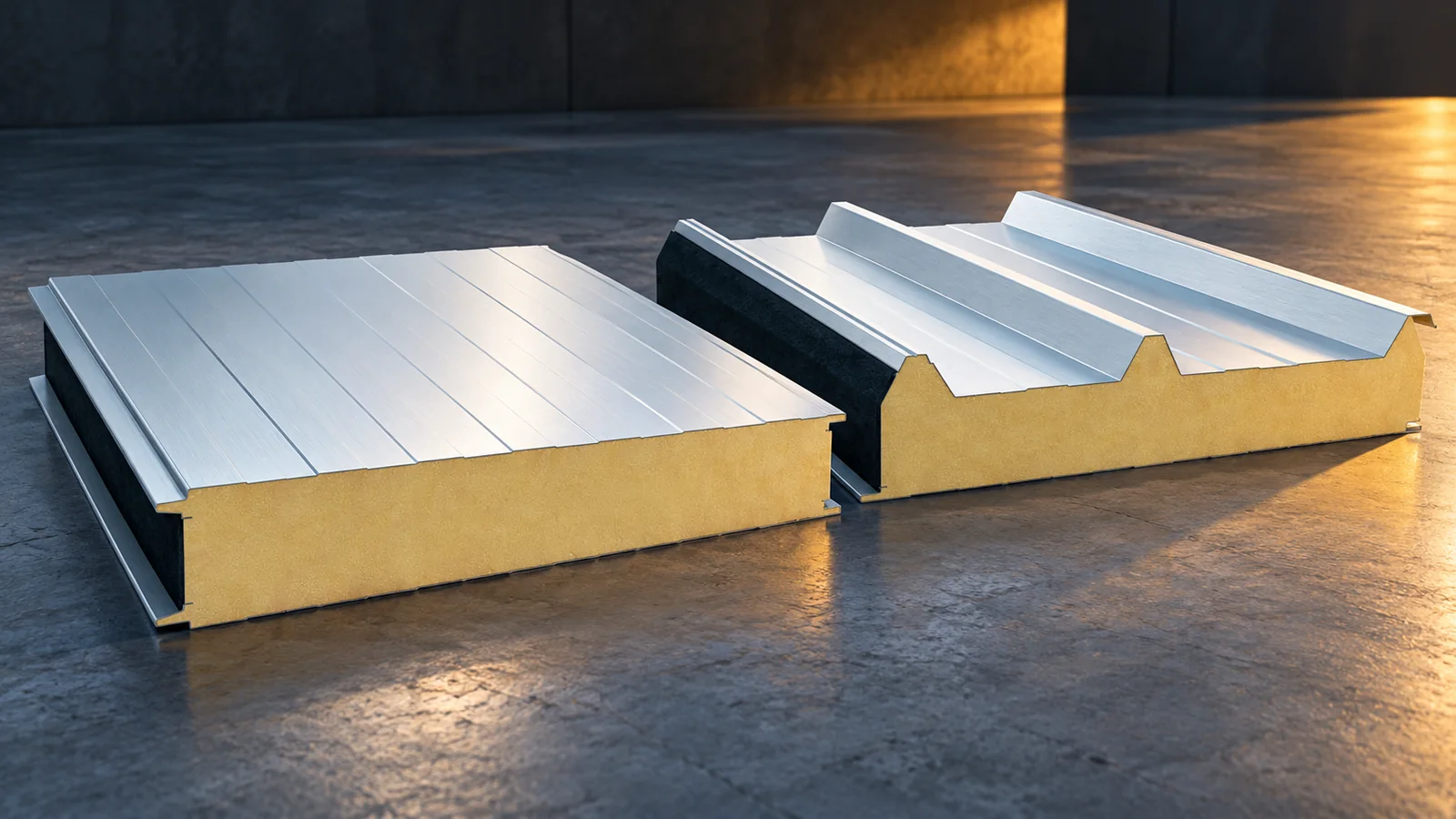
What distinguishes a roof sandwich panel from a wall panel?
Roof and façade sandwich panels are not interchangeable, as they differ in purpose, profile, joint and fixing. When choosing, check above all the product data sheet, the cross-section drawing and the installation instructions for the specific application. The roof must carry the design loads and drain water, while the façade must perform under wind action and have sealed joints. The appearance of the sheet alone does not determine the application – the product designation and the scope given in the documentation do. Compare parameters only for the correct function, because a similar core and nominal thickness do not guarantee the same properties.