Coated trapezoidal sheet: specifying protection for both faces
Metal roofing
When choosing coated trapezoidal sheet, describe the conditions on each side. Sun, rain and airborne dirt act on the outer face of a roof. The underside may be in a dry warehouse, a damp garage or a room that is washed regularly. Sheets of the same colour need not provide the same protection in all three settings. Tell the supplier how the building is used, what moisture is expected and how it will be cleaned. Compare the coating specifications for both faces and include the selected finish code in the order. This helps with checking the delivery and choosing compatible flashings and repair materials.
In this guide
What does the colour code tell you?
A RAL reference identifies a colour. Obtain the full product designation, the metallic protection on the steel and the organic finish. Samples with similar colour and gloss may have different approved uses.
How should internal exposure be described?
For a warehouse, describe the goods stored and whether condensation forms on the underside. In a farm building, list the cleaning agents used. The manufacturer needs the service conditions to assess a particular reverse-side coating.
In an open shelter, consider both faces even where rain does not reach. Sheltered areas can collect deposits, and access for cleaning will depend on the finished layout.
Does the finish determine the permitted span?
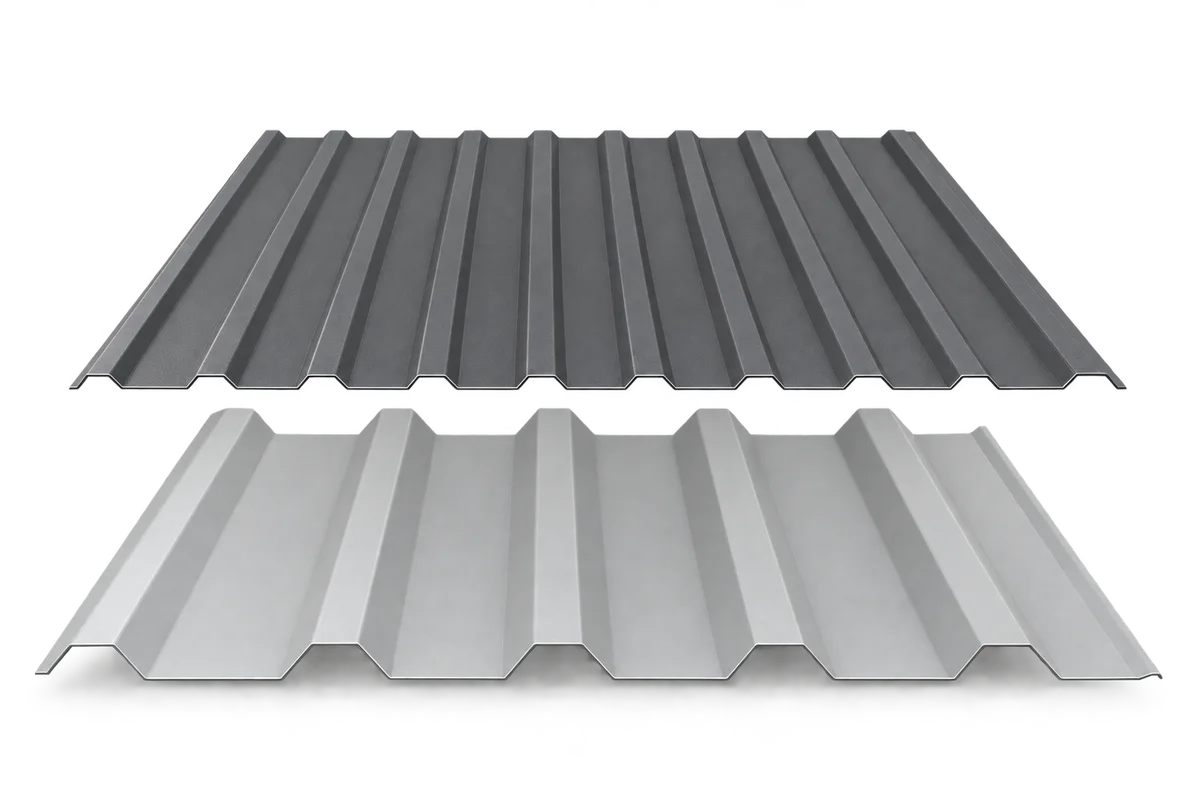
Check corrosion protection and load capacity separately. For T18 or T35 cladding and for structural decks, establish the exact section and steel thickness. Changing the finish is no basis for altering support spacing.
If a change of finish involves another sheet supplier, obtain the edge drawing and data for the application. Sheets with similar names may differ in cover width or side lap, particularly important when adding a strip to existing cladding.
How do you compare warranty cover?
Alongside the warranty period, record its scope. Appearance and perforation can be subject to different conditions. Compare documents for the actual coating, exposure and required inspections.
Check restrictions on moisture, contact with other metals and cleaning. If in doubt, describe the detail to the supplier, such as a new sheet adjoining an existing eaves flashing.
How should sheets be protected during installation?
On delivery, check the finish code on the pack and identify the exposed face. Set damaged sheets aside before installation. Check how long the protective film may remain on the sheets and what storage conditions are required.
Use tools intended for cold cutting. Hot particles can damage the coating of a neighbouring sheet. Inspect cut edges and remove loose swarf when the work is finished.
Which details should be kept for repairs?
Record which batch went on each roof slope or elevation. Keep its label and the manufacturer’s instructions. If one sheet needs replacing, these details identify the finish and help establish whether that version is still available.
During inspections, look at edges, flashings and surfaces below run-off marks. Photograph damage before repairing it. Select a cleaning method and touch-up product suited to the coating instructions.
7 branches. Materials closer to your project.