How to avoid the most common mistakes when installing insulated panels?
Sandwich panels
Installation mistakes with insulated panels often concern details that are difficult to inspect later. Incorrect support, a damaged lock or incorrect screw pressure can cause leakage and deformation. Cutting, storage and the removal of swarf and film are also important. Inspection should accompany the work, not begin only after the building is closed. It is worth checking the structure, fixings, joints and edge finishing in sequence. Excessive spacing, incorrect support width or a static scheme different from the table change the working conditions of the element. A similar problem is caused by using thinner facings without rechecking. The panel may look the same but have different permissible loads.
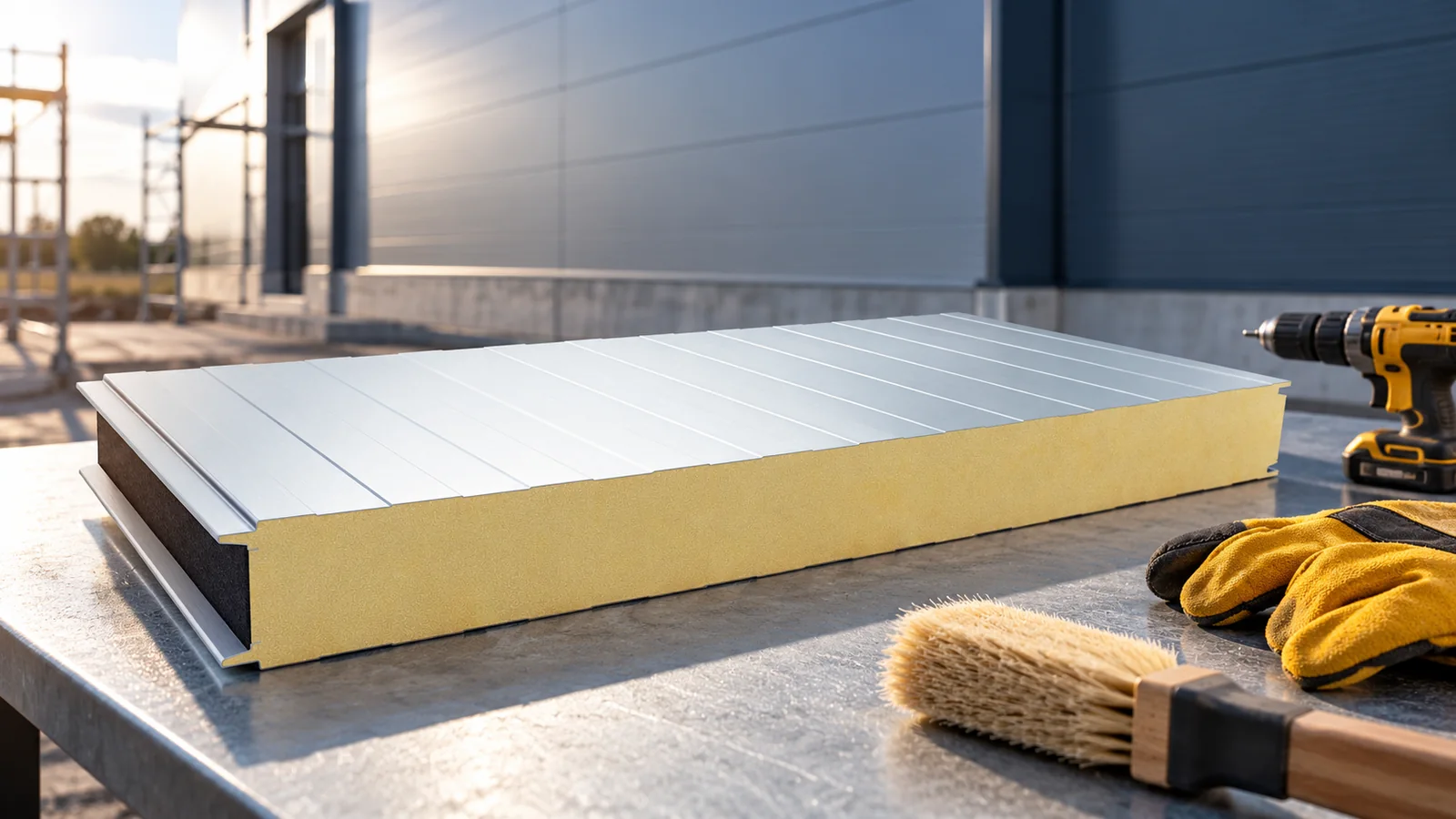
Support error: does the panel fit the structure?
Too large a spacing, the wrong support width or a different structural scheme from the one in the table change the working conditions of the element. A similar problem is caused by using thinner facings without rechecking. The panel may look the same but have different permissible loads. The verification must be carried out before installation begins.
Also check the geometry. Pulling the panel onto a crooked frame can deform the sheet and make it difficult to close the locks. Random shims are not a universal repair. If the actual arrangement differs from the design, the change must be clarified. This also applies to additional holes and displaced purlins. The cladding should not hide structural errors that can still be corrected before it is covered up.
Screw error: is the fixing correct?
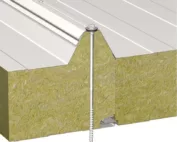
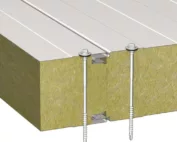
The fastener must match the panel thickness and the type of support. A screw with the wrong drilling capacity or too short an anchorage may not do the job. The number of fastenings results from the loads and the detail. It must not be reduced simply because the element seems to hold well on a windless day.
Check perpendicularity and contact pressure. Too strong a setting can distort the facing and the seal. Too weak a setting leaves the possibility of a leak. A crooked or missed hole should not simply be covered with paint. The specified repair must be used. Remove swarf after drilling. A small piece of metal left on the paint can later leave a clear corrosion mark.
Lock error: is the seal working correctly?
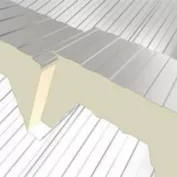
Incomplete closing, a damaged edge or a missing required seal can impair tightness. Water and humid air do not have to penetrate by the same route. Therefore the outer layer of sealant does not always repair a badly assembled joint. The lock must be checked during laying, before it is covered by the next panel or flashing.
Do not swap different tapes and seals. The material on the support can protect the facing from contact with the structure, while the seal in the lock serves a different function. In walls with a required fire resistance, the classification conditions additionally apply. Omitting a small element can therefore affect more than just the appearance of the joint.

Cutting error: is the edge protected?
Cutting with a tool that strongly heats the sheet can damage the anti-corrosion protection. An angle grinder with a grinding disc does not replace a tool approved for panels. The cut-off piece should be supported so that it does not break off the facing. After work, metal particles must be removed and the condition of the surface assessed.
An exposed core requires finishing in line with the detail. A large opening cannot be left without proper treatment and verification of support. Unplanned roof penetrations are particularly risky. Poorly drained water can accumulate at the edge. First establish the solution for the opening, and only then cut the element. The reverse order often ends in improvised repair.
Storage error: what happens before installation?
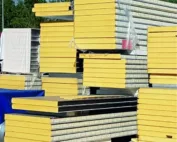
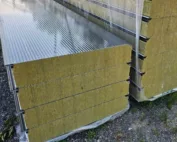
Packages left on uneven, wet ground can be damaged before use. Water should not accumulate between the facings or reach the core. Proper supports, protection and drainage are needed. Do not walk on stored panels or place tools on them that cause dents.
Protective film has a limited service life. The deadline for removing it depends on the system and exposure conditions. Left in the sun, it can bond more strongly to the coating. Do not assume a single number of days for all products. Check the instructions before unloading and plan the installation. Good organisation reduces the need to move elements repeatedly, which limits the risk of scratches and damage to the seams.
How do you carry out a check that will catch the problem?
Divide acceptance into stages. First check the structure and materials, then the fixings and joints, and finally the flashings and surfaces. Photograph the details before they are covered. Record deviations and how they were rectified. This means there is no need later to guess what lies beneath the finished facing. Inspection after completion does not replace these earlier checks.
After the first rainfall, check for water stains and the performance of the drainage. If water appears, establish the cause instead of automatically adding more sealant. Also check the film, swarf and paint damage. A correctly executed wall or roof should correspond to the design and the product instructions. Such conformity provides a much better basis for durability than the mere assurance that similar panels have been installed many times before.
7 branches. Materials closer to your project.