How much does an insulated panel with mineral wool weigh and how do you allow for it in the design?
Insulated panels
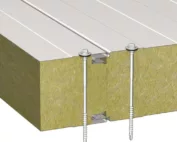
A panel with mineral wool has a defined mass per square metre, but for unloading you need to know the weight of the whole element. The result depends on the core thickness, its construction and both facings. Two panels described as 100 mm may weigh differently. For the design and order you need the datasheet for the specific variant. The mass affects the structure, transport and lifting, but does not replace checking the load-bearing capacity of the panel. The mass consists of the core, two facings and the bonding layers. The thicker the mineral wool at the same density, the greater the share of the core. However, the steel also matters. Changing the thickness of one or both sheets affects the weight of the element.
What determines the weight of the panel?
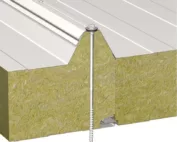
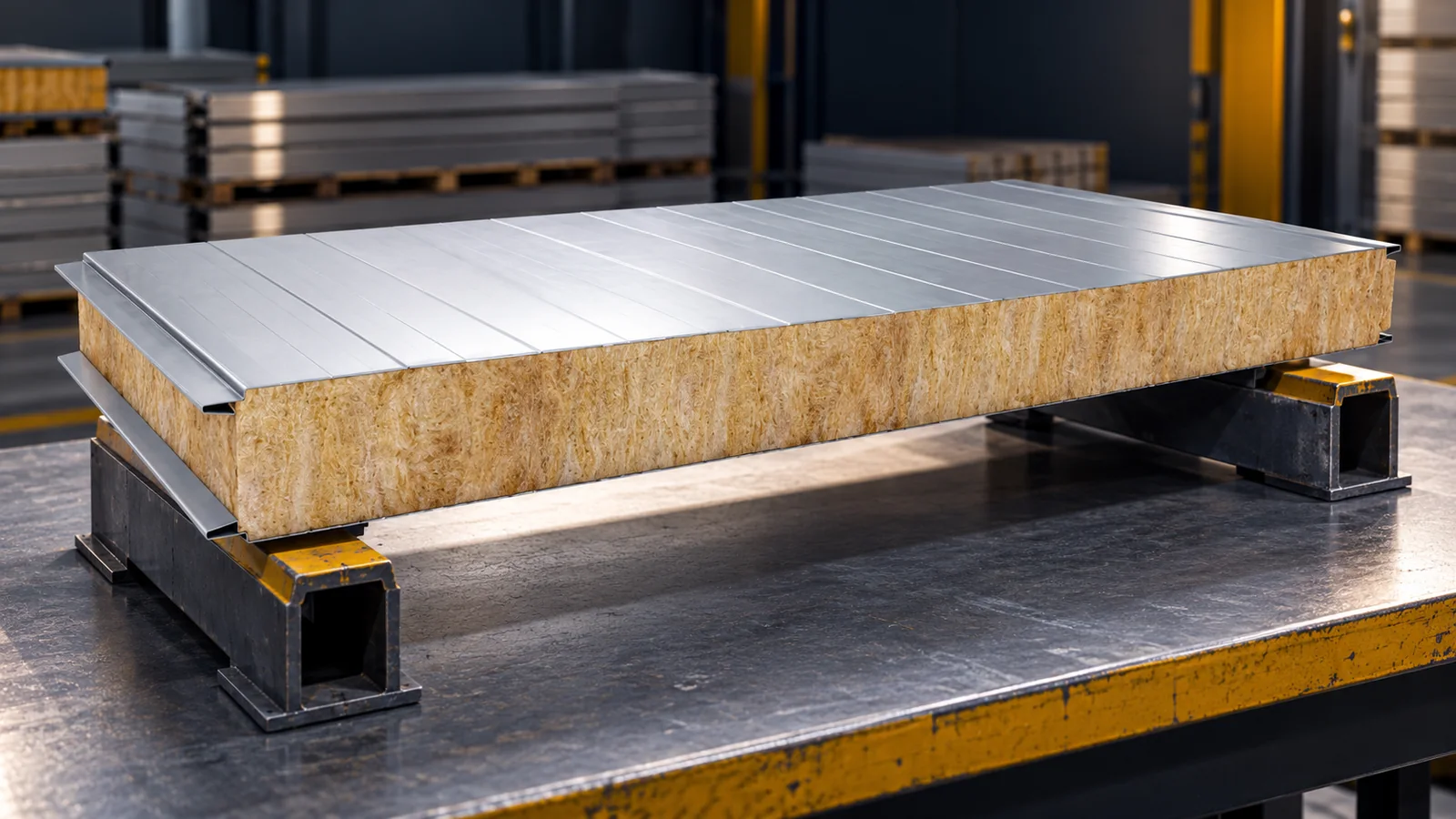
The mass consists of the core, two facings and the bonding layers. The thicker the mineral wool at the same density, the greater the share of the core. However, the steel also matters. A change in the thickness of one or both sheets affects the weight of the element. Therefore, the total mass cannot be calculated from the volume of mineral wool alone.
The core construction also varies. Some panels use mineral wool of a single density, while others combine two densities. This is another reason not to use a single online table for all products. Values from the data sheet should be read together with the footnote regarding the facings. They often refer to the 0.5/0.5 mm variant and a specific product tolerance.
How much do example wall panels weigh?
In one system with a rock mineral wool core of 100 kg/m³ and 0.5/0.5 mm facings, the following masses are given: 60 mm has 14.1 kg/m², 100 mm has 18.1 kg/m², 150 mm has 23.1 kg/m², and 200 mm has 28.1 kg/m². These are data for one solution. They do not describe all panels of these thicknesses.
For another panel with a core of varying density, the values are different. The 100 mm variant with 0.5/0.5 mm facings has a mass of 17.0 kg/m². With 0.6/0.6 mm facings, 18.7 kg/m² is given. These differences do not determine which product is better. They show why the order should include a full product description, not just the core type and thickness.
How do you calculate the mass of one element?
If the data sheet gives the surface mass, it must be multiplied by the relevant panel area. Assume an element with a length of 6 m, a module of 1 m and a mass of 18.1 kg/m². This gives approximately 108.6 kg. This is an indicative mass of one element under the assumptions consistent with the data sheet. It does not include packaging or lifting accessories.
With a module of 1.13 m and the same length, the area increases to 6.78 m². This parameter should not be replaced by the overall width including the joint. The reference basis for the mass in the documentation must be checked. The transport schedule may also list kg per linear metre instead of kg/m². First establish the unit, and only then perform the multiplication.

What does the mass mean for the structure?
The self-weight of the envelope is one of the loads considered in the design. In a wall, it must be properly transferred to the structure. Wind actions and thermal deformations are added. In a roof, snow and loads related to use and maintenance are also relevant. A greater panel mass does not automatically mean greater load-bearing capacity.
Manufacturer tables are based on specific assumptions. Some already account for self-weight, so it should not be added a second time without checking the instructions. Selecting the support spacing requires a separate assessment of load capacity and deflection. Fasteners and bearing widths are checked in the same way. Comparing two panels solely by weight can lead to an incorrect design decision.
How should unloading and installation be prepared?
Before delivery, establish the weight and length of the largest element and of the entire pack. Select equipment with the appropriate lifting capacity and support method. The maximum lifting capacity alone does not solve the problem of deflection in a long panel. The arrangement of lifting points and the compatibility of the gripper with the facing are important. Not every vacuum system is suitable for every surface.
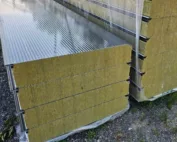
Ensure level access, manoeuvring space and a prepared storage area. Panels should be placed on suitable supports, protected from water and edge damage. They must not be dragged by the top metal sheet alone. A long element lifted incorrectly can be damaged despite a correct transport weight. The unloading instructions are part of work organisation, not an addition to the invoice.
Does lighter PIR always reduce cost?
A PIR panel of the same thickness is often lighter. For example wall variants of 100 mm with 0.5/0.5 mm facings, the weight is 12.3 kg/m² for PIR and 18.1 kg/m² for mineral wool. This can facilitate transport and installation. However, the comparison must include fire, thermal and structural requirements. Weight alone does not justify substituting the material.
In practice, it is worth comparing two complete specifications that meet the same purpose. Record the weight, lengths, U-value, fire classification and fixing method. Add the cost of equipment and delivery. Then you will see where the lighter material provides a real benefit. If the project requires a specific mineral wool build-up, the right action is to organise its installation, not to replace it at random with another panel.
7 branches. Materials closer to your project.