What sets insulated roof panels apart from other roof coverings?
Sandwich panels
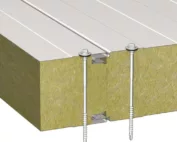
A roof sandwich panel is a factory-bonded product, not a loose combination of sheet and insulation. When choosing, first check whether the variant is permitted in the design. Verify the product data sheet, core thickness and type, facings, joint and support conditions. Compare thermal, fire and acoustic performance for the specific product, not just the material name. Remember that load-bearing capacity depends on the structure and loads. The final decision rests with the designer, and compliance with the building’s requirements is essential.
How is such an element constructed?
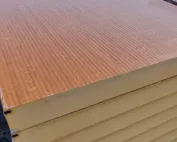
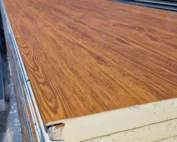
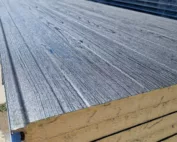
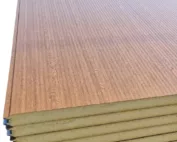
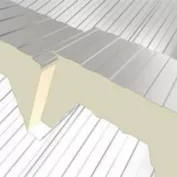
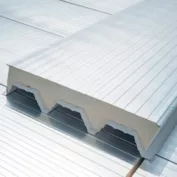
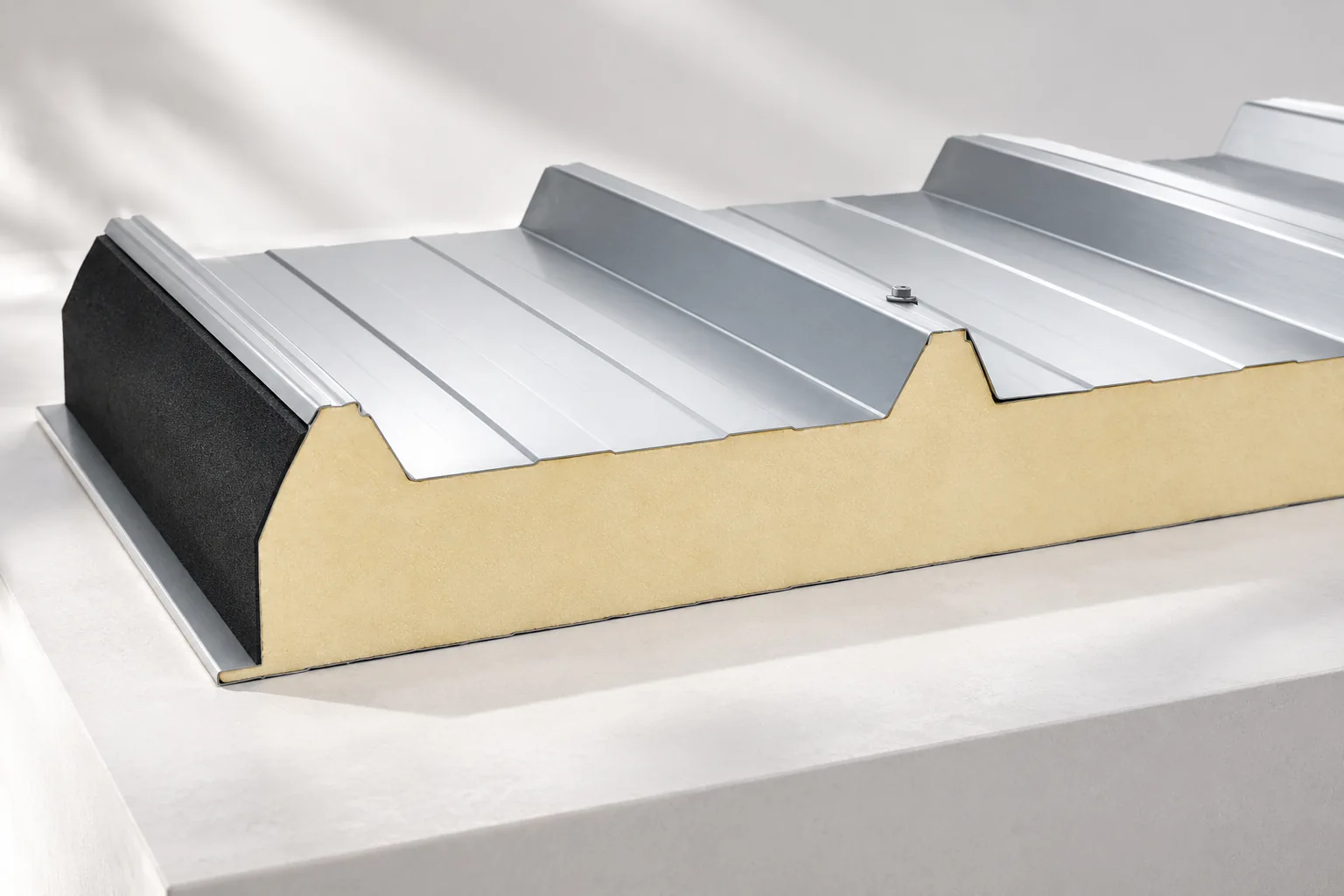
The outer facing of the roof sandwich panel has a trapezoidal profile, with a second steel facing underneath. Between them is a permanently bonded core. The whole works as a product with a defined geometry and properties. An identical element cannot be obtained by randomly combining two sheets and loose insulation.
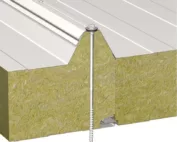
The core can be made of different materials. When choosing the PIR variant, the specific product data sheet must be checked. The material name does not automatically define all panel parameters. Thickness, skins, joint and the support conditions specified in the documentation are also important.
How does it differ from T18 or T35 trapezoidal steel sheet?
T18 and T35 are steel sheet profiles that can serve as roof covering in approved applications. On their own they do not provide thermal insulation for a heated building. A suitable layer build-up must be designed beneath them. A sandwich panel already contains a core, and the lower facing forms the visible surface on the interior side.
However, this is not a simple choice between a better and a worse product. In an unheated shelter the needs differ from those in a workshop. In a residential building, acoustics and the interior layout may also be decisive. A comparison only makes sense for complete roofs that meet the same service requirements.
How should thermal insulation performance be assessed?
The thermal transmittance value given for the specific product is used to assess the finished panel. It should not be replaced solely by a calculation from the core lambda. Joints and fastenings affect the performance of the building envelope. It must also be checked what the value presented in the documentation covers.
For an example PIR roof panel 100 mm thick, the data sheet states Uc equal to 0.21 W/(m²K). This is a parameter of the specific solution, not of all panels of this thickness. Selection for a building additionally includes connections to other building envelope parts and penetrations. A good value in the table will not fix a leaky detail.

What does the panel’s load-bearing capacity mean?
The permissible support spacing depends on the panel’s construction and loads. Core thickness, facing parameters, span arrangement and deflection criteria all matter. These must be related to snow, wind and the equipment planned on the roof. There is no single span suitable for every PIR roof sandwich panel.
With dark colours, heating of the outer facing is also taken into account. The permissible length or support arrangement may depend on thermal conditions. The choice of colour should not be left outside technical agreements. A change of appearance may require the assumptions to be rechecked.
How to read fire and acoustic requirements?
The product’s reaction to fire and the fire resistance of the assembly describe different characteristics. A designation for the panel does not replace the classification of the entire system. The scope of application, fixings, orientation and spans must be checked. PIR should not be called non-combustible on the basis of the steel facings alone.
Acoustics require similar caution. The variant with mineral wool may have more favourable parameters in a specific solution. The airborne sound insulation value does not directly describe the sound of rain. If the roof covers an office or a room requiring quiet, an assessment of the entire system is needed.
Does the panel reduce the number of roof works?
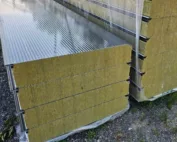
Factory bonding of the layers facilitates organising the enclosure of large, regular roof areas. Panels are supplied in specified lengths, so accurate measurement matters. Installation requires prepared supports, handling equipment and a delivery sequence. The benefit of the large format may disappear if the site has no space for unloading.
Ridges, eaves, connections and service penetrations still have to be executed. The permissible pitch depends on the product and any longitudinal laps. It is worth comparing the scope of works rather than assuming a predetermined installation time. A simple roof slope and a roof with many installations are entirely different tasks.
When is this choice particularly worth analysing?
A sandwich panel is worth considering for a heated hall, workshop or service building when it meets the project requirements. Information on temperature, humidity and internal conditions is needed. The coating is selected for both sides of the enclosure, not only for the view from the street.
In the offer, check the exact panel variant, facing thicknesses, core, colour, lengths and fixings. Add flashings, seals and planned equipment. The final choice should result from a comparison of complete assemblies. The most useful panel is the one whose properties match the specific building.
7 branches. Materials closer to your project.