Can you walk on insulated roof panels?
Sandwich panels
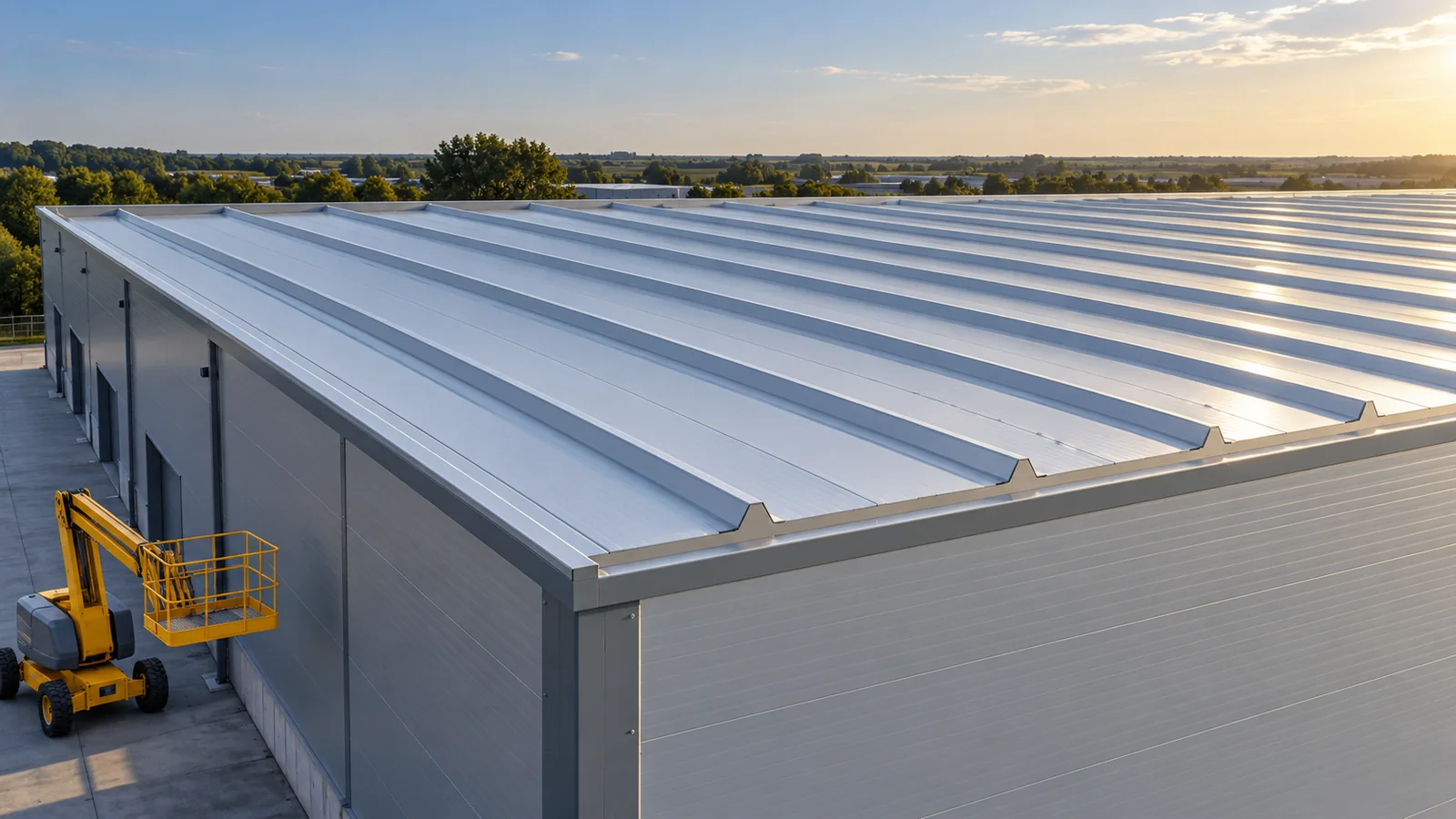
Can you walk on a sandwich roof panel? The answer depends on the specific assembly, not on panel thickness alone. Before stepping onto it, check the manufacturer's documentation, the support spacing, the fixing pattern and the technical condition of the roof. Snow load capacity does not automatically permit any point load, so it is worth establishing what service conditions are envisaged for the given roof. A completed, fixed roof is treated differently from a loose panel or a stored pack. Where equipment is serviced regularly, it is worth providing suitable routes and walkways.
Why does thickness alone not provide the answer?
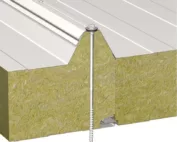
The roof panel is a composite element, and its performance depends on the core, the metal sheets and the supports. Span and the method of fixing are of great importance. It cannot be said that every 100 mm variant is suitable for foot traffic and a thinner one is not. Information is needed on the specific configuration and the usage rules specified by the manufacturer.
The condition of the roof also matters. Corrosion, debonding, dents and damaged fixings can change the assessment. A panel that looks correct from below does not necessarily have a good condition over its entire surface. Before stepping onto an older roof, its documentation and technical condition should be assessed. Load-bearing capacity must not be checked by trial stepping onto an unknown element.
How does a person’s load differ from snow?
Snow is usually analysed as a distributed load in a specific arrangement. A foot or the base of a device can concentrate force on a small area. This creates a different action on the thin cladding and the core. Therefore, a load-bearing table for surface load does not automatically give the permissible weight of a person with tools.
During work, movement, carried equipment and the possibility of several people in one place are added. Placing heavy materials can create additional point loads. The entire installation stock should not be transferred onto the panel without checking the design. If frequent inspections of installations are planned, access should be designed together with the roof. Improvising the route later is often troublesome and costly.
What must be checked before stepping onto the roof?
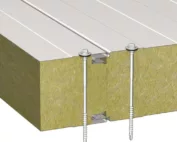
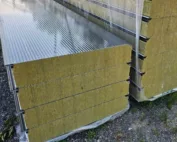
Determine the panel type, cladding thicknesses, support spacing and fixing pattern. Check the instructions for movement and roof handling. Confirm completion of installation and the condition of connections. A loosely laid element does not have the same conditions as a fixed one. Stored packs should not be treated as walkways.
Identify skylights, openings and other places requiring separate protection. Their appearance does not confirm the possibility of stepping. Plan fall protection and safe access and egress. A wet, icy or dirty surface changes the working conditions. Approval of the panel for a specific load does not remove the risk of slipping and does not replace the organisation of work at height.

How can damage to the cladding be limited?
Installation instructions specify suitable footwear, often with a soft sole, so as not to scratch the coating. Soles should be free of swarf and hard particles. Tools should not be slid over the paint. The walking area and the method of distributing loads must correspond to the documentation of the specific system.
Do not apply a single rule for walking on the ridge or valley of every profile. Roof panels vary in geometry and usage rules. Temporary walkways must also be supported and secured in a planned manner. A randomly placed board is not automatically adequate protection. If there are no clear instructions for a given roof, they must be established before work begins.
What changes with the installation of photovoltaics and equipment?
Additional equipment means not only its weight. Fastenings, wind action and the need for later servicing are added. The design should specify how loads are transferred to the structure and how penetrations are sealed. It must not be assumed that screwing a component into the top sheet alone is always sufficient.
For regular servicing, it is worth providing a permanent access route and working areas. This limits repeated loading of random sections of the cladding. Also check the possibility of snow clearing and cleaning of drains. The presence of equipment must not block water drainage. Changes to an existing roof require assessment of the entire system, not only the load-bearing capacity of a single fixing.
How to assess the roof after the work is completed?
Inspect the route, equipment storage areas and the vicinity of fastenings. Look for dents, scratches, loose components and left-over swarf. Check seals and drain patency. Even minor surface damage should be repaired using a method compatible with the coating. Work should not be considered complete if waste and materials remain on the roof.
Record the activities performed and any irregularities noted. At subsequent inspections, it will be possible to assess whether the condition is changing. The answer to the question of walking on the panel should always relate to the specific roof, its condition and the planned work. Without this data, the name ‘roof panel’ alone is insufficient. Well-planned access protects both people and the building envelope.
7 branches. Materials closer to your project.