How to assess the fire safety of a PIR insulated roof panel?
Sandwich panels
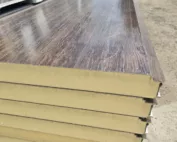
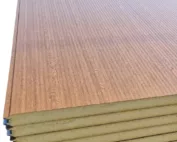
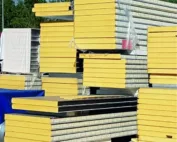
The fire safety of a PIR roof panel cannot be described with the single word “fire-resistant”. A distinction must be made between reaction to fire, fire resistance of the roof and its behaviour under external fire. Each assessment applies to a specific product or assembly. PIR is not non-combustible. The suitability of the panel is determined by whether the documentation and installation comply with the requirements of the specific building. Reaction to fire describes the behaviour of the product under fire exposure. Fire resistance concerns the behaviour of a specific element over a defined period. The third piece of information relates to the effect of external fire on the roof. These assessments should not be used interchangeably. When selecting a panel, ask for the declaration of performance and documents indicating the scope of classification.
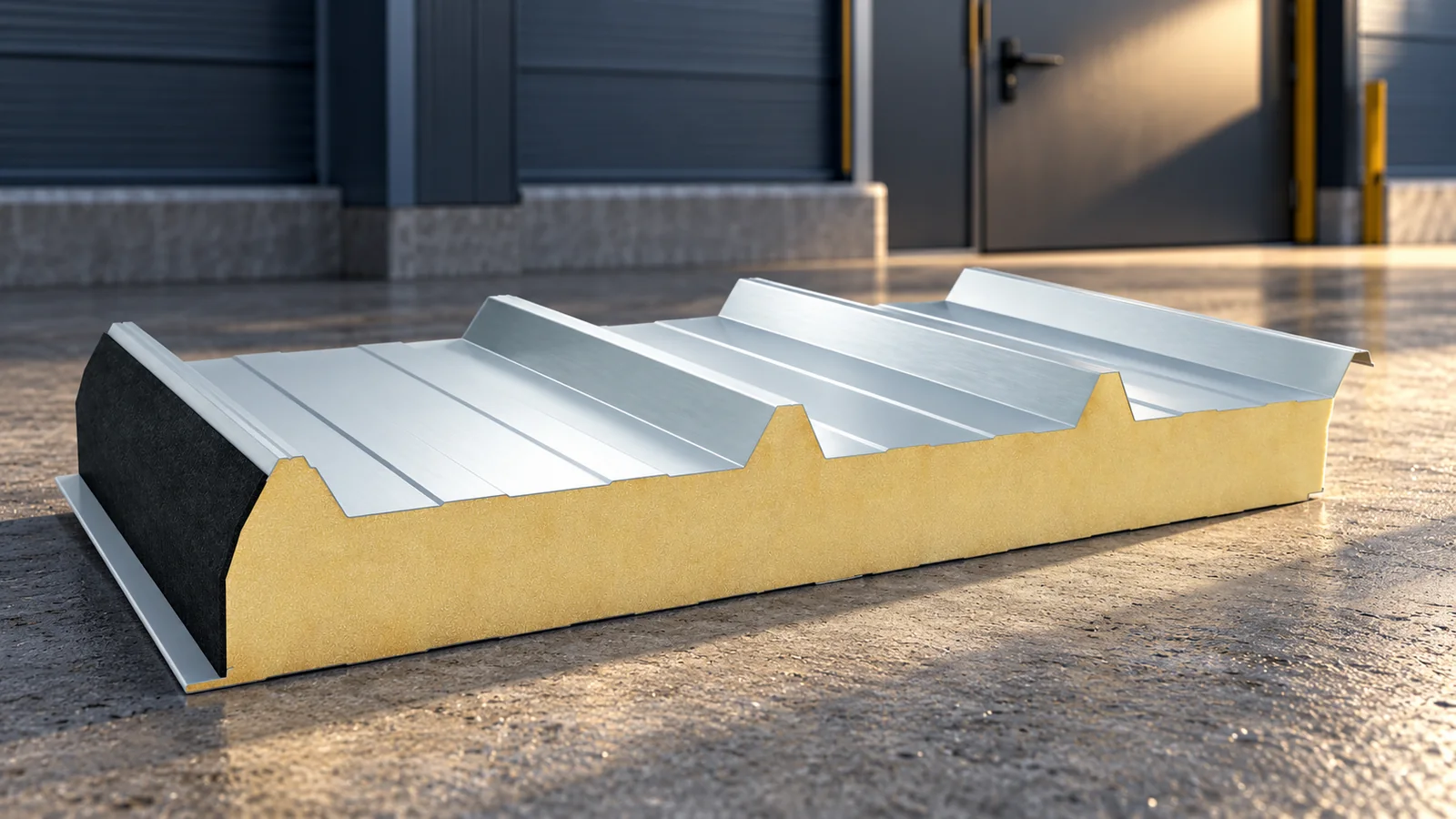
What three pieces of information need to be checked?
Reaction to fire describes how the product behaves when exposed to fire. Fire resistance concerns how a specific element behaves over a defined period. The third piece of information relates to the effect of external fire on the roof. These assessments should not be used interchangeably.
When selecting a panel, ask for the declaration of performance and documents indicating the scope of classification. A quote may highlight only the most favourable parameter. This does not mean that the other requirements are met. You need the complete data for the roof that will actually be built, together with its supports, fixing and planned penetrations.
What does B-s1,d0 mean in the panel data sheet?
This is a reaction-to-fire classification. The letter refers to the basic class, and the additional designations describe smoke production and flaming droplets or particles under test conditions. It is not a number of minutes of roof resistance. It also does not provide a basis for describing the PIR core as non-combustible.
B-s1,d0 appears in the documentation for selected PIR roof panels. Other products or variants may have different data. The result should not be transferred to the entire category. The construction of the panel matters, including the facings and the joint detail. Finding a similar name or thickness is not enough to confirm the class of the supplied material.
How to read REI?
R relates to loadbearing capacity, E to integrity, and I to insulation. The number next to the designation refers to the time under classification conditions. It does not describe a guaranteed safety time in every real fire. The scope of application of the result must be checked.
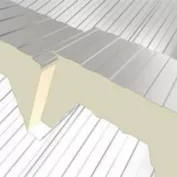
Span, panel thickness, support and fixing all matter. If the project requires a specific class, all conditions must be maintained. You must not arbitrarily increase the distance between supports or change the sealing and still rely on the same declaration for the finished roof. The classification is not a label independent of how the element is constructed.

What does BROOF(t1) indicate?
This designation relates to the behaviour of the roof under external fire according to a specific method. It does not replace the assessment of the reaction of the product itself or the REI class. It also does not mean that any roof with such a core will behave identically.
Check which assembly, pitch and other conditions the result applies to. Additional layers may change the scope of the solution. This matters for later additional insulation, new waterproofing or changes to covering elements. A rebuilt roof should not automatically be assigned the class it had before renovation. Confirmation is needed that the new assembly complies with the documentation.
Which changes on site require attention?
Openings, skylights, ducts and services locally interrupt the continuity of the roof. Their detailing should be provided for in the design. Not every sealant is suitable for every penetration. Fire requirements may also apply to the junction with the wall and to structural elements.
Do not replace the panel or accessories solely on the basis of similar appearance. Check the thickness of the facings, the core and the material class. At acceptance, identification of the batch and conformity of fixing are important. If the document states NPD, this means that the property has not been declared. A missing class cannot be added on your own initiative on the basis of data for another panel.
The documentation should be retained after acceptance of the building as well. A later team may install a new duct or replace a section of the covering. It should know the roof construction and the requirements for its junctions. A schedule of panels, installation drawings and photographs of concealed details facilitate assessment of such changes. The mere information that PIR was used is not sufficient to reproduce the correct solution. Operational inspection also covers damage to facings and unauthorised modifications. Maintaining the conditions adopted in the design is important throughout the service life.
How do you make a decision without misleading claims?
First determine the requirements of the building, then check the specific roof. PIR can be part of a solution meeting specified fire conditions, but it will not automatically replace an assembly requiring non-combustible insulation. If a different core or an additional protective layer is needed, this should be allowed for in the design and costs.
In the request for quotation, list the required classes separately and ask for confirmation of the scope. Attach a support layout and information on openings. Before installation, establish the rules for approving changes. This allows technical comparison of solutions. The slogan ‘fire-resistant panel’ alone does not provide the data needed for a responsible choice.
7 branches. Materials closer to your project.