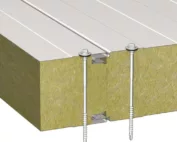
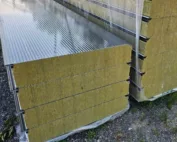
Will a 40 mm insulated wall panel really reduce construction costs?
Sandwich panels
A 40 mm insulated wall panel can reduce material cost if its parameters suit the building. However, it is not a universal panel for every wall. In a heated building, thermal insulation may be the limiting factor, while in an unheated one, load-bearing capacity, fire and moisture must still be checked. Cost-effectiveness will be decided by the price of the finished partition and its operating costs. A 40 mm panel can be considered for selected partitions and enclosures that do not require high thermal resistance. Suitability is determined by the building’s function and the product documentation. A covered warehouse, a separated room or a seasonally used facility do not impose identical requirements. However, automatic exemption from requirements should not be attributed to all such buildings.
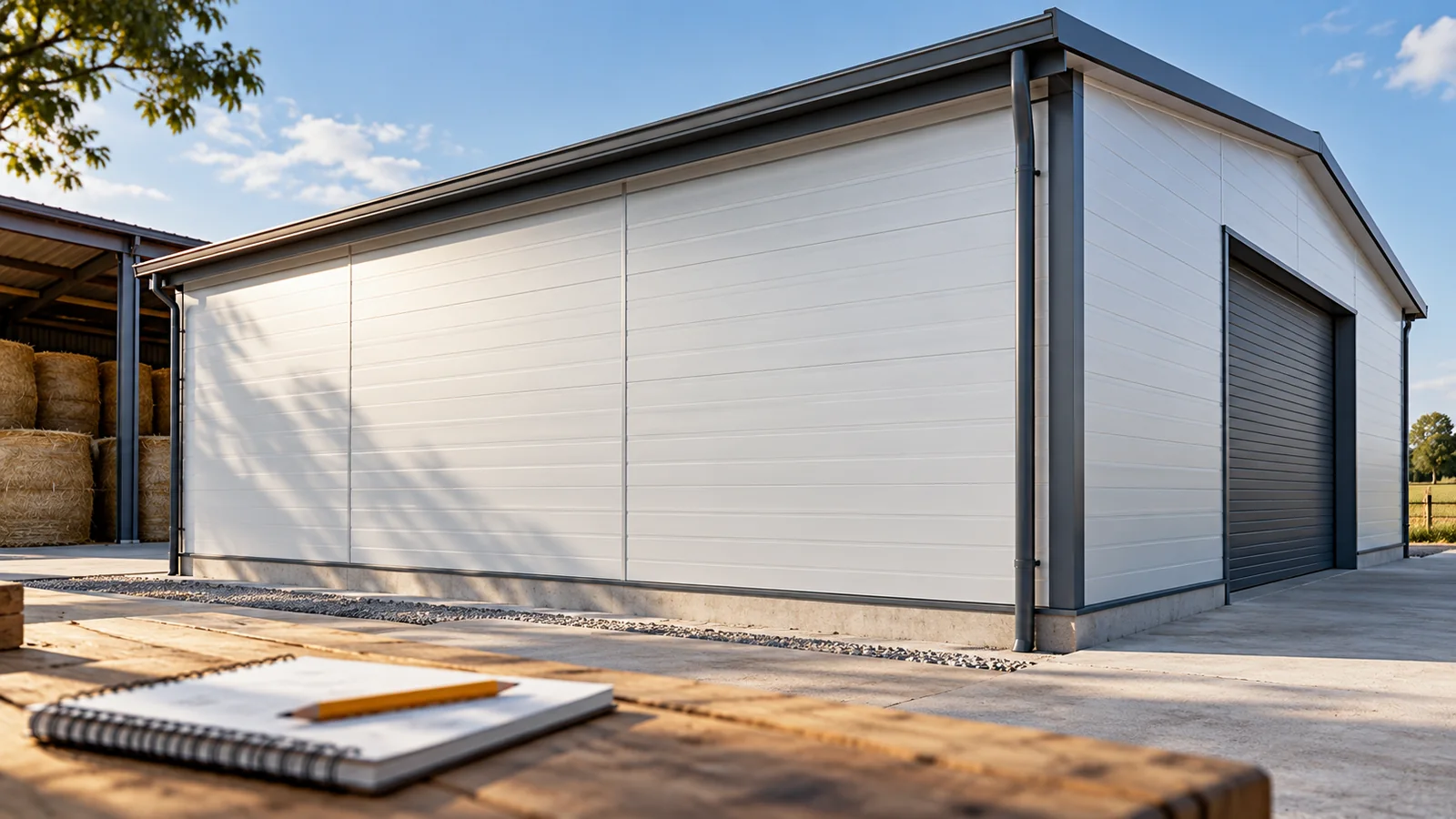
Where can a thin wall panel be used?
A 40 mm panel can be considered for selected partitions and enclosures that do not require high thermal resistance. Suitability is determined by the building’s function and the product documentation. A covered warehouse, a separate room or a seasonally used facility do not impose identical requirements. However, automatic exemption from requirements should not be attributed to all such buildings.
Even without heating, wind, support spacing and fixing are relevant. The required fire resistance may depend on the way the building is used and the position of the partition. If a thin panel does not fall within the required classification, a low price does not solve the problem. The choice should begin with the requirements, not with the available promotion.
How to compare thermal insulation with a thicker panel?
Compare the U-value for the exactly specified panels. The core lambda describes the material, while U describes heat flow through the partition. The result is influenced by thickness, joints and the corrections applied. Therefore, comparing two numbers in the product name is not enough. A panel with a better core may insulate more favourably, but still requires a proper connection on site.
For a heated room, also consider gates, windows and thermal bridges at columns. A thicker panel will not fix a leaky gate, but a thin panel will not become sufficient thanks to a good window. Operational savings cannot be calculated from the thickness difference alone. Temperature, partition area, usage time and system efficiency are needed.
Does a thinner panel mean a cheaper structure?
Less core material may reduce the panel weight, but its performance depends on the entire system. The thin variant may require closer support spacing. Additional purlins, connectors and labour then add to the budget. So do not compare only the price per square metre of panel. Check whether the difference in structure is not greater than the saving on material.
The tables require the thickness of both facings, the colour, the support scheme and the load. Two 40 mm panels may have different capabilities. With an existing frame, selection begins with its measurement and assessment. Do not change the fixing spacing at will to accommodate a random panel. Conformity of the solution with the design and the product documentation must be confirmed.

How to calculate the real saving on purchase?
For example, on an order of 180 m², a net price difference of €1.85 per m² amounts to €333.00 before VAT. Deduct any additional costs that come with the cheaper option, such as extra supports, offcuts, another delivery or different detailing around openings.
If you are comparing catalogue prices, check the date and the unit. A promotional amount per total surface area is not directly comparable with a price for the covering. Also check the minimum number of panels and the available lengths. The final cost should relate to the quantity you actually buy. It is not always possible to order exactly as many metres as the finished wall measures.
Does second grade increase cost-effectiveness?
It may increase it if the defect is permissible in the specific application and does not undermine the required properties. However, there is no single commercial definition that describes the condition of every second-grade panel. Therefore, establish the reason for the price reduction. Inspect the joint, the edges, the adhesion of the facings and the condition of the coating. Ask for the batch documents instead of relying on the description of a similar product.
With a thin panel, extra care is needed during handling and storage. It must not be treated like any sheet metal that can be deformed and straightened. Damage to the bond between the core and the facing can affect the performance of the panel. If a defect is difficult to assess, ask for a technical qualification before purchase. Installation should not be an attempt to check whether the material is suitable.
When is it better to choose a different thickness?
Consider the thicker variant when insulation performance, support spacing or fire documentation require it. Pay attention to future use. A building that is unheated today may become a workshop in a few years. Replacing the heating system alone will not improve its building envelope. Any later additional insulation must be assessed with regard to moisture, fixing and protection of the facings.
There is no need to buy the thickest panel for every task. What is needed is a thickness sufficient for the specific conditions. A 40 mm panel can be a sensible choice where it meets the requirements and does not cause additional costs. The best saving results from a good match of material. A low price in the offer headline alone does not prove it.
7 branches. Materials closer to your project.