How does an insulated panel with mineral wool reduce sound transmission?
Insulated panels
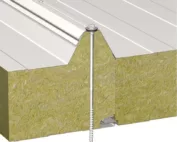
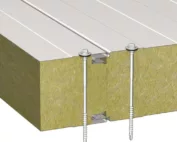
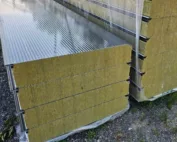
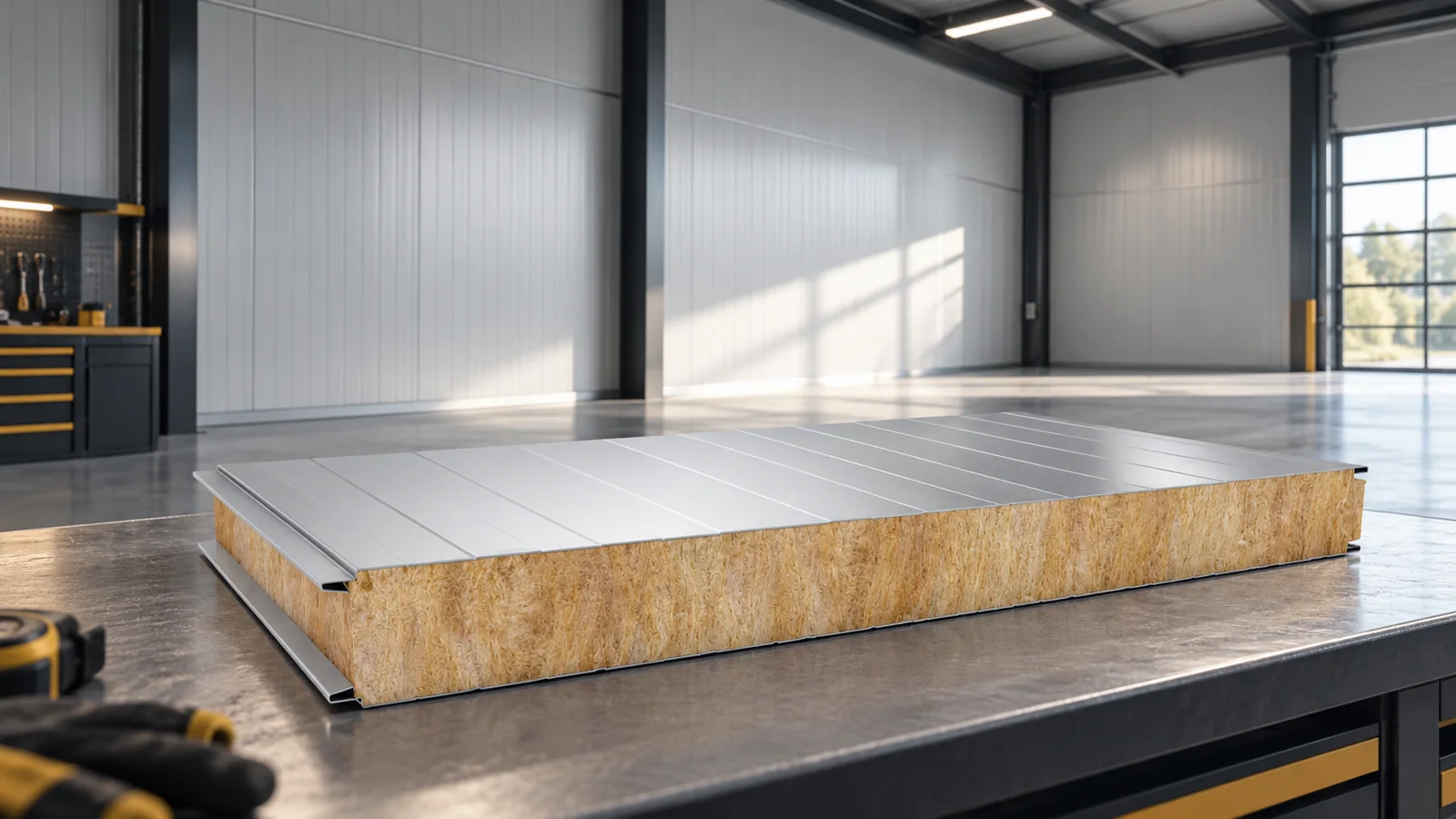
An insulated panel with mineral wool can reduce sound transmission through a wall. However, the result is determined by the entire product, not by the name of the core alone. The declared ratings must be compared and the airtightness of the building envelope ensured. Large doors, leaky joints and the structure can weaken the effect. Reverberation inside the hall is a separate issue. A full metal facing does not become a sound-absorbing panel simply because there is mineral wool behind it. Insulation describes the reduction of sound passing to the other side of the partition. This matters when production noise is to be less disruptive in an adjacent room or the surroundings. The result depends on the panel construction and the sound frequency.
What does the acoustic insulation of a wall mean?
Insulation describes limiting the passage of sound to the other side of a partition. This matters when production noise is to be less disruptive in an adjacent room or the surroundings. The result depends on the panel construction and the sound frequency. A single figure from the datasheet is a useful indicator, but it does not describe every noise source equally accurately.
One should not claim that a panel with Rw 30 dB will always reduce the noise level in a hall by exactly 30 dB. The datasheet refers to a specific property of the element. The actual situation also includes room dimensions, openings and other transmission paths. Assessing the whole building requires bringing these factors together. Buying a panel with a better figure alone may not deliver the expected effect.
How to read Rw, RA1 and RA2?
Rw is a weighted sound insulation index. The associated corrections allow the result to be better related to different noise spectra. Datasheets may also show RA1 and RA2. One should not pick the highest figure from one datasheet and compare it with a different index from another. First establish which parameter corresponds to the intended application.
Also check how the data was determined. A test result and a calculated result are not the same kind of information. In some catalogues, calculated values are given with a tolerance. Omitting it can create an apparent advantage of one or two decibels. A reliable comparison covers the same index, the correct panel variant and a comparable data basis.
Does mineral wool always perform better than PIR?
It is not worth formulating such a broad rule. In an example series of mineral wool wall panels, Rw 31–34 dB is given, and for a specific PIR panel 26 dB. However, another mineral wool product has Rw 27 dB. The parameters depend on the core, the steel sheets, the thickness and the layer arrangement. The material name alone is not enough to establish a ranking.
Compare variants that simultaneously meet the thermal and fire requirements. Increasing the thickness does not necessarily produce a simple, uniform increase in every acoustic index. In the datasheet of one series, values may change unevenly. Therefore, missing data should not be filled in by proportion. The value declared for the specific thickness and construction must be used.

Why do gaps and gates matter so much?
Sound can pass through weaker parts of the enclosure. A large gate with low insulation or a leaky penetration can limit the benefit of better panels. Careful execution of the joints, flashings and the connection to the floor is important. Simply filling a visible gap with an arbitrary compound does not always create a durable acoustic detail.
Sound transmission through the structure must also be assessed. Machine vibration may travel by a different path than through the air and the wall area. In such cases, a solution at the vibration source may be needed. Replacing the cladding without identifying this path is often ineffective. It is advisable first to establish where and when the noise is a nuisance, and only then to choose the scope of works.
Will mineral wool panels reduce reverberation in a hall?
Sound absorption is a different phenomenon from insulation. A solid steel skin can reflect sound even though there is mineral wool inside the panel. Appropriate parameters, such as αw, are used to assess absorption. If the datasheet does not declare them, it should not be promised that the wall will solve a long reverberation problem.
In the hall, separate acoustic elements or products with properly designed perforation may be needed. Such a solution must be provided for by the manufacturer and the designer. An ordinary panel’s skin must not be perforated on site to improve acoustics. This would change its airtightness, the protection of the core and the conditions of use. It would also affect the assessment of other declared properties.
How to prepare an effective comparison?
Describe the noise source, the operating time and the location that requires protection. Gather the layout of walls, gates and services. Indicate whether it concerns noise outside, between rooms or comfort inside the hall. Then compare the documentation for the panels and the other cladding components. For a difficult problem, it is worth basing the decision on measurement and an acoustic design.
A mineral wool panel can be a good component of such a solution. It should not, however, replace an analysis of the entire sound path. Improving the weakest points and selecting materials for the specific purpose makes the most sense. In this way, a higher panel parameter becomes a real benefit rather than just a number that cannot later be linked to a perceived change in the building.
7 branches. Materials closer to your project.