Is a thin insulated panel with mineral wool sufficient for a wall?
Insulated wall panels with a mineral wool core
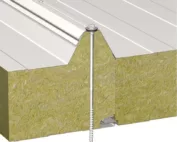
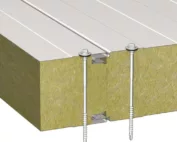
A thin panel with mineral wool may be suitable for the chosen wall, but its suitability must be verified in the project. A thickness of 60 mm does not provide the same thermal and fire performance as 100 or 200 mm. Nor can it be assumed that this is the smallest thickness available in every system. First establish the function of the partition and the requirements. Only then assess whether saving on thickness will not force changes to the entire solution. The term “thin” depends on the application. A 60 mm panel may be available in a given series, but not necessarily in every joint and finish. Dimensions and the thickness range must be checked in the current data sheet.
What does a thin panel mean in practice?
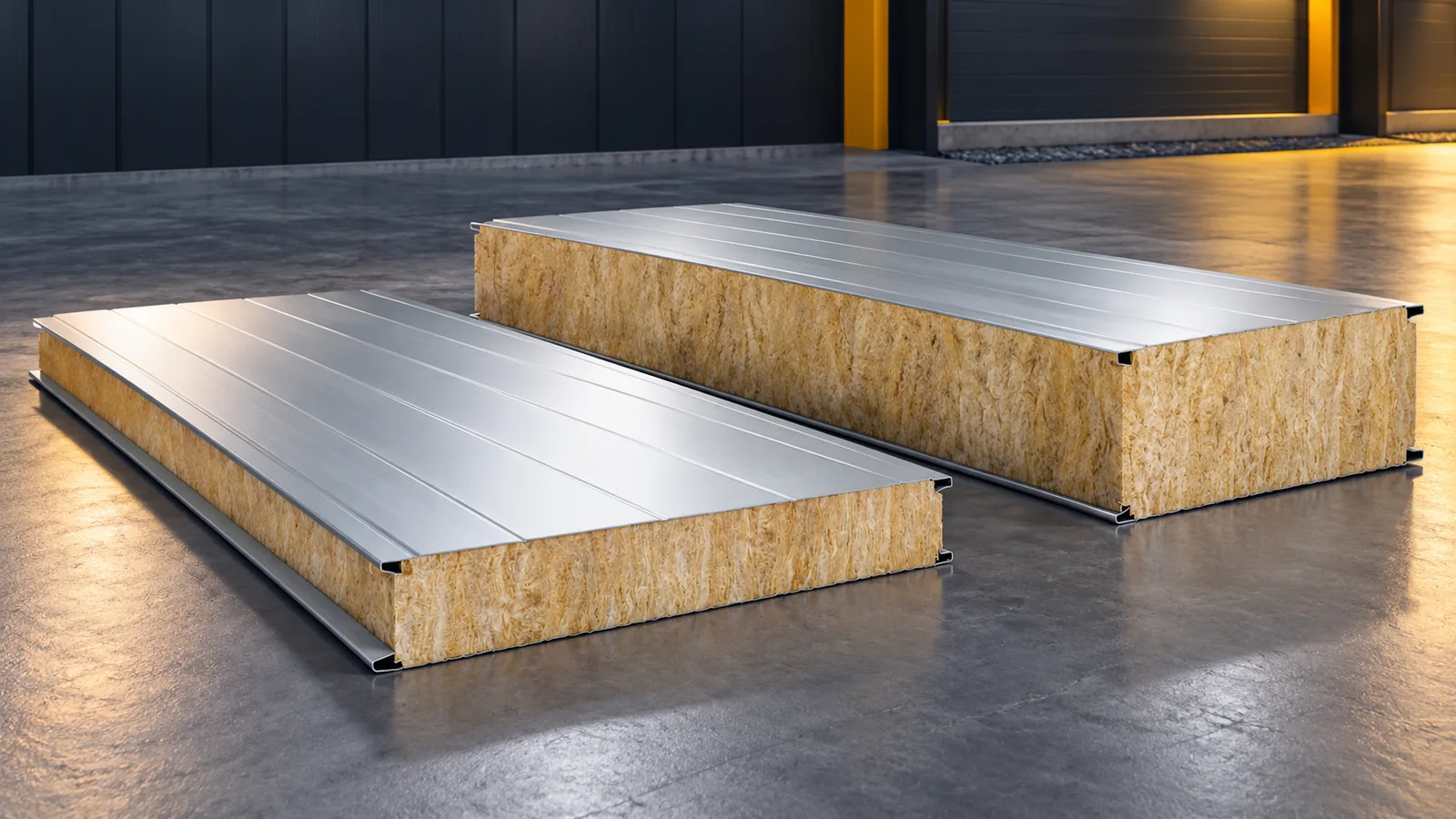
The term “thin” depends on the application. A 60 mm panel may be available in a given series, but it need not be available with every joint and finish. The dimensions and thickness range should be checked in the current data sheet. An offer for a 40 mm PIR panel does not confirm that an identical variant with mineral wool exists. These are two different products.
A small thickness makes some details easier to resolve and reduces weight within the same series. It does not, however, mean that a substructure is unnecessary. The panel still spans between supports and requires suitable fixings. A full specification, including the facings, must be used for the quote. Otherwise only a shortened description is compared, which says little about the finished wall.
Does 60 mm insulate a heated building well?
For an example wall panel with 60 mm mineral wool, Uc 0.66 W/(m²·K) is given. In the same series, 100 mm has 0.39 and 200 mm has 0.20. It is clear that thickness significantly changes heat flow. An arbitrary thin panel should not be called a solution for every heated building. The required parameter is determined for the specific building element.
The internal temperature, the way the building is used and the details must be taken into account. A thin envelope may be justified differently in an unheated warehouse than in a workshop operating all day in winter. Likewise, a low U-value does not exempt from assessing thermal bridges. The joint, the base and the connection to the roof should form a correct assembly, regardless of the thickness chosen.
Where is it worth considering the thin variant?
It may be a candidate for some internal walls and envelopes with low thermal requirements. The condition is that the other requirements, including structural and fire requirements, are met. A partition between rooms at a similar temperature has a different task than a façade. Nevertheless, it may still be exposed to impacts or a pressure difference.
Do not assign an application solely on the basis of the word “warehouse”. A small building may have specific requirements resulting from what is inside it. Likewise, a partition wall does not always lack a fire role. It is worth starting from a description of the function and operating conditions. If a thin panel meets these needs, there is no reason to increase the thickness merely for the sake of the number of millimetres.

Will mineral wool provide the required fire resistance?
A mineral wool core does not automatically confirm the wall’s EI class. In the data sheets of some thin variants, NPD is found for fire resistance. This means that no performance has been declared for this item. It cannot be replaced by a default value based on the data for a thicker panel from the same family.
The reaction to fire of the finished product is assessed separately. Even when the panel has the appropriate reaction class, the separating element may additionally require a specified resistance. If the project calls for this, a variant with the correct classification must be found and its conditions maintained. The choice should not be decided by the mere conviction that a non-combustible core solves all fire-related issues.
Does a small thickness limit the support spacing?
It affects the behaviour of the element, but does not give one simple conversion factor. The thicknesses of the sheets, the type of core, the support pattern and the load all matter. The table for the specific panel must be consulted. In a thin cladding, particular attention should be paid to deflections and to zones around large openings. An identical spacing to the 120 mm variant must not be assumed.
The construction can change the cost-effectiveness of the purchase. If a lower material price requires additional purlins, the whole wall does not necessarily become cheaper. Fasteners and the width of the supports also matter. Compare two complete variants with calculated support. This shows whether the saving on the panel really remains once the construction and labour are taken into account.
What should be entered in the order?
State the application, the required U-value, the fire parameters and the actual support arrangement. Determine the thickness of both facings, the coating and the direction of installation. Confirm the availability of lengths and accessories for the thin variant. Also check how the base and reveals are finished. Standard flashings intended for a different thickness may need to be changed.
If your main priority is a small thickness with good thermal insulation, compare the PIR variant approved in the project. If a solution with mineral wool is the priority, choose the thickness that meets the requirements. Do not order extra based on a photo or a marketing slogan. A thin panel is a good choice when its limitations are known and suit the specific task.
7 branches. Materials closer to your project.