PIR beneath a roof membrane: specifying the facing and adhesive
PIR insulation
Matching thickness is not enough when substituting PIR on a flat roof. If the membrane will be bonded, the installer needs to know which surface it will adhere to. Even boards sold under similar names can have different facings. Start with a drawing: label both sides of the board, the layers touching them and how each joint is made. You can then check the instructions for that combination and identify gaps in the quote. This is particularly useful for a partial roof repair where the new build-up meets existing waterproofing.
In this guide
Which surface touches the membrane?
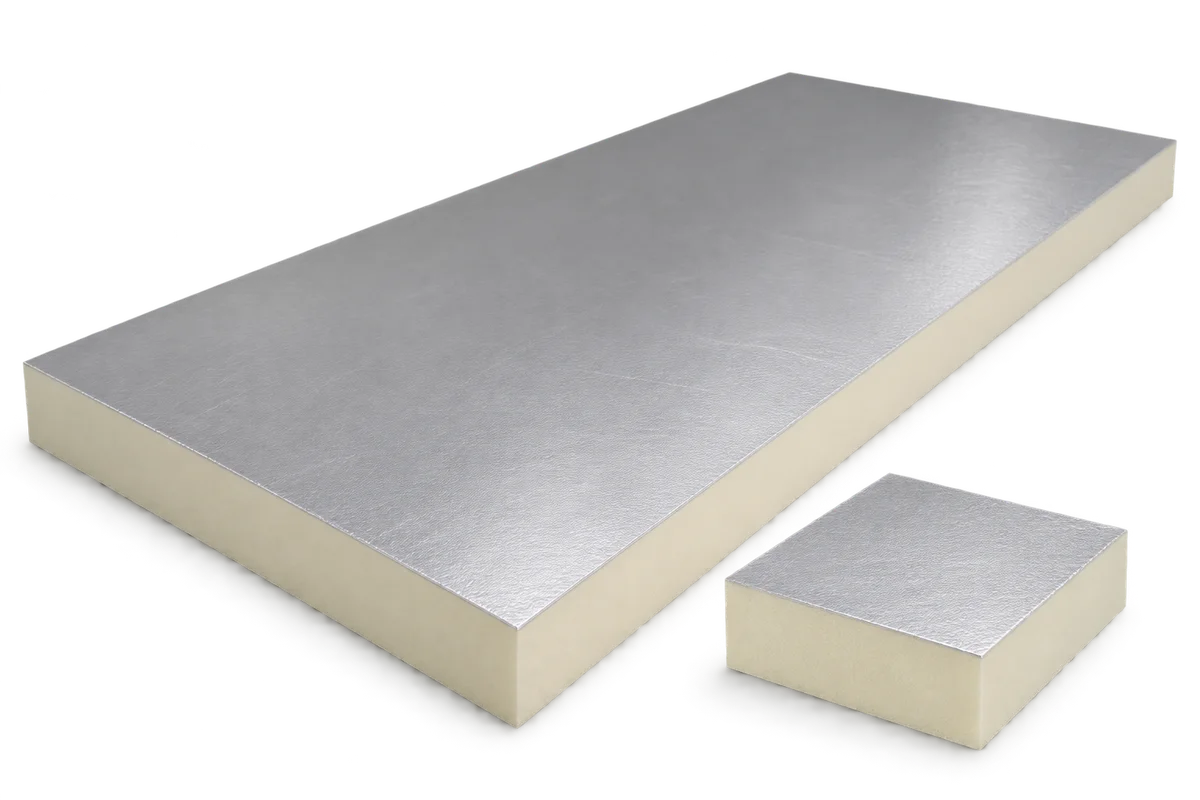
Distinguish the core, the factory facing and any separate separation layer on the drawing. “Bond to PIR” does not identify the surface that will actually receive the adhesive.
Check both interfaces
Label the membrane above the board and state how it is secured. A bonded, mechanically fixed or ballasted system assigns different functions to the same interface.
The surface below the board may differ from the one above. Approval for bonding the membrane to the top face does not establish how to secure the insulation underneath. Check each interface separately.
Three documents for one detail
Read the board data sheet alongside the membrane instructions and adhesive data sheet. Look for the facing designation in the list of accepted substrates. A brand name without a variant may cover several surfaces.
If the instructions call for primer or an intermediate layer, list it separately in the order. A missing system component is also a cost difference between two apparently similar quotes.
A substitute with a different facing
Suppose the supplier offers a fleece-faced board instead of a foil-faced one. Ask for documentation covering the proposed pairing with the specified membrane and adhesive. “For flat roofs” does not answer that question.
At the edge of the retained roof, identify what the new waterproofing will join. Evidence for compatibility within the new system does not automatically cover the existing coating.
Checking boards on delivery
Compare the pack label with the agreed specification before laying the boards. Photograph the variant designation. The wrapping around the pack is not the board’s functional factory facing.
Set aside boards with damaged or detached facings and agree with the supplier how to handle them. Covering the defect with the membrane will make the intended bond line harder to inspect later.
Record what went into the repair
Record the board, membrane, adhesive and any primer actually installed. Include a sketch of the repaired area so the next team can identify where the old build-up ends.
Consult that record before ordering materials for a later repair. Two areas on the same roof may look identical from above but have different facings underneath and need different details.
7 branches. Materials closer to your project.