

Building handbook
The Izoprofil.eu handbook covers roofing, wall cladding and insulation, from reading specifications to preparing an order. Find guidance on sandwich panels, PIR boards, trapezoidal sheets and metal roof tiles. Understand overall sheet width and effective cover width, compare insulation options and plan installation details. The articles also cover renovation, material storage and costs that are easy to overlook. Worked examples explain the calculation method. Check the design and product documentation before making the final selection. Once you have identified the material, prepare the dimensions, quantity and delivery location for a quote.
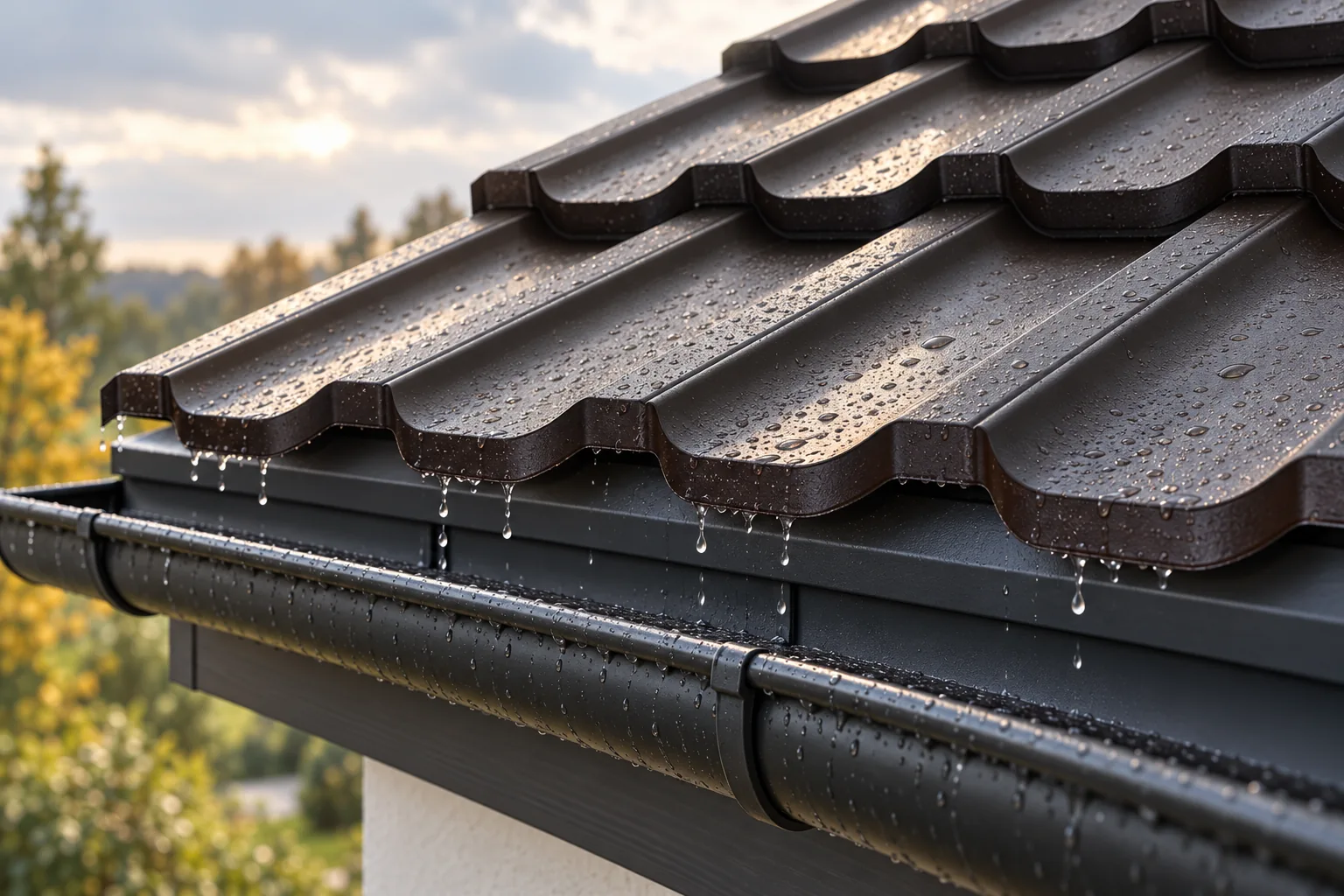
A leaking roof: how to trace the cause and decide what to do next
First limit damage inside and have the roof inspected, rather than immediately looking for the culprit at the wet patch. Water may travel along the membrane or structure, and a hole visible above a stain is not always the source of the leak. It is worth establishing whether the problem occurs with every rain or only with rain from a particular wind direction, and distinguishing precipitation from water-vapour condensation. The check should cover valleys, chimney flashings, wall junctions and service penetrations. An effective repair removes the cause instead of covering an arbitrary section of the roof slope.
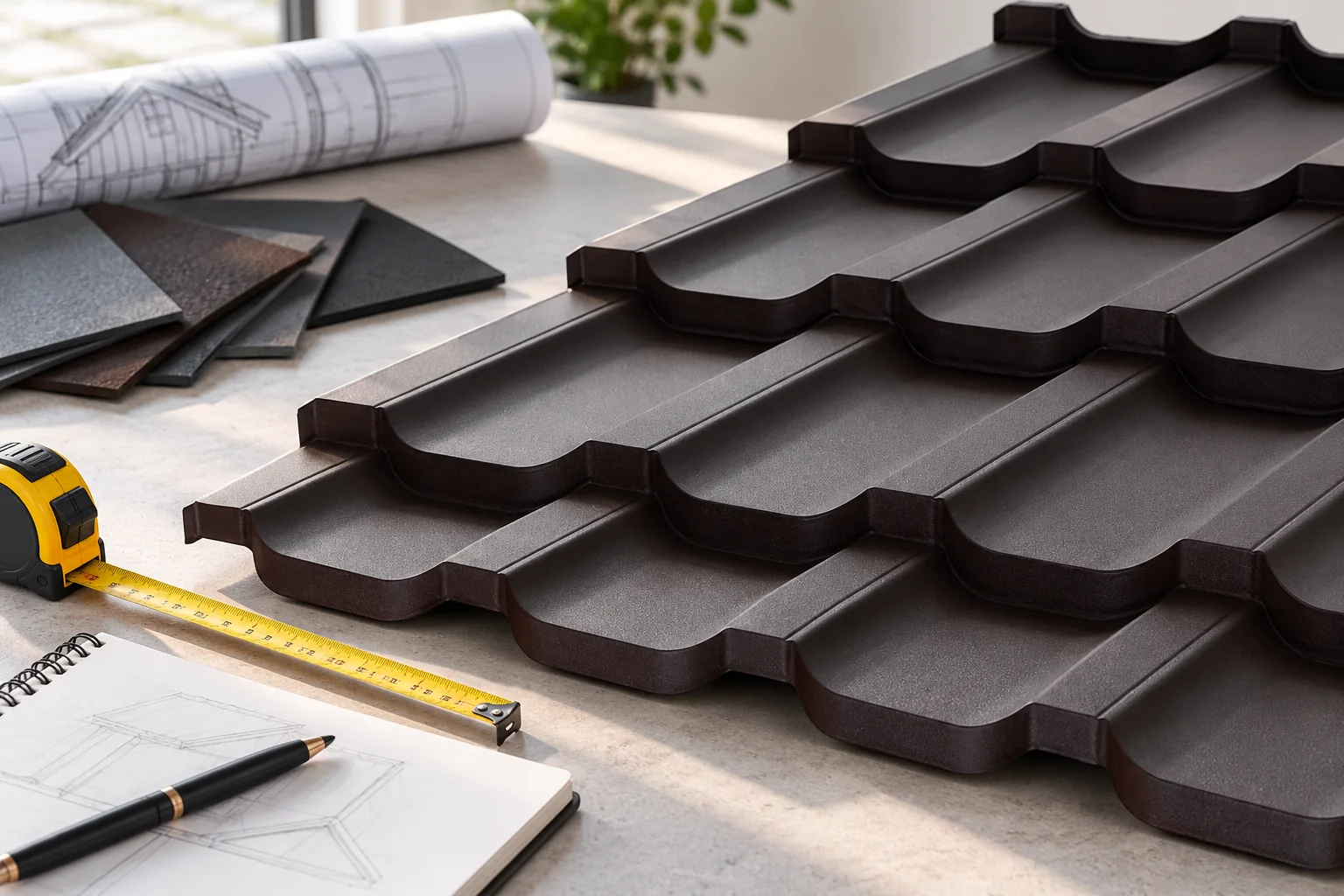
Four checks when selecting a tile-effect metal roof covering
Begin by establishing whether the chosen roofing tile profile actually suits the roof geometry and the intended method of installation, rather than by comparing colours. Check its conformity with the design, the specification of the steel and workmanship, the suitability of the coating for the surrounding conditions, and the full cost of the finished roof including delivery. Any one of these points may rule out a seemingly attractive offer. Only once they have been set side by side is it worth deciding between similar variants, since the appearance of a sample alone will not reveal technical differences.
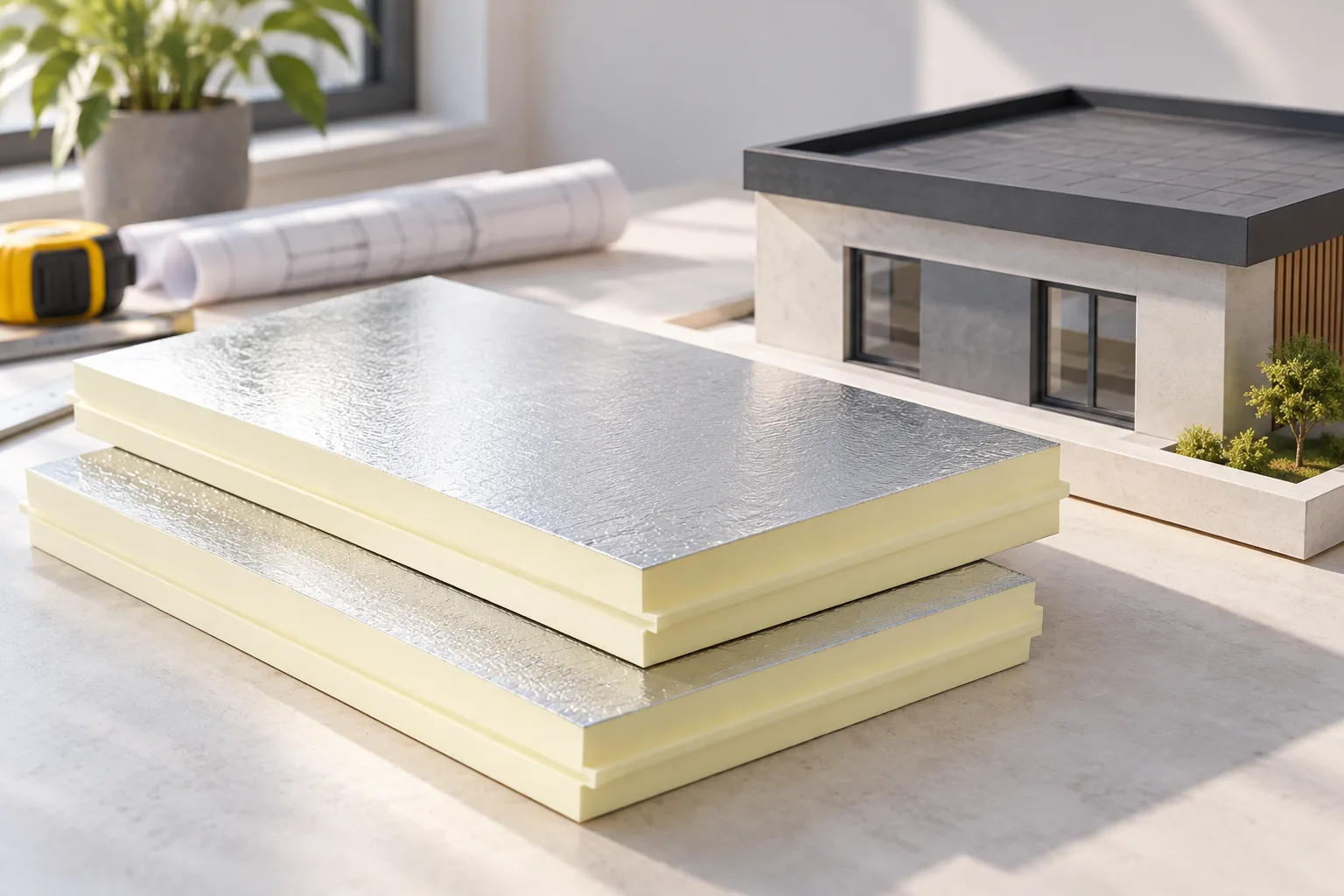
Building a watertight flat roof: design details and limitations
The watertightness of a flat roof depends above all on a coherent layer system, not on the covering material alone. Before construction, it is worth establishing how water will be drained, who will service the surface and how, and whether the roof is to serve additional functions. Falls, waterproofing, outlets and continuity of insulation form a whole in which every element must fit together. PIR boards can be part of such a system, but they do not replace a watertight covering. The project and the care taken over details determine success.
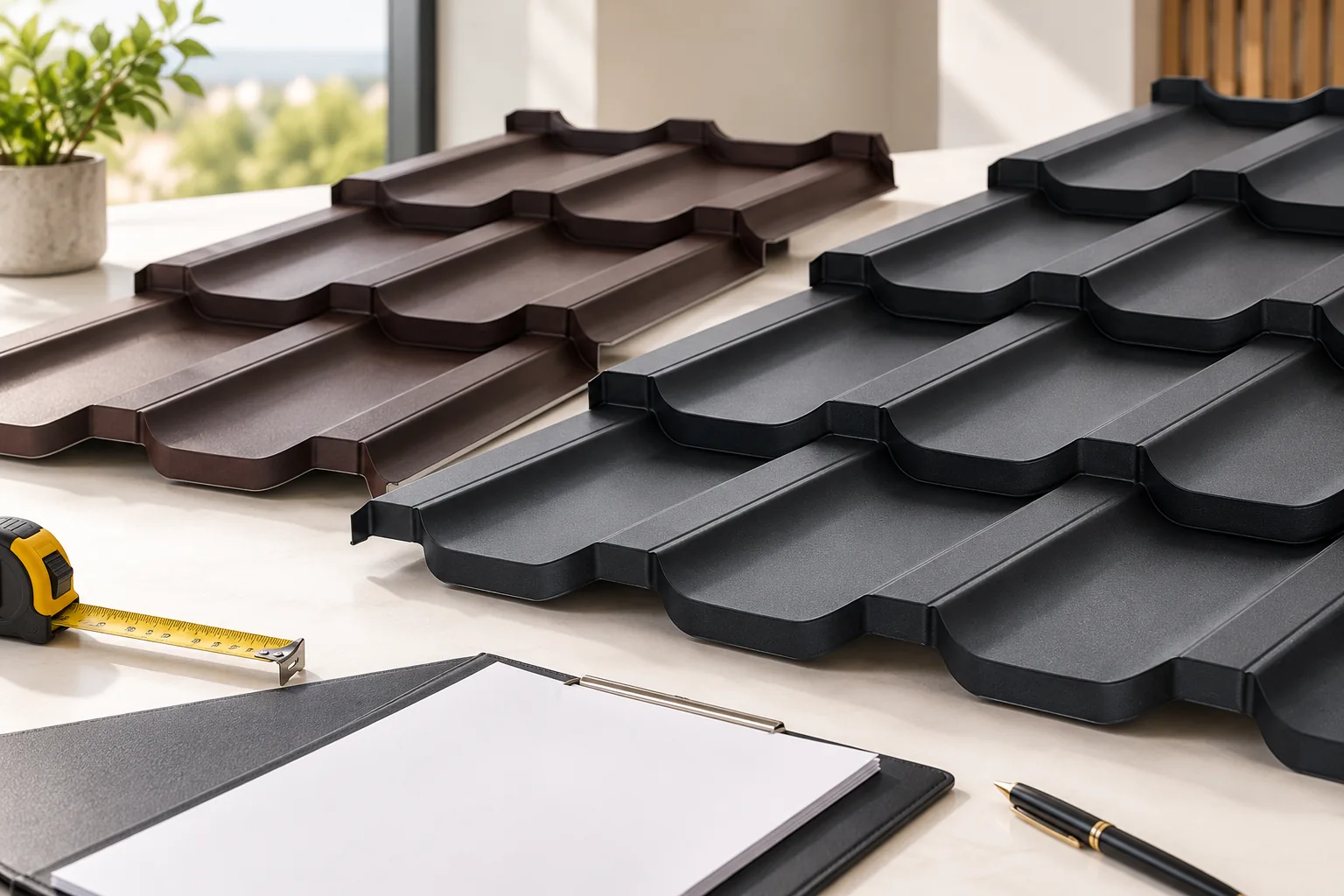
When a cheaper roof covering raises the total cost
A lower price for the covering does not always mean a cheaper roof — what matters is whether the material meets the project requirements and suits the entire roof slope. Before comparing offers, check whether the running metres share the same basis of settlement, whether the product name confirms the parameters, and what the scope of accessories and labour includes. Saving makes sense when it reduces waste and unnecessary complications rather than omitting necessary layers. Compare the cost of the finished solution and its later maintenance, not just the price of a sheet.
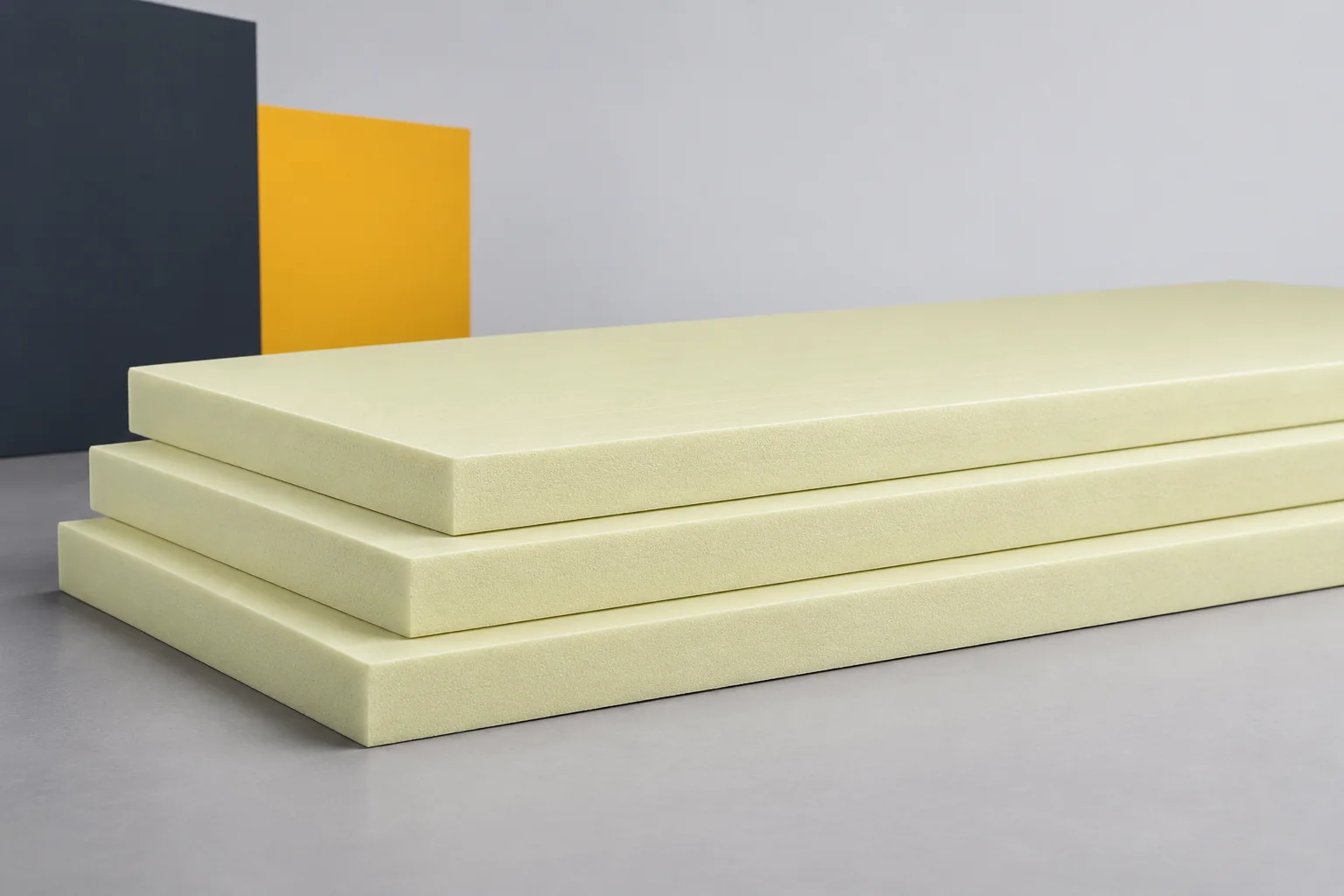
XPS reaction to fire and the fire resistance of a building element
In insulation descriptions, reaction to fire is easily confused with fire resistance. With XPS, the distinction is particularly important. Extruded polystyrene is not a non-combustible material, and its properties must be taken from the product documentation. A finished wall, floor or roof, on the other hand, has its own requirements as a complete building element. Using insulation correctly means combining both assessments, rather than attributing the properties of the whole building element to the board or drawing conclusions from a single letter. Reaction to fire describes how the product behaves under specific test conditions related to the development of a fire. For XPS, the class must be checked in the documentation for the specific variant. Various declarations exist on the market, so a single class cannot be assigned to all boards.
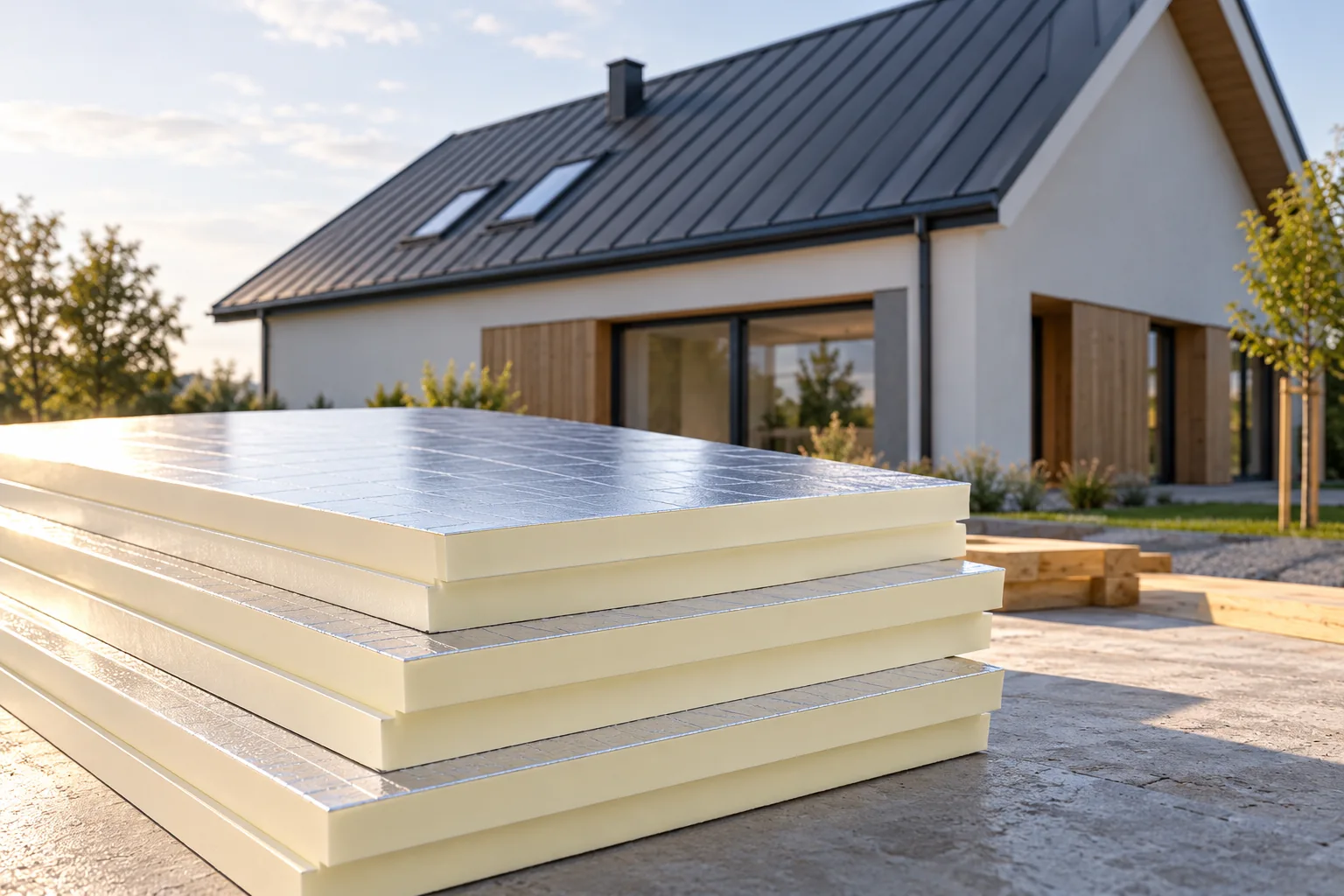
Can a metal roof work on an energy-efficient home?
Metal sheeting suits an energy-efficient house only as part of a complete, well-considered roof assembly, not as a stand-alone solution. Before approving the design, it is worth checking the continuity of insulation, air tightness and how the eaves, ridge and service penetrations are detailed. Equally important are the declared lambda of the insulating material and the choice of counter-batten fixings capable of carrying the covering loads. Whether the roof meets its targets depends on how all layers work together with the rest of the building, so the thermal assessment should cover the whole assembly rather than a single sheet.