Trapezoidal steel sheet weights: calculating the mass of an order
Trapezoidal steel sheets
The weight of trapezoidal sheet is determined mainly by thickness, material and profile geometry, not by the height of the trapezoid alone. Before comparing offers, check whether the stated value refers to a gross, effective or running metre, as this is the most common source of error. For an order, the total weight of all sheets together with flashings and packaging matters, while for roof design the other layers and loads also count. Choosing thinner sheet may reduce stiffness and permissible span, so leave the decision on the section to the designer.
Why can two trapezoidal profiles weigh differently?
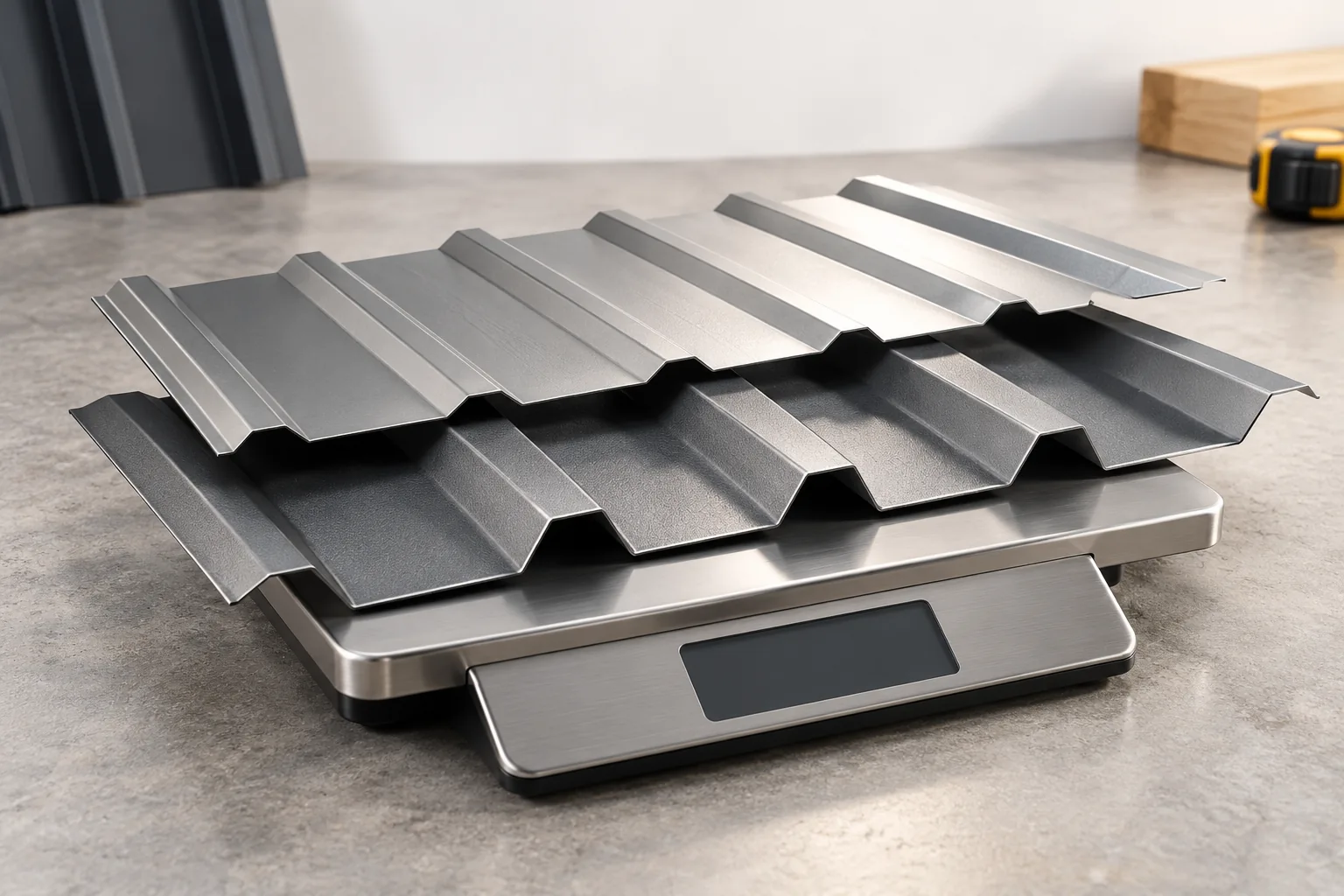
Profiling changes the shape of the sheet but does not remove material from it. Taller or denser ribs can reduce the coverage width obtained from a strip of sheet. In that case, a different amount of steel is used per metre of finished roof surface. That is why comparing weights requires knowledge of the cross-section, not just the height of the trapezoid.
Nominal thickness and the type of metallic substrate also matter. An aluminium sheet will not weigh the same as a steel one of similar appearance. Coatings and additional fleece also have their own mass. The most reliable basis remains the current data sheet for the specific product and confirmation of the unit given in the offer.
Full metre, usable metre or running metre?
A full square metre covers the entire width of the sheet. The usable area takes into account the part occupied by the side lap. A single sheet has the same mass regardless of how it is described, but the kilograms per square metre figure can differ. This is a common source of errors when comparing tables.
A running metre means the length of the sheet at a specified width. It cannot be directly equated with a square metre. If the supplier gives the mass per running metre, you multiply it by the length. If per usable square metre, you must first calculate the coverage area according to the data used in the same table.
How do you calculate the weight of a single sheet?
Assume, solely for the calculation, that the data sheet states 5 kg per usable square metre. A sheet with a length of 4 m and a coverage width of 1 m then corresponds to 4 m². Its mass will be approximately 20 kg. The stated figure of 5 kg is an example assumption, not a parameter of every T18 or T35 sheet.
If the table refers to the total area, use the total width in the same calculation. Do not mix the mass calculated for one area with the dimension of the other. Before ordering, it is worth checking the result with the supplier. This allows a unit error to be detected, which already makes a significant difference with several dozen sheets.

How do you calculate the weight of an entire transport?
Add up the weights of all lengths and quantities. Sheets for a single roof slope may come in several sizes, so a table is the most convenient format. Add flashings, fixings and packaging to the weight of the steel sheet itself. For the carrier, the gross weight of the load matters, not just the theoretical weight of the covering.
Also check the length of the packs and the required unloading method. A low weight per sheet does not mean it is easy to carry by hand. A long element can deform, and wind acts on a large surface. The number of people or equipment is selected according to the dimensions, transport instructions and site conditions.
Does a lighter sheet mean a safer roof?
A low covering weight reduces the dead load, but it does not describe the entire structural behaviour. The roof must also carry snow, wind and the weight of the other layers. In wind, the uplift force on the sheets is also important. Reducing weight does not remove the need for proper fixing to the substructure and anchoring of the structure.
Do not choose thinner steel sheet just to reduce the kilograms. A change in thickness can lower stiffness and the permissible span. The structural engineer uses load tables for the specific profile, steel and support arrangement. T35 is not always the right substitute for T18 if the other parameters are different.
What does mass mean for structural sheet?
In structural trapezoidal profiles, self-weight is one of the input values for calculations. The profiles may carry insulation, waterproofing and roof equipment. At the same time, the installation conditions and permissible concentrated loads must be checked. A table for one static scheme does not describe all ways of supporting the sheet.
Packs of material should not be placed at a random location on the finished roof slope. Even lightweight steel sheet gathered in one stack creates a significant local load. The storage location on the roof is determined with the person responsible for the structure. Safe transport up to the roof therefore also includes a plan for distributing the material.
What data should be collected before purchase?
Ask for the technical name of the profile, the thickness, the material grade and both widths. Check the weight unit and the number of sheets per pack. Include the lengths, coating and any additional equipment. This allows the supplier to confirm the order weight and the requirements for the vehicle and unloading.
For structural assessment, also provide the support layout and the full roof section. For transport planning, give the access route and the place where the packs will be set down. These are two different uses of the same weight information. A reliable calculation starts with consistent units and a specific product, not with an average figure found online.
7 branches. Materials closer to your project.