Five advantages of sheet metal as façade cladding
Façades and fences
Sheet metal on a façade offers five benefits, but not every one applies to the same product. First establish whether you are comparing thin trapezoidal sheet, which is only an external cladding, or a sandwich wall panel with an insulating core. Check how the design and quotation cover the substructure, fixings, substrate, flashings and water drainage. Match the T18 or T35 profile to the building rather than to randomly chosen materials. A choice combining appearance, load capacity, thermal requirements and maintenance will let you relate these benefits to a specific building.
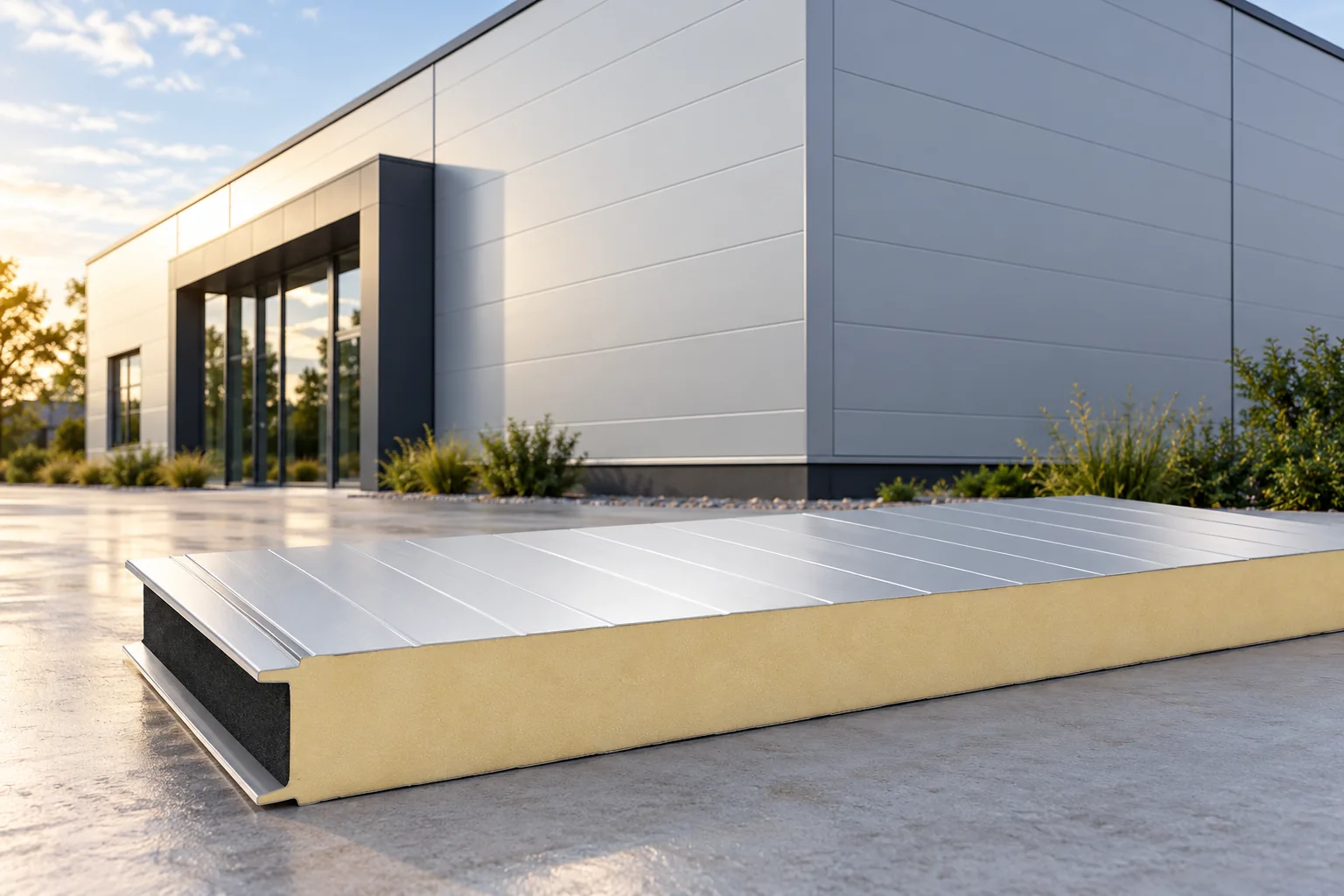
What type of façade are we comparing?
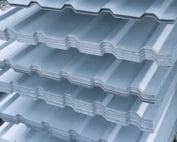
Thin trapezoidal steel sheet is an external cladding. It does not replace insulation or the wall structure. In a layered build-up it requires a suitable substrate and a solution for the space behind the covering. The cross-section must be matched to the building, not assembled from randomly selected materials.
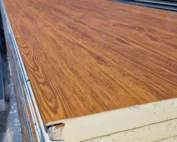
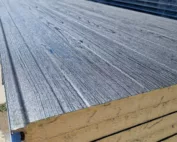
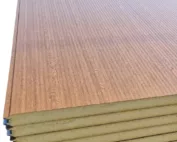
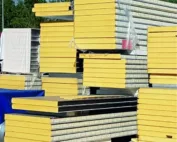
An insulated wall panel is a separate product. It combines steel facings with a core and has defined thermal properties and support rules. Both solutions may look similar from a distance, but they are designed differently. Before comparing quotes, it must be established which part of the wall the ordered material is to form.
First benefit: control over the building’s appearance
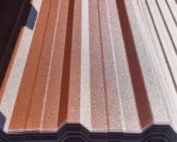
T18 or T35 profiles create a regular surface pattern. Their height and spacing affect the interplay of light and shadow. They can be used to accentuate part of the façade or to organise a large hall wall. However, the laying direction must be checked in the documentation for the selected product and taken into account in the substructure design.
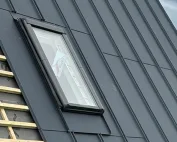
The appearance is best assessed together with the windows, plinth and corners. A narrow cut strip at the last opening can disturb the effect. A layout drawing is therefore useful, not just a colour sample. Before ordering, it is worth establishing where the full widths will begin and how the edge sheets will be finished.
Second benefit: relatively lightweight cladding
Sheet metal adds relatively little weight to a new building or an existing wall being reclad. The design still needs to account for the whole assembly, including the support frame and fixings, and for wind loads on the façade. The low weight of the sheets alone does not justify using fewer fixings.
On an older building, first check the wall where the support frame will be anchored. Even lightweight sheets need a sound fixing point. The condition and strength of the wall determine which supports and anchors are suitable and whether the proposed cladding offers a weight advantage in practice.

Third benefit: installation over large areas
On uninterrupted stretches of façade, sheets cut to suit the layout can cover a large area in one operation. Fewer individual pieces need aligning. The finish depends on how accurately the frame and openings have been set out. A support that is out of line can be conspicuous across a long run of profiled sheets.
A sandwich panel combines several functions of the building envelope in one component. Joints, seals and flashings still need to suit the intended use of the building. The time needed for installation depends on the working height, panel lengths, number of openings and how the panels can be moved into position on site.
Fourth benefit: the option of planned replacement
Dividing into sheets or panels can facilitate repair of a limited section of the façade. However, this does not mean that every element can be removed without disturbing adjacent ones. The connection method and access to fixings must be checked for the specific system. For a heavily used building, it is worth discussing this before purchase.
Documentation of the profile, colour, coating and delivery batch is helpful. A new element after years may differ in shade from the surface exposed to the sun. Therefore, the repair decision also includes the aesthetics of the larger area. Retaining the layout drawing will make it easier to order the correct format later.
Fifth benefit: matching the protection to the surroundings
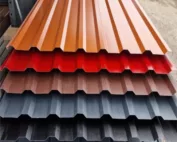
The availability of various coatings allows the protection of the steel sheet to be matched to the conditions of use. Contaminants, moisture and contact with other materials are significant. Colour alone should not be the sole selection criterion. In an industrial hall, conditions on the inner side of the enclosure must also be considered, especially with sandwich panels.
The factory coating still requires proper cutting, cleaning and damage inspection. Swarf and dirt should not remain on the façade. Cleaning agents are selected in accordance with the instructions. Proper maintenance helps preserve the benefit of the chosen protection, rather than losing it through aggressive cleaning.
What must the design and quote include?
The specification should include the cladding, substructure, fixings, insulation as specified in the design, and flashings. Special locations are the plinth, corners, lintels and sills. The method of water drainage and required gaps must be indicated. The cost of the sheets alone does not describe the price of the finished wall.
Before deciding, compare complete variants with the same function. T18 as cladding and a sandwich panel with a core are not equivalent cost estimate items. A good choice combines appearance, load-bearing capacity, thermal requirements and maintenance. Then the five benefits described can be related to a specific building, instead of being treated as a universal promise.
7 branches. Materials closer to your project.