Is it worth ordering trapezoidal steel sheet with an anti-condensation layer?
Sheets and roofs
An anti-condensation layer on the underside of the sheet can reduce dripping of water formed by condensing vapour. It acts as a temporary store of moisture that must subsequently dry out. It is most often considered in adequately ventilated buildings with an uninsulated covering. It does not replace thermal insulation, a vapour barrier or repair of a leaking roof. Whether it makes sense to buy depends on the conditions inside the building and the possibility of removing moisture. The roof surface can cool to a temperature at which the vapour contained in the air begins to condense. Droplets then appear from below, even though no rain has passed through the covering. The phenomenon depends on surface temperature and air humidity. It may be noticeable after a cool night or with a large difference in conditions between the interior and the surroundings.
Where does water under tight sheet metal come from?
The roof surface can cool to the temperature at which water vapour in the air begins to condense. Droplets then appear on the underside, even though rain has not penetrated the covering. The phenomenon depends on the surface temperature and the humidity of the air. It may be noticeable after a cool night or with a large difference in conditions between the interior and the surroundings.
Moisture may come from the use of the building, a wet floor, stored material or technological processes. In a new facility, construction moisture is added. Before purchasing the layer, the source of the water must therefore be established. If a flashing or a lap is leaking, the fleece is not the solution. It may only conceal the symptoms of the problem for a certain time.
How does anti-condensation fleece work?
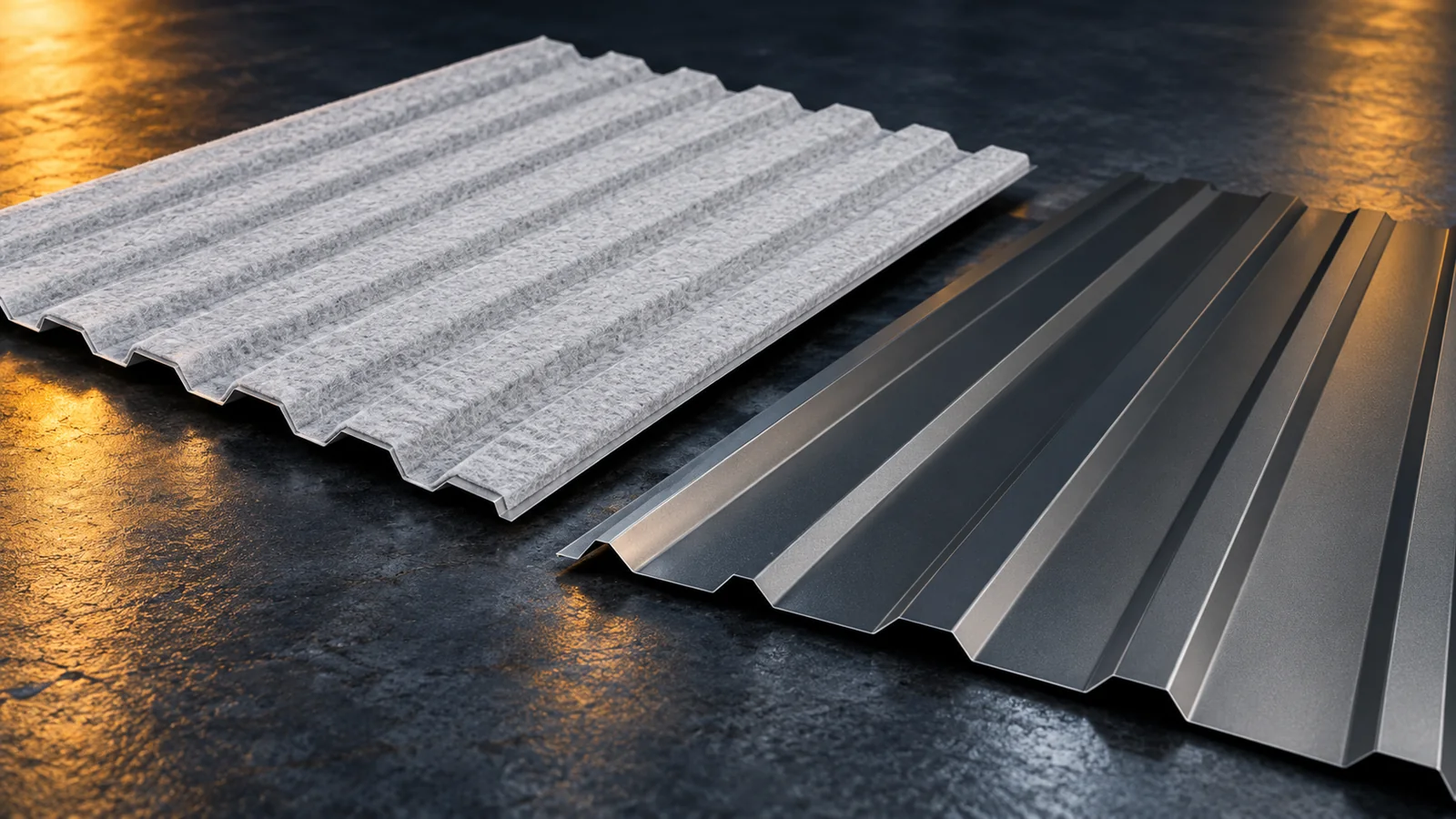
The material bonded to the underside of the sheet retains part of the condensate. As a result, the droplets do not detach immediately from the steel sheet. When conditions change and drier air flows in, the moisture can be released to the surroundings. This cycle requires the possibility of drying out.
The water retention capacity is limited and depends on the specific product. The value in the technical data sheet refers to defined test conditions. It does not mean that the roof will withstand any amount of vapour or rain. Once saturated, the material may not prevent dripping. It should not be treated as a permanent reservoir for moisture or as a layer intended for permanent wetting.
Ventilation must also function when the facility is closed. A large gate opened only occasionally does not guarantee constant air exchange. If the fleece is wet in the morning and still has not dried by the evening, it is worth checking the conditions of use. A recurring inability to release moisture indicates that the entire system needs to be improved, not just the thickness of the layer itself increased.
Where can such a solution be useful?
The fleece is considered, among other things, under uninsulated roofs of halls, garages and warehouses. The risk of objects or the substrate being wetted by condensate is significant. With good ventilation, periodic water retention can improve the conditions of use. However, seasonal changes in humidity and temperature must be taken into account.
In a facility with high, constant moisture emission, the layer alone may be insufficient. It may be necessary to reduce the vapour source, provide more efficient ventilation or use a different roof system. In a heated building, thermal insulation and vapour control should not be abandoned on this basis. The fleece-lined trapezoidal sheet and the insulated layered partition perform different functions.

Why do the eaves and laps require preparation?
The absorbent material must not create a path for water to be drawn up from outside. For this reason, the areas around the eaves and the longitudinal joints require the solution described in the instructions. Depending on the product, appropriate zones without fleece or other factory or installation preparation of the edges are provided.
The method should not be selected independently on the basis of a video about another product. It is important to preserve the coating and ensure compliance with the documentation. Agree which zones have been prepared before delivery. Check this also when cutting sheets on site. Cutting off a finished end may require the proper detail to be redone. Omitting this step can increase the moisture problem instead of limiting it.
What should you not expect from this layer?
The fleece does not perform several functions with which it is sometimes confused:
- it does not provide thermal insulation comparable to PIR board or mineral wool;
- it does not repair leaky fasteners and flashings;
- it does not replace the required vapour barrier;
- it does not exempt the building from ventilation;
- it does not automatically give the entire roof a specific fire resistance.
Fire properties must be checked in the documentation for the given system. The same applies to acoustics. The additional layer may affect the sound of rain, but it is not a standalone noise protection design. If these requirements are important, the complete building envelope should be assessed.
How to assess the surcharge and subsequent service?
Compare the surcharge for the same trapezoidal steel sheet, thickness and billing area. Check whether it covers the preparation of the overlap zones. Ask about the permitted cleaning method and the conditions of use. In a building with dust or contaminants, assess whether the surface can be kept in an appropriate condition.
After installation, observe whether the material dries and whether it does not remain wet in the same zones. Prolonged moisture requires the cause to be established. Also check the flashings and the patency of ventilation. The fleece is a useful addition when it corresponds to the actual condensation problem. It should not be bought as a universal protection against all water under the roof.
7 branches. Materials closer to your project.