Replacing metal fence pickets: which parts of the existing fence can stay?
Metal fences
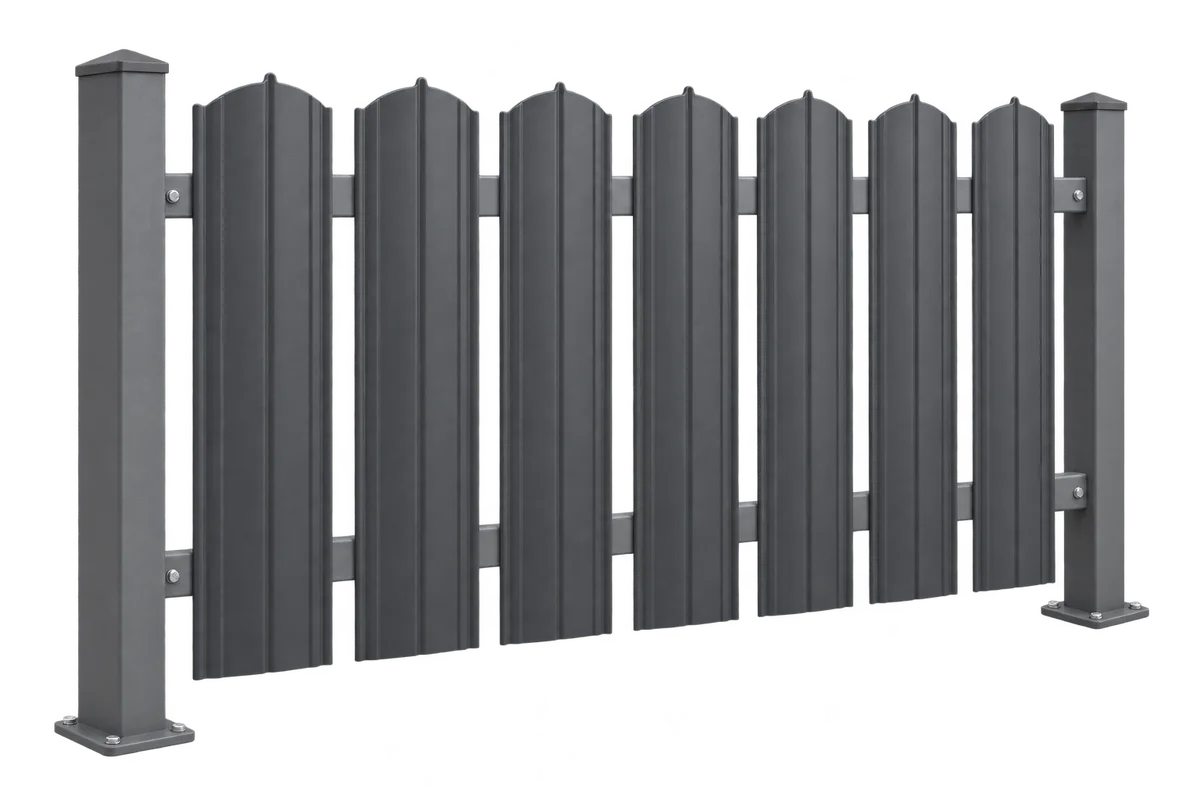
Replacing metal fence pickets allows the appearance of the fence to be renewed, but does not automatically mean that the existing posts and rails are suitable for reuse. Their condition, dimensions, fixings and suitability for the planned height and clearances must be checked. On Izoprofil.eu we discuss the preparation for such a modernisation: assessment of the existing bays, trial assembly of the new profile and organisation of the replacement. A picket made of profiled steel sheet is an infill element; it does not replace the supporting structure. A change in the installation direction or the addition of a second row requires a separate assessment of the entire system. The decision to retain part of the fence is made before ordering the material. This allows the choice of colour and shape to be combined with the actual constraints of the existing property.
In this article
Inspect the structure after exposing the connections
Do not assess the condition of the structure from the street side alone.
Also inspect the rear surfaces of the crossbars, the areas around the screws and the bases of the posts. Corrosion, deformation or a loose connection require clarification. A new picket can conceal damage but does not remove it. If the suitability of a component cannot be confirmed, the scope of the repair should be determined by a specialist before repetitive work begins.
Check the effects of changing the infill
Record the heights of the bays, the spacing between posts and the position of the crossbars. Mark locations with different dimensions, corners, the gate and the pedestrian gate. An older fence does not have to maintain uniform geometry along its entire length. Measurements taken on only one bay can lead to ordering lengths that do not fit.
Compare the planned layout with the existing one. A higher infill, smaller gaps or a second row can change the wind action on the fence. The low mass of sheet metal pickets is not proof that the posts and their foundations have sufficient load-bearing capacity. The entire system is assessed, not a single new component.
Match the new picket to the available support
The documentation for the selected profile should confirm the installation direction and the required support locations. The existing crossbar spacings may be unsuitable for a different model. Do not move the fastening point to a random part of the profile just to use an existing hole. If necessary, the upgrade must also include the substructure.
The type of fastener depends on the material and thickness of the substrate and the recommendations for the coating. When reusing holes, their condition and the feasibility of achieving a proper connection must be assessed. Choosing a larger screw by eye is not a universal repair method. The fastening details belong to work preparation, not to improvisation on a finished bay.
Assess the sample together with the old elements
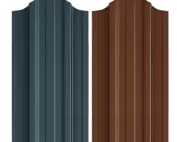
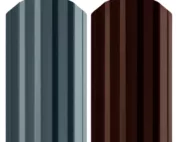
Assess the new colour next to the retained posts, gate and plinth. Older coatings may have changed appearance through use. A matching colour number does not guarantee identical gloss or texture. A sample should be viewed from both sides of the fence and under different lighting before deciding on the entire batch.
Confirm the finish on the reverse side of the metal fence pickets. If part of the fence remains unchanged, the difference may be particularly noticeable from the garden side. Two-sided colour and two rows of elements mean different things. In the specification, separate the type of coating from the method of laying the infill.
Plan the dismantling and reinstallation
Plan how to secure the property during dismantling. Removing the infill may change access to the plot, so the sequence of work must be agreed with its users. Place old elements and fasteners away from the walkway. Do not leave sharp ends in places accessible to children or animals.
Before fixing the entire section, check a trial panel: gaps, the top line, the alignment of the profile and the appearance of the connections. Thin sheet must not be straightened by excessive screw pressure. If cutting is required, use the method and edge protection in accordance with the product documentation. After working, remove swarf from both retained and new surfaces.
Keep the data needed for the next repair
Record the model, lengths, coating variant and delivery data for each part of the fence. Photographs and field markings will make any later damage report easier. Keep the cleaning instructions and information on the fasteners used. When reordering material, check the variant compatibility again instead of relying solely on the former colour name.
After modernisation, inspect both the new infill and the retained structure. Connections, impact points and surfaces near the ground and vegetation require particular attention. Renewing the pickets does not reset the age of the remaining parts. The inspection plan should take into account the entire current condition of the fence.
7 branches. Materials closer to your project.