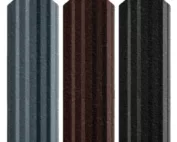
Coordinating metal fence pickets with the lines of the house façade
Metal fence pickets and fences
The fence and the façade are usually seen together. Their divisions can either give each other order or compete unnecessarily. Metal fence pickets create a regular, fine rhythm that is worth setting against the larger elements of the house. There is no need to align every picket with the window axis. What matters more is a clear relationship between the entrance, the posts and the infill. A well-composed front looks coherent even though it consists of elements of different scales and purposes. On the façade, we first notice the volume, the roof and the larger openings. The fence has its own large divisions: the gate, the pedestrian gate and the bays. Only within these does the rhythm of individual pickets appear. It is worth keeping this order when planning. Trying to match the width of every profile to the window detail can complicate the composition without any visible benefit.
In this article
Separate large divisions from fine rhythm
So start with the layout of the fence posts and the entrance. Check whether their arrangement makes sense in the view of the whole house. Then select metal fence pickets that will calmly fill the resulting fields. They can have a fine or more pronounced rhythm. It is important that this rhythm does not clash with every division of the joinery. One clear order is often better than many attempts at perfect alignment. For example, a wide gate can define the main division of the front, while a narrower pedestrian gate marks a separate entrance zone. The rhythm of the pickets should work within these fields rather than forcing a change to their functional widths.
Find a common direction
Vertical pickets can reference slender windows or entrance posts. A horizontal arrangement can work with a wide building volume. However, these are not rigid rules. Changing direction also allows the fence to be clearly separated from the house. It is worth checking both variants on a simple sketch using the actual product width and planned gaps.
If you choose a horizontal arrangement, match it to the profile and system that provides for such installation. Not every picket can be treated identically after rotation. Length, supports and method of fixing require verification. The composition should result from the actual product. It is not worth drawing a solution that cannot later be correctly executed.
Define the role of the posts
Fence posts divide a long section into larger fields. They can be a strong accent or remain a background for the pickets. In the first case, their regularity and relationship to the entrance become important. In the second, the rhythm of the infill takes on a greater role. Both approaches can work, but it is worth choosing one consciously. An accidentally strong post next to a delicate bay can disturb the proportions.
Metal fence pickets do not have to end perfectly on the axes of the façade divisions. Perspective changes their relative alignment depending on the viewing position. What looks perfectly aligned from one point will be offset from another. Therefore, it is better to aim for a consistent character of divisions than for a single apparent axis viewed only from a specific place.

Match the density to a calm background
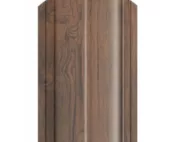
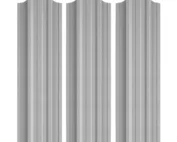
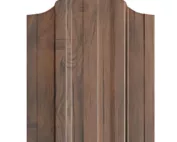
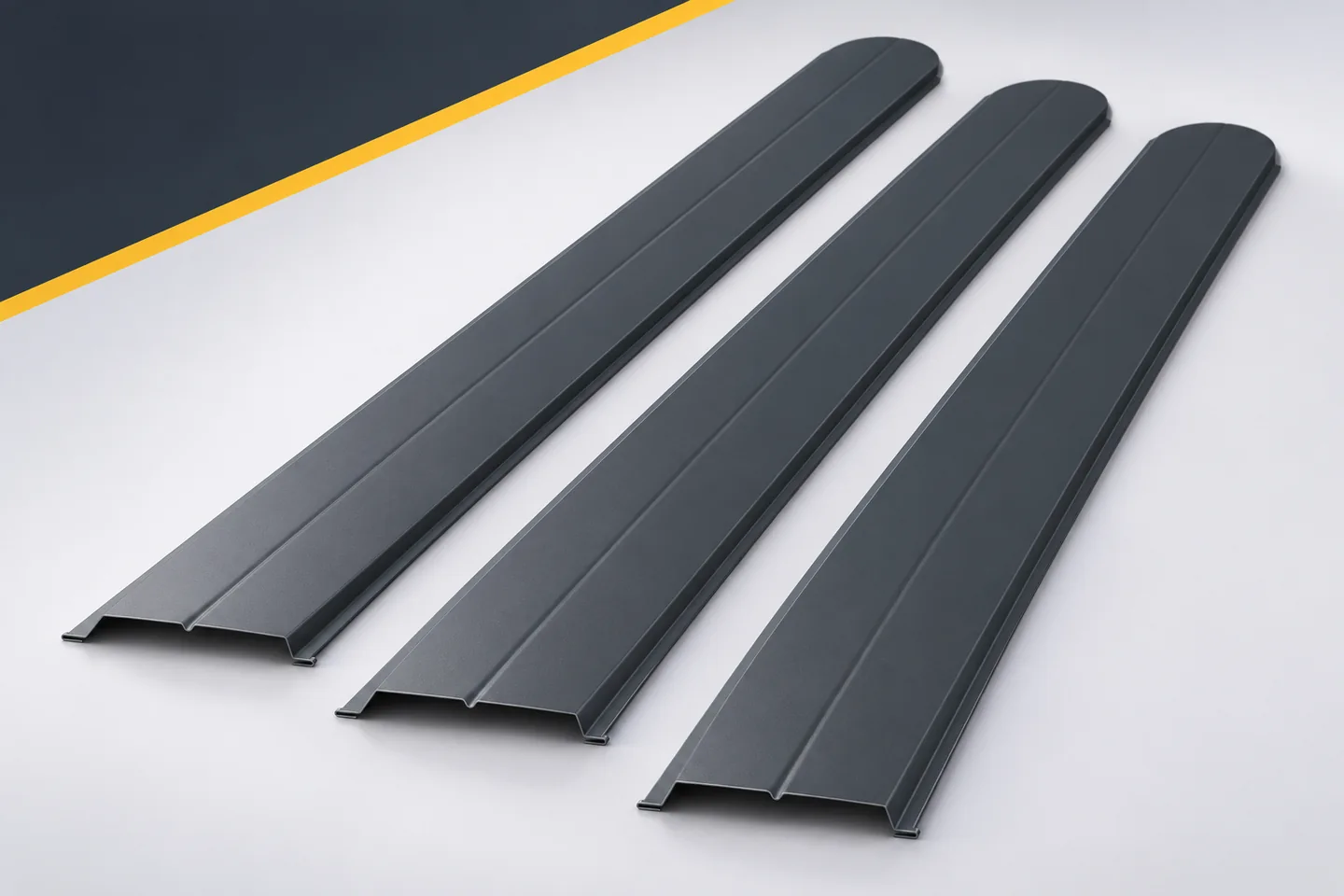
With a façade full of details, a simple infill can tidy the view. With a very restrained volume, a pronounced picket profile can be an attractive accent. However, the entire bay must be assessed. The picket width, the gap and the pressings together create the rhythm. A photo of a single element does not show how it will look after a dozen repetitions.
Sheet metal pickets spaced closely together give a different surface than the same elements with larger gaps. It is worth checking the view from the street and from the house windows. A smaller gap can increase the visual share of the fence, but does not guarantee full screening. The structure should be matched to the intended degree of enclosure. The aesthetic change also has consequences for the entire system.
Limit the number of competing materials
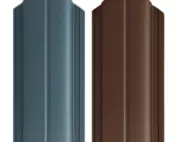
The rhythm is easier to read when colour and texture do not change at random. You can reference the joinery with a single shade of pickets. You can also use contrast that clearly separates the fence from the wall. It is important not to add further decorative elements without a specific role. The plinth, posts and infill already create several different surfaces.
Compare samples against the actual façade. The same colour number on different materials does not guarantee an identical appearance. Gloss level and light direction matter. Also check the back of the pickets, visible from the house. The composition does not end with a representative photo from the street. It should also work well in everyday viewing of the garden.
Assess the design from several viewpoints
Prepare a simple straight-on view and two angled shots. You will see whether the rhythm remains legible when walking along the property. It is also worth briefly covering the details and looking at the large shapes alone. If the arrangement of the house, fence and entrance looks calm, the small divisions have a good foundation. Only then is it worth refining the ends and spacing.
Metal pickets can connect the house architecture with its surroundings through a repeating shape and colour. The most important thing, however, is the right scale. The fence does not have to copy the façade to suit it. It is enough that its large divisions are logical and the rhythm of the pickets supports the chosen character. Such a design remains legible both up close and from a greater distance.
7 branches. Materials closer to your project.