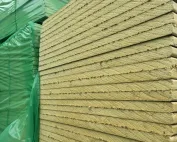
PIR and mineral wool: documenting a fair design comparison
PIR insulation
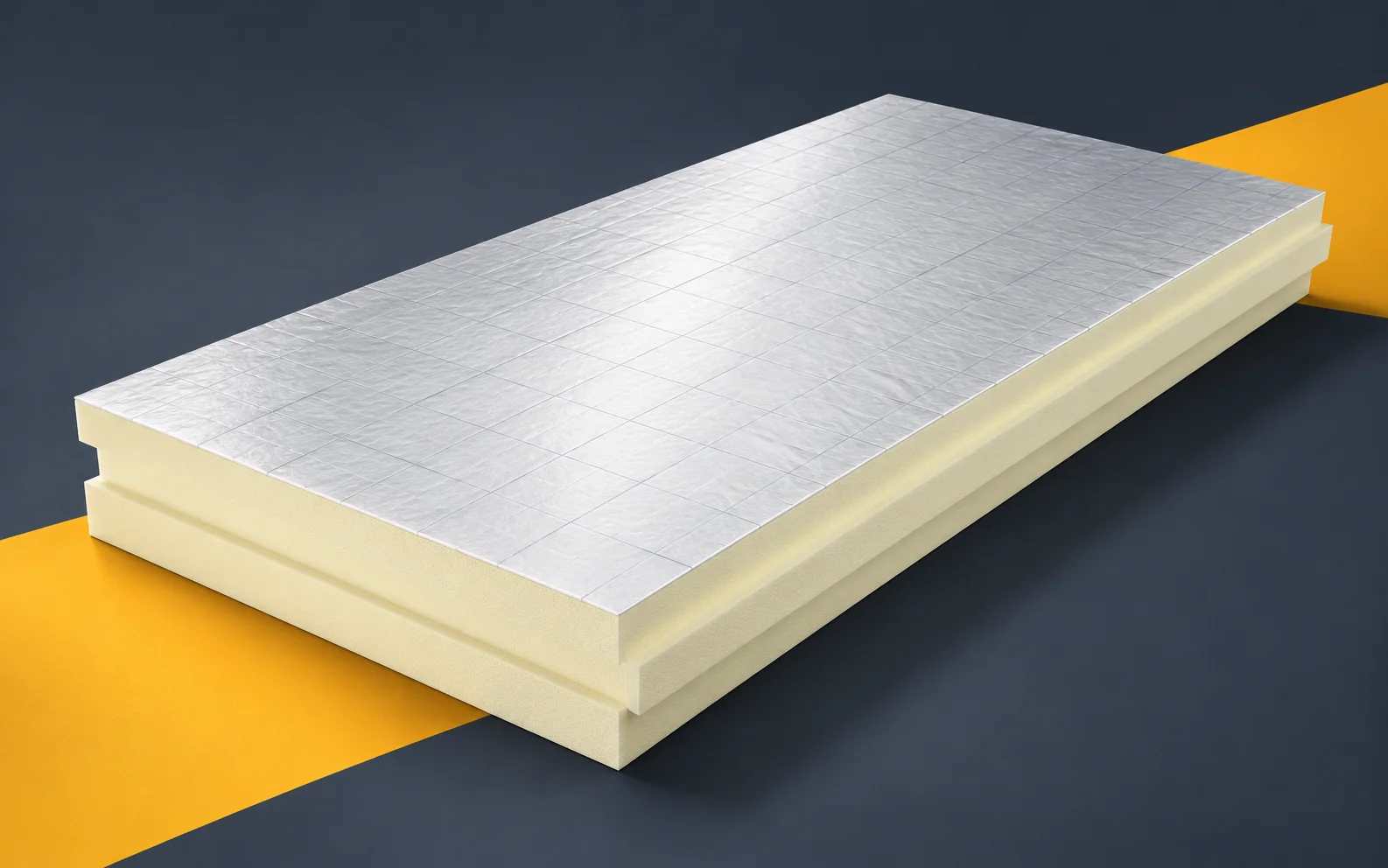
In a project comparison, PIR and mineral wool should be assessed against the same functions of the building envelope. Compliance with a single parameter does not prove full equivalence. PIR boards can reduce the required thickness, but the specification must also preserve the fire, acoustic and moisture requirements. Spray polyurethane foam is not the same product as a factory-made PIR board. If the general word foam appears in a comparison with wool, the type of material must be established. Without this, data from different technologies may be compared. The name of a group does not replace the product declaration. State the thermal objective independently of the material name, and then select the specific thicknesses.
In this article
Comparing thicknesses requires specific figures
Polyurethane boards and mineral wool products have different declared lambdas. In the comparison, their exact variants must be stated. The best value from one family and a random value from the other must not be used. A clear comparison shows the data source and the final available dimension. It also allows the effect of the substitution on the height of the entire cross-section to be assessed.
Reaction to fire requires a separate assessment
The reaction to fire of the PIR or mineral wool product must be stated separately from the fire resistance of the entire building element. The first concerns the behaviour of the material in a specific test, the second the layer assembly over a specified time. Therefore, in the specification and on the drawings, each of these characteristics must be assigned to the correct subject of assessment, and when selecting parameters one must not be derived from the other. The installation conditions that also contribute to the fire resistance of the building element must likewise remain part of the description of the solution.
Fire requirements must have an unambiguously defined subject. The reaction of the material, the fire resistance of the building element and the behaviour of the roof under external fire are not the same classification. Polyurethane foam cannot be credited with the characteristic of the complete assembly as its own property. For a substitute, the relevant documents and their conditions of application must be checked. Otherwise, a correctly calculated thermal performance may go hand in hand with an incomplete assessment of an essential requirement.
Thermal insulation does not mean sound attenuation
In a room with acoustic requirements, the source and path of sound transmission must first be determined. Only then are the layers selected. Polyurethane insulation can serve the thermal objective, and another component the acoustic one. Such a division of functions is correct if the entire assembly has been properly designed.
If the design has an acoustic objective, it should remain visible in the substitution procedure. Polyurethane insulation with a similar thermal resistance is therefore not acoustically equivalent to a system with mineral wool. An assessment of the actual layer build-up is needed. It is also worth specifying the type of sound being analysed and the role of the facings. The general word insulation should not combine quantities describing entirely different phenomena in a single column.
Rigid boards and flexible infill are installed differently
Before covering up, inspect the joints and hard-to-reach places. Good PIR boards do not compensate for a missing section at the chimney. Good mineral wool does not compensate for a poorly executed air layer. Acceptance should concern the function of the building envelope, not just the brand of material.
The construction drawing must correspond to the chosen form of the material. Rigid boards and flexible infill have different rules for fitting to the structure. A change may require adjustment of the fixing, joints and support. These consequences should not be left outside the scope of the assessment of the substitute. In the specification, it is worth indicating which details require re-approval. This prevents thermal equivalence from becoming a pretext for arbitrary changes to the technology.
Water vapour and moisture depend on the entire cross-section
The material’s own resistance to water does not exempt one from analysing moisture in the building envelope in the design. A wet substrate, a leak and moisture transport by air are separate phenomena that polyurethane insulation does not eliminate. In the description of the specific solution and in the coordination of drawings, the layers protecting the system and the manner of its intended operation should therefore be indicated. The equivalence check of the substitute material should cover the same functions, not merely the product’s declared resistance to water.
Moisture conditions must be checked for the entire cross-section, taking account of the facings and the continuity of joints. The high diffusion resistance of one product and the low resistance of another can lead to different solutions. This does not mean an automatic advantage for one group. What matters is matching to the conditions of use. In the case of renovation, the condition of the existing layers and the constraints on their further drying out must additionally be described.
The choice can combine the advantages of different materials
PIR has a strong position where effective, thin insulation is needed. Mineral wool remains an important solution for other requirements. It is worth separating the criteria and putting them in order for the given building. There is no single general answer independent of the place of application.
A design can deliberately combine materials if specific functions have been assigned to them. PIR boards are sometimes useful in a continuous layer of limited thickness. Another component may be responsible for a requirement that the board itself does not fulfil. Polyurethane insulation should then be assessed as part of a system. The description of the substitute must preserve all these tasks, not just the number of centimetres or the nominal thermal resistance.
Recording the decision in the documentation
In the documentation, separate the required thermal resistance from the fire classification. A product meeting the first criterion may not satisfy the second. The alternative variant must be checked across the full range. Such a record makes it easier to compare offers fairly without favouring the material name itself.
A good specification makes it possible to trace why a given material was adopted. Record the criteria and link them to the drawing. In the change procedure, apply the same scope of verification. PIR boards can have a clear spatial advantage, but equivalence involves more than lambda. Separate requirements protect against unauthorised simplification. They also facilitate a substantive conversation with the supplier, who should present documents for the specific product and the intended assembly.
7 branches. Materials closer to your project.