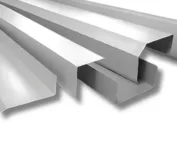
Assessing stains on coated chimney flashings
Flashings
A dark mark on a chimney flashing does not yet tell you what is happening to the sheet metal. It may be a deposit, soiling left after works, or a sign of surface damage. Before cleaning, it is worth identifying the source of the change. Chimney flashings work in a complex environment, so an arbitrary chemical agent is often a poor choice. The assessment must be combined with checking the joints and the path of water around the roof penetration. Check where the soiling appears and whether it recurs after cleaning. Its location can help distinguish run-off from the chimney surface from contamination left on the roof. However, final conclusions should not be drawn from the colour of the stain alone. An inspection of the location is needed.
In this article
Start by determining the source of the mark
If a problem with the chimney’s operation is suspected, it must be assessed separately. The metal flashings are not responsible for the correct operation of the flue. Replacing the coloured strip will not remove the cause associated with another part of the installation. It is worth separating the scopes before planning a repair.
Check which material has been used
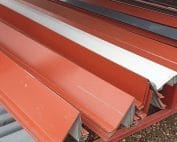
Galvanised, aluzinc and coated steel sheets have different finishes and care requirements. It is best to find the specification of the flashings that were installed. A photograph alone does not always allow the coating to be identified with certainty. Especially after longer use, the appearance of the surface may be altered by deposits.
Coloured steel sheet has a layer system that should not be treated like arbitrarily painted steel. When choosing a cleaning agent, its compatibility with the coating must be taken into account. A recommendation for one surface does not automatically become suitable for every other. Doubts should be clarified before using chemicals.
Inspect places where moisture is retained
The upper part of the chimney flashing receives water running off the roof slope. Dirt may collect at the sides and in the corners. It should be checked whether it restricts drainage. Even a small obstruction can change conditions in a place that should discharge water efficiently.
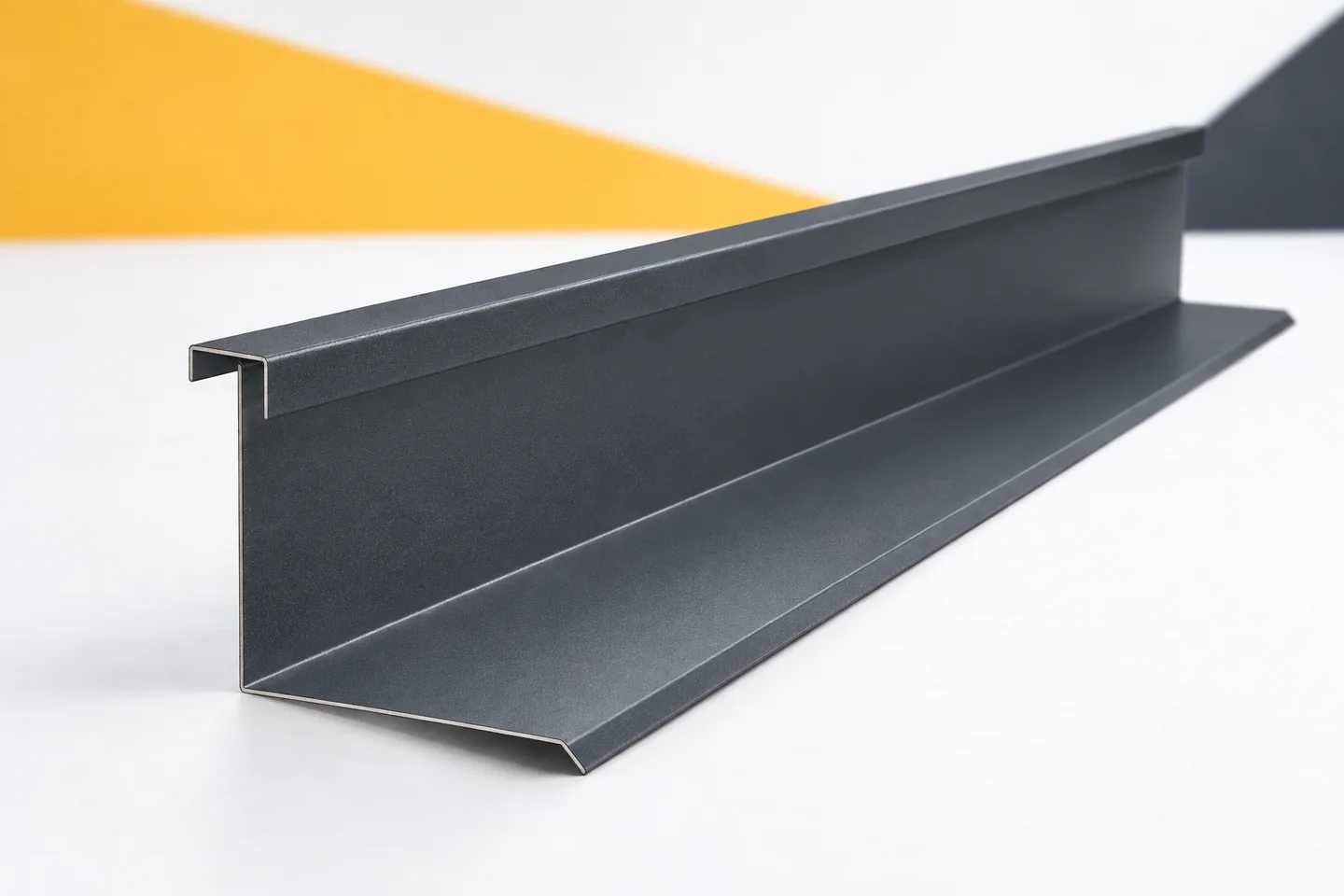
The problem should not be concealed with another layer of sealant without assessing the geometry. The laps and the shaping of the parts must first be checked. Unusual metal flashings should correspond to the actual penetration. If a component has been forced into place, it is worth assessing whether an unintended pocket has formed.
The sealant must work with the substrate
At the chimney, there is a junction between the metal sheet and another surface. The sealing material should be intended for both substrates and the conditions of use. It is not enough to choose any product described as roofing. Its specific specification and the method of preparing the area are important.
Before repair, the existing seal should be assessed. Applying new compound over a dirty or damaged layer does not automatically solve the problem. The intended allowance for movement between components must also be maintained. A tight joint should not be created at the cost of accidentally immobilising the entire detail.

Cleaning should be controlled
First, a method suitable for the identified coating is selected. Do not start with a strong agent or a sharp tool. This easily turns removable dirt into permanent damage. For stubborn stains, it is worth establishing the recommended procedure for the specific material.
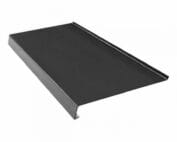
Adjacent surfaces must also be considered. An agent used at the chimney may run onto the covering and flashings lower down the roof. The gutter aprons and gutters will be further along its path. Cleaning should therefore cover the entire area, not just the place where the preparation was applied.
Separate cosmetic work from damage repair
If the change concerns only the deposit, proper cleaning may restore the appearance. If the coating has been breached, an assessment of the damage is needed. The repair method depends on its extent and the material. It should not be assumed that a similar paint colour is enough to restore protection.
It is also worth checking the edges and fixing points. A scratch at a fold or hole may require different treatment than a stain on a broad surface. If the condition of the component is in doubt, it is sensible to compare repair with replacement. The decision is made on the basis of the actual damage.
Combine the chimney inspection with the roof assessment
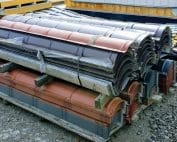
Ridge caps and verge flashings may be exposed to different soiling, but it is worth inspecting them during the same safely organised survey. Starter profiles are checked in the lower zone of the cladding. Each location should retain its own scope of assessment. Not everything that looks similar has the same cause.
Documenting changes helps compare condition between surveys. Photographs with the location and date marked are useful. Chimney flashings should remain part of a properly designed penetration. Their cleaning and maintenance do not replace checking the technical and safety requirements of the chimney itself.
Questions and answers
Does a dark stain at the chimney always mean corrosion?
No. First you need to distinguish deposits from surface damage and establish the source of the change. The colour of the mark alone is not enough for a diagnosis.
Will a strong cleaning agent be more effective?
It may damage the coating. The method is chosen according to the material and the soiling, also taking into account surfaces onto which the agent may run.
7 branches. Materials closer to your project.