Clay tiles or tile-effect steel sheets for a house roof?
Choosing a covering
The choice between clay tiles and metal roofing depends mainly on the design, roof structure and budget. Check which material the documentation specifies and whether the local plan defines the roof’s appearance. Compare the roof pitch with the requirements of the specific product, as neither clay nor metal has a single minimum angle for all models. Also analyse the weight of the whole system, how details are formed and the amount of waste for the given geometry. Leave decisions on layers and fixing to the designer, and compare two complete specifications before ordering.
Start with the project conditions
Check which material is specified in the documentation and whether the local development plan defines the roof appearance. Then compare the roof slope with the requirements of the specific product. Neither clay tiles nor tile-effect metal roofing have a single minimum angle for all models. The underlay does not give you freedom in choosing the covering.
Changing the material can affect the substrate, batten height and eaves details. In a renovation, the existing roof structure must also be assessed. If lightweight metal has been chosen in place of a heavier covering, the condition of the timber and fixings must still be checked. The reverse change requires particular attention when calculating loads.
Compare the weight of the entire system
Tile-effect metal roofing uses a thin profiled sheet and is usually considerably lighter than a ceramic covering. This simplifies logistics and reduces the permanent load on the structure. However, the weight of a single tile should not be compared with the weight of a sheet. The reference unit is the square metre of the finished roof surface.
Add the required sheathing, substructure and other layers. The structural engineer will also allow for snow, wind and equipment on the roof. Heavier tiles do not remove the need for correct fixing against uplift. Lightweight metal can also perform safely in demanding conditions if the entire connection system has been properly selected.
How does geometry affect the amount of waste?
On a simple gable roof, long tile-effect metal sheets cut to size allow transverse joints to be reduced. With many roof valleys, dormers and corners, the layout must be drawn precisely. A large sheet is not always used in full. Offcuts have a defined direction and not all can be transferred to another roof slope.
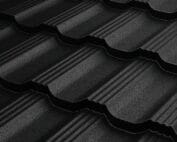
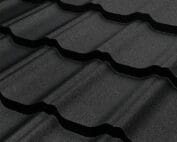
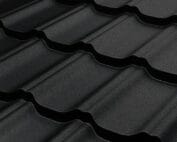
Modular tile-effect metal roofing makes working with smaller elements easier. Ceramic tiles also allow the surface to be assembled from small pieces. In both cases, the amount of waste depends on the geometry and careful planning. Do not assume a single percentage saving for every roof based only on the material format.

What determines the appearance?
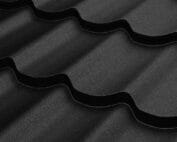
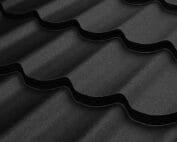
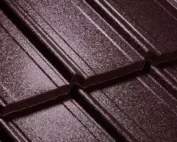
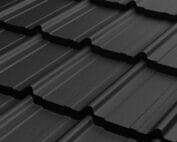
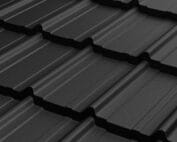
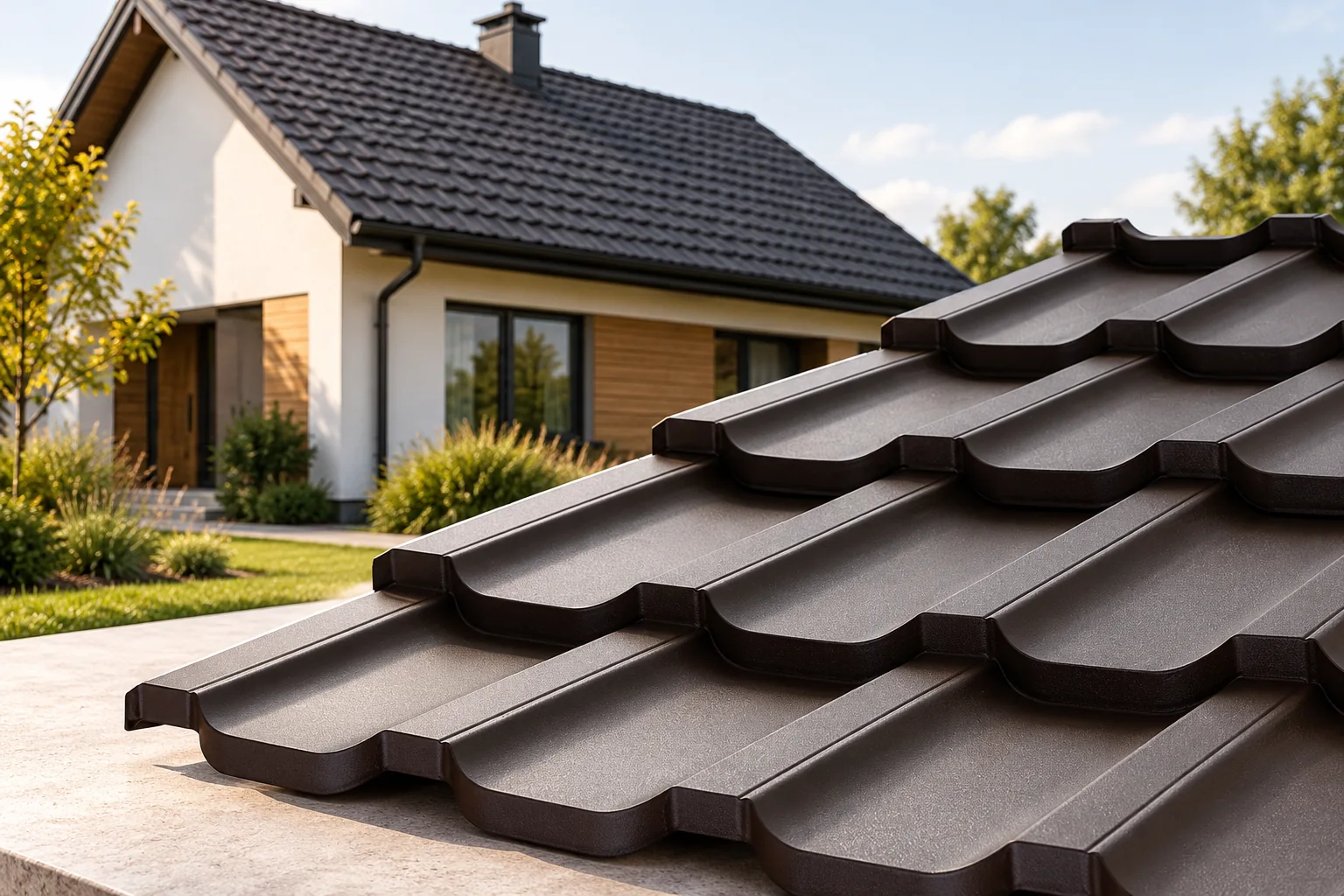
Ceramic tiles give a distinctive pattern of separate elements. Tile-effect metal roofing can have subtle, flat pressings or a more pronounced wave. Look at samples in daylight and from a distance. A small swatch does not show the rhythm of the whole roof slope or how the material will work with the façade.
With steel sheet, it is also worth assessing the coating, its texture and how the colour behaves. A colour name does not guarantee an identical shade across different batches and materials. Gutter, flashings and roofing can look different despite a similar designation. So compare samples of all visible elements before ordering.
Will it always be louder under metal?
The sound of rain depends on the whole assembly. The substrate, insulation, gaps and room finish all matter. Striking an exposed sheet standing in a warehouse does not show the conditions in an insulated house. Likewise, heavy roofing alone does not guarantee good protection against every type of noise.
If the attic will be a bedroom, discuss acoustics at the stage of selecting the layers. Do not replace a sound-absorbing material with random insulation of a similar lambda. PIR can reduce insulation thickness, but its thermal advantage is not proof of equivalent acoustic properties.
How do you compare costs and later repairs?
The comparison should include the roofing, accessories, substrate, transport and labour. For ceramic, check the edge and special elements. For steel sheet, count the flashings, fasteners and actual use of sheets. The price of the basic material is often only part of the difference between quotes.
Also ask about access to the area to be repaired. A single ceramic element can be replaced in a specific layout, but a matching model is needed. With steel sheet, the sheet format and the ability to release the seams matter. Neither roofing is completely maintenance-free. Both require inspection of details and drainage.
When is which variant worth choosing?
Consider tile-effect metal roofing especially when weight, convenient logistics and fitting sheets to simple roof slopes matter. The modular variant can make installation easier on a more complex roof shape. This does not replace an analysis of the cost of a specific roof layout.
Ceramic tiles are worth including if they match the desired appearance and the structure and budget are prepared for the chosen system. Before deciding, compare two complete specifications. A comparison of a similar scope of work will show more than a general opinion that one material is always better than the other.
7 branches. Materials closer to your project.